




Here's what that means in practice: when someone asks an AI tool a question, that tool doesn't scan the entire web equally. It gravitates toward sources it has learned to trust - sites with steady expertise, authorship, strong external recognition, and content that goes hand in hand with what authoritative institutions and publications already say. If your site doesn't register as a trusted source in those systems, your content may be ignored entirely - even if it's accurate and well-written.
That's the stakes of Source Authority in AEO - whether an AI will reference you at all. As more users turn to AI tools for direct answers instead of clicking through search results, being a recognized source becomes an important part of your visibility strategy.
The good news is that Source Authority isn't fixed - it can be built, strengthened, and optimized. This entry breaks down what signals give you it, why AI engines weigh it so heavily, and what you can do as a website owner to position your site as a source these systems learn to use.
Quick Answer
Source authority refers to the credibility and trustworthiness of an information source. It is determined by factors such as the author's expertise, institutional affiliation, peer review status, publication reputation, and track record of accuracy. High-authority sources include peer-reviewed journals, government agencies, established academic institutions, and recognized experts in a field. Evaluating source authority is essential for research, journalism, and critical thinking to ensure information is reliable, unbiased, and credible before using or citing it.
How AI Answer Engines Decide Which Sources to Trust
AI answer engines don't read a page and just choose it feels credible. They pull from a wide set of tells that have built up around a source over time - and some of the tells matter quite a bit more than most website owners expect.
Domain age is one of the easier ones. A site that has been around for ten years and has published on the same topic tells the AI something helpful: this source has a track record. A two-year-old blog with large, scattered content shows something different.
Backlink profiles carry weight here as well. What matters is not how many sites link to you but who those sites are. Links from universities, government agencies, and established publications signal that other trusted sources have vouched for your content. That endorsement is hard to fake and slow to build, which is why AI systems give weight to it.
Authorship credentials are another part of the picture. When a page attributes its content to a named expert with a verifiable background, that's a signal the AI can use. Anonymous content or bylines that lead nowhere don't carry the same weight - not because the content is necessarily wrong, but because there's no accountability attached to it. If you've ever tried to find out who actually owns a blog, you'll know how often authorship trails go cold.
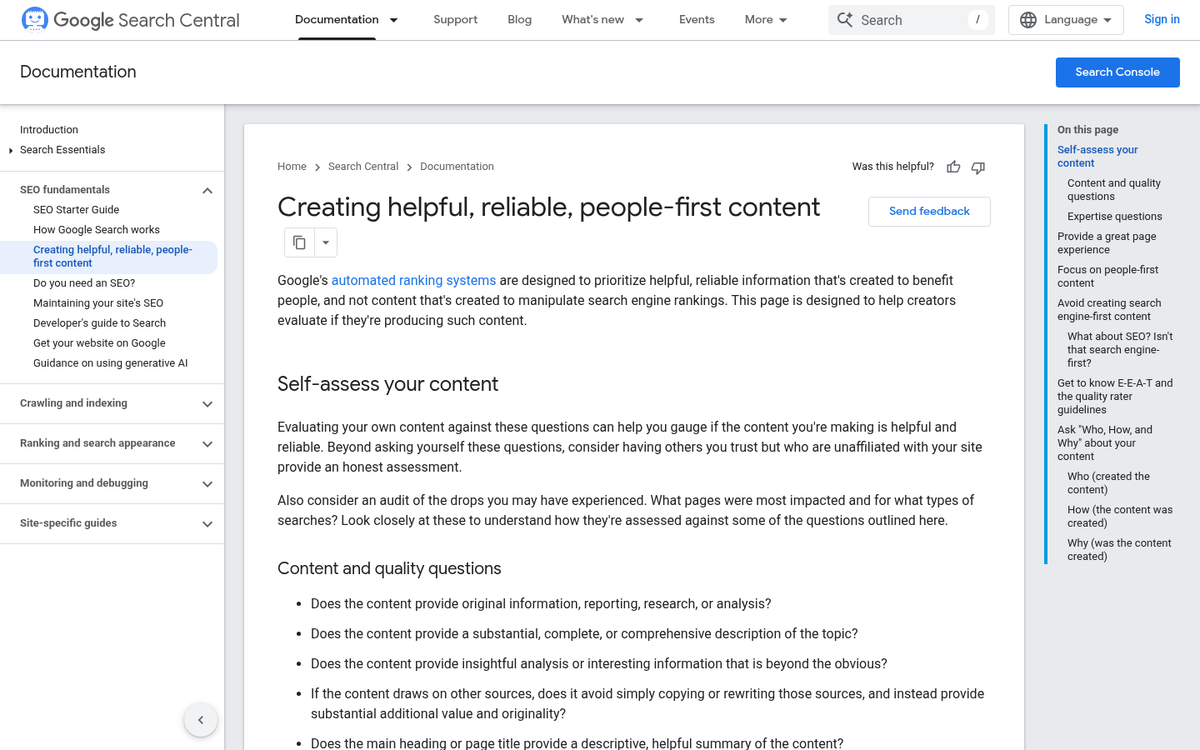
Structured data helps too. When you mark up your content with schema that identifies your organization, your authors, your publication dates, and your topic focus, you give the AI a cleaner read on what you are and what you stand for - it removes ambiguity, and AI systems like less ambiguity.
Citation patterns across the web are where things get interesting. A government data source like Data.gov - which hosts over 250,000 datasets - gets pulled over a random blog that covers the same topic because it's referenced repeatedly by journalists, researchers, and other authoritative sites. That pattern of citation builds a consensus that the AI recognizes as a trust signal in its own right. Building citations through high-authority directories is one way smaller sites have tried to replicate this kind of signal.
For a website owner, this translates into a helpful question worth sitting with: what does the web say about your source when no one is asking you directly? If other trusted sites reference your work, if your authors have a presence, if your domain has published for years - those are the conditions under which an AI is more likely to treat you as a reliable source to cite.
None of these tells are isolated. An AI engine is weighing a combination of them together, and a strong performance in one area won't compensate for gaps in another; it's worth keeping in mind as we look at how this is different from the way traditional SEO has approached authority.
The Difference Between SEO Authority and AEO Source Authority
A lot of site owners treat these two things as the same, and that mistake can send their efforts in the wrong direction. SEO authority is about how well your site ranks in search results - it's built through backlinks, domain age, PageRank signals, and link equity flowing between pages. AEO source authority is different - it's about whether an AI answer engine trusts your content enough to cite it, quote it, or surface it as a direct answer.
You can have strong SEO authority and still be invisible to AI systems. The reverse is also true. A pretty new site with deep, well-structured expertise in a narrow topic can earn AI citations while barely cracking the first page of search results.
The ACRL frames authority as "constructed and contextual." That idea maps well onto how AI systems work. Your site could be treated as authoritative for questions about tax law but not for questions about nutrition - even if your domain metrics are identical across topics. AI systems don't hand out blanket trust; they assess relevance and credibility per query.
That's worth sitting with for a bit. Source authority isn't a score you earn once and carry forever - it gets reassessed depending on what the user is asking.
| Factor | SEO Domain Authority | AEO Source Authority |
|---|---|---|
| Primary goal | Rank higher in search results | Get cited or quoted by AI systems |
| How it's built | Backlinks, link equity, domain age | Topical depth, credibility signals, structured content |
| Who assigns it | Search engine algorithms | AI language models and retrieval systems |
| Is it topic-specific? | Not strongly - domain metrics apply broadly | Yes - authority is evaluated per query context |
| What content does it reward? | Optimised pages with strong link profiles | Accurate, well-attributed, expert-level content |
The key difference between these two shows up most in how content is written. SEO work has long rewarded pages built around keyword placement and internal linking structures. AEO source authority rewards content that shows genuine expertise and gives AI systems something concrete to pull from.
Consider what an AI is actually doing when it generates an answer - it looks for content it can trust to be accurate and contextually relevant. A wall of keyword-optimised text doesn't help with that. Clear attributions, named authors, and well-organised factual content do.
Neither type of authority is going away. They call for different investments, and treating one as a substitute for the other means gaps will appear in places you didn't expect them. If you're producing content at scale, quality and sourcing decisions matter more than they ever did for pure SEO purposes.
Signals You Can Build to Strengthen Your Site's Source Authority
Source authority isn't fixed. There are concrete things you can do to build it, and most of them come down to making your site look like a place where honest, credible information lives.
One of the most helpful moves is to publish original data - this could be a survey, an internal study, or aggregated findings from your own customer base. When other sites reference your numbers, AI systems start to treat your domain as a primary source instead of a secondary one; it's a difference in how your content gets used.
Author credibility matters more than most site owners expect. Anonymous content or posts attributed to a vague "staff writer" sends a signal that no one is willing to put their name to the work. Adding author bios with credentials - qualifications, job titles, links to professional profiles - gives AI and human readers a reason to trust what they're reading - it's a small difference that does work.
Being cited as a source, referenced in a post, or named in a respected publication tells AI systems that experts see your content as worth pointing to. You can also see who has liked and shared your blog posts to understand which content is already earning that kind of attention.

Schema markup is worth adding too - it helps AI parse what your content is about, who wrote it, and what source your site represents - it labels your content so nothing gets lost in interpretation.
| Signal Type | What It Communicates to AI | How to Build It |
|---|---|---|
| Original data or research | Your site produces primary information, not just summaries | Publish surveys, studies, or findings from your own data |
| Author bios with credentials | Real, accountable people stand behind the content | Add named authors with qualifications and links to professional profiles |
| Mentions on authoritative domains | Trusted sources consider your content credible | Earn citations through PR, expert contributions, and original content |
| Schema markup | Your content is structured and easy to interpret | Implement Article, Person, and Organization schema where relevant |
| Citations from other trusted sources | Your content functions as a reference point in your space | Create content worth referencing - data, guides, and definitive explanations |
Thin content actively works against you here. A page with a few generic paragraphs and no author tells an AI system very little about your site's credibility - it's not neutral - it pulls your source authority down because it looks like filler instead of substance. If you rely on outsourced writing services like Textbroker, understanding what quality you're actually getting matters more than ever.
Anonymous, surface-level content is one of the most common and expensive mistakes site owners make. AI systems are trained to find sources that show depth and accountability. Content that shows neither gets passed over in favor of sites that do.
Your Site Either Gets Cited or Gets Skipped
A helpful exercise is to step back and look at your site the way an AI answer engine might. Is your expertise demonstrated? Are your sources transparent? Does your content hold up under scrutiny, or does it blend into the noise? If you'd pause to stake your reputation on what's currently published, that's a signal worth acting on. Tools like Sumo Pro can help you grow your audience while you build that credibility.
The shift toward AI-driven discovery is already underway, and it's accelerating. As more people get their answers from AI systems instead of scrolling through search results, the sites that have invested in genuine authority will be the ones that get surfaced, cited, and trusted. There's no better time to build that foundation than now - and auto-sharing your content is one way to expand your reach as you do.
FAQs
What is Source Authority in AEO?
Source Authority in AEO determines whether an AI answer engine trusts your site enough to cite or quote it. Unlike traditional SEO, it's evaluated per query context, meaning your site may be authoritative on one topic but not another.
How do AI engines decide which sources to trust?
AI engines assess a combination of signals including domain age, backlink quality, author credentials, structured data, and citation patterns across the web. Strong performance in one area alone won't compensate for gaps in others.
How is AEO Source Authority different from SEO authority?
SEO authority focuses on ranking in search results through backlinks and link equity. AEO Source Authority determines whether AI systems cite your content, rewarding topical depth, expert authorship, and well-structured factual information instead.
Can Source Authority be built or improved?
Yes. Publishing original research, adding credentialed author bios, earning mentions on authoritative sites, and implementing schema markup all strengthen Source Authority over time.
Does thin or anonymous content hurt Source Authority?
Yes. Thin content with no clear authorship signals low credibility to AI systems, actively reducing your Source Authority rather than being neutral. AI systems prioritize sources that demonstrate depth and accountability.