





Key Takeaways
- Google's public PageRank Toolbar was killed in 2016; evaluate directories using third-party tools like Ahrefs, Moz, or Semrush instead.
- Submit 1-2 directories per day maximum; sudden spikes of bulk submissions trigger Google's spam detection algorithms.
- Many formerly popular directories like DMoz, ArticlesBase, and StumbleUpon are defunct, penalized, or no longer worth submitting to.
- Niche-specific directories typically outperform general ones in SEO value and referral traffic for targeted audiences.
- Directories should be treated as brand awareness and citation tools, not link-building engines for manufacturing backlinks at scale.
Before we begin, I'll be upfront: directory submission is a technique that requires careful, strategic use. It's not a shortcut, and treating it like one is a fast track to an SEO penalty. Used correctly and in moderation, it can still give you value - but the community has changed dramatically over the years, and so has the way we measure directory quality.
Is PageRank Still Relevant?
For those who weren't around for the early days of SEO, PageRank was one of the foundational elements of Google's ranking algorithm - it was a publicly visible score that indicated the relative authority and quality of a website. Webmasters obsessed over it, and for a while, it was a reasonably helpful shorthand for site quality.
Google officially killed the public PageRank Toolbar in 2016 and stopped updating it well before that - it's gone as a publicly visible metric. That said, Google still uses a form of PageRank internally - it just isn't something you can look up anymore. John Mueller has confirmed this on multiple occasions.
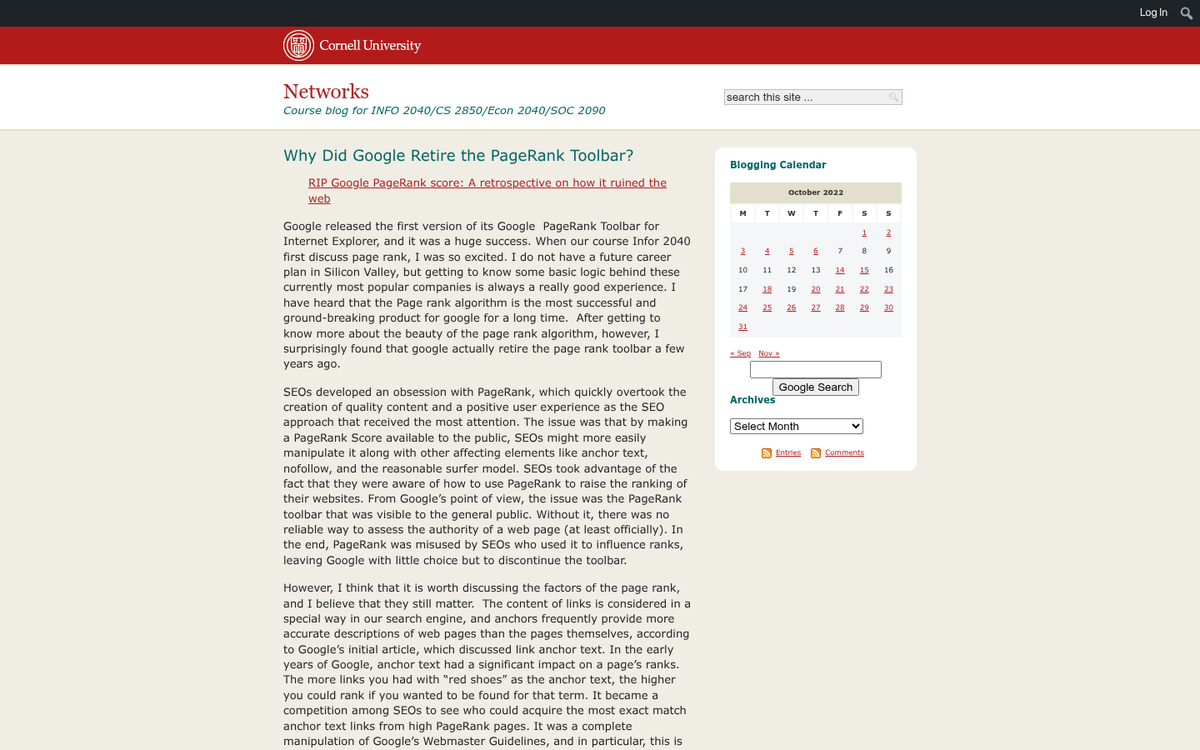
So what does this mean for directory submission? It means that the old habit of chasing high-PR directories is obsolete. You'll have to instead review directories based on their domain authority (via third-party tools like Ahrefs, Moz, or Semrush), their organic traffic, their editorial standards, and their relevance to your niche. Any directory submission site with a domain authority or equivalent score that places it in a competitive range - roughly like what would have been a PageRank higher than 5 - is worth investigating more. Understanding how content marketing affects your SEO can also help you evaluate whether directory links are a worthwhile part of your broader strategy.
Some directories do still publicly display PageRank-style metrics, though these are usually third-party scores - not official Google data. For example, Feed Up Info carries a listed PageRank of 8 and Lilink carries a listed PageRank of 7, based on legacy or third-party scoring. Treat these numbers as rough guides - not gospel.
The Perils of Directory Submission in 2026
The core danger with directory submission hasn't changed since Google's Panda and Penguin updates fundamentally influenced the SEO community. What has changed is that Google's spam detection is more refined than it was even five years ago.
Panda penalizes low-quality and duplicate content. If you're submitting the same post across dozens of directories, you're asking for trouble. Penguin penalizes manipulative link patterns - identical anchor text appearing across hundreds of sites is a red flag that modern Google algorithms are very good at catching.
The velocity of your submissions matters. A sudden spike of 50 new directory links appearing within a 24-hour window is a manipulation signal. The recommended safe rate for directory submissions is 1-2 manual submissions per day, with a maximum of around 5-10 per day if you're being aggressive but still want to stay within safe SEO territory. Slow and deliberate wins here. Bulk submission tools are a self-imposed penalty at this point.
The other change is that most of the old-guard directories are gone or irrelevant. Many sites that were staples of directory submission lists from a decade ago - ArticlesBase, Buzzle, GoArticles, Gather, eHow as a publishing platform, Examiner, Technorati, StumbleUpon, and others - have either shut down entirely, pivoted away from user submissions, or declined to the point where a link from them carries no actual value and could even be a liability.
DMoz, once the gold standard of web directories with over 4 million listed sites, shut down permanently in 2017 - it no longer exists in any functional capacity.
So how do you use directories responsibly in 2026?

First, prioritize niche and industry-specific directories over general ones. A quality directory focused specifically on your industry will usually outperform a catch-all general directory in terms of SEO value and referral traffic.
Second, create unique content for every submission. Duplicate content penalties are real and well-enforced. Whatever you submit to a directory should not appear verbatim anywhere else on the web. If you're looking for ways to repurpose content while staying SEO friendly, that's a separate strategy worth understanding before you start submitting.
Third, keep links minimal and natural. One contextual link is usually fine. Multiple links with keyword-rich anchor text in every submission is a pattern that will get you flagged.
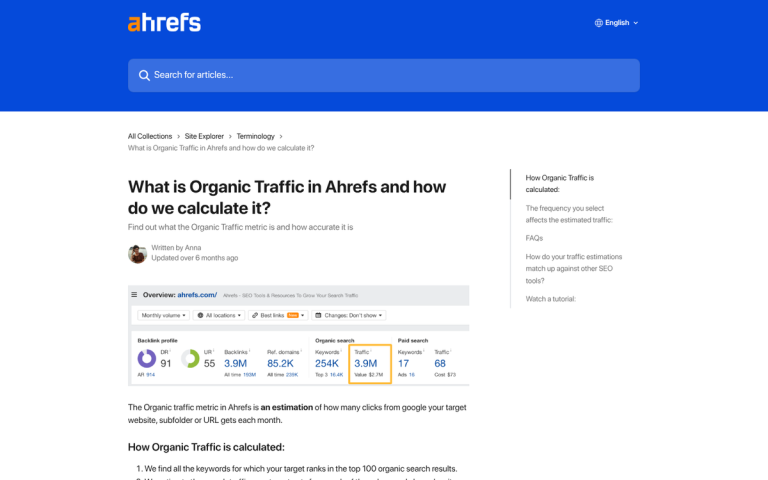
Fourth, vet the directory before you submit. Check its organic traffic in Ahrefs or Semrush. If the directory itself doesn't rank for anything or pulls negligible traffic, a link from it is nearly worthless. Look for editorial oversight and content standards.
The wider principle is this: directories work best when treated as a brand awareness and supplemental citation tool - not as a link-building engine. The era of using them to manufacture backlinks at scale is long over.
The List

What follows is an updated list of directories and directory-adjacent places worth investigating. Many of the old standbys have been removed because they are defunct, penalized, or simply no longer worth your time. Use this as a starting point for research - not a submission checklist to work through in one sitting.
- HubPages - One of the few old-style content directories that has genuinely adapted to the modern era. It has strong editorial standards, a real readership, and still carries meaningful domain authority. Good for almost any niche.
- Seeking Alpha - If you operate in finance, investing, or stock market analysis, this remains one of the best places to publish. It has a large, engaged, financially literate readership and strong organic rankings.
- EZineArticles - Still operational and one of the longer-standing general article directories. Standards have tightened over the years, which is actually a good sign. Approach with caution and only submit genuinely original, high-quality content.
- SooperArticles - Surprisingly strict quality requirements for what appears to be a straightforward directory. That strictness is a feature, not a bug - it keeps the content quality higher than average. Good for niche expertise pieces.
- SelfGrowth - A directory entirely focused on personal development, wellness, relationships, and self-improvement content. If that's your niche, it's one of the better-maintained vertical directories still operating.
- BusinessKnowHow - Focused on small business topics, from operations and management to marketing and growth strategy. Consistently maintained and relevant for B2B and small business content creators.
- Envirolink.org - A robust, long-running directory focused entirely on environmental topics including climate, green energy, agriculture, and environmental policy. A strong fit if this is your niche.
- ILoveLanguages - Highly niche, focused entirely on language learning, translation, linguistics, and related educational topics. Low competition and a loyal readership within a specific audience.
- Feed Up Info - One of the higher-rated free directory submission sites currently available, carrying a legacy PageRank of 8. Worth investigating for general submissions, particularly if you're testing directory performance.
- Lilink - Carries a listed PageRank of 7 and functions as a general-purpose link directory. Not a place to post full articles, but useful for URL and description submissions in relevant categories.
- ABCDirectory - A general web directory that includes a separate section for press releases, which is somewhat uncommon. If you have press releases to distribute broadly, it's a low-friction option.
- TheFreeLibrary - Has been accumulating posts since 2003 across business, science, and a range of other industries. Still active, still indexed, and has a long enough track record to be worth considering for evergreen content.
- ArticlesFactory - Operating since at least 2005 and still publishing content across money, home improvement, taxes, and general interest topics. Not flashy, but consistent.
- Article Alley - Distinguishes itself by featuring high-quality authors prominently on its front page. If you consistently publish strong content, there's an incentive beyond just the directory link.
- WebSource - Geared toward web designers, developers, and digital marketers. Less crowded than mainstream tech communities, which makes standing out somewhat easier.
- GMAWebDirectory - Originally a Montreal-focused directory, now broader in scope. Be aware that it reportedly has over 140,000 pending links in its queue, so don't expect fast turnaround on submissions.
- 1WebsDirectory - Has strong regional category coverage, making it particularly useful if your content focuses on travel, geography, or region-specific topics.
- Reddit - Not a directory in the traditional sense, but functionally one of the most powerful content discovery platforms online. Subreddits act as highly targeted niche communities. Approach with genuine value - promotional content without community contribution is quickly removed and can damage your reputation.
- Pinterest - A visual bookmarking platform with strong SEO properties of its own. Particularly effective for visual niches like design, food, travel, fashion, home decor, and DIY. Pins frequently rank in Google image and standard search results. Finding the most popular pins can help you understand what content performs best on the platform.
- Medium - Not a traditional directory, but functions similarly as a publishing platform where content reaches readers beyond your own audience. Medium posts frequently rank well in search, and the platform has a large built-in readership. Strong editorial quality is expected. Note that content published here may compete with your own site for rankings, so use it strategically.
- LinkedIn Articles - LinkedIn's native publishing platform has become one of the more effective options for B2B content, thought leadership, and professional niche topics. High domain authority and a targeted professional audience make it worth including in any content distribution strategy.
- Quora Spaces - Quora has evolved significantly and now supports Spaces, which function as topic-specific content communities. Contributing genuinely useful answers and original posts in your niche can drive meaningful referral traffic and brand awareness.
- SearchWarp - One part directory, one part writer community. Better suited for personal, insightful long-form writing than for straightforward marketing content. Keep the promotional tone low here.
- PromotionWorld - A marketing-focused directory with an annual and monthly top-10 recognition system. Niche enough that standing out is achievable, particularly for digital marketing and advertising content.
- InfoBarrel - A general interest directory with a shared revenue model, meaning you can earn from content you publish here in addition to any SEO or referral value. Features content across health, travel, finance, and general lifestyle topics.


2 responses
Thoughtful replies only - we moderate for spam, AI slop, and off-topic rants.
Even though I appreciate a list like yours, of which I'm
sure will be more than helpful to many other SEOs, I still try to avoid article directories in general.
Well, it is the best list of high PR directory sites. There are also some old directories and also many of them are new and fresh. This list can be very handy if you want to get top page ranking. Kindly share some blogs commenting list too. Anyhow thanks for sharing such a helpful list.