




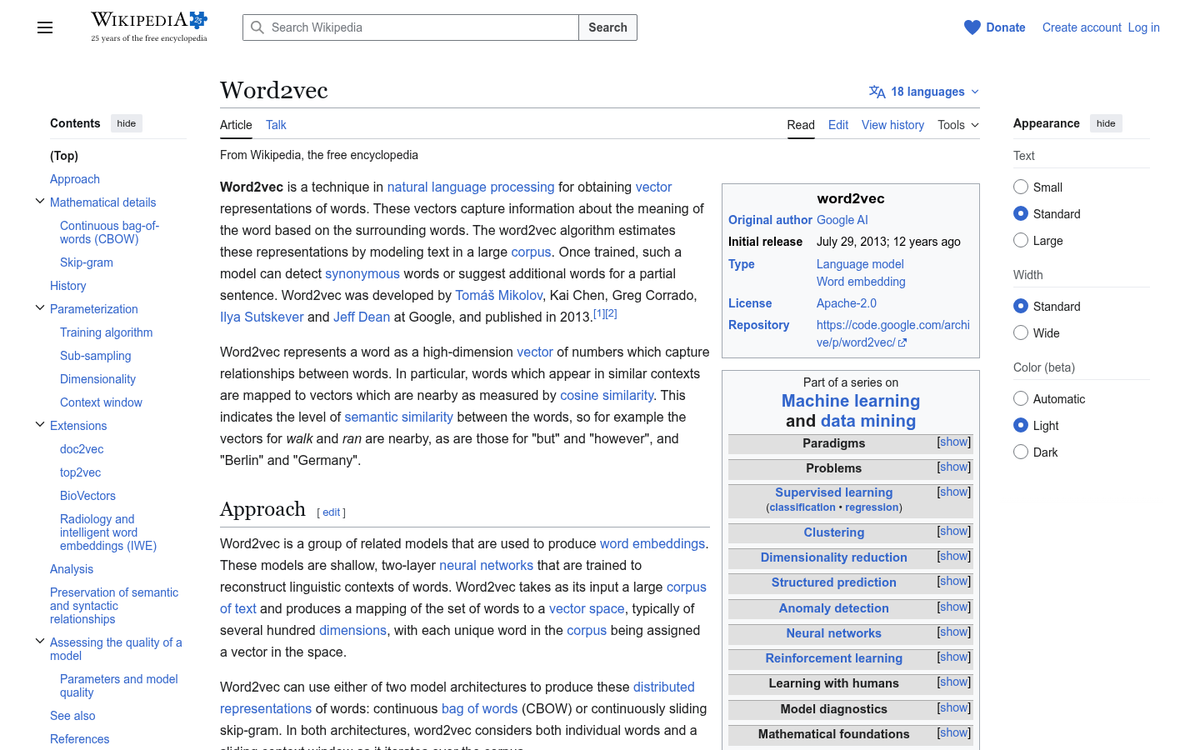
The concept has roots in linguistics. In 1957, John Rupert Firth famously wrote that "you shall know a word by the company it keeps" - meaning that words derive their meaning from the context in which they appear. Modern word embedding models like Word2Vec, GloVe and the transformer-based systems powering today's AI are direct descendants of that idea. They are trained on massive amounts of text, learning which words appear near each other and encoding those relationships as numbers an AI can reason with.
The AI systems behind answer engines - tools like ChatGPT, Google's AI Overviews and Perplexity - use word embeddings to determine if your content legitimately covers a topic or basically repeats keywords. They are not counting how many times you wrote "best running shoes." They are assessing if your content lives in the right conceptual neighborhood - if the ideas, terms and relationships you use signal topical authority.
Understanding semantic SEO shifts your thinking away from keyword stuffing and toward building content that's semantically rich, contextually coherent and structured in a way that goes hand in hand with how AI actually reads and ranks information. The sections ahead break down how that works and what you can do about it.
Quick Answer
Word embedding is a technique in natural language processing (NLP) that represents words as dense numerical vectors in a continuous vector space, where semantically similar words are mapped to nearby points. Unlike one-hot encoding, embeddings capture semantic relationships and context. Popular methods include Word2Vec, GloVe, and FastText. These vectors allow machine learning models to understand word meaning, similarity, and relationships (e.g., king - man + woman ≈ queen). Word embeddings are foundational to modern NLP tasks like sentiment analysis, machine translation, and text classification.
How AI Uses Word Embeddings to Understand Your Content
When an answer engine or large language model reads your content, it does not read the way a human does - it converts words into numbers - long strings of values that place each word at a point in a multi-dimensional space. Words with similar meanings sit close together in that space, and words with very different meanings sit far apart.
Models like Word2Vec, developed at Google, were trained on around three billion words pulled from Google News. At that scale, the model learned to associate words based on how they appear together in writing - it did not need anyone to define the relationships - it picked them up from patterns in the data. BERT, another well-known model from Google, was pre-trained on roughly 3.3 billion tokens and went further by reading text in both directions at once to better understand context.
What that means in practice is that these models understand that "buy," "purchase," and "order" are related without anyone spelling that out. They also understand that "bank" means something different in a financial post than it does in a post about rivers. The surrounding words do that work.
So when your content goes through one of these systems, it's not being scanned for exact keyword matches. The model is building a picture of what your content is actually about based on the relationships between the words. That is a difference from the way older search systems operated.
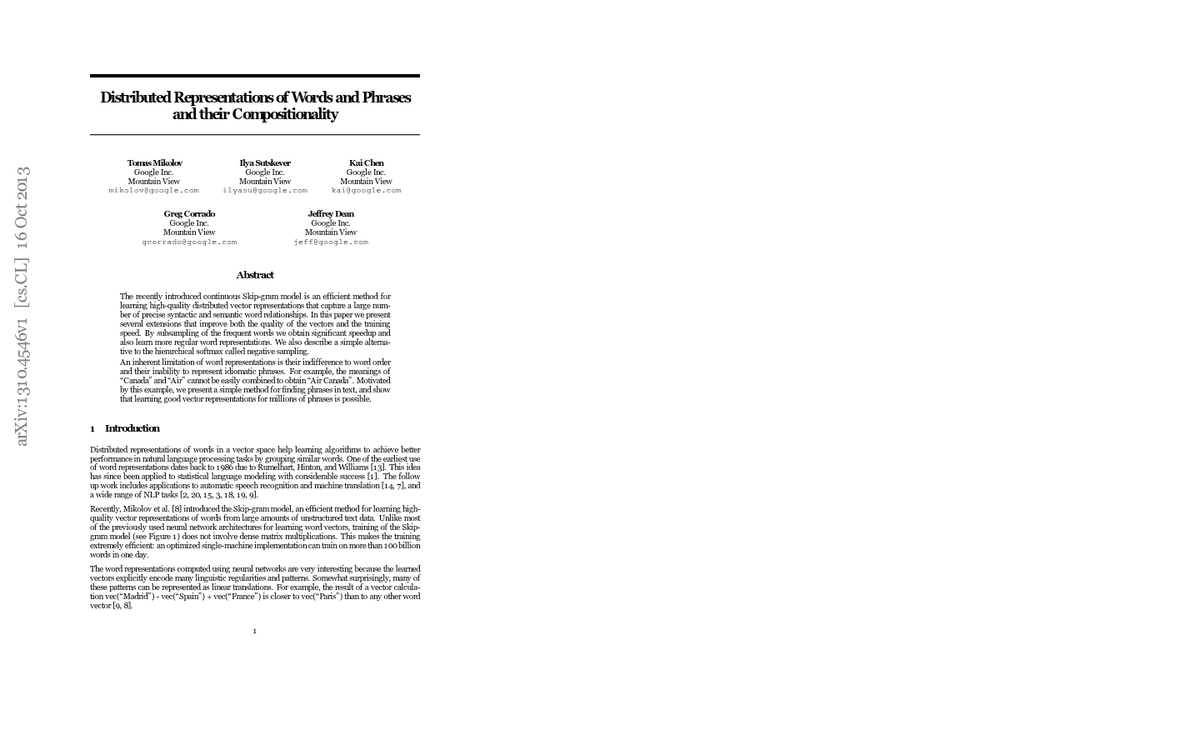
The scale of training data matters here because it shapes how well the model can make those connections. A model trained on billions of real-world sentences develops a much better sense of language than one trained on a fraction of that. That is why modern AI is able to manage synonyms, implied meaning, and topic associations in a way that feels almost intuitive.
The goal is not about the words you repeat - but the meaning your content builds across every sentence.
Why Semantic Relationships Matter More Than Keywords
Words that sit close together in vector space are treated as related in meaning. That is a technical thing that changes how you should think about content.
Search engines and AI systems don't look for the exact phrase you typed. They look at the full picture of what a piece of content is about. A page that covers a topic in depth will include related terms, connected ideas and supporting concepts. That depth tells the system that your content legitimately covers the subject instead of just repeating a phrase.
Think about what that means for keyword stuffing. Repeating one phrase over and over doesn't make your content more relevant - it makes it look thin. The system already knows what words belong near a given topic, so if those surrounding concepts are missing, something feels incomplete.
That's where semantic proximity can become helpful to know. Two words don't need to be identical to be treated as related. Words like "fatigue," "exhaustion," and "tiredness" occupy very similar positions in vector space, so content that uses all three is seen as richer than content that leans on just one.
AI systems group content by concept, not by term. That means your page about home insulation isn't competing on the word "insulation" alone - it's competing on how well it covers the whole concept, like energy costs, installation, materials and seasonal performance. Pages that hit those surrounding ideas tend to rank and surface more in AI-generated replies.
If your content targets a single keyword phrase without expanding into the related territory, you're leaving visibility on the table.
That's a helpful test to apply to your own content. Read it back and ask if it covers the full shape of the topic or just circles one phrase. The difference tends to be pretty visible.
The good news is that writing for semantic depth doesn't mean writing more for the sake of it - it means writing with a fuller picture of the topic in mind, which the next section gets into.
Structuring Your Content Around Conceptual Clusters
The idea is to stop thinking about a page as a place to cover one topic and start thinking of it as a place to cover a topic, with the related ideas, questions and terms that belong together.
Answer engines and modern search systems don't look for a matching phrase. They look at whether your content feels as if a person who legitimately knows the subject wrote it. Thin content that repeats one idea slightly tends to perform worse than content that explores a subject from multiple connected angles.
A helpful way to approach this is to think in clusters. If you write about a subject, consider what a knowledgeable person would bring up in the same conversation. Those related terms and ideas are the ones that word embeddings expect to find nearby.
There are a few helpful questions worth asking: What are the common questions people have about this topic? What related terms would someone with experience use? What subtopics sit close to the main subject without being a separate subject on their own? A page feels rich instead of shallow when it addresses those questions.

For example, a page about home insulation that only explains what insulation is will feel incomplete to a language model. A page that also touches on heat transfer, installation methods, material types and energy costs maps to a much wider cluster of related concepts, and that breadth signals genuine coverage.
This doesn't mean you have to write longer content for the sake of it. You want to write content that covers what the topic actually means - not to pad a page with loosely connected ideas. Relevance still matters and going too wide can dilute your focus.
Think of your topic as having a natural neighbourhood of related ideas. Your job is to write content that lives comfortably in that neighbourhood - not content that could have been written by a person who only read the headline. The more your language reflects genuine familiarity with a subject, the more it aligns with the way word embeddings map that subject.
The Hidden Bias Problem in Word Embeddings
Word embeddings don't learn the structure of language - they learn everything in it- like the biases. A known 2017 study by Caliskan, Bryson and Narayanan found that GloVe embeddings replicate human-like semantic biases from the text they were trained on. Associations that align with historical stereotypes are baked into the model's understanding of words.
This matters more than most people know. When an AI model reads your content, it interprets your words through the lens of the same embeddings. The relationships between concepts that the model has already learned will shape how it places your content in its internal map of meaning.
For website owners, that has some helpful weight. Certain topics or phrasings may carry unintended associations inside a model's embedding space - not because of anything you wrote, but because of how the training data shaped the model's understanding of the words. You can write something in a neutral way and the model may still connect it to concepts you'd never intended.
This isn't a reason to write in fear or second-guess every sentence- it's worth learning about so you can hold basic expectations about how AI interprets your content. The goal of writing for AI audiences is to be steady, direct and contextually clear so the model has less room to fill in gaps on its own terms. If you're also thinking about how your content gets distributed, free plugins that auto share new blog posts can help extend your reach without extra effort.
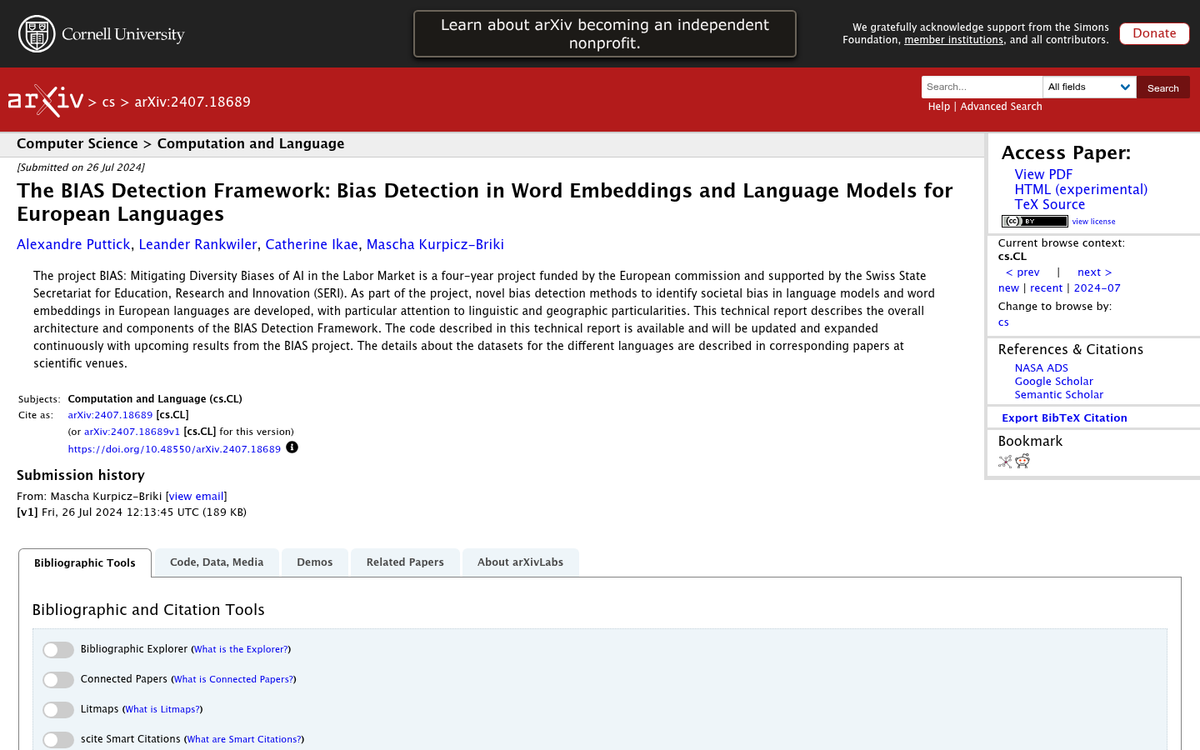
Bias in embeddings is also most pronounced around language for gender, race and profession. Small changes in phrasing can change where a model places your content in its semantic space.
AI doesn't read your content the way a human editor would- it matches patterns, pulls from associations and builds context from a foundation that was shaped long before your content existed. Knowing that is helpful- even if it doesn't change how you write right away. For those monetizing their sites, understanding how to automatically inject ads into WordPress posts is one practical way to keep revenue flowing as your content strategy evolves.
Make Your Words Work Smarter, Not Just Harder
A good starting point is to audit your existing content with fresh eyes, checking if each piece legitimately explores a topic or repeats a keyword in different arrangements. If it's the latter, there's an opportunity to expand - add related concepts, answer natural follow-up questions, and write the way a knowledgeable person would explain the subject.

From there, keep three principles in mind as you create new content:
- Broaden your topic coverage - address the full context around a subject, not just its surface definition.
- Use natural language - write the way people speak and search, because that's the language models are trained on.
- Write for meaning - every sentence should add something; filler content weakens your semantic signal.
None of this is about tricking an algorithm. The goal is content that's legitimately helpful - the kind that makes sense to a reader and to the AI systems looking at it. When those two things align, you're working with the system - not against it.