





Domain parking is one of those techniques that is widespread, commonplace, and extremely variable. Sometimes you can make a lot of money from it, while other times you'll lose money on the meager annual registration fees.
Key Takeaways
- Domain parking turns unused domains into ad-revenue landing pages, but realistically earns only $0.10-$500 monthly depending on niche.
- Parking services keep 50-70% of revenue, making large portfolios necessary to generate meaningful returns.
- Google doesn't index parked domains, so traffic depends almost entirely on direct type-ins and residual backlink visitors.
- High-value niches like finance, legal, and insurance generate significantly more per click than generic or lifestyle domains.
- Parking trademark-matching domains risks losing them entirely through ICANN dispute resolution, with no compensation guaranteed.
The Elephant in The Room
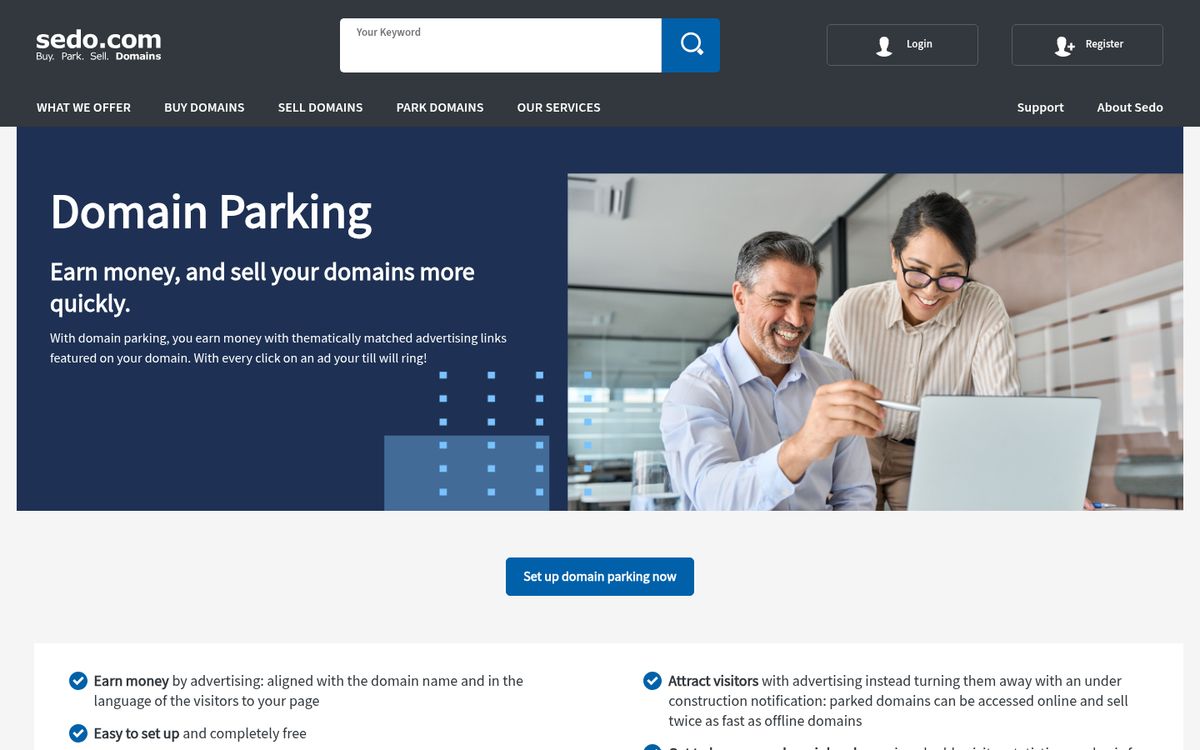
The first thing we need to address is the concept of domain hoarding. Hoarding digital assets can be a real problem for entrepreneurs. Maybe you keep an eye on domain auction sites. Maybe you just come up with ideas and go seek out relevant domains to register in case you decide to pursue the idea.
The problem is, for every 10 domains you register, you're probably only going to pursue one of those ideas, and for every 10 ideas you pursue, maybe one of them will reach a point where it's complete enough to go live. It's not a very high success rate. Such is the situation among entrepreneurs who buy up domain after domain, only to never use them and let them languish.
Now, if these are generally unheard-of domains that cost you $1 to buy and register for three years, that's not a big deal. On the other hand, if it's a good exact-match domain on a .com that costs you $5,000 to buy, only to sit in your portfolio with no content, that's a huge wasted investment. So it is that domain hoarding can become a problem.
Making Money with Excess Domains

There are a lot of different ways you can use your portfolio of domains to make some money. I'm primarily going to be talking about domain parking - as the title implies - but I'll go over other options first in case you want to pursue other options.
- Domain Parking. Parking a domain means registering the domain but not putting a site on it. You essentially turn the domain into a landing page with a "this domain for sale" notice on it, covered with ads. Whenever someone lands on the page, you make a small amount of money. Then, if someone does express interest in buying the domain, you can sell it for a profit. Domain parking currently accounts for roughly 17.5% of all registered domains worldwide, so you'd be in good company.
- Flipping Domains. A lot of marketers look for aged domains to buy up and put a site on for the residual authority and backlink value they carry. You can park domains and wait until someone wants them, then sell them for a profit. This goes hand in hand with domain parking, and the global domain market hit $2.4 billion in 2024 - so there's real money moving around in this space.
- Microsite Selling. You can buy up domains and set up very basic microsites on them to build up some value. These sites are narrow niche sites with a handful of pages, maybe one blog post per month to keep them active, and affiliate links to generate income. It's more time-consuming, but the idea is to earn some affiliate revenue while building enough value that it's worth selling.
And, of course, you can always just let an unprofitable domain expire and cut your losses. Even if it only costs a few dollars a year to register, that's still a drain on finances you don't need.
Now, parking domains is not going to make you a millionaire. It's not a get rich quick scheme. It's merely a way to turn a financial drain into a break-even point, or squeeze a small return out of domains while you decide what to do with them.
Issues with Domain Parking

There are a lot of issues with parking domains as a means of making money. There are risks, and you can lose money for quite a while before you reach a point where you're profitable.
First of all, Google doesn't really index parked domains. A parked domain has no meaningful content and therefore no search value. You will get little if any organic traffic from Google. Almost all of your traffic will come from direct type-in visitors, people researching domain availability, or residual traffic from old broken links pointing to an expired domain. That last source can dry up quickly as webmasters clean up their links.
Secondly, a parked domain is not going to be a big money-maker on its own. The realistic numbers look like this: a typical mid-market keyword domain earns somewhere between $0.10 and $5.00 per month. Higher-traffic keyword domains in competitive niches might generate $50 to $500 per month. It's a volume game. One investor with approximately 1,200 domains parked via GoDaddy CashParking over seven years averaged around $3.50 per day - roughly $1,200 annually. That's real money, but it required a massive portfolio and years of patience to get there.
The niche matters enormously when it comes to ad revenue. Finance and insurance-related domains can earn $2-$15 per click. Legal domains can pull $5-$50 per click. Shopping and retail? You're looking at $0.10-$2 per click. So a domain sitting in a profitable niche is worth far more than a random keyword domain with no commercial intent.
Third, there are other real costs involved in domain parking. Parking services typically keep 50-70% of the revenue they generate, paying you the remainder. That's a significant cut. On top of that, you may need a web hosting package to support your portfolio, and you're always spending time managing registrations, tracking performance, and culling underperformers. Never underestimate the time cost - that's time you could be spending on your actual projects.
You also can't really drive traffic to a parked domain artificially. You'd never buy paid ads to send people to a parked page - most PPC platforms won't approve them, and even if they did, you'd spend far more than you'd earn. Social media links to a parked domain look like dead ends to users. You're entirely dependent on organic type-in traffic and residual interest.
Also, there's one final issue worth flagging: sometimes you'll lose control over valuable domains with no recourse. If you register a domain that matches an existing brand's trademark and park it, the trademark owner has options. They can ignore it, buy it from you, or simply file a dispute with your registrar and seize the domain - and since it's their trademark, you have very little recourse.
If you want to know more about that, look up domain squatting. Suffice it to say, if you don't own the trademark but you're parking the domain, it can be taken from you and the trademark owner is under no obligation to compensate you for it. This process is governed by ICANN's dispute resolution policy, which gives trademark holders a formal mechanism to reclaim domains without paying the registrant.
Making Money
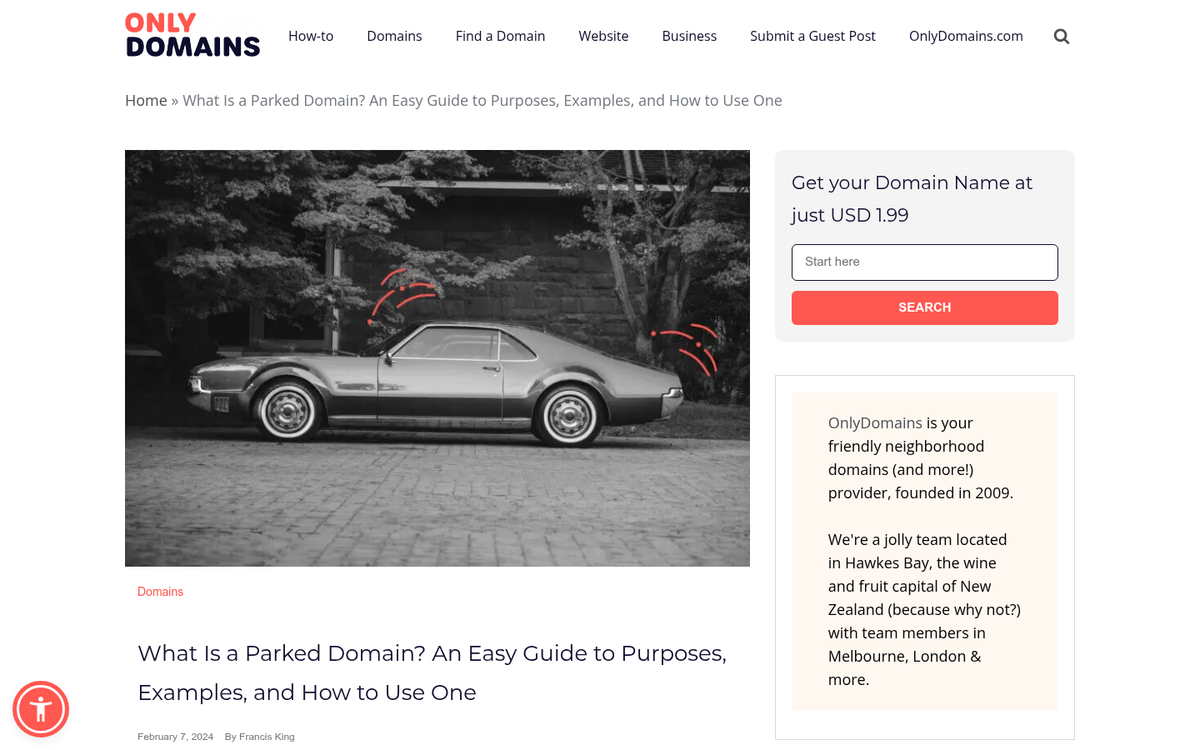
Now, if you have a portfolio of domains and you want to try to make some money from them while you hold them, you can park them. Parking basically means setting up a landing page with ads and contact or purchase information for anyone interested in buying the domain. Your asking price should account for what you paid, your ongoing registration costs, and whatever profit you've earned - you don't want to walk away from a sale at a loss.
Revenue potential varies widely. One NamePros user reported earning around $800 per month from domain parking using Bodis combined with custom landing pages, with a single domain purchased for $5 generating $160 in one month. That's an outlier, but it illustrates that the right domain in the right niche can genuinely punch above its weight.
There are several services that can manage a portfolio of domains for you, handling the setup, hosting, and ad monetization. These services save you significant time, though you'll need to weigh their revenue cuts against your actual profits.
Here are several services you can use.
- Bodis has become one of the more popular domain parking platforms among serious domain investors. It offers clean, customizable landing pages, solid ad monetization, and transparent reporting. Many active domain portfolio holders prefer it over older alternatives for its performance and flexibility.
- Sedo has a domain parking system that's well-suited for investors with larger portfolios. They generally recommend having at least several hundred parked domains to see meaningful returns. They also act as a broker if you choose to sell, which makes them a convenient all-in-one option for serious domain investors.
- GoDaddy CashParking remains an option, particularly if you're already managing your registrations through GoDaddy. Keep in mind they charge a monthly fee and take a cut of your revenue, so the math needs to work in your favor before this becomes worthwhile at smaller portfolio sizes.
These aren't perfect systems, but they can generate income both through parked advertising and through domain sales when a buyer comes along. Most platforms include "buy this domain" calls to action by default, so you're always passively marketing your portfolio even when you're not actively involved.
As you might imagine, most of your domains won't earn much on their own. The real money in domain parking comes from either high-traffic keyword domains in lucrative niches, or from eventually selling domains to buyers who want them more than you do. With that in mind, don't park premium domains you actually plan to develop - only park what you're genuinely willing to sell.
Choosing Domains to Park

Some people want to build a portfolio specifically to generate income from parking. That's a legitimate strategy, but it requires research and discipline. Unprofitable domains should be culled, profitable ones should be held, and you need to keep adding quality domains to the mix to grow your returns over time.
If you're evaluating domains for your portfolio, run them through these filters. Fail one, and you're probably not going to see a meaningful return.
- TLD. Always start here. Stick to .com, .org, .net, or other established major TLDs. Interest in .io has grown somewhat in the tech startup world, but for straight parking purposes it's still a distant second to .com. Novelty TLDs like .faith, .music, or .biz are almost always dead weight in a parking portfolio.
- Residual Traffic. To make money from a parked domain, you need visitors. Expired domains are worth investigating here - they often carry residual traffic from old backlinks and direct type-in habits. They typically cost more upfront, but they can generate revenue immediately rather than sitting dormant.
- Niche Profitability. Not all keywords are created equal. A domain in the finance, legal, or insurance space will attract far higher ad revenue per click than a generic lifestyle or entertainment domain. Think about who would want to buy the domain and whether there's commercial intent behind the keyword before you commit to it.
- Spelling and Clarity. Generally you want properly spelled, easy-to-type domains. There is a small market for strategic misspellings - Google owns gooogle.com and goggle.com for obvious reasons - but this runs the trademark risk discussed earlier, so tread carefully.
If you can find domains that check all of these boxes and build up enough volume, you can generate real returns from a parked portfolio. But there are a lot of variables to manage. If all you have is a small handful of potential project domains, the effort of setting up a full parking operation probably isn't worth it. In that case, a simple "for sale" landing page through a service like Sedo or Bodis is all you really need while you figure out your next move.
5 responses
Thoughtful replies only - we moderate for spam, AI slop, and off-topic rants.
Great article! I was kicking around placing ads on some domains and it's clear from your text that it's a steep uphill climb to a very small pot of money (if any!). Thanks for taking the time to go deep into all the avenues.
Hi,
We have three or four really cool domain names that probably get a lot of traffic each month. How can we send traffic to other businesses that need it using our domain names that we're not using?
Please advise,
Denise Harris
310-619-3588
Hi Denise! Great question! The simplest approach is to use a domain parking service that displays ads relevant to your domain's topic - you earn revenue whenever visitors click them. Alternatively, you could redirect your domains directly to businesses willing to pay for that traffic. Reach out to companies in a related niche and negotiate a traffic deal. Either way, those unused domains could definitely be working harder for you!
Excellent article. Educational and beneficial. Thanks!
Thanks so much, Tucker! Really glad you found it helpful. Domain parking can be a surprisingly effective passive income stream when done right - it's one of those strategies that often flies under the radar. If you ever have questions as you start putting it into practice, feel free to drop them in the comments. Good luck with your domains!