





Have you ever wanted to run a storefront, but taken a look at the work it requires to successfully run one and decided "nope! That's way too much work for me."? At some point, virtually every entrepreneur considers a store, and many do indeed move on to other things.
Dropshipping is one way to avoid most of this issue. You still have to put in some work, but it's significantly less than running a traditional store yourself.
Think about the issues you encounter with a conventional store. You have to make ties with a manufacturer and pay them to create your items. Or, in the case of a reseller, you have to order the items from the original manufacturer. Some companies only sell to resellers, while for others you'll have to compete directly with the manufacturer.
You have to have items shipped to your location to store. If you're dealing with large volumes, you either need a lot of storage space at home or you have to rent a storage facility of some kind. Depending on the product, that can be anything from a self-storage unit to a climate-controlled warehouse. Quite the expense!
You also have to handle quality control, order fulfillment, shipping, customer service, and all the financial aspects of running a business - bearing in mind that most businesses aren't profitable for several years after founding.
If you have ambitions beyond simply running a store, you'll quickly recognize that all of this takes either an enormous amount of your personal time or a significant amount of money paying employees to do it for you. Finding the right balance is a constant challenge for traditional business owners. But with dropshipping, you largely sidestep all of it.
Key Takeaways
- Dropshipping lets you sell products without handling inventory, shipping, or fulfillment - the supplier does the heavy lifting.
- Selling through Amazon and eBay bypasses building your own site, but margins are thin and fees significantly reduce profits.
- Dropshippers fulfill an estimated 34% of Amazon sales, and 94% of Amazon dropshippers reported being profitable in 2024.
- Virtual assistants can manage listings and day-to-day tasks, making dropshipping largely passive once systems are established.
- Only 10% of dropshipping businesses are profitable in year one, so realistic expectations and patience are essential.
How Dropshipping Works

Dropshipping is a lot like affiliate marketing, which you may already be familiar with - but with one key difference. If you want a deeper look at how the two compare, check out this breakdown of dropshipping vs. affiliate marketing and which is better.
With dropshipping, you reach out and make a contract with a manufacturer or supplier of a product. You agree to drive sales their way, and in exchange you're allowed to list and sell their products through your own storefront. You set up a website, list the products, and let buyers come to you.
When someone visits your site and makes a purchase, they believe they're buying from you. In reality, you're forwarding the order on to the original supplier, who then does all the heavy lifting - fulfilling the order, handling shipping, and in many cases managing returns or support. All you do is pocket the margin.
This raises two natural questions. Why would anyone buy from you rather than the original manufacturer, and what do you actually get out of this arrangement?
The second question is the easier one. You get money. Say you're selling a widget that costs $10 from the supplier. You list it for $12 on your site. Every sale nets you $2, with your only ongoing cost being things like web hosting - a fraction of what a traditional retailer would spend keeping the lights on.
As for what the manufacturer gets out of it: marketing reach without the headache. You're the one going out and driving sales. Many manufacturers and suppliers are simply not interested in building an online presence, running ads, or dealing with individual retail customers. You handle all of that. It's similar to affiliate marketing, except your earnings aren't capped at a fixed commission - you control the pricing.
So why would anyone buy from you instead of going straight to the source? A few reasons. First, they find you when they might never find the manufacturer. Suppliers who are open to dropshipping arrangements often have little to no consumer-facing web presence. Second, many manufacturers won't sell to individuals at all - they require minimum order quantities that no individual buyer would want. You bridge that gap. Before committing to a supplier, it's worth knowing the right questions to ask a wholesaler before selling their products.
The numbers back this up. Dropshippers now fulfill an estimated 34% of Amazon sales, and roughly 50% of third-party Amazon sellers use the dropshipping model. It's not a fringe side hustle anymore - it's a mainstream e-commerce strategy.
With dropshipping, you end up making money from product sales while skipping most of the operational work. All you need to do is set up a storefront, drive traffic to it, process orders securely, and maintain your supplier relationships. The tradeoff is thinner margins - but volume and smart product selection can more than compensate.
Outsourcing the Work
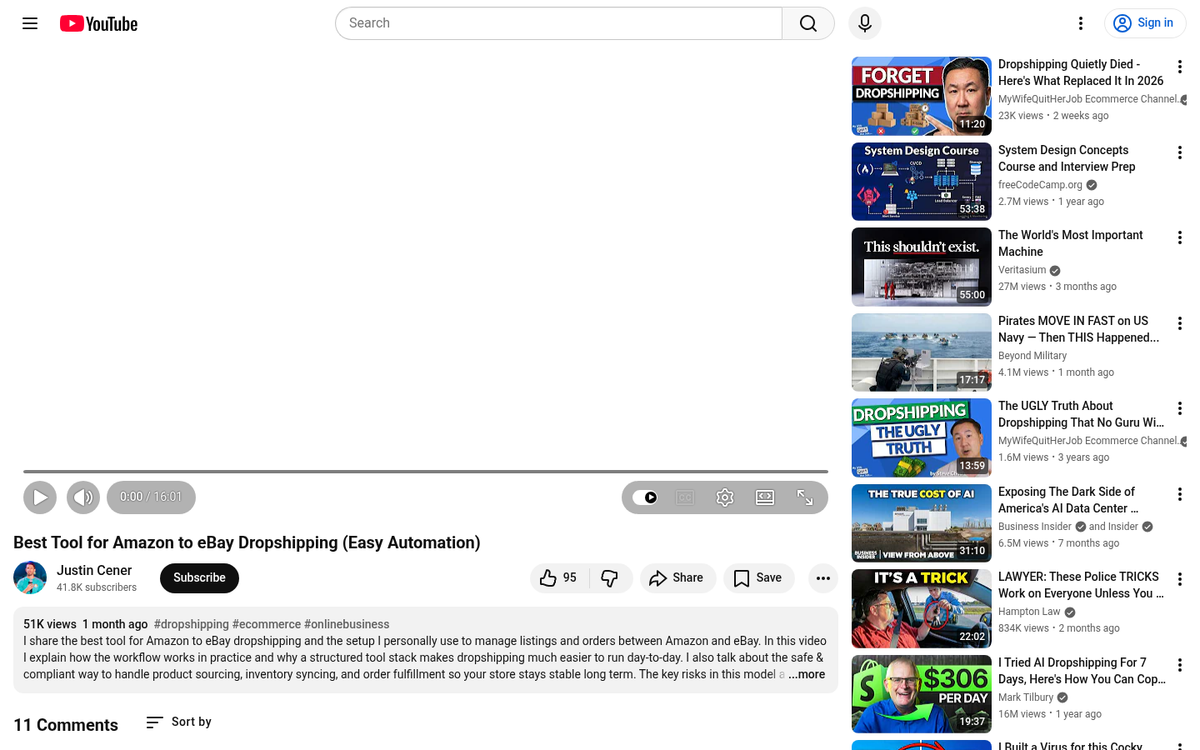
There's still one meaningful chunk of work involved: setting up and managing the storefront you're selling through. But even that can be outsourced or bypassed entirely.
Consider this - what are the two biggest retail marketplaces online? Amazon and eBay. Rather than building a brand-new site and trying to compete with them for search traffic, why not simply sell through them?
Selling through Amazon and eBay comes with a compelling set of advantages. These platforms already have the trust, the traffic, the secure payment infrastructure, and the conversion-optimized product pages. You're plugging into an engine that's already running at full speed. You still need to create solid listings and do some promotion, but you're not building everything from scratch.
The stats are encouraging. In 2024, 94% of dropshippers selling on Amazon reported being profitable - a number that reflects how well the model fits the platform. U.S. small and midsize businesses collectively sell more than 4,000 items per minute on Amazon alone.
eBay tells a slightly different story. The top 10% of eBay dropshippers earn around $7,731 per month, and about 25% of dropshippers on the platform report making over $1,000 per month. However, profit margins on eBay hover around 6% - considerably lower than the 30-40% margins achievable on your own e-commerce platform. Factor in an average of roughly $1,078 in eBay fees and $479 in PayPal fees per month for active sellers, and the math becomes less exciting unless you're moving serious volume. If you want to reduce what you're spending, it's worth learning how to successfully lower your Amazon FBA seller fees.
There are real downsides to selling exclusively through these platforms, though. You lose the ability to build your own brand. You're not growing a mailing list, you can't run a blog alongside your storefront, and any trust or loyalty you build with customers ultimately benefits Amazon or eBay - not you. You also can't customize the shopping experience to differentiate yourself.
Competition is another factor. Anyone can sign a dropshipping agreement with the same supplier and list the same products on the same platform. If a competitor with a bigger ad budget undercuts your price, you either adapt or lose that revenue stream. Amazon's algorithm doesn't care about your history - it cares about price, reviews, and fulfillment speed.
One increasingly important note: Amazon has tightened its dropshipping policy over the years. You're allowed to dropship, but you must be the seller of record, ensure all packaging and invoices identify you and not a third-party supplier, and be responsible for returns. Violating these terms can get your account suspended, so make sure your supplier agreements are airtight before scaling. If you do run into trouble, it's also useful to know proven ways to get more sales on your eBay listings as an alternative revenue stream.
Further Outsourcing
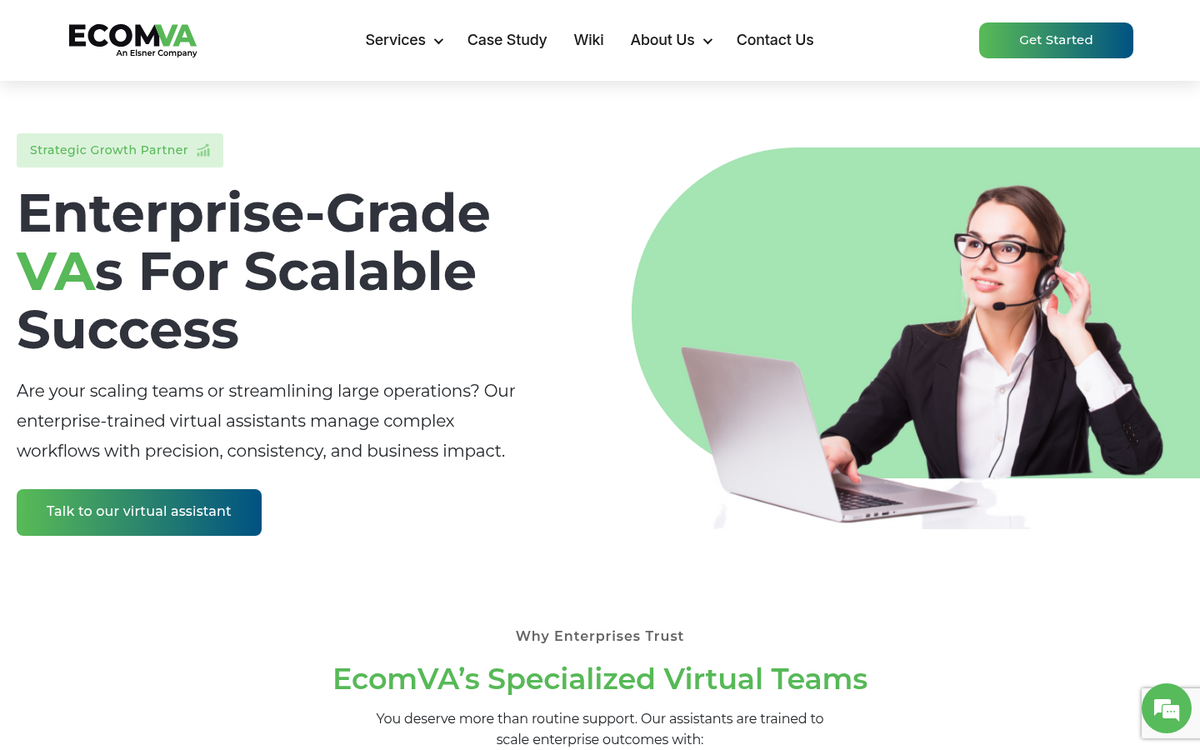
You can take things one step further and hire a virtual assistant to handle much of the day-to-day work for you. Once trained and set up with a clear process, your involvement can become minimal.
The ideal setup gives your VA access to create and manage listings, but not to make financial decisions or purchasing actions on your behalf. Keep your financial credentials separate and protected - you're working with someone you may have only ever communicated with remotely.
The workflow looks something like this: you secure dropshipping deals with suppliers and get the product details. A copywriter - or your VA, if they're capable - writes up the listings. Your VA publishes and maintains those listings. You focus on promotion: running a niche blog, building a social media presence, running paid ads, or using email marketing if you're selling through your own site alongside the marketplace listings.
When orders come in, Amazon or eBay handle the payment processing, the order goes to your supplier, and the supplier ships the product. Your job at that point is largely growth - finding new suppliers, adding new products, and refining what's already working.
A broader market stat worth noting: a 2024 survey of 350 manufacturers found that net profit margins on dropshipped goods averaged 12.2% compared to 10.3% on direct online sales - an 18.3% improvement. That's a meaningful edge, and it suggests that the dropshipping model, when done well, is genuinely competitive.
That said, there are real challenges worth being honest about:
- Only 10% of dropshipping businesses are profitable in their first year - so patience and realistic expectations matter.
- At any time, a competitor can undercut your pricing and erode your margins.
- Suppliers can end agreements, go out of stock, or change their terms with little notice.
- Platform fees on Amazon and eBay eat into already slim margins, so volume matters.
- You're constantly adding new products to replace those that stop performing.
The end result, though, is that you can build a scalable, largely passive income stream without the overhead of a traditional retail operation. It's always going to require some active management - new supplier deals, listing updates, promotional efforts - but once the system is running, it doesn't demand your constant attention.
Is outsourced dropshipping for everyone? No. The setup phase is time-intensive, the margins are often thin, and the first year is genuinely difficult for most people. But if you're willing to put in the groundwork, treat it like a real business, and stay adaptable as platforms evolve their policies, dropshipping in 2026 remains one of the more accessible ways to build an e-commerce income without going all in on inventory and logistics from day one.
2 responses
Thoughtful replies only - we moderate for spam, AI slop, and off-topic rants.
If I want to be an outsourced agent from Bangladesh for a dropshipper, what I need to do? Will be waiting for your response.
Hi Kazi! To work as an outsourced agent for a dropshipper from Bangladesh, you'll want to build skills in product research, customer service, and order processing. Create profiles on freelancing platforms like Upwork or Fiverr highlighting these skills. Reach out directly to dropshippers offering virtual assistant services. Strong English communication skills and reliability are key selling points. Good luck!