





VSLs are one of the many forms of affiliate marketing used online, with major traffic platforms like Meta, YouTube, and TikTok now serving as primary distribution channels alongside traditional networks. They're something of an alternative to traditional PPC, combining the primary benefits of a sales video with a dedicated landing page.
Key Takeaways
- VSL landing pages convert at 12.7% versus 4.8% for text-only pages, making them over 2.5x more effective.
- VSLs follow a predictable formula: establish authority, share personal success, reveal a "secret," then pressure viewers to convert.
- Most VSL operators run affiliate offers, earning commissions while the original provider handles fulfillment and delivery.
- Post-purchase upsell acceptance rates average 34.7% in VSL funnels, significantly higher than traditional e-commerce.
- VSLs work best as conversion multipliers for already-proven offers; investing in one before testing your offer risks significant losses.
What is a VSL?
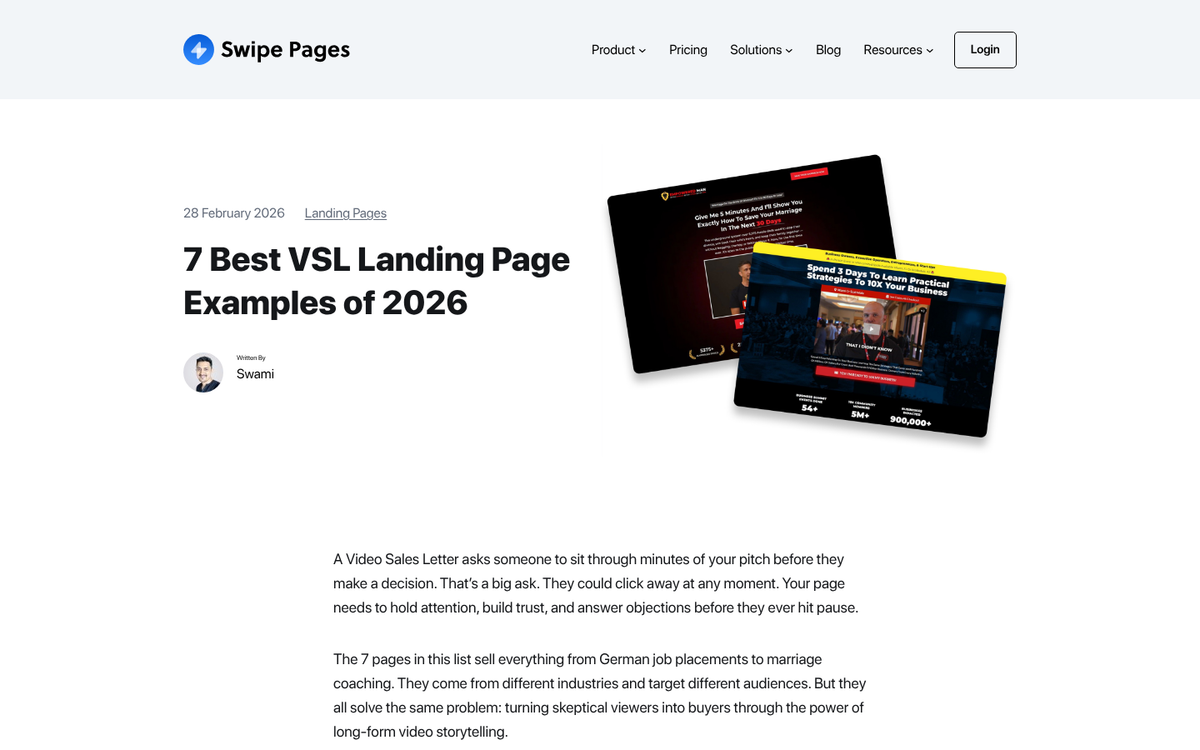
A VSL is a Video Sales Letter. This is generally just a fancy way of saying a sales-focused video meant to pitch an offer, generally an affiliate offer of some kind. I guarantee you've seen these around. Any time you click a link and end up on a landing page that has a video front and center, you've found a video sales letter.
Unfortunately, VSLs are often used by all sorts of marketers, and that includes low quality spammers. Videos convert very well, and that's a fact. According to a 2025 Unbounce benchmark report analyzing 44,000 landing pages, pages featuring a VSL averaged a 12.7% conversion rate compared to just 4.8% for text-only pages - that's more than 2.5x the conversion rate. That kind of data explains why everyone from big name brands to fly-by-night black hats has adopted them.
I'm going to be honest here; VSLs and VSL offers are a difficult topic to research simply because everyone writing about them is selling something. They might be pitching their own VSL offers as "examples" or they might just be selling software or methods to create your own VSLs. Either way, they're certainly not objective or informative, they're sales-focused.
That's why I'm trying to focus this post on the informative side. You're not going to find links to any offers I have here, nor am I trying to sell you software to create them. I'm in this to help you learn about them.
The typical way a video sales letter is used is on a landing page. In fact, that's one of only two real ways a VSL is used. The other is on a single-page site, which is like a landing page without the context. In any case, it will look roughly the same regardless of the topic. The page will be long and vertical. It has a video front and center, right up top, with some surrounding copy and graphics pointing to it with arrows and text. "Watch this video," they say, "you won't want to miss it." They claim it will change your life.
The video could range anywhere from 2 minutes to 30, though based on a 2025 Vidyard analysis of 850 B2B sales videos, the sweet spot appears to be around 8-15 minutes for the highest engagement-to-conversion ratio. You don't want a video that's too long for people to watch, but neither do you want one that's too short to give enough information or enough persuasion. Remember, that's what their goal is; to persuade you to opt-in to the offer, whatever the offer may be.
One of the hallmarks of a sales letter, or a video sales letter, is a high degree of narrow targeting. A VSL is designed to capture the interest of one narrow segment of an audience, but to do it very well. Rather than trying to capture .1% of 100,000 people, it tries to capture 50% of 5,000 people. This means that anyone outside that narrow audience is going to ignore it, scoff at it, or decry it as a scam, but anyone right within that narrow cone of audience is highly likely to convert.
The Flow of the Letter
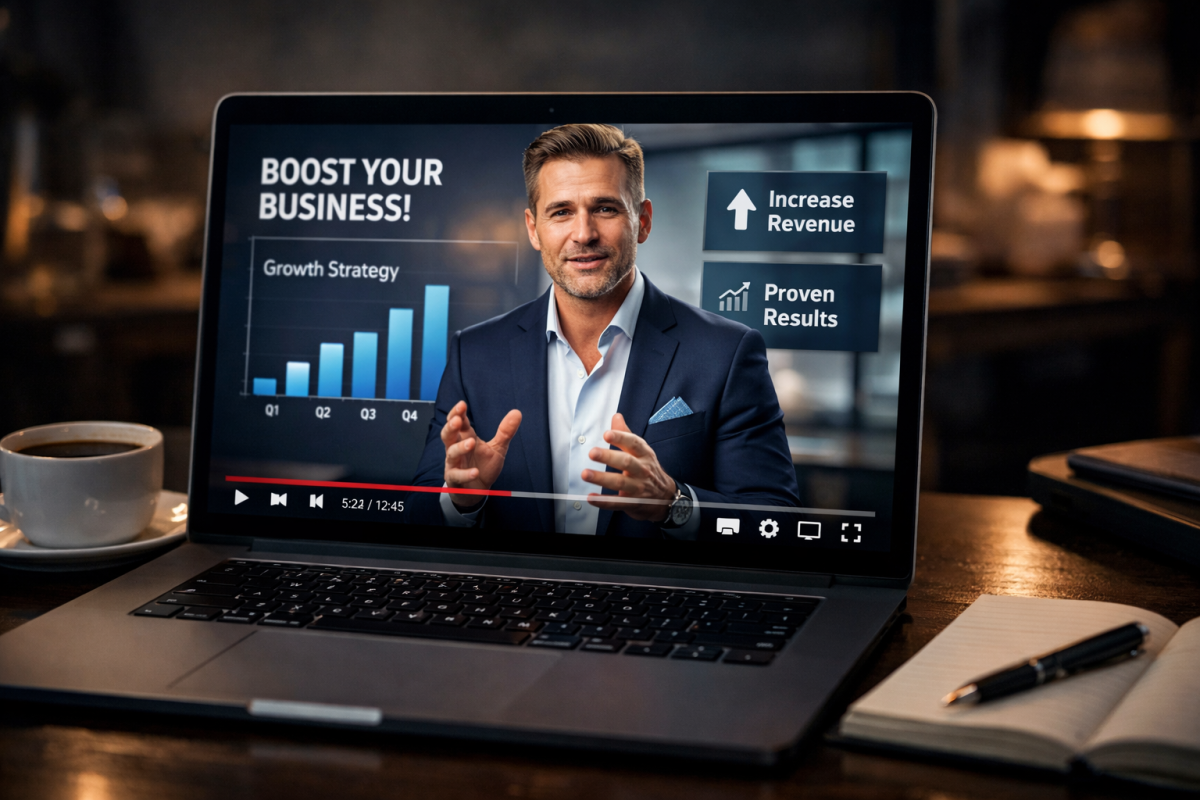
Video sales letters have a certain type of flow to them, and once you've had that look behind the curtain, you start to see the same items again and again within marketing videos, almost like the creators are working with a checklist.
First, they start off with content designed to establish their authority as the poster of the video. They'll namedrop someone famous, either as who they are or as who mentored them directly in their success. If they have anyone in a high profile role that they can claim used their system, they'll claim that as well. Their goal with this step is to make you believe that they're trustworthy and that they know what they're talking about.
Even if you don't know who the person they're namedropping is, the way they talk about him makes you assume he's a millionaire or a super successful doctor or whatever it is their niche happens to be. In the shadier black hat cases, the person they're talking about might not even exist, or might be a real person who has no affiliation with what they're selling.
Part of this step might be accomplished by the text surrounding the video, so that it's always there while you watch. At any time, if you take your eyes off the video, you see how it was endorsed by Mr. Famous Name.
After the authority establishment shot, they take a minute to talk to you about themselves and their own success. They tell you how they followed this program, they used this supplement, they did this training, or what have you. They tell you how they made their first million dollars in two months, how they lost 100 pounds, how they doubled what they can lift.
This is to establish that even if they're not the creator of the program, they have used it to great and quick success. Then comes the first hit in the sales; they tell you that they're willing to share the secret with you.
This implies that there's a hard to get secret, and implies that it's usually not something you would have access to. They're breaking some kind of unspoken rule by bringing it to you, sharing a secret "they" don't want you to know. They might tell you how the program cost them $5,000 when they paid for it, but they're taking a loss and selling it to you for only $1,000, because they want others to succeed where they did with a lower barrier to entry.
Of course, the finale of the video entices you to continue reading the landing page and to follow the instructions to claim the offer, which is probably limited in either quantity or in time, if not both. The special sale might be ending soon, they might have only 1,000 available units - with a counter that ticks down - or any number of other pressure sales tactics.
That's the general flow of a video sales letter and accompanying landing page. The formula will vary from case to case. The spammier side of things will play up the authority of the source and the limit in quantity in order to get as many sales as possible before their site gets torched by Google or flagged by the ad platforms. The best VSLs from high quality brands use their own brand reputation as the authority and have a more genuine approach, albeit still cloaked in sales. Many top-performing VSLs in 2025 and 2026 have also started incorporating money-back guarantee messaging directly into the video itself - a 2025 CXL Institute study found this alone increased conversion rates by 32%.
Making Money with VSLs
Of course, most people running video sales letters aren't doing it for their own products. They're doing it for affiliate programs. All they need to do is set up the sales page and let it run. All actual sales and fulfillment is handled through the original provider of the offer. It's affiliate marketing at its finest.
Some work on a PPC model, where the site owner is paid for each click through to the offer behind the VSL. Others are the typical pay-on-sale affiliate marketing, more lucrative but harder to get. But that's where the VSL comes into play. Their narrow audience plus the persuasive nature of videos means they convert at a significantly higher rate than traditional marketing. Cold traffic VSL funnels typically convert at 0.5-3%, while warm or retargeting traffic can push that to 2-8%. Those aren't small numbers when you're running paid traffic at scale.
The real money, though, is often in the post-purchase funnel. VSL funnels average a 34.7% post-purchase upsell acceptance rate - 74% higher than traditional e-commerce, according to a study of 1,847 digital businesses. A real-world example: Plug&Pay reported that switching a text-based upsell page to a VSL raised conversions from 6.68% to 22.91%, a 243% increase. Healthy VSL funnels typically achieve a 3:1 to 10:1 return on advertising spend when the offer and traffic are dialed in.
The VSL Drawback
There are a couple of drawbacks to using VSLs. First and foremost, as I've mentioned a few times, they're used by a lot of spammy sites. If you're not careful with the way you put yours together, you can look a lot like a spam site. Audiences in 2026 are increasingly skeptical of the classic VSL format - the autoplay video, the fake countdown timer, the "they don't want you to know this" hook. People have seen it all before. You can still absolutely use VSLs effectively, but you need to approach them with more authenticity and production quality than you could get away with five years ago.
The second drawback is that video content is not natively indexable by Google. If you host the video on YouTube and upload a transcript or use auto-captions, you can get some traction, but it's not going to carry the same SEO weight as a well-written page of content. It's a tricky balance to strike, because your pages will need both text and video. The video is persuasive and sells more, but doesn't provide as much value to search engines and thus doesn't rank as high on its own. The content purely on the page will rank higher, but because people skim and skip, they miss parts of your message and aren't forced to consume it the way you want them to. They end up converting at a lower rate.
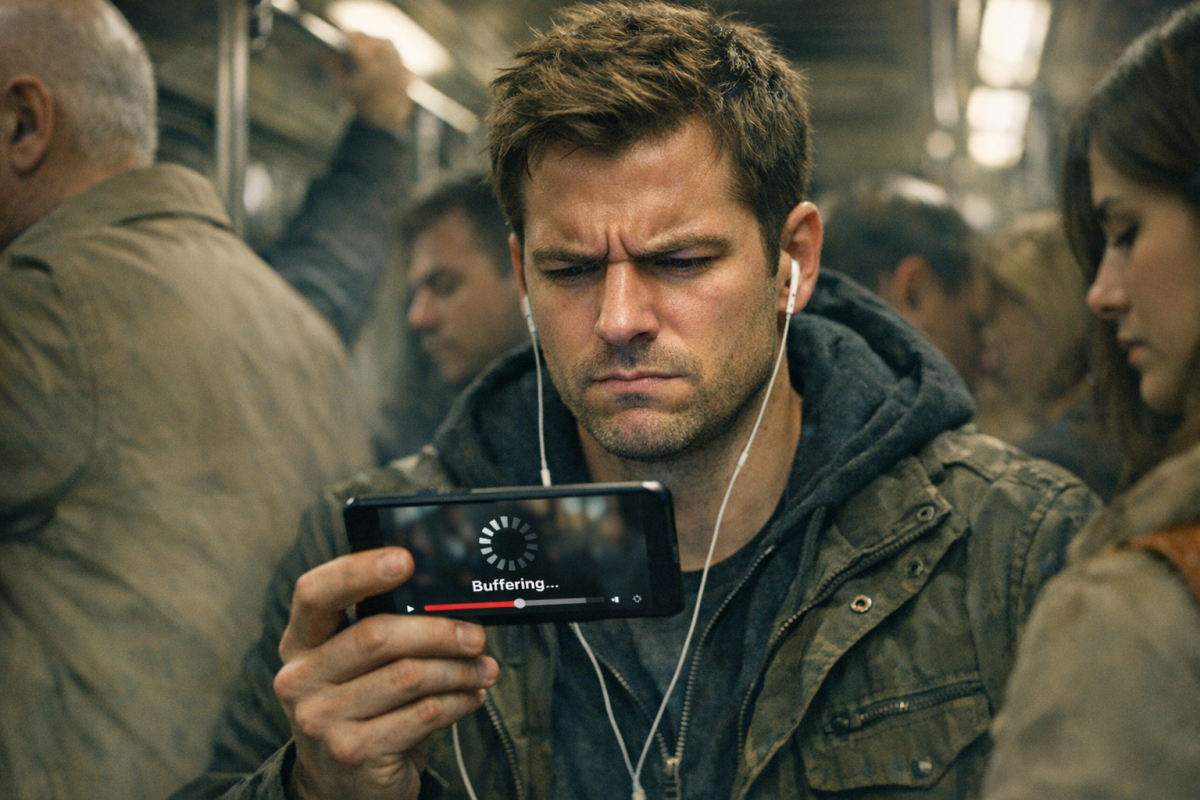
There's also the issue of time, audio, and mobility to consider. Not all users will have the time to invest in watching a lengthy video. Even if they have the time, they might be browsing on a mobile device and either don't want to use their data or simply aren't in a position to watch a video. This has become increasingly important as mobile traffic has grown - a significant portion of your audience may never actually watch your VSL at all, which is why the supporting copy on the page matters more than ever.
Producing Video Sales Letters
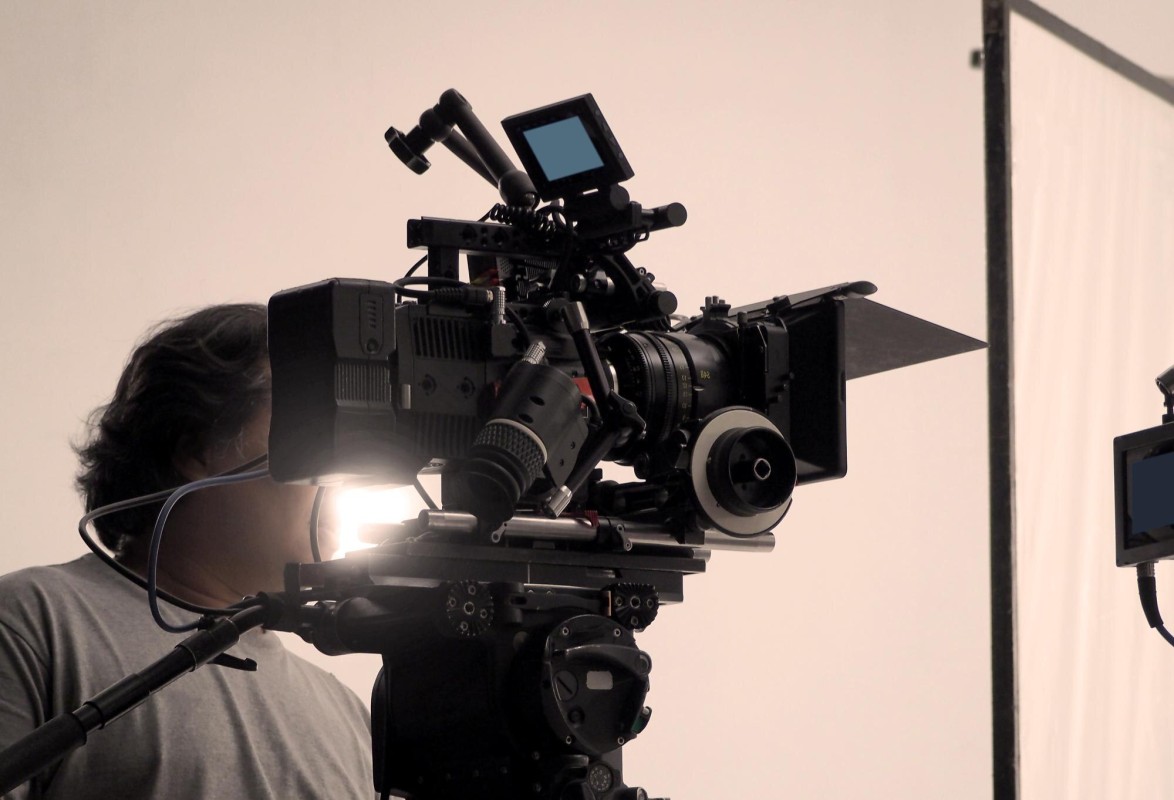
Possibly one of the biggest drawbacks of a video sales letter, for some marketers if not others, is that they're a pain to produce. You have to write a script. You have to make sure that script is compelling. You then need to decide what kind of video you want. Do you want it to be a talking-head style video with a real presenter? Do you want simple animations or motion graphics? Do you want a whiteboard-style explainer? Do you want a simple slide deck with voiceover? Each approach has its own production requirements and its own conversion characteristics.
Once you have a script and a direction, you need to shoot or create the video, and that's a skill in itself. Nine times out of ten you're going to hire someone to produce it, which is fine, but it sacrifices some creative control and it can be expensive. There are several things worth knowing before you buy, including what to watch out for on freelance platforms like Upwork where you'll find a wide range - from budget options that may look it, to professional producers charging $150 an hour or more, and a quality VSL rarely gets done in a single hour.
That said, AI-powered video and scriptwriting tools have matured significantly by 2026. Tools using AI voiceover, automated video generation, and script optimization have lowered the barrier to entry for producing a VSL considerably. You can now produce a reasonably compelling VSL faster and cheaper than was possible even a couple of years ago. The tradeoff is that so can everyone else, which raises the quality bar you need to clear to stand out.
Then you have to put it up on your site and hope it works. Will it? You still have testing and analytics to do, and that means paying close attention to what is and isn't working. You can't capture the people leaving and ask them what part of the video turned them off. You need to use heatmaps, video engagement analytics, and session recordings to piece it together.
What happens if you need a new video, a variant for split-testing, or more than one video for different traffic sources? You're paying for them all, whether in time, money, or both. VSLs don't always come cheap, so you need to make sure your offer is capable of converting before you invest too heavily.
That's one thing you need to pay attention to before you consider a VSL. Does your current offer convert? If it does, a VSL will very likely enhance your conversion rate and boost your income significantly - the data backs that up. On the other hand, if your offer is untested, you can't afford to dump hundreds of dollars into a video before you're sure you can convert. You're very likely to take a loss.
Think of a good VSL as a multiplier. If you're already getting sales, it will make your sales better - sometimes dramatically better. If you're not getting sales, you don't have anything to multiply, and you won't know whether the video or the offer is the problem.


2 responses
Thoughtful replies only - we moderate for spam, AI slop, and off-topic rants.
An you do a follow up in the email
Great idea, Joezer! A follow-up email sequence that reinforces your VSL offer is actually a really smart strategy. You can recap the key pain points, highlight the offer again, and address common objections. Many marketers see strong conversions from email follow-ups alone, especially for people who watched the video but didn't buy right away. We'll definitely consider covering this in a future post!