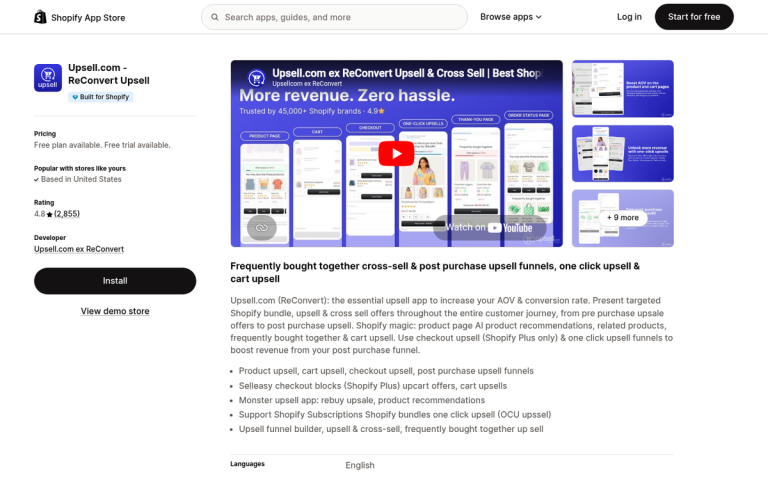
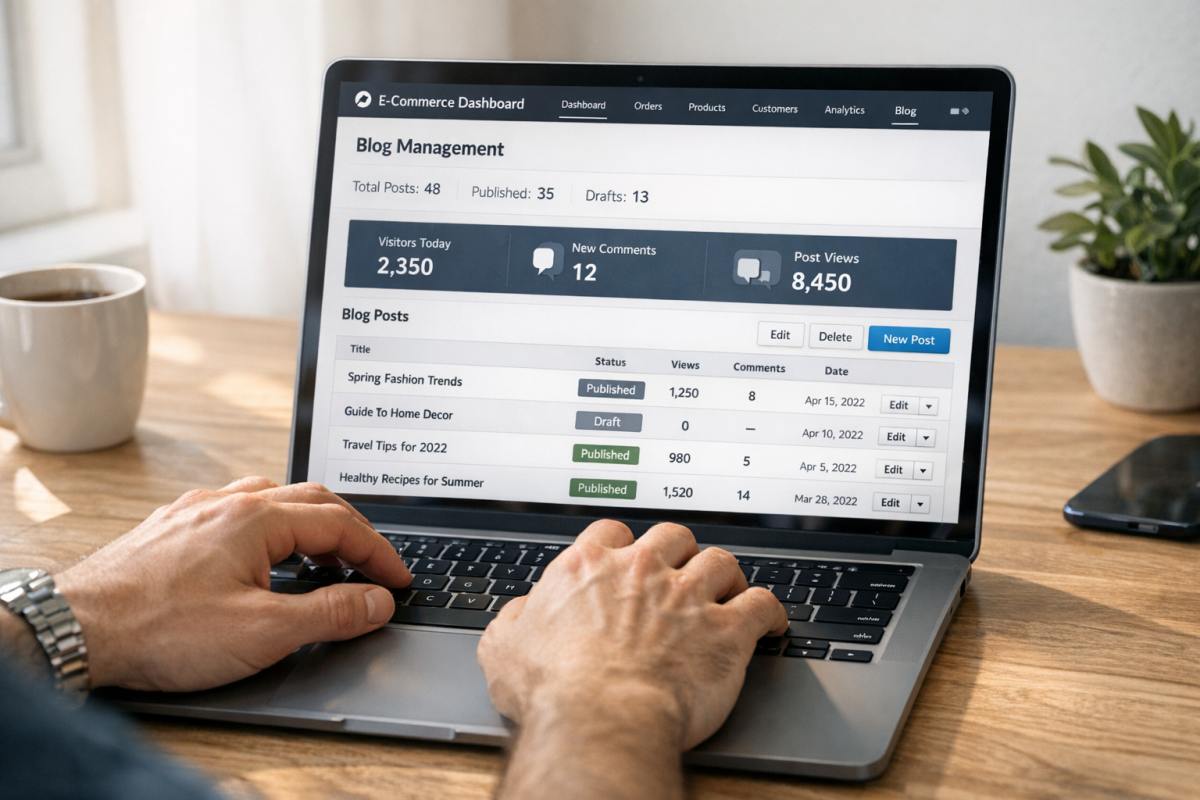
Shopify is very much like WordPress, in that it's a powerful platform with a wide range of add-ons and plugins that expand and extend functionality. This makes it a very powerful option for businesses of all sizes, at least until you reach such heights that you need a custom solution to keep up with your brand.
Shipment tracking is one of those modern conveniences that, a decade ago, was seen as a luxury. Back before the ubiquity of Amazon, when you ordered a package, tracking on shipping cost extra. You typically only got tracking on certified mail or when you paid for priority shipment.
These days, shipping with tracking is a given. It's rare that you order anything from an online store and don't receive a tracking number as soon as it's available. Amazon has their own page for it, while other stores simply email your main linked address your tracking information. Gmail is even smart enough to recognize a tracking number for USPS, UPS, or FedEx and give you a quick link to check it without even opening the email.
So as a business owner running a Shopify store, you have two options. You can run your business without the convenience of tracking shipping for your customers, or you can use a shipment tracker.
Key Takeaways
- Shopify's native Shop app offers free shipment tracking, making it the ideal starting point for new or budget-conscious merchants.
- 17Track supports over 2,400 carriers globally, making it the strongest choice for merchants shipping internationally or using overseas suppliers.
- AfterShip is a popular premium option supporting 1,000+ carriers, with plans starting at $11/month and built-in returns management.
- Australian merchants have a dedicated solution in ReadyToShip, which focuses exclusively on local carriers like Australia Post and Sendle.
- No single tracker is universally best; the right choice depends on budget, carrier needs, geographic focus, and desired features.
No Tracking

We should not discount the option of not having shipment tracking at all. Often, as you'll see when I give you the plugin rundown later, shipment tracking has a cost. Either you have to pay a monthly fee for the service, or you have associated costs, like the price of a text message for notifications. You also, obviously enough, will need to actually install and configure the plugin, and adapt your new purchase and shipping process to run through it, which can take some time and might lead to mistakes or bugs in the system. You don't want to have to shut down your business for a week while you test it out, but you don't want to let orders slip through the cracks either.
On the other hand, not having tracking means you're constantly fielding calls and emails asking about order status. You either have to monitor shipping on your end somehow, or you just shrug and say "yup it shipped, just wait for it and call us again."
Remember a few decades ago, when ordering anything from a catalog or a TV or radio ad said to "allow six to eight weeks for delivery"? There were a lot of reasons for that. Sometimes it was a way of delaying while products could be made to meet demand. Sometimes it was the time it took to wait for a check to arrive, to deposit it and make sure it doesn't bounce, and then to ship the product. Often, though, it was simply because shipping varied wildly in quality, especially in outlying areas. By saying "allow six to eight weeks," businesses essentially said "don't call us unless it's pretty obvious your package isn't going to arrive."
With shipment tracking, you offload all of the responsibility of monitoring shipments. You provide a tracking number, which is proof enough that you actually shipped the order. From there, it's the responsibility of the courier service or postal network to get the product where it needs to be. If it disappears or never arrives, you can work with the post office to see where it went off the rails. Only once it's been confirmed that the package is lost are you responsible for sending a new one.
To be honest though, this really isn't an option. It's so easy and so relatively inexpensive to add tracking to your shipping that there's no reason not to do it. Not having tracking is almost guaranteed to come up in negative reviews against your company, or even as a negative point in positive reviews, and it's such a time saver and convenience for your customers. You can't do without, so let's take a look at the various plugin options you have.
1: Shop by Shopify
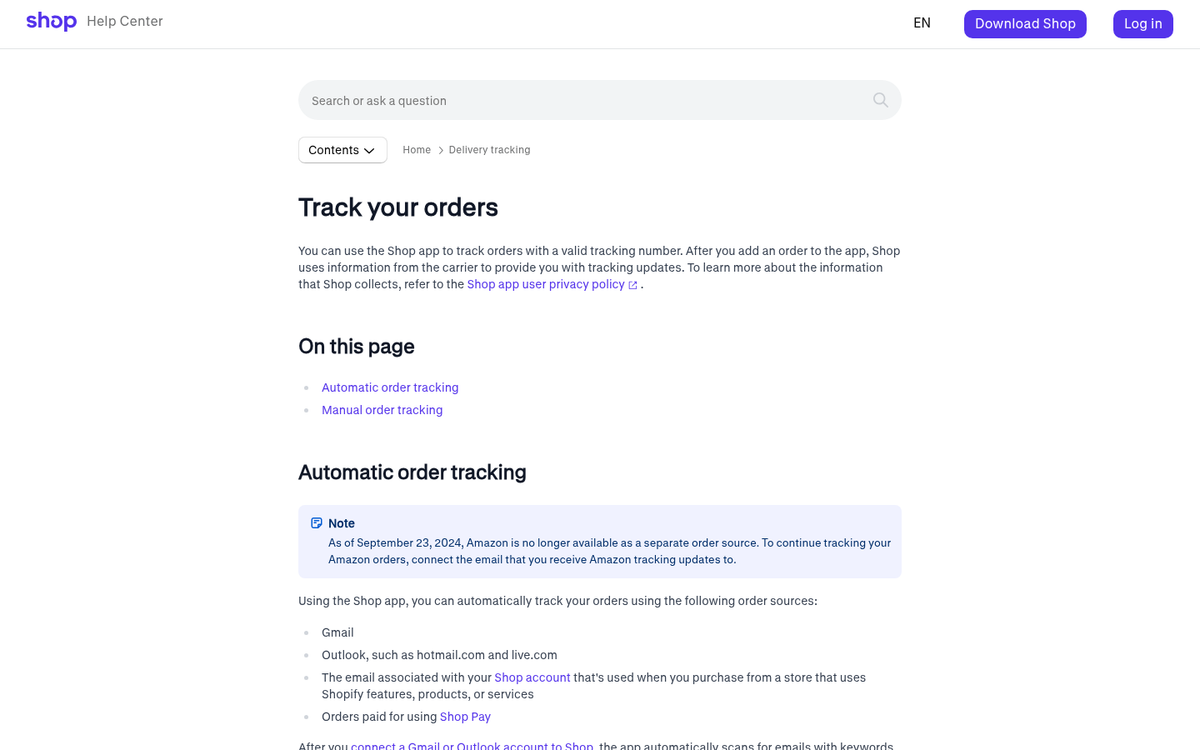
Before diving into third-party apps, it's worth mentioning that Shopify has its own native tracking solution built right into the platform. Shop is a free app available to all Shopify merchants, and it gives customers a branded order tracking experience without any additional monthly cost. Customers can follow their orders in real time, receive delivery notifications, and manage all of their purchases across different Shopify stores in one place.
Because it's built by Shopify, the integration is seamless and requires minimal setup. If you're just starting out or looking to keep costs down, this is the obvious first stop before considering any third-party solution.
2: AfterShip Tracking
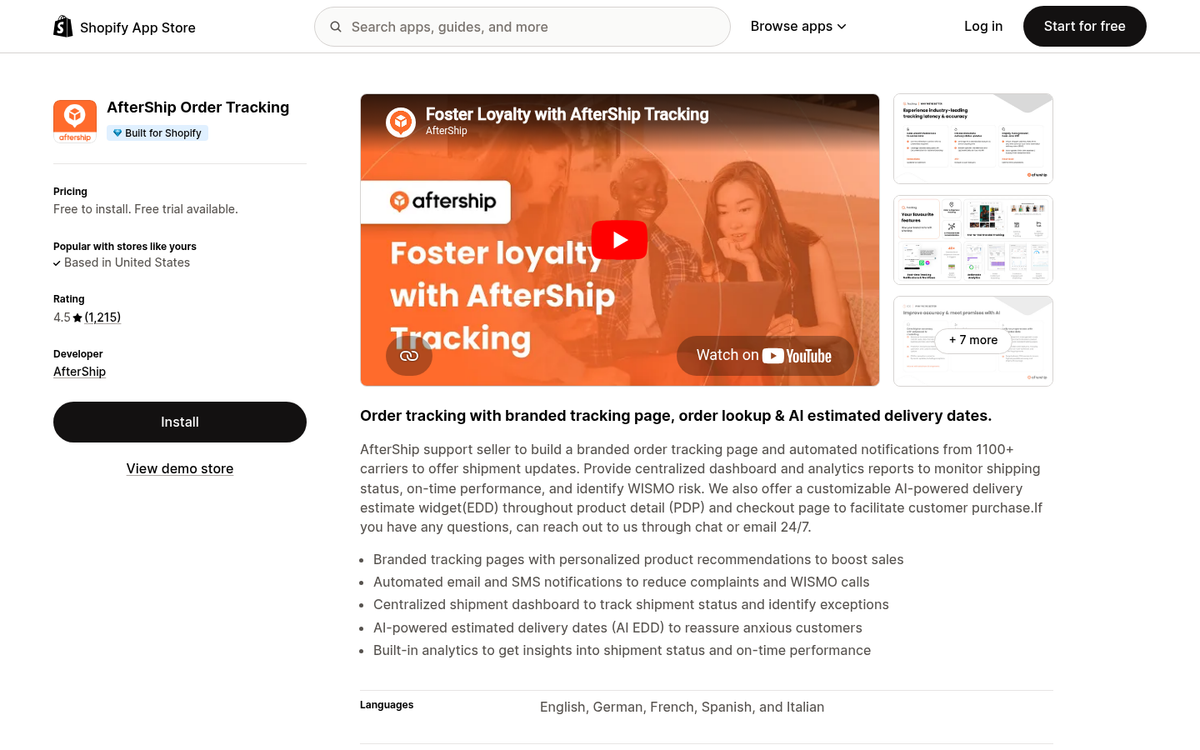
AfterShip is one of the most well-known shipment tracking apps in the Shopify ecosystem, and it's earned that reputation. It supports more than 1,000 worldwide carriers, including major players like FedEx, UPS, DHL Express, and China EMS, making it one of the more globally capable options on this list.
AfterShip offers a 7-day free trial, after which you can stay on a limited free plan or upgrade. Paid plans start at $11 per month for the Essentials tier, $35 per month for Essentials Plus, and $119 per month for the Pro plan. Higher tiers unlock more shipments, more automations, and more advanced analytics.
AfterShip also integrates with its own returns management tool, AfterShip Returns, which handles reverse logistics if you find yourself processing a lot of return shipments.
3: 17Track
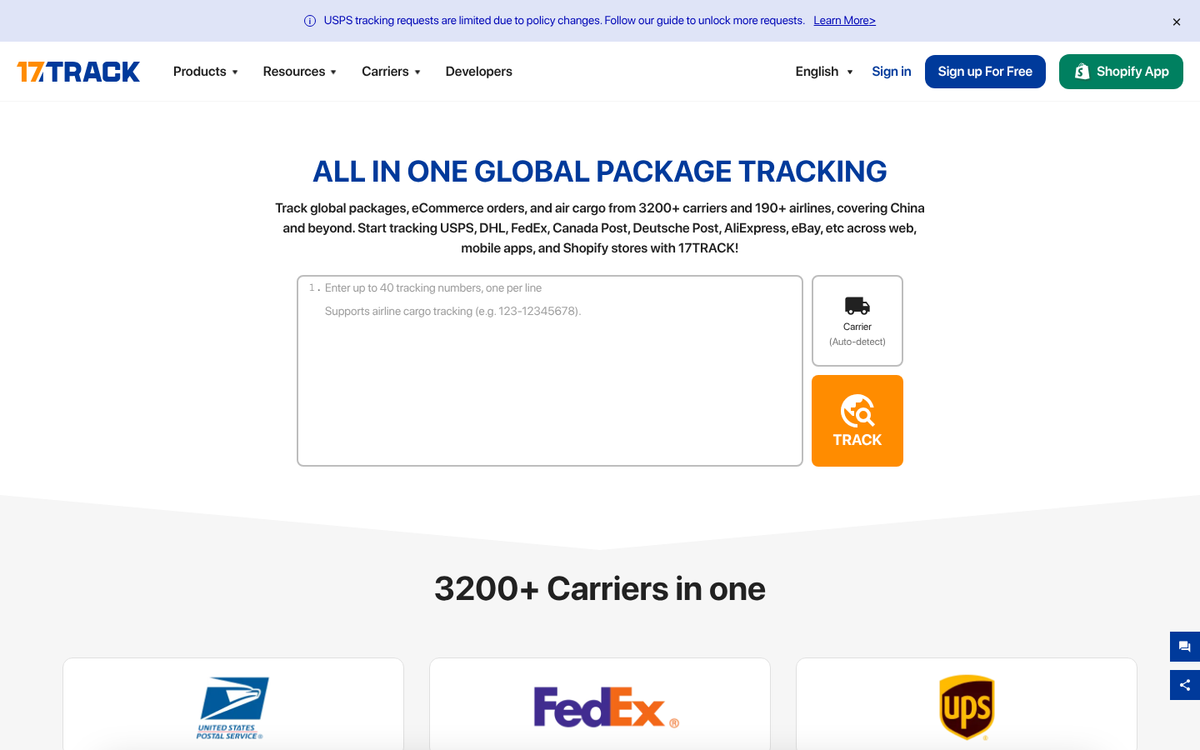
If carrier coverage is your top priority, 17Track is hard to beat. It supports more than 2,400 carriers globally, including SF Express, Singapore Post, UK Mail, India Post, and hundreds of regional carriers that many competing apps simply don't cover. This makes it a particularly strong choice for merchants who ship internationally or source inventory from overseas suppliers.
The free version allows up to 50 packages per month, which is workable for very small stores. Paid plans are reasonably priced: $9 per month for the Basic plan (100 shipments), $49 per month for Pro (1,000 shipments), and $159 per month for Premium (2,000 shipments). If you ship in large volumes, custom pricing is available.
4: Tracktor
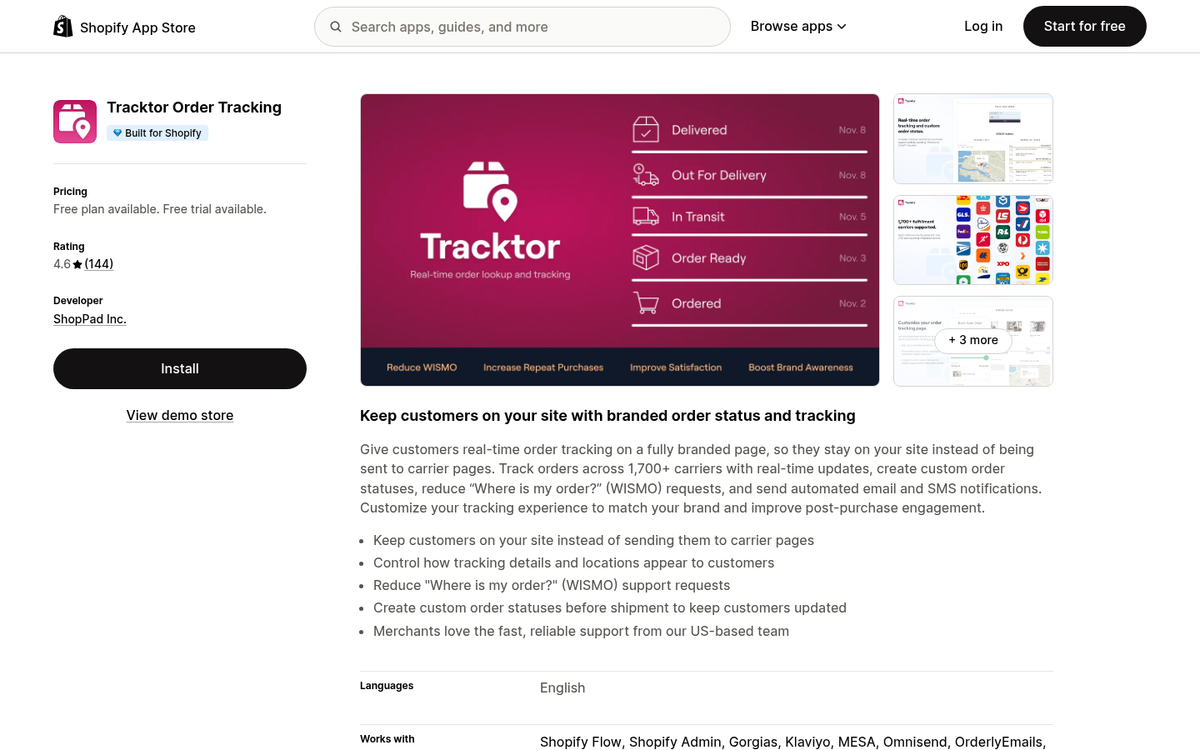
Tracktor is a clean, well-regarded shipment tracking app that focuses on giving customers a polished self-service tracking experience directly on your store. Rather than sending customers off to a courier's website, Tracktor keeps everything branded and on-site.
Pricing is straightforward, with a 14-day free trial available across all plans. After that, the Hobby plan is $9.99 per month, Professional is $36 per month, Business is $99 per month, and Enterprise is $249 per month. There are a few negative reviews online relating to configuration, so it's worth going directly to the developer's documentation rather than relying on third-party tutorials.
5: Hulk Order Status Tracker
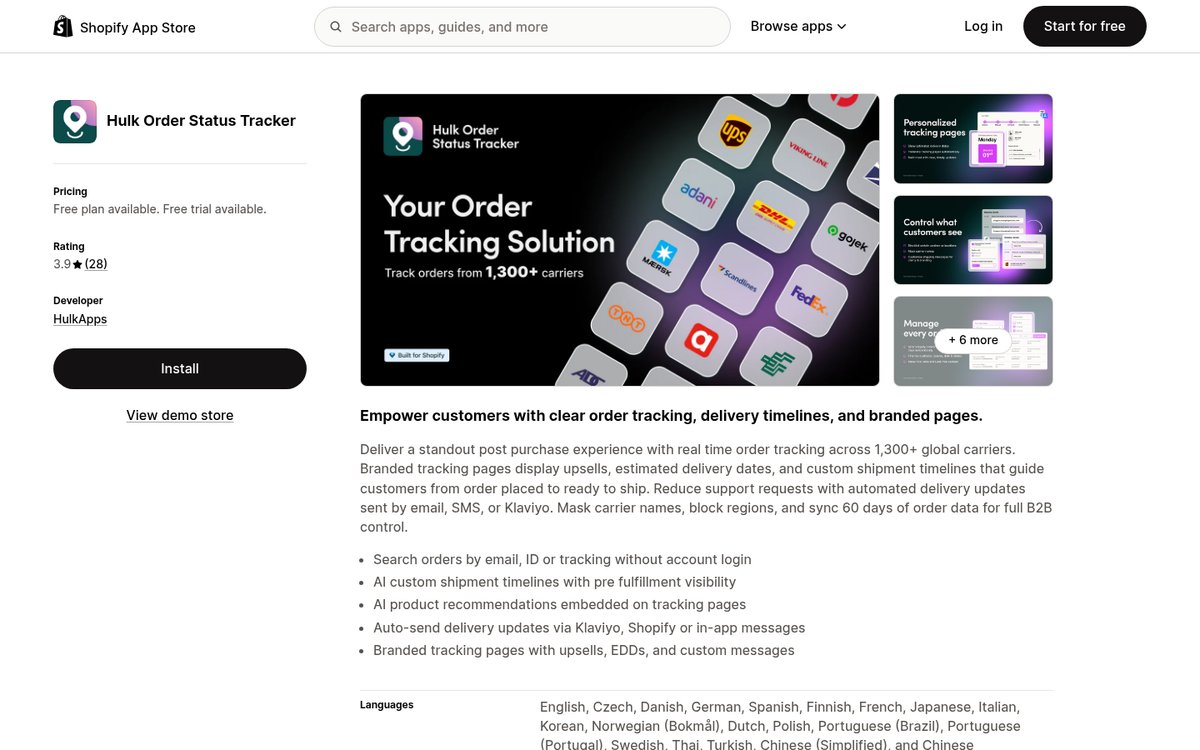
Hulk Order Status Tracker is a solid mid-range option that provides real-time tracking across more than 1,300 global carriers. It's designed with a clean customer-facing interface and supports automated shipping notifications via email and SMS. One of its stronger selling points is a customizable order status page that keeps customers on your store rather than redirecting them elsewhere.
It's a good fit for merchants who want solid carrier coverage and a professional look without needing the full feature set of a platform like AfterShip.
6: Ordertracker

Ordertracker is another capable option that monitors deliveries across more than 1,200 carriers. It's positioned as a straightforward, no-frills tracking solution that covers a wide carrier network and provides customers with a simple, reliable tracking page. If you're looking for broad coverage without a lot of extra features layered on top, it's worth a look.
7: ShippingEasy
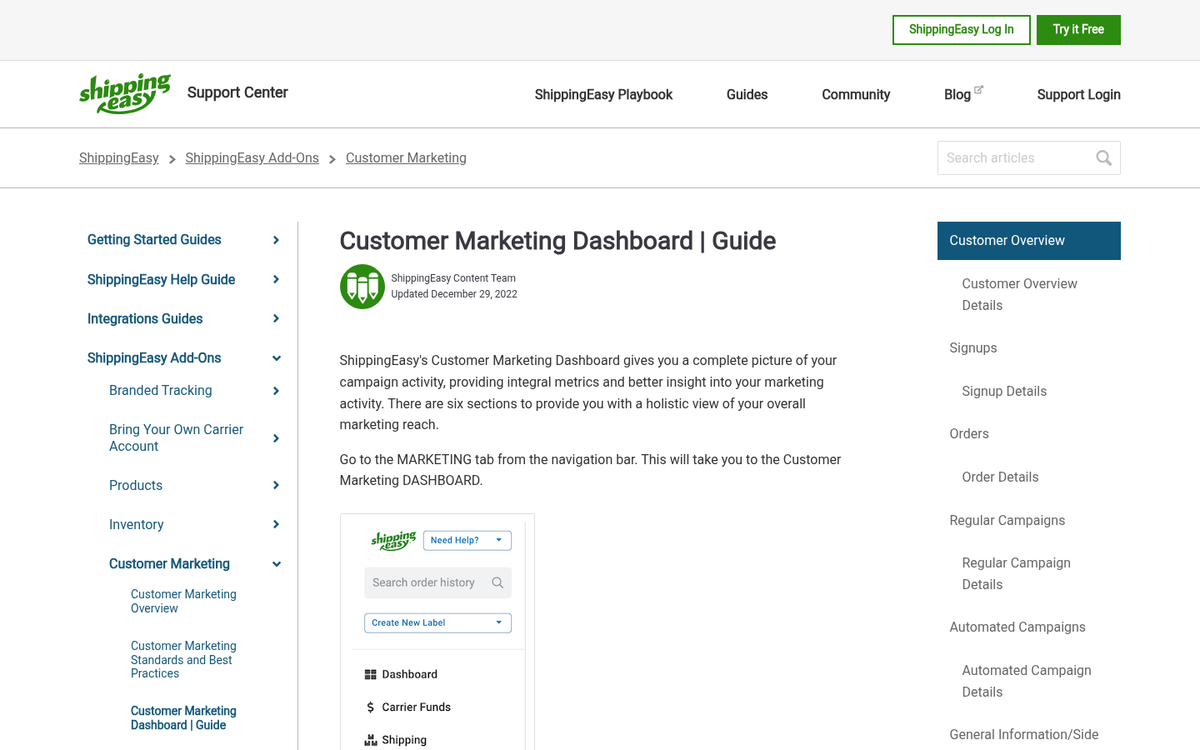
This is one of the more robust shipping management plugins, and consequently has a ton of features beyond just tracking. You can sell through your own store as well as through Amazon, eBay, Etsy, and other storefronts, and manage all of the orders through the single ShippingEasy dashboard. It's excellent for keeping all of your information in one place, rather than having different sets of order histories on different sites.
ShippingEasy supports USPS, FedEx, and UPS across all tiers and offers bulk shipping discounts that can offset the cost of the subscription if you're shipping at sufficient volume. It's best suited for merchants who want a full shipping management suite rather than a standalone tracker.
8: ReadyToShip
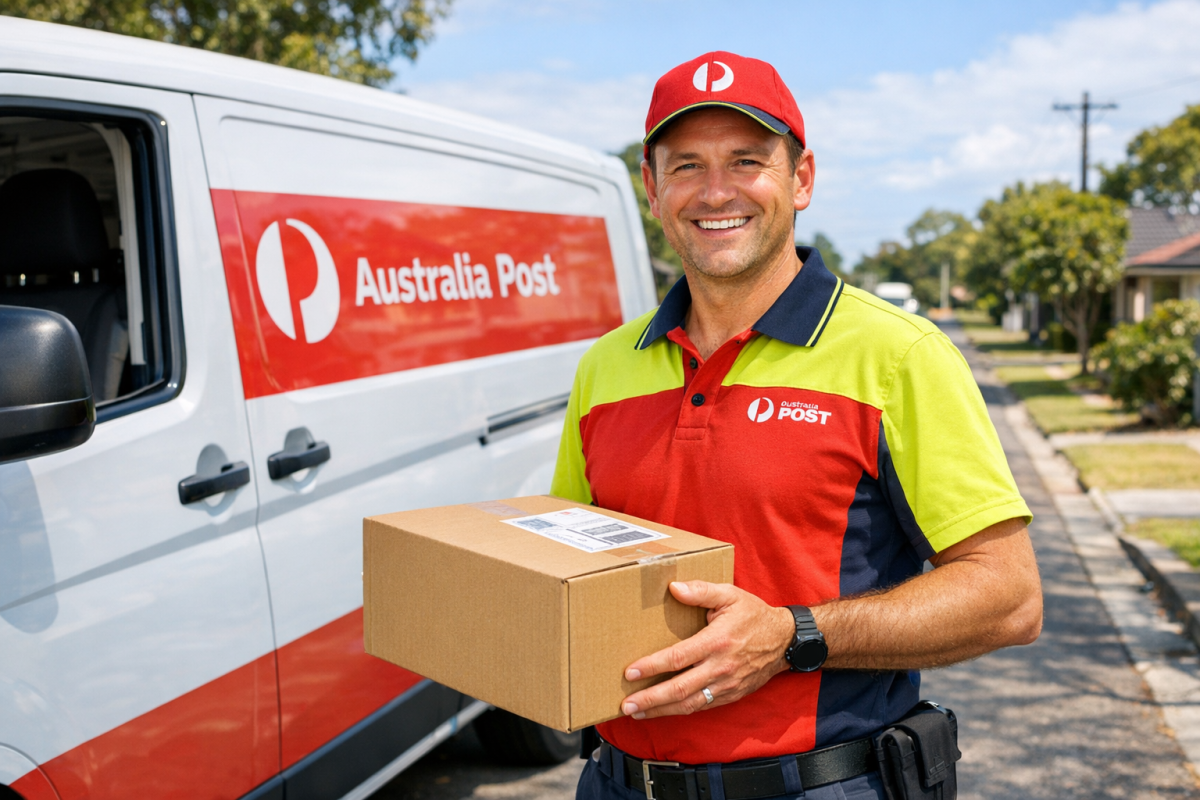
This one is worth noting because it's 100% Australian. Rather than catering to a global audience, or focusing on North America specifically, ReadyToShip focuses entirely on Australian carriers. They cover Australia Post, Sendle, Fastway, StarTrack, TIG, and more. They even offer a generous free trial period to make certain they work for your business across both slow and busy months.
If you're running an Australian store and want an app built specifically for your local carrier network rather than a global tool that treats AUS carriers as an afterthought, ReadyToShip is the obvious choice.
9: AfterShip Returns
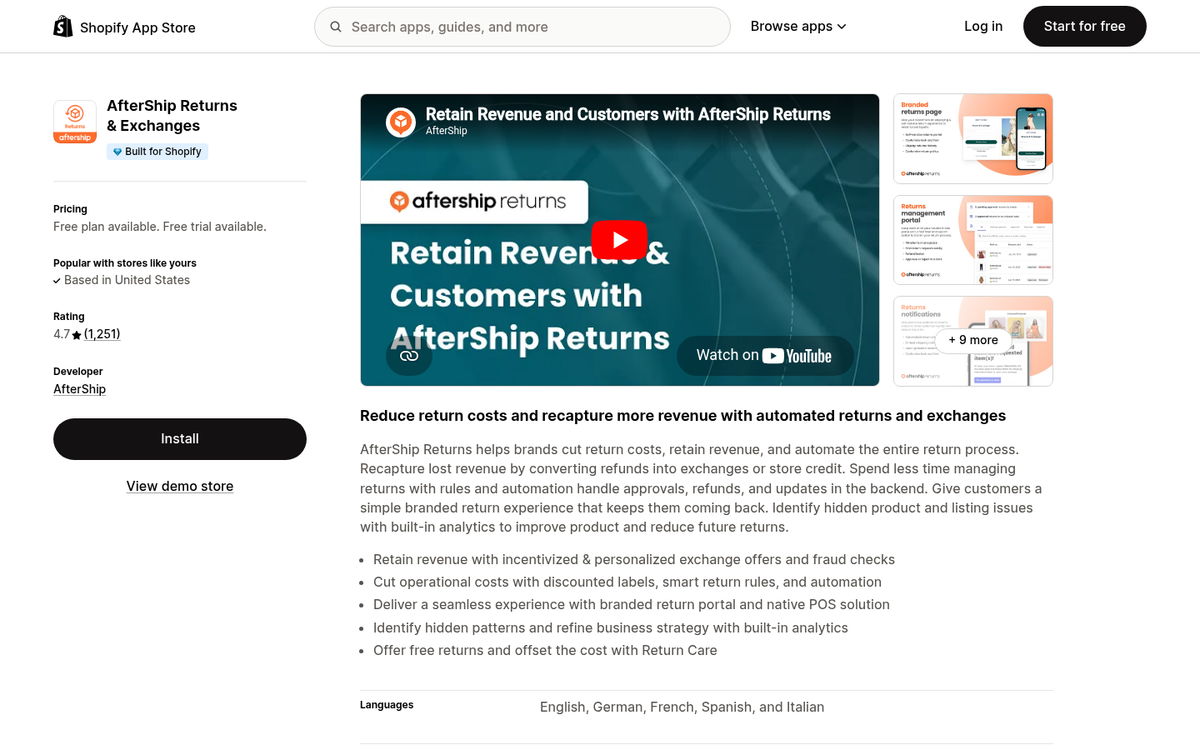
This isn't strictly a shipment tracking plugin, but it's worth including because it tracks shipping in a different direction - literally. AfterShip Returns is a return management suite that allows customers to initiate returns directly from their order pages. When the customer ships using the label your return center generates, you get real-time tracking on the return shipment and can monitor its status all the way back to your warehouse.
If you process returns frequently, pairing this with AfterShip's main tracking app gives you end-to-end visibility on every order, in both directions.
Now, I know up above that I titled this article with "the best shipment tracker," but I don't think there's ever one clear best in a situation like this. I've listed a range of apps that differ in pricing, carrier coverage, geographic focus, and feature depth. If you're just starting out, Shop by Shopify costs you nothing. If you ship internationally at scale, 17Track's carrier network of 2,400-plus may be exactly what you need. If you want a polished branded experience, Tracktor or Hulk Order Status Tracker are strong contenders. And if you need a full shipping management suite, ShippingEasy goes well beyond tracking alone.
It's up to you to make your own decision that fits your requirements; which one do you like best for your store and your unique needs?