Cost per click, or CPC, is a pretty easy metric to understand. It's just the amount of money you spend for each click you get. Simple, right?
Where the complexity comes in is when you try to look at all of your different expenses and all of your different traffic sources. Here are some questions you might end up asking yourself:
- How do I calculate the cost per click on organic traffic?
- How do I know if a visitor is returning after seeing a paid ad?
- Should I calculate the value of time I spent on organic marketing?
- What is the cost of X marketing channel?
- What is a good range for CPC?
Some of this comes down to keeping records and assigning values to things. Some of it is a matter of looking in the right places in your analytics. Ideally, you'll be able to figure out quite a bit.
Key Takeaways
- CPC is calculated by dividing total money spent by total clicks received, applicable to both paid and organic traffic.
- Ad networks like Google, Facebook, and Amazon have vastly different average CPCs: $5.26, $1.72, and $0.95 respectively.
- Higher quality scores lower your CPC and improve ad visibility; scores improve over time with consistent campaign performance.
- Organic traffic isn't truly free - factor in time, tool subscriptions, content creation, and outreach costs to calculate real CPC.
- CPC alone is incomplete; cost per conversion provides deeper insight, with Google Ads averaging $70.11 per lead in 2025.
Checking Ad Networks
The first and easiest form of CPC you can check out is the CPC provided to you by the ad networks you're using. For example, Google Ads has a listed CPC and an actual CPC. The formula is your competitor AdRank divided by your quality score, plus .01. Don't worry about that, though; you don't need to know or care about those numbers directly, not for our calculations. All you need to know is that Google Ads will record the total amount of money spent and the CPC of the ads you run.
Other ad networks will show their own CPCs as well. If you're using something like Facebook Ads, which offer bidding structures like cost per action or optimized CPM, you'll have some calculating to do.
Specifically, you'll want to take the total amount you paid to run an ad and divide it by the total number of clicks to that ad you received. This gives you the actual cost per click for those ads.
Be aware, though, that CPC is not necessarily a complete metric on its own. You could have a low CPC on a Facebook ad that resulted in no conversions whatsoever. You could have a higher CPC on an ad that, since it was optimized per action, gave you quite a number of conversions but a much lower number of clicks altogether. What it comes down to is the value you're getting out of knowing the numbers.
Knowing CPC is, for the most part, a comparative number. If you run four ads and they all perform about the same conversion-wise, you'll want to invest more in the one with the lower CPC. That will get you more views and a higher number of conversions, since the conversion rate is better.
In any case, any ad network you use will have metrics and analytics built into the platform so you can check your CPC. No ad network these days can operate without an analytics dashboard, so you can be sure the information is available, even if it's slightly inaccurate due to timing or sampling.
With Google Ads, you may be curious how your CPC stacks up against the broader market. As of 2025, the average CPC across all industries on Google Ads is $5.26, which represents a 12.88% year-over-year increase - a reminder that paid search is getting more competitive and more expensive every year.
There are two key factors that go into this comparison. The first is whether or not you're running your ads in search. Ads in search are generally more expensive than ads in the Google Display Network. The second factor is industry. Some industries carry dramatically higher CPCs due to competition and deal values. Here's how some industries break down in 2025:
- Attorneys & Legal Services: $8.58 per click
- Dentists & Dental Services: $7.85 per click
- Home Improvement: $7.85 per click
- Education & Instruction: $6.23 per click
- Travel: $2.12 per click
- Restaurants & Food: $2.05 per click
- Arts & Entertainment: $1.60 per click
It's also worth knowing that Facebook Ads average $1.72 CPC across all industries, with an average CTR of around 0.9%. And if you're selling on Amazon, Amazon Ads average just $0.95 per click, making it one of the more cost-efficient platforms for e-commerce advertisers specifically. Each platform has its own strengths, and the right mix depends heavily on where your audience actually is.
The Matter of Quality Scores

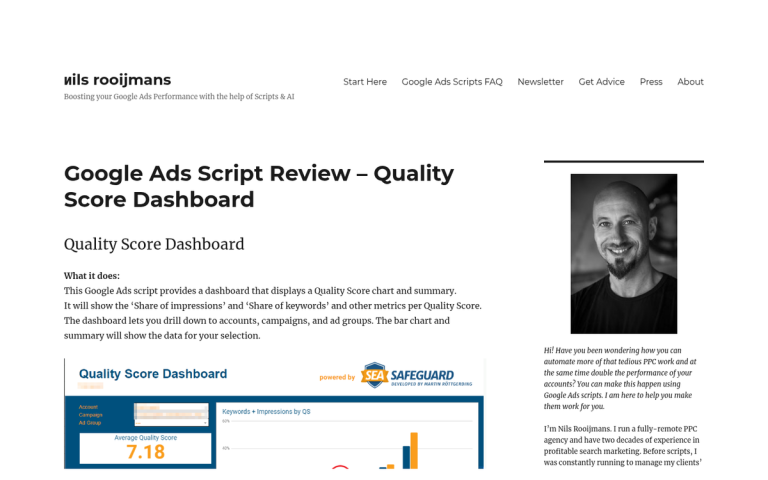
In most ad networks, there is a measurement of quality, often called your quality score for the sake of simplicity. On Google, it's your quality score. On Facebook, it's now referred to as ad relevance diagnostics rather than a single relevance score, but it's measuring roughly the same things.
What does your quality score measure? Typically, it's a compilation and analysis of various factors that measure how useful your landing page and ad are to the people who click. An ad for red shoes that leads to a product page for red shoes is high in relevance. An ad for red shoes that leads to blue shoes is less relevant. An ad for red shoes that leads to enterprise budgeting software is going to score very poorly, unless of course the software is called Red Shoes.
Quality score also tends to measure how well you're using the ads program. Google, for example, cares about how well you've built out ad groups and how well you're testing different ad variations.
Facebook breaks quality into three diagnostic metrics: quality ranking, engagement rate ranking, and conversion rate ranking. Ads that are reported frequently tank in these scores. Ads that are clicked and acted upon more frequently earn better rankings. The better your ad performs, the better off you are.
Your quality score or relevance diagnostics are very important. They typically act as a modifier to your base CPC. A higher score makes your CPC lower, shows your ads to better traffic, and gives you more opportunities. A lower score raises your costs, because Google needs to make money somehow, and they certainly aren't making it on ads that don't get clicked. The same goes for any platform; it's not just a Google thing.
To a certain extent, time is a factor as well. the longer you've been running campaigns with decent performance, the more your quality score will build. You don't start at the top and lose it as you underperform; you start at the bottom and have to prove you're worth having a higher score.
Calculating Organic CPC

Typically, we think of organic marketing as "free" marketing. You're not paying for your clicks, you're not paying for promotion, you're just putting content out there and getting traffic in return. I say that's a bit disingenuous, though; you're paying, after all.
The calculation is still the same. You take the total costs and divide by the total number of clicks you get in that same amount of time. The difference is that the numbers are harder to find.
Let's start with the number of clicks you get. How do you figure this out? The first thing you need to do is pull your total number of clicks from your analytics. That's your total for both paid and organic, though, so it's not suitable for our uses. What you need to do is identify the traffic streams that are paid - ideally they were flagged with UTM parameters or something similar, so you can separate them out - and remove them from the calculation. When you remove the paid streams, you're left with just the organic traffic.
That's on the traffic end; what about the cost end? Here's where things get complicated.
The first thing you need to do is pick a time frame. You're only counting traffic in this time frame, and you're only counting costs in this time frame. If you try to go retroactive with either one, you might as well total up every cent you've ever spent and every hit you've ever gotten. You'll have one fancy statistic when you're done, but it'll be completely worthless to you.
Next, you need to decide: are you going to count time as a factor? After all, time is money, and the reason organic traffic feels "free" is because you're putting in time rather than putting in dollars.
If you want to value your time in the equation, determine how much you want to count. How much do you get paid per hour? How much do you pay employees or contractors per hour? How many hours did you and your team spend on traffic-building tasks?
This is where it can get a little complicated. Something like product fulfillment or customer support isn't necessarily a traffic-building activity. There are a lot of tasks related to running a business that don't directly build traffic. You want to limit your calculations to the actual traffic-building activities, like posting on branded social media, writing blog posts, recording video content, and promoting your site.
You will also need to calculate the costs of associated tools and other expenses used specifically for organic marketing. I wouldn't count the cost of a website theme or hosting, for example - those cover your whole site on an ongoing basis. However, a paid SEO tool subscription, a content planning platform, a social media scheduling tool, or an AI writing assistant might count. Pro-rate it for the time frame you're using.
You will want to include the costs of content marketing itself as well. Did you pay for graphic design for your blog posts? Did you pay to have those blog posts ghostwritten or edited? Did you pay for any third-party content distribution or outreach? These are expenses that turn organic traffic into not-quite-free organic traffic.
Finally, once you have both your calculated traffic and your calculated costs, you can divide the costs by the traffic and see how much your "free" organic traffic is actually costing you.
Beyond CPC

There are related metrics you might want to look into beyond just the cost per click for your traffic. For example, if you have two ads with identical CPC, which one is better? Well, the one with the higher number of conversions might be, but if both ads had 10 conversions, one might still be more valuable if it drove higher average order values.
Cost per conversion - sometimes called cost per lead or cost per action - is one metric you can use to monitor yourself more closely. Rather than just calculating the amount of traffic you get and comparing it to the amount of money spent, you'll want to calculate the amount of conversions you get and use that as your benchmark. For reference, the average cost per lead for Google Ads paid search in 2025 is $70.11 across all industries. That number gives you a useful baseline when evaluating whether your campaigns are performing competitively.
It's all tricky, though, because there's a lot of intangible value floating around. It isn't as though your old content ceases being valuable a month or two after you created it; quite the opposite, in fact. If your content is established and authoritative, it builds trust over time. People know your site has been around, producing value, for quite some time. This contributes to Google's trust in your domain and boosts your organic rankings. That's why older, well-maintained sites tend to rank more easily than brand-new ones.
There's also brand reputation. If you're new or small, sometimes a great source of value is simply getting your brand name in front of the right people. You can loosely monitor this through social media mentions, branded search volume in Google Search Console, and alerts for your brand name - but that's only representative of the people who encounter your brand and then take a visible action.
These other sources of value are much harder to quantify, both in terms of what they bring to the table and what they cost to achieve. If you can find a way to monitor your reputation and brand awareness over time, feel free to factor those into your overall investment picture as well.
At the end of the day, there's more to your marketing than just the raw cost of your traffic. You can take a bunch of different perspectives, look at your data from multiple angles, and find value where you weren't sure you had any in the first place.