Key Takeaways
- The article covers Facebook/Meta ad spending strategies, not user signup optimization - the title and content do not match.
- Small daily budgets remain viable; Meta's low CPM rates and Advantage+ targeting help even minimal campaigns generate meaningful reach and data.
- Creative quality is the single biggest performance lever in 2026; strong visuals help the algorithm find your audience effectively.
- Budget decisions should factor in campaign goals, audience quality, niche competition, and timeline before committing to any spend level.
- Average costs: $0.50-$2.00 CPC, $10-$25 per lead, and $15-$60+ per purchase, varying significantly by industry and creative performance.
What Should You Spend on Facebook (Meta) Ads?
Meta ads (still widely called Facebook ads) are genuinely a case of "you get what you pay for" - with one important caveat: you have a lot of control over what you're paying for. In 2026, there's still no good reason for a business to avoid the platform entirely, especially given how granular the targeting has become and how relatively affordable entry-level campaigns remain.
The problems arise when businesses don't know how to optimize their ads, don't bother learning, and end up burning through hundreds of dollars a week on campaigns that go nowhere. That's where the bad reviews and anti-Meta advice come from. If you understand the platform - or work with someone who does - you can run highly effective campaigns while keeping costs under control.
The Basic Minimum
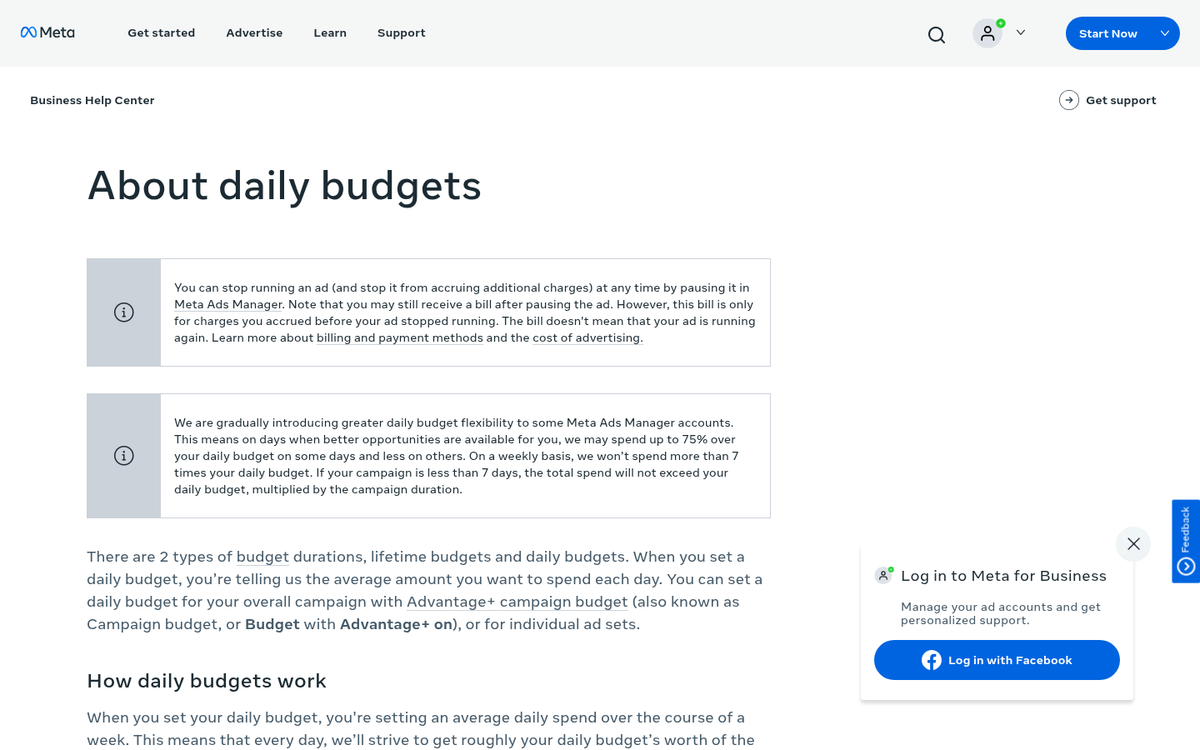
The old argument for spending $1 a day on Facebook ads still holds up in principle, even if the specific numbers have shifted. The core idea: even a tiny daily budget, applied consistently with solid targeting, can generate meaningful reach and data over time. Here's why it still makes sense:
- Meta's advertising platform still offers one of the lowest cost-per-thousand-impressions (CPM) rates of any paid channel, especially for highly targeted audiences. You're not going to get that on LinkedIn or traditional media.
- The targeting capabilities have only gotten more sophisticated. In 2026, Meta's Advantage+ audience tools use machine learning to find your best-fit audience automatically, which means even small budgets can punch above their weight if the creative is strong.
- $30 a month is still a negligible line item for most businesses. If a single conversion covers that cost - and for most businesses it should - you're at least breaking even on awareness while collecting data you can use to improve future campaigns.
- Meta's conversion tracking and Pixel data (now integrated more deeply with the Conversions API) give you lasting behavioral data on visitors who don't convert, which feeds back into your targeting and helps reduce waste over time.
- Even with iOS privacy changes and increased signal loss, Meta has rebuilt much of its measurement infrastructure. Running campaigns - even small ones - helps season your pixel and feed the algorithm useful data.
Expanding Budgets
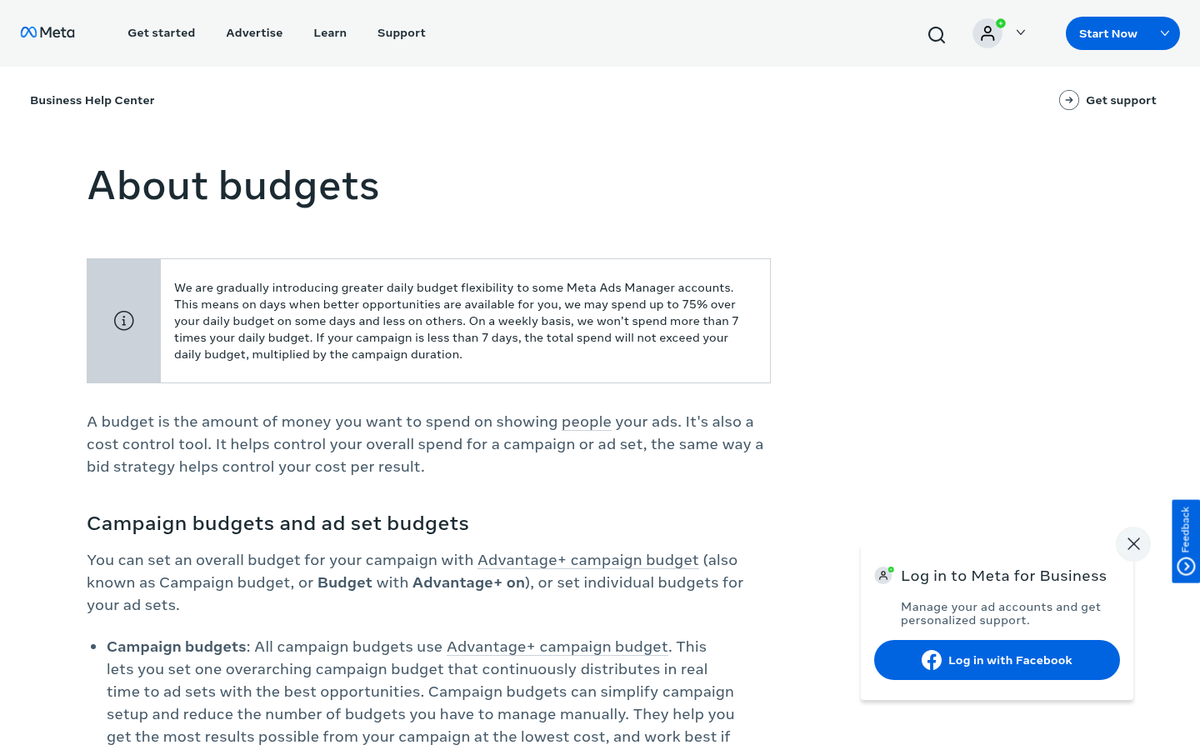
A $1-a-day floor is a reasonable starting point for very small operations. But once your page has meaningful reach, your product catalog has grown, or you're competing in a crowded niche, that minimum won't move the needle on its own.
So how much should you actually spend?
There's still no universal right answer - and anyone who gives you one without knowing your business is guessing. What you need to understand before setting a budget:
- Your goals. Campaign objectives drive cost structures significantly. Awareness campaigns are cheap. Lead generation campaigns cost more. Purchase conversion campaigns can be expensive but are also the most directly tied to revenue. Meta's campaign structure - Awareness, Traffic, Engagement, Leads, App Promotion, and Sales - each carry different average CPMs and CPAs.
- Your audience size and quality. A page with 100,000 followers built through engagement bait or click farms is functionally worse than one with 10,000 real, active followers. Lookalike audiences built from low-quality seed data perform poorly. Know what you're working with.
- Your niche and competition level. Competitive verticals like insurance, finance, legal, and e-commerce drive CPMs up significantly. If you're in a niche with large advertisers bidding against you, your costs will reflect that. Less competitive industries - local services, B2B tools, specialty products - often still find real efficiency on the platform.
- Your creative quality. In 2026, creative is the single biggest lever in Meta ad performance. The algorithm has become good enough that it can find your audience - but only if your creative gives it a strong enough signal. A compelling video or scroll-stopping static image will dramatically outperform a bland boosted post at any budget level.
- Your timeline. Running a campaign over three months gives the algorithm time to learn and optimize. Compressing that into two weeks costs more and gives you worse data. Budget accordingly.
The Numbers

Specific costs have shifted since this was first written, so here are more current benchmarks. Keep in mind these are averages and your results will vary based on all the factors above:
- Cost per follower/page like: Page like campaigns have become less of a priority for most advertisers, as organic reach remains low. When run, expect to pay anywhere from $0.50 to $3+ per follower depending on your niche and targeting.
- Cost per lead: Meta lead generation ads (including instant forms) average around $10 to $25 per lead across most industries in 2025-2026, though B2B leads can run significantly higher and local service leads can come in lower with well-optimized campaigns.
- Cost per click (CPC): Average CPC across industries runs roughly $0.50 to $2.00, with highly competitive niches pushing higher. Traffic campaigns to well-matched landing pages still represent solid value.
- Cost per purchase/conversion: Highly variable. For e-commerce, average cost per purchase typically ranges from $15 to $60+ depending on product price, margins, and creative performance. Your target CPA should always be calculated against your product margins and customer lifetime value - not just the sticker price of the product.
The bottom line is the same as it's always been: know your goals, understand your starting position, set a realistic budget, and commit to optimizing rather than just spending. Meta's platform rewards advertisers who test, learn, and iterate. Those who set it and forget it are the ones leaving bad reviews about wasted money - and they're not entirely wrong in their experience, just wrong about the cause.