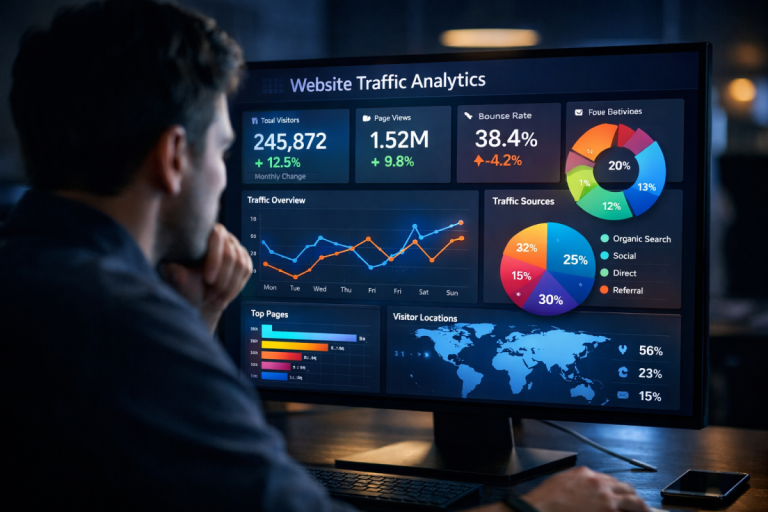
If you're monitoring your traffic from day to day or week to week, you'll be readily aware of the fluctuations in volume over time. Ideally, you'll have a bumpy but upward climb, depending on how close you look. Weekends may be peaks or troughs depending on your business, but the ideal is to see growth from Monday to Monday, month to month, year to year.
It can be a heart-stopping shock to check your analytics, then, and find a sudden, dramatic decrease in your traffic. What do you do? How do you handle it?
Key Takeaways
- Always check the scale first - short timeframes or seasonal holidays can make normal fluctuations look like serious traffic drops.
- Traffic drops don't always mean ranking drops; AI Overviews can slash CTR even while pages hold top positions.
- Common causes include technical issues, Google core updates, specific penalties, negative SEO, and reduced content quality or frequency.
- Core update recoveries have no quick fix - audit content quality thoroughly and compare against pages that outranked you.
- If AI Overviews are stealing clicks, diversify traffic sources and target transactional or complex queries users still click through for.
Step 1: Determine the Scale of the Loss
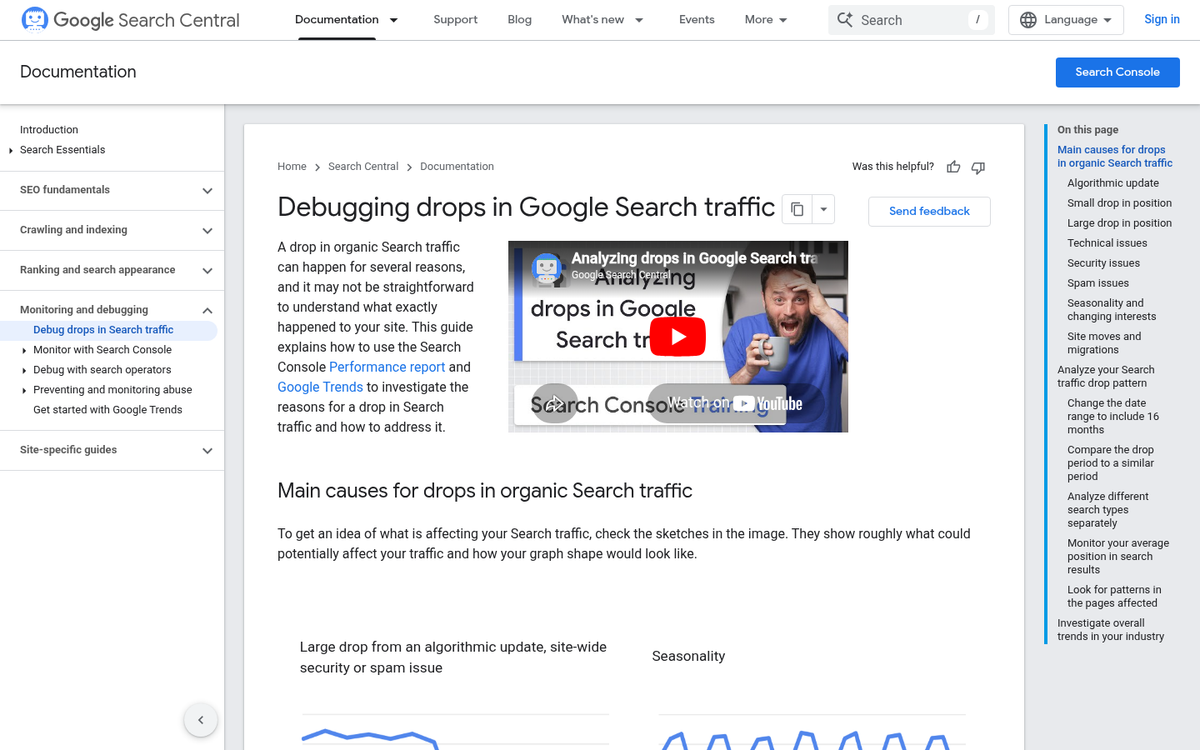
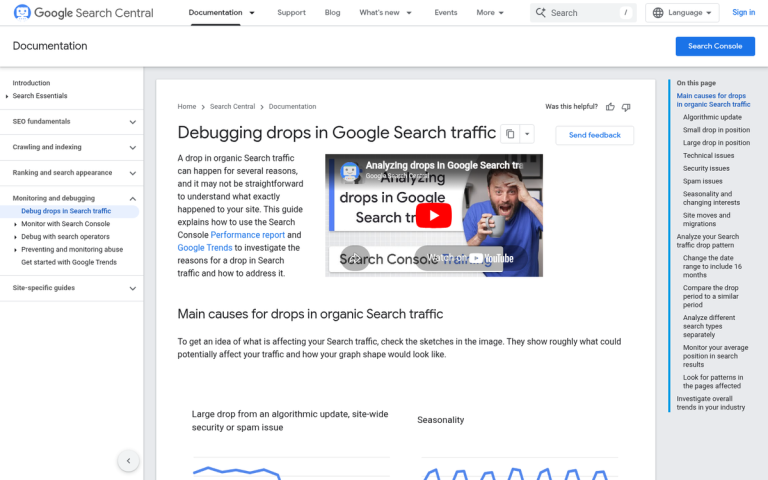
Sometimes, what looks like a very dramatic drop in traffic might just be an off day, zoomed in too close. If you're accidentally looking at your traffic hour to hour, for example, one bad hour can look catastrophic despite being completely meaningless in the bigger picture.
Sometimes the drop has a root cause in seasonal fluctuations. If there's a holiday you forgot about, even a minor one, people might be out celebrating rather than visiting your site. That's usually nothing to worry about.
If the drop is sudden, dramatic, and visible at a wide view, you have a deeper issue. Losing 30% or more of your traffic overnight is cause for real concern, and you need to diagnose what caused it.
It's also worth noting that traffic drops don't always mean ranking drops. Publishers in 2025 and 2026 have reported CTR declining sharply even while holding top rankings - in some cases, a page ranking #1 saw its CTR fall from 5.1% to 0.6%. AI Overviews and other zero-click SERP features have changed the game significantly, so always check both your rankings and your click-through rates before drawing conclusions.
Step 2: Determine the Cause

There are a wide variety of possible causes for traffic loss, and in 2026, the list is longer than ever.
- Technical reasons. This might include your site being down, a fault in your robots.txt blocking indexing, a broken analytics tag reading only a fraction of your real traffic, or your site being flagged as harmful due to a hack. Always rule these out first before assuming an algorithm penalty.
- A Google core update. Google makes thousands of changes to its search systems every year - over 4,700 in 2022 alone, averaging 13 per day. Major core updates can be brutal. The March 2026 Core Update, for example, knocked approximately 24% of pages out of the top 10 entirely, with SEMrush Sensor recording a peak volatility score of 9.5 out of 10. The December 2025 Core Update before it rolled out over 18 days and reshuffled rankings across countless niches. Check SEMrush Sensor, Google's Search Status Dashboard, or SEO news sites to see if a core update coincides with your drop.
- A specific Google penalty. Beyond broad core updates, targeted penalties still exist. The Penguin system targets manipulative link profiles. The Panda system targets thin or low-quality content. The Pirate Update targets copyright infringement and can cause an average traffic drop of 89%. Each has its own diagnostic path.
- Negative SEO. Negative SEO occurs when a competitor directs hundreds or thousands of low-quality spam links at your site, triggering a Google penalty. Newer or lower-authority sites are most vulnerable. Monitor your backlink profile regularly with a tool like Ahrefs or Google Search Console so you can catch this early.
- AI Overviews and zero-click results. If your rankings haven't moved but your traffic has dropped, Google's AI Overviews may be answering your target queries directly in the SERP, eliminating the click entirely. This is an increasingly common cause of traffic loss in 2025 and 2026 that has nothing to do with a penalty.
- A change in your content habits. Did you recently drop your publishing frequency, change your content format, or let content quality slip? A sudden shift in how you produce and publish content can signal declining trust or authority to Google, and traffic often follows.
Step 3: Develop and Implement a Fix
Depending on the issue you've identified, you may have a quick fix, a long site revamp ahead of you, or in some cases, not much you can do at all. Here are some general guidelines.
Host downtime. Make sure your host is actually down. If it is, contact them about it. They should have an explanation and an estimate of when your site will be back up. Until then, there's nothing you can do - but take it as a sign to evaluate whether your host offers sufficient redundancy and guaranteed uptime going forward.
External relay or ISP issues. If your host is online but a large segment of your users can't reach your site, it could be an internet relay issue or a problem with a specific ISP. Unfortunately, there's very little you can do here except wait it out.
Hacking. If your site has been hacked, take it offline as quickly as possible. Restore a clean backup, remove any affected files, replace them with clean versions, and check whether any user data was compromised. Follow Google's official guidance for hacked sites via Google Search Console and request a review once the site is clean.
Robots.txt error. Check your robots.txt file and any robots meta tags in your page headers. Look for entries like "Disallow: /" that may be accidentally blocking your pages or entire site from being crawled. Remove the offending entry and allow Google to re-index your content.
Core update impact. If a broad core update hit your site, there's no quick fix. Google is explicit that core updates reward sites that were previously underrewarded, not that they penalize sites that violated a rule. The path forward is a genuine audit of your content's quality, depth, accuracy, and usefulness compared to whoever outranked you. This takes time. Between major changes, wait one to two weeks to properly isolate what's working before making your next move.
Panda-style content issues. Thin content, duplicate content, and low-quality pages can all suppress your site's performance. Audit your content, consolidate or remove weak pages, and invest in genuinely helpful, in-depth content that serves your audience better than what's currently ranking.
Penguin-style link issues. Pull your backlink profile using Ahrefs, Semrush, or Google Search Console and look for problems: keyword-stuffed anchor text, links from obvious spam sites, or an unnatural pattern of link acquisition. Work to disavow or remove those links through Google's Disavow Tool. It's also worth understanding whether forum links are still helping or hurting your rankings, and if Web 2.0 sites are still effective for link building in your niche.
AI Overviews stealing clicks. If this is the culprit, the fix is less about rankings and more about diversifying your traffic sources. Build your email list, invest in social and community channels, and focus your SEO efforts on queries where users still need to click through to get the full answer - transactional, navigational, and complex informational queries tend to hold up better here. NLP-optimized content may also help you rank better within AI Overviews themselves.
Low content volume or quality changes. If you changed your content habits and your traffic dropped, change them back. Anything you did that caused a loss of traffic can be reversed or improved upon.
False alarm. If it turns out your analytics tag was broken or misfiring, laugh at your panic and move on. A good scare is healthy now and then - and it's a good reminder to audit your tracking setup periodically so you're always working with accurate data. It's also worth knowing whether there's a real correlation between your traffic levels and your rankings before drawing conclusions.