At first glance, the question in the headline seems simple, as a yes or a no. Is there a correlation between traffic and rank? Does more traffic mean a higher rank? Or does traffic have nothing to do with rank? Unfortunately, a simple yes or no answer wouldn't mean anything here.
Key Takeaways
- Traffic and rankings correlate, but higher rankings cause more traffic far more often than traffic causes higher rankings.
- Quality traffic matters more than volume; engaged users generate behavioral signals that meaningfully influence Google rankings.
- Google's first page captures 71% of search clicks, making ranking position and traffic deeply intertwined metrics.
- Content quality now outweighs page quantity; 100 valuable pages can outrank thousands of thin, low-quality articles.
- AI search is shifting the landscape-ChatGPT cites lower-ranking pages 90% of the time, unlike Google's behavior.
Correlation vs. Causation
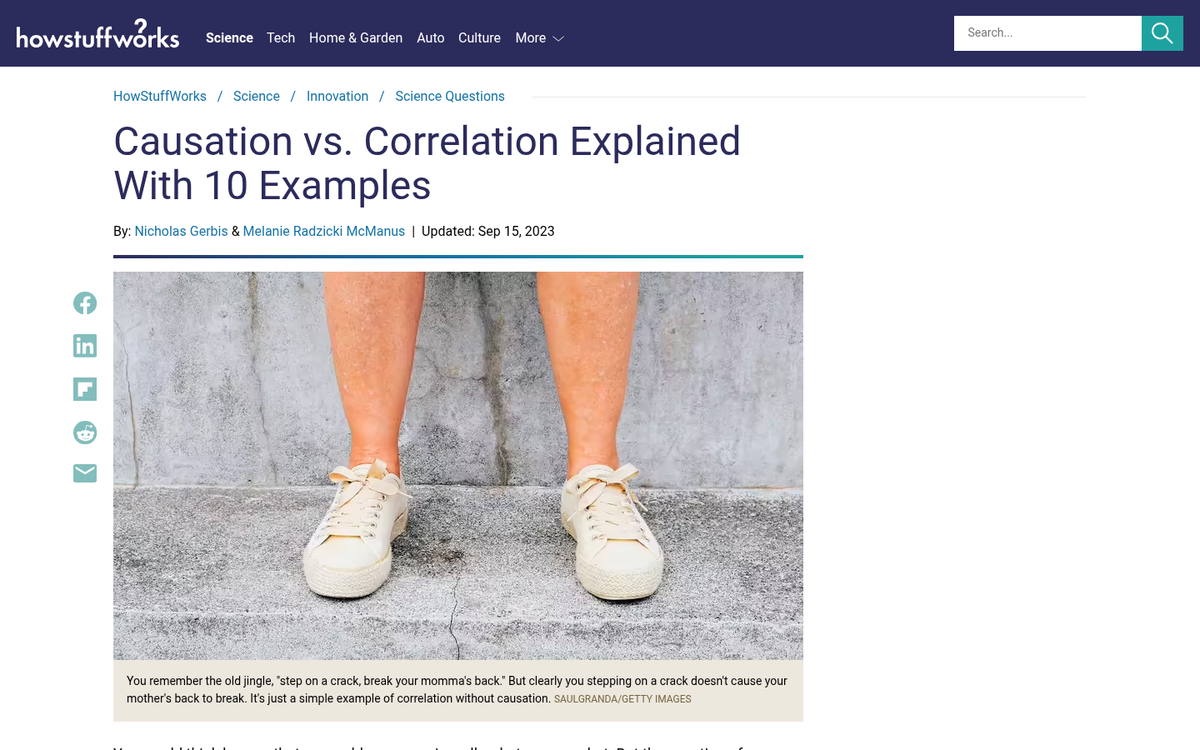
The first issue to address with the question is the wording. See, correlation simply means similar trends in two measurements. For example, there is a strong correlation between the divorce rate in Maine and the per capita consumption of margarine in the United States. The correlation between the two, however, is meaningless; people don't decide they want divorces because too much margarine was eaten somewhere in the country.
On the other hand, you have causation. There is a strong causation between the number of people seeing a movie and the amount of butter consumed in that movie theater. More movie-goers means more popcorn sold, which means more butter consumed. One causes the other.
So, if you have traffic on the rise, and your search ranking is rising, you would have a correlation between traffic and ranking, but that correlation is meaningless on its own. What you really want to know is if there is a causation between the two; does having more traffic cause higher rankings?
For a quick summary:
- Is there a correlation between traffic and rank? Yes.
- Does more traffic cause higher ranking? Not necessarily.
- Does a higher ranking cause more traffic? Far more likely.
To put some hard numbers behind that last point: the first page of Google captures around 71% of all search traffic clicks, with the majority going to the first five results. If you're not on page one, you're largely invisible - which means ranking and traffic are deeply intertwined, even if one doesn't cleanly cause the other. This is also why relying on Google too much for traffic can be a risky strategy, and understanding how much traffic top websites actually get per day can help put your own numbers in perspective.
More Traffic, Higher Rank
In some ways, having higher traffic numbers can contribute to a higher ranking. As you build more dedicated readers, you also build some of the behavioral signals that influence how Google evaluates your pages. Some of these factors include:
- Organic clicks. More traffic means more people clicking on your links in the search results, which can reinforce a ranking and boost it over time.
- Direct traffic signals. A high volume of users navigating directly to your site is a quality signal. Google has long used direct traffic patterns as one indicator of brand authority and trustworthiness.
- Engagement signals. Pages with more traffic tend to generate more comments, shares, and on-page interactions - all of which suggest genuine value to Google's quality assessments.
- Time spent on site. The longer users linger on your site after clicking through from search, the more Google infers about the quality of your content. According to a Backlinko analysis of 11.8 million Google search results, the average time on site for a first-page result is 2.5 minutes - a meaningful benchmark to aim for.
Better Traffic, Higher Rank

Consider this thought experiment. You have two identical sites with identical content, identical backlink profiles, and identical URLs. One site pays for a million visitors, while the other relies entirely on organic traffic. The site paying for traffic will have far higher hit counts, but the percentage of satisfied, engaged users will be much lower.
In this instance, the site with higher quality traffic is going to rank higher. To put it another way, a site with 100 users - all of whom comment, share the link, and write about the page on their own blogs - is going to outperform a site with 10,000 users who all bounce after less than ten seconds.
This also helps explain a striking finding from Ahrefs, who studied roughly 14 billion webpages and found that 96.55% of them get zero traffic from Google. It's not just about having pages indexed - it's about earning the kind of engagement and trust signals that push those pages into positions people actually click.
More Pages or More Quality

Here's another scenario to consider. Which site will do better: the one with 100 valuable pages, or the one with 10,000 low-quality pages?
In the early days of SEO, the site with more content almost always came out on top. The sheer volume of pages was a shotgun approach to ranking - more pages meant more opportunities for inbound links without concentrating everything on a single URL.
That calculus changed dramatically with Google Panda, and the quality-first philosophy has only intensified in the years since. Today, Google cares far more about quality, relevance, and demonstrated expertise than raw page count. A site with a hundred genuinely helpful pages can very easily outrank one with thousands of thin, recycled articles. In fact, that low-quality site is increasingly likely to face a manual or algorithmic penalty - or simply be ignored entirely.
This is especially true given the rise of Google's AI Overviews and the broader shift toward experience, expertise, authoritativeness, and trustworthiness (E-E-A-T). Per Ahrefs data from July 2025, 76.1% of URLs cited in AI Overviews also rank in Google's top 10 - meaning that the pages earning featured placement in AI-generated answers are the same ones already dominating traditional rankings. Quality content doesn't just rank; it gets amplified.
This principle also applies to smaller, more focused sites. A small business with deep, well-researched content in a niche can absolutely outrank a larger competitor on specific queries. It's how a regional soft-drink company could outrank Coca-Cola for certain local or long-tail searches.
Engagement as a Game of Numbers

All of this considers users to be one-trick ponies, with their page load or visit as their only valuable interaction with a page. That's far from true. Users can do a number of things that are valuable to a page and help boost search ranking:
- Commenting on the blog post.
- Sharing the post with friends or colleagues directly.
- Sharing the post via social networks.
- Linking to the post from their own website or blog.
Engagement is, however, something of a game of numbers. Only a small percentage of your viewers are going to perform any engagement action, and as the value of that engagement increases, the number of people willing to do it decreases.
One way to increase your engagement in absolute terms is to increase your traffic in absolute terms - but only if you maintain traffic quality. Flooding your site with low-quality or paid traffic won't help, because your engagement percentage drops alongside it. The better play is to grow both your audience size and your engagement rate simultaneously, by consistently delivering content that earns a response.
In this way, a rising traffic number can be genuinely beneficial: more readers means more people performing engagement actions, which feed back into your search ranking signals.
More Traffic Brings More Ranking Factors - But AI Search Is Changing the Game
The most likely scenario is the one that reverses the causation: higher rankings cause higher traffic far more often than higher traffic causes higher rankings.
The reason for this is simple: people trust Google to surface the best results first. If a page is at the top of the rankings, most users assume it's the most relevant answer to their query. They click it, and only if dissatisfied do they return and try the next result. Google's entire business model depends on that assumption being correct.
What you end up with is a feedback loop of sorts. A higher rank brings in more traffic. More traffic generates stronger behavioral signals. Stronger signals help push your ranking higher. Rinse and repeat.
But in 2026, there's a new wrinkle worth paying attention to: AI-powered search. Google's AI Overviews now appear for a wide range of queries, and as noted above, the pages they cite overwhelmingly come from already-strong rankings. That feedback loop now has a third rail - getting cited in AI answers compounds your visibility further.
Interestingly, the picture looks different on ChatGPT Search. Per Semrush data from July 2025, ChatGPT Search primarily cites lower-ranking pages - position 21 and beyond - roughly 90% of the time. That's a meaningful divergence from Google's behavior and suggests that optimizing for AI-driven traffic may eventually require a strategy distinct from traditional SEO.
For now, the fundamentals still hold: quality content, genuine engagement, and earned authority are what drive both rankings and the traffic that follows. The feedback loop is alive and well - it's just operating across more channels than ever before.