In business parlance, what are leads, exactly? They're interested users who reach out to your business through one of your contact methods, interested in your services. They might sign up for your mailing list. They might give your business a call. They might shoot your sales rep an email. They might register for more information, a sales packet, or an ebook.
The point is, leads are all the same; they are people, who are interested in your brand and product, asking you for more information. Well, they aren't really all the same, since some are more interested than others. A mailing list signup is a lower priority than a direct email to your sales team, which is lower priority than a phone call.
Leads come from your website. They come from other advertising means as well, like off-site advertising and print advertising, but those aren't relevant to this discussion. Website leads come from your website, and you're virtually guaranteed to be measuring them. You probably have a percentage and a raw number for your incoming leads, and a percentage and a raw number for the people your sales team converts based on those leads. It's your conversion rate.
Look at the math, for a moment. According to MetricHQ, the global average lead conversion rate for a typical webpage sits at around 2.4%. So if your website pulls in 100 visitors in a week, that's roughly 2 to 3 leads in a week.
Key Takeaways
- Buying traffic can increase leads if targeted correctly; doubling visitors from 100 to 200 roughly doubles leads at a 2.4% conversion rate.
- Organic traffic consistently outperforms paid traffic in conversion quality; professional services see 12.3% organic versus 7% paid conversion rates.
- Low-quality or bot traffic inflates visitor numbers without generating leads, potentially wasting 15-25% of annual advertising budgets.
- Bad bots accounted for 37% of global web traffic in 2024, and 14-22% of paid ad clicks are estimated to be fake.
- Ideally, businesses should combine increased targeted traffic with conversion rate optimization, while monitoring for click fraud and bot activity.
How Buying Traffic Affects Leads

Now let's add traffic buying into the equation. You buy an extra 100 visitors for a week. That bumps your visitors from 100 to 200. Your website hasn't changed, so assumedly your conversion rate will still be around 2.4%. That means your weekly leads just jumped from roughly 2 to 5. Not a massive jump, but we're dealing with tiny hypothetical numbers. Multiply everything by 100 and the principle still holds.
There are two ways to get more leads. One is to increase your conversion rate. This involves a lot of conversion rate optimization, which in turn involves a ton of testing, a lot of experimentation and no shortage of creativity.
The second option is to increase your traffic. If you boost your traffic significantly, and your website stays the same, you end up with more leads. At least, that's the theory. Does it work in practice?
The Quality of Leads
Remember how I mentioned up above that not all leads are really created equal? Neither is all traffic. Pulling in 100 interested users from Facebook is one thing. Pulling in 100 interested users from Google's organic search is another. Pulling in 100 disinterested users from a traffic exchange is yet another. Pulling in 100 bot-based software refreshes for your site is, well, hardly worth mentioning.
When you buy traffic, you need to be mindful of where that traffic is coming from and how interested the users happen to be. The most legitimate means of buying traffic is something you know, but might not want to acknowledge: advertising. After all, what is PPC advertising other than paying for traffic?
With direct, highly targeted PPC advertising, you can bring in a ton of traffic for a reasonable cost. Depending on how you manage your campaigns, platforms like Google Ads, Facebook, and LinkedIn can deliver highly targeted traffic with measurable intent. That said, it's worth noting that organic traffic consistently outperforms paid in terms of conversion quality - in professional services, for example, organic traffic converts at 12.3% versus just 7% for paid search, according to Ruler Analytics.
Still, well-managed PPC done right is not going to compete with the low costs of traffic exchanges or traffic generation software. So why don't people use those cheaper options more often?
The key is in "highly targeted" in the description of traffic.
The Problem with Bad Traffic
When you connect with a bad, unfiltered link exchange, or a poor audience through unrelated sites, you end up with a lot of visitors who don't care about your site. You visit sites, but what does it matter? You don't care what's on them. The business on the other end gets a boost to their traffic, but their conversion rate percentage drops.
Rather than using the more legitimate passive means of generating traffic, or the legitimate PPC networks for buying traffic, people try to shortcut through low quality offerings. The people who visit don't convert, so your leads stay low. Your traffic, in terms of our numbers above, jumps from 100 to 1,000. Your leads, though, only jump to around 4 or 5. You have a 10x jump in traffic, but only a 2x jump in conversions. Not very valuable.
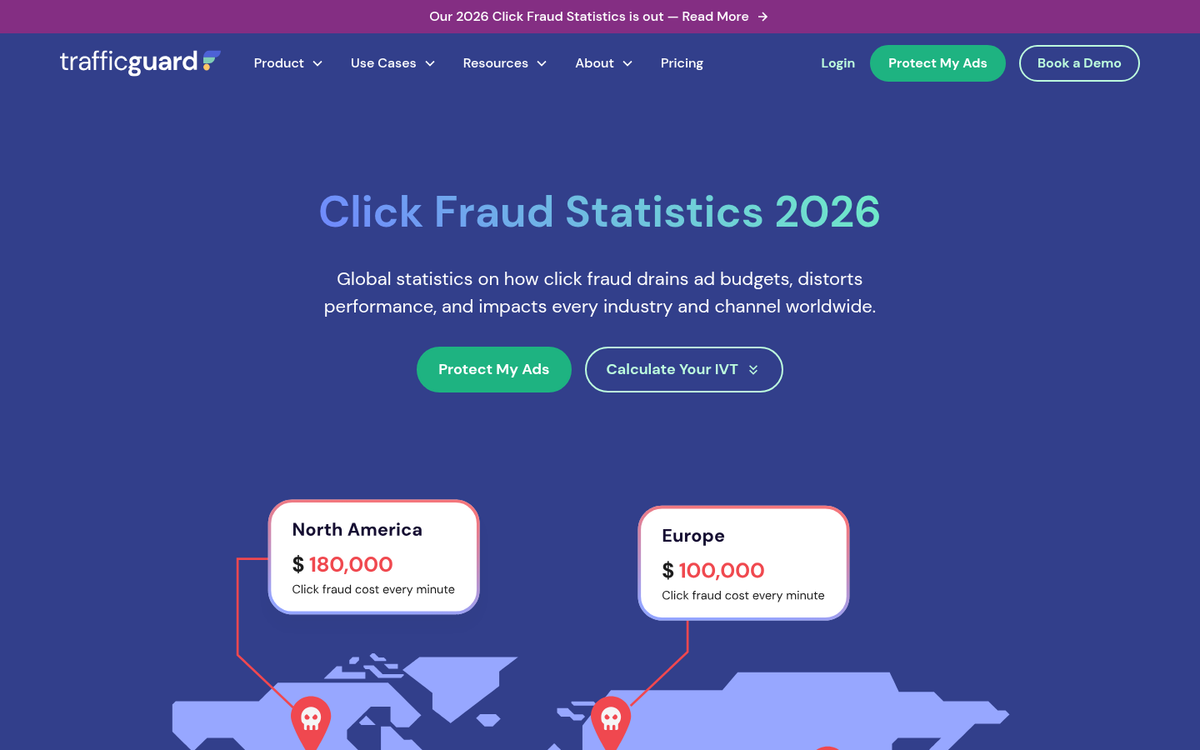
That's if you get legitimate users from your traffic at all. The bot traffic problem is significant and growing. According to a 2024 industry report, bad bot actors accounted for 37% of all global web traffic - a 12% increase from the prior year. On the paid advertising side, a PPC Shield report found that 14-22% of paid ad clicks are outright fake. And the Association of National Advertisers estimates that ad fraud across all channels now costs advertisers $120 billion annually worldwide.
The financial damage is real too. Many brands lose between 15% and 25% of their annual advertising spend to non-human traffic, fake clicks, and low-quality interactions that never lead to revenue. It's like that old trick of a site with a hit counter, where the webmaster refreshes their own page to inflate visitor counts. It looks good on paper and does absolutely nothing in practice.
Back to the Question

So, does buying traffic increase your leads? If you do it right, certainly. When you boost your traffic in a way that brings in targeted, interested users - whether through Google, Meta, LinkedIn, or a reputable third-party service - you're bringing in people who will engage with your website like normal users.
When, on the other hand, you end up with software hitting your site, you're doing nothing but paying for an ineffectual DDoS against yourself. It corrupts your analytics data, inflates your traffic numbers, and earns you zero conversions. Worse, it costs you real money - money that could have gone toward traffic that actually converts.
The Ideal Pattern
Ideally, you're going to be increasing both your traffic and your conversion rates. Both require different methods, but they both build on each other. A better site means more leads and more sales. More traffic means more leads and more sales. They both reinforce each other, through social networks and word of mouth.
If you are going to invest in paid traffic, pair it with click fraud monitoring tools and regularly audit your traffic sources for bot activity. Good traffic and a good website are both necessary to boost your leads effectively - but only if that traffic is real.