





Key Takeaways
- YouTube requires approximately 30 seconds of watch time for a standard video view to count.
- YouTube Shorts count a view every time playback starts, with no minimum watch time required, effective March 2025.
- Repeat views are capped at roughly 4-5 per user within a 24-hour window to prevent spam inflation.
- Invalid views from bots, malware, spam accounts, and external autoplay embeds are actively filtered and removed.
- BTS's "ON" dropped from 83 million to 48 million views after YouTube's audit, illustrating aggressive invalid-view removal.
How YouTube Counts Views in 2026
Different video providers count views in different ways. Videos hosted on platforms like TikTok and Instagram Reels count a view almost immediately, taking advantage of short-form content and the short attention spans of people scrolling through their feeds. If you've ever wondered why a TikTok video seems to rack up way more views than a YouTube video, that's a big part of why - passive, autoplay-driven exposure counts almost instantly, whereas YouTube views require a much more intentional action from the viewer.
Today I'm discussing, primarily, YouTube.
As one of the oldest surviving video hosts, and by far the largest, YouTube has had to contend with pretty much every possible form of scamming by people looking to get ahead on the platform. One of the most common metrics to inflate is the view count, because it ties into the recommendation engine and the perceived influence of a video.
What counts as an actual view, these days? You can bet that YouTube has a bunch of filtering in place. Here's what YouTube says:
- We want to make sure that videos are being viewed by actual humans and not computer programs. During the first couple of hours after a video has been published, we'll only show views that our systems believe to be valid. This might not yet show all legitimate views at the time.
- After quality views are counted, view count updates more frequently. The process of including all quality views can take some time depending on a video's popularity and viewership. Afterward, the view count updates more frequently, but keep in mind that we're constantly validating views, so view count can always be adjusted.
- On some videos, the view count might seem frozen or not show all the views that you expect. Video views are algorithmically validated to maintain a fair and positive experience for content creators, advertisers, and users. To verify that views are real and accurate, YouTube may temporarily slow down, freeze, or adjust the view count, as well as discard low-quality playbacks.
One thing you'll notice here is that nothing they say is, well, specific information. That's because Google has learned time and again that when you reveal the actual, specific limitations or requirements for something, people will do exactly what they need to do to meet those requirements, nothing more. Neither creators nor viewers are given detailed information about what counts as a view.
Another thing to note is that last bullet point, the one about a frozen view count. You may have heard of the old "301 views" phenomenon - where videos used to get stuck at exactly 301 views while YouTube ran an audit. That was a relic of an older era. YouTube upgraded their video audit algorithms years ago, and for standard long-form videos, the view count no longer freezes at that threshold in the same way. Every video is simply audited as it goes.
That said, view counts can still appear frozen or slow to update, particularly in the early hours of a video's life. This is normal and expected - YouTube is simply doing its job verifying that early traffic is legitimate before publishing those numbers publicly.
What Counts as a View?
So, with YouTube refusing to publish exactly what counts as a view, what have marketers, leaks, and years of testing combined to tell us?
The widely accepted threshold for a standard YouTube video view is 30 seconds of watch time. This has been tested extensively by creators and marketers and holds up as well as any publicly available information we have on the topic.
What about shorter videos? This is where things have changed notably. As of March 31, 2025, YouTube updated how it counts views on YouTube Shorts. Every time a Short starts playing - whether it's a first play or a replay - it counts as a view, with no minimum watch time required. This is a significant departure from standard video rules and brings Shorts more in line with how TikTok and Instagram Reels count views. For Shorts, YouTube essentially decided that an impression-level interaction is enough to qualify.
For regular videos under 30 seconds in length (outside of Shorts), YouTube likely applies a percentage-based threshold rather than a hard cutoff, though the exact methodology isn't published. The practical reality is that very short videos do accumulate views - a classic 11-second video can rack up millions of them - so YouTube isn't applying the same 30-second rule to content that is, by nature, shorter than 30 seconds.
You can perform a rough test on your own. Set up a video and mark it as unlisted. Then, using a device and account not connected to your creator account, watch the video for around 10 seconds. It won't count. Watch for more than 30 seconds on a separate account, and it typically will. I say "typically" because there are other factors that can invalidate a view even when the watch time threshold is met.
Repeat views are one such factor. YouTube does allow repeated views from the same user to count, acknowledging that people replay music videos, tutorials, or funny clips. However, this is capped at roughly 4 to 5 views per person within a 24-hour window. After that, additional replays from the same user stop counting. This prevents the most obvious forms of repeat-view spam.
What about skipping through a video? If a viewer jumps between several short segments of a longer video, it may or may not count as a view depending on how YouTube's systems interpret the behavior. There's no clean public answer here, and in practice it seems to depend on other signals surrounding that viewing session. For a deeper look at how YouTube counts and rewards engagement, see our ultimate guide to increasing views on YouTube.
What Makes a View Bad?
I've mentioned a couple of causes for a view to be filtered - repeated replays beyond the daily cap, or bot-like behavior from an account. What else can flag a view as invalid?
One significant cause is if Google correlates the source of a view with their known database of malware. There are computer viruses that open hidden browser windows and use them to play monetized videos, generating revenue for bad actors while the device owner has no idea. Google tracks this and similar schemes - including off-screen video embeds on websites - and strips the validity of views coming from those sources.
Google also monitors for comment spam on videos. Spam comments aren't just a nuisance; they're a red flag. Views from accounts that leave spam comments are removed, because those accounts are almost certainly operated by bots.
Views also typically don't count when a video is embedded with autoplay enabled on an external website. If a user actively clicks play on an embedded video, that view typically counts. Passive autoplay on external embeds generally does not.
YouTube does count views from autoplay within playlists and the "up next" recommendation feature on YouTube itself - but only up to a point. If there's no user interaction with the page over an extended period, YouTube will stop autoplaying. This is their way of balancing legitimate passive listening behavior against pure inflation.
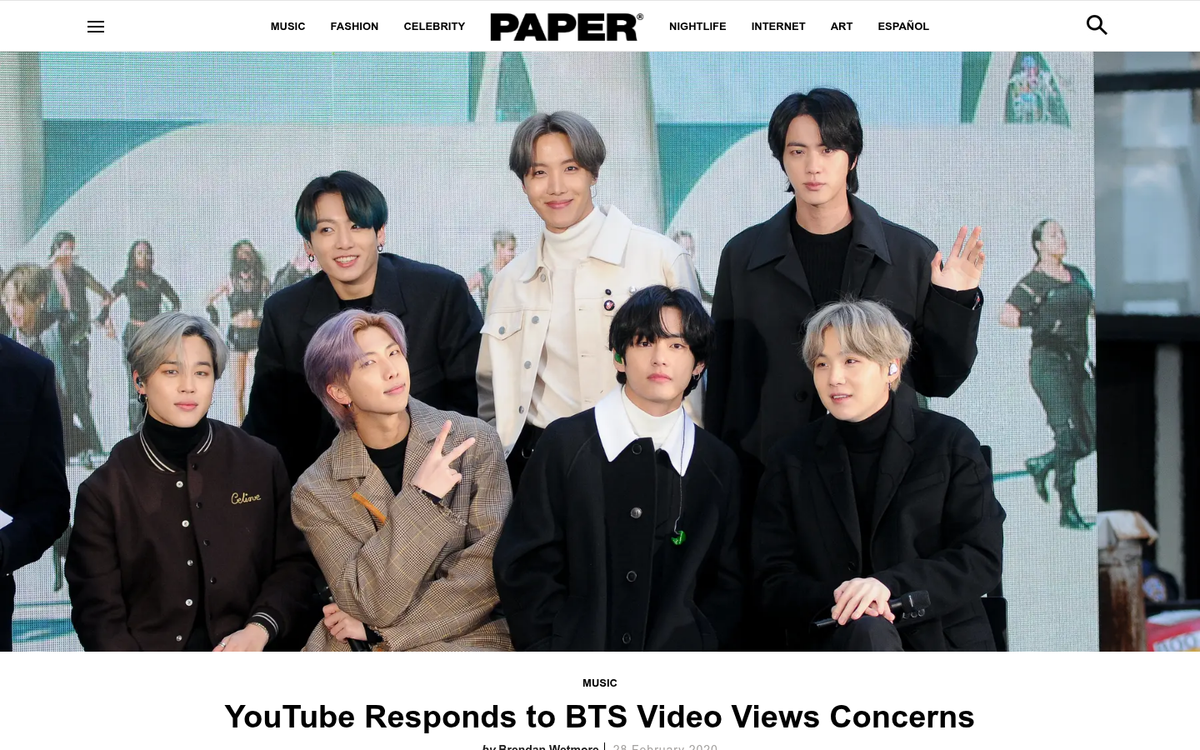
The impact of bad views on real channels can be dramatic. When BTS released "ON," the video racked up approximately 83 million views within the first 24 hours - only to see that number drop to around 48 million after YouTube completed its audit and removed invalid views. Despite the drop, it still set a record as the biggest YouTube Premiere ever with 1.54 million concurrent viewers. That's a real-world illustration of just how aggressively YouTube audits high-traffic videos.
Why are fake views bad, anyway? There are a few reasons, but likely only one YouTube actually cares about most.
- Fake views make content creators feel like they have more exposure than they do, which might cause them to question lower engagement rates, weaker traffic, and disappointing monetization figures.
- Fake views push videos into the recommendation engine that don't deserve the circulation. When the algorithm surfaces low-quality or irrelevant content because its view count was inflated, users lose trust in recommendations - and that erodes one of YouTube's most powerful retention tools.
- Fake views hurt advertisers. Advertisers pay for views and clicks. Fake views mean creators earn money they didn't deserve, and advertisers pay for exposure they never actually got. It devalues the entire ecosystem.
In case you hadn't already guessed, it's that third one that really makes Google move fast. Anything that threatens advertiser confidence gets addressed quickly and firmly.
A Note on Buying Views

Sellers around the web - from Fiverr to forums like Black Hat World - still sell YouTube views as a service. The key thing to know is that the cheaper the seller, the worse the views will be and the more likely they are to be filtered out entirely.
When you buy views, it is possible to buy legitimate ones. Some sellers simply have their own promotional channels and distribution methods, and they're monetizing genuine human traffic. Those views hold up, and you're unlikely to see any negative consequences.
Other sellers peddle bot views, doing the bare minimum to make those views appear legitimate. Sometimes they survive the audit. Often they don't, and you've lost your investment with nothing to show for it.
There's also the negative angle worth mentioning. Just as negative SEO exists for websites - where someone could theoretically point spammy links at a competitor's site - a similar concept applies to YouTube. Someone could buy low-quality views for a competitor's video and, if those views are bad enough, trigger an audit that strips view counts or raises flags on the channel. Whether YouTube takes punitive action against a channel on the receiving end of this is a gray area, but it's a risk worth knowing about. The cleaner your channel's traffic history, the less vulnerable you are to this kind of manipulation.


15 responses
Thoughtful replies only - we moderate for spam, AI slop, and off-topic rants.
I ran a test, I uploaded a private approximately 1 minute long video. I did a mix of watching/refreshing 18 times for less than 10 seconds, each time trying to hit a range of watch times (1, 3, 5, etc.) within the 5 minutes not logging out of my personal youtube account and each one of the views was counted...
So I am not sure if this '30-second' rule actually counts, unless it is only applied to videos over 300 views.
It is only applied for videos over 300 views, since getting 300 views by bots or other fake methods won't influence the system much.
Youtube is not television. They can set rules for viewers, how to view a show but
It is not credited by any network or television entity.
Even if you watch a t.v. program while browsing online - it is not counted.
The viewers are people who are loyal to the tube. The key is viewers.
Viewing something is not watching something - if your a viewer your
Not watching for something in the program, your simply viewing to
See if the show is still on even though you stoped watching it.
You could actually watch the television to view if they
Cancelled a program you hate. But that's not counted.
That was very useful - far more useful than the short official YouTube support page which did not give much useful information.
Could you please write a similar detailed blogpost on how Facebook counts views, how its algorightms work, how it earns money, how people purposely and accidentally game the system?
Thanks for the kind words! Not a bad idea, we will put it on our list 🙂
How about the quality of the video does it affect the amount of views? just like running for 30sec.
Hi Stake! YouTube definitely does filter out lower quality views (very short views, bad browsers, bad IP ranges, suspicious clicks or browser movement, etc). They are also most likely less trusting against views from users who aren't signed in, and I would wager that those views are more likely to be filtered than from users who are signed into Google accounts. I hope this helps!
Is it true that when you don't finished watching a certain video, the remaining minutes that you skip or watched will be deducted on your own watch time?
Is it also true that if you go in and out of a live stream, the watch hour of the hist will be affected?
Hi Jolly! I've never heard of anything like this. If this were the case 3 hour videos wouldn't have any watch hours since a much lower percentage of people watch the video the whole way through. I wouldn't worry about it 🙂
I watched a video for 20 seconds and youtube counted it as a full view. I watched another video for 10 seconds and it didn't count as a full view so are those ones which we watch for 20 seconds and counted as a whole legitimate or has the publisher bought views/something like that?
Great question, Lily! The difference you noticed is totally normal and doesn't mean anyone bought views. YouTube's view counting system isn't purely time-based - it also considers factors like how the view was initiated and whether it seemed like genuine engagement. A 20-second watch on a shorter video might hit the threshold, while 10 seconds on a longer one might not. Nothing shady going on!
Hello! I find this article very useful, probably the best one that I found until now.
However, I was wondering if the video's volume (sound) affects the probabilities of counting views. For example, if I play someone's YT video with lower sound or, even, without, it will still count as a view?
Thank you
Stay well!
Hi Vanda! Great question! The good news is that YouTube's view count system doesn't take audio levels into account at all. Whether you watch a video with full volume, low volume, or completely muted, it won't affect whether the view gets counted. YouTube focuses on factors like watch time and user engagement rather than sound settings. Hope that clears things up, and stay well! 😊
thanks for such an amazing and detailed information.
my question is, what if someone make playlists of 5 videos each. And open it from an another pc(different ip address) all the playlists in different tabs, while a timer auto refresh the tabs after finishing the playlist? or use a VPN?
Will this bring some earning or not? will it effect our channel, views etc or not?
will be a kind of you reply in detail. thanks in advance.
Hey Siraj, glad you found it helpful! To answer your question - YouTube's algorithm is incredibly sophisticated and can detect artificial view patterns like auto-refreshing, VPN cycling, and bot-like behavior. These views would likely get filtered out and not count toward monetization. Worse, YouTube could penalize or even terminate your channel for manipulation. It's simply not worth the risk. Focus on genuine content and organic growth - it's the only sustainable path!