





Sometimes you might come across an old blog post or forum thread referencing a website's Alexa rank as a badge of honor. Maybe you've seen archived screenshots of sites proudly displaying their Alexa widget. If you're wondering what Alexa rank was, why people cared about it, and what replaced it - you're in the right place.
Key Takeaways
- Alexa rank was a traffic-based website metric that ranked domains by recorded visits, with lower numbers meaning more traffic.
- Alexa's fatal flaw was relying on toolbar data, making rankings inaccurate and biased toward technical, older, Western audiences.
- Amazon shut down Alexa's ranking service entirely in May 2022, with data updates stopping completely by February 2023.
- Google's John Mueller confirmed Google never used Alexa rank as a ranking signal, debunking longstanding SEO myths.
- Similarweb, Semrush, Ahrefs, Google Search Console, and GA4 now offer more accurate, reliable alternatives to Alexa rank.
What Was Alexa Rank?

Alexa was a web analytics company founded in 1996 and acquired by Amazon in 1999 for $250 million in stock. At its peak, it provided rankings and data on over 30 million websites, and its own website was visited by over 400 million people per month as recently as 2020.
The Alexa ranking was essentially an ordered list of domains sorted by their recorded traffic. A lower number meant more traffic - rank #1 being the most visited site on the web. There was nothing more to it than that. Alexa didn't judge site quality, content, or subjective value. It was purely a traffic-based metric.
Three types of people cared about this metric. First were the competitive webmasters who would look for any excuse to consider their sites better than other sites. Second were the affiliate marketers, who would feel more confident paying out more to sites with higher Alexa ranks. Third were the domain traders - people who buy and sell domains and existing sites - who used it alongside Google's PageRank as a quick valuation shortcut. For reference, Google stopped publishing PageRank scores entirely in 2016, around the same time both metrics began losing their grip on the industry.
The Problem with Alexa Rank
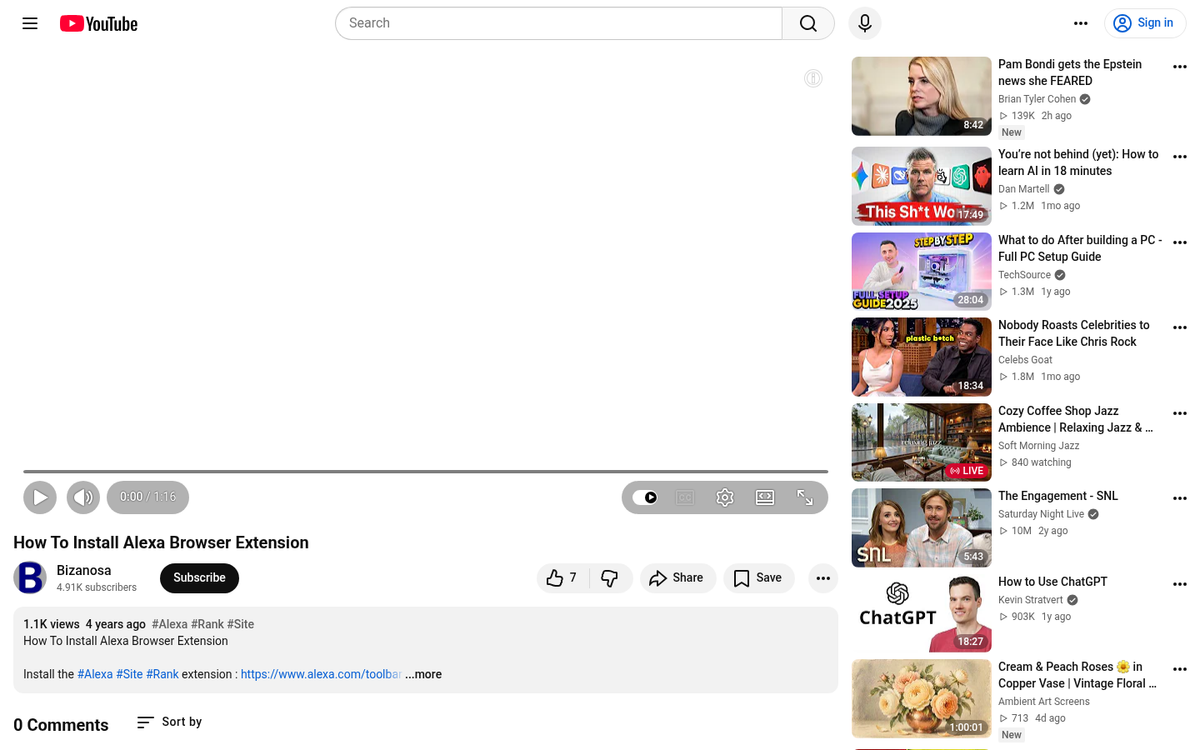
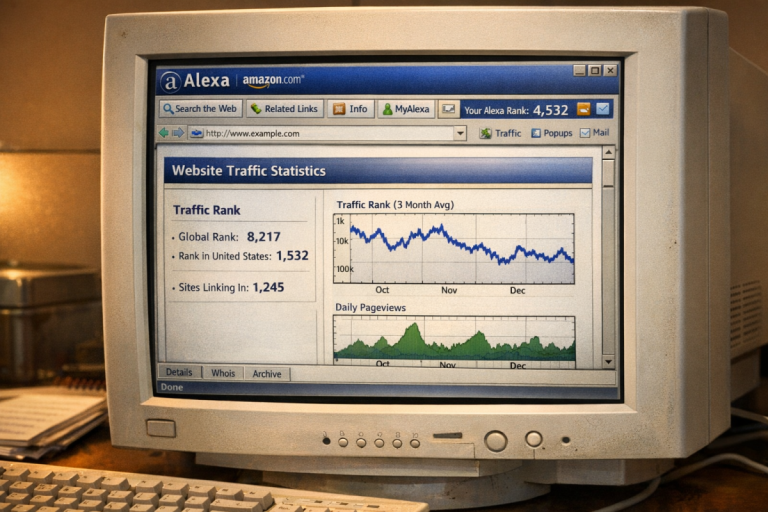
Your site was very likely on Alexa's list, and yet you probably never had any Alexa tracking code on your site. So how did Alexa measure your traffic? The answer is that Alexa primarily recorded visitors using the Alexa toolbar - a browser extension. Amazon made efforts to make the toolbar genuinely useful, bundling in web search, site previews, links to the Internet Archive's Wayback Machine, and more. But the toolbar never achieved mainstream adoption, and that was always Alexa's fatal flaw.
What this meant in practice was that your Alexa rank was never accurate. It only recorded visits from people who happened to have the toolbar installed. You could have 500,000 monthly visitors, but if only a small fraction used the toolbar, your rank would look correspondingly anemic. Meanwhile, a competitor in a tech-savvy niche - where toolbar adoption was higher - could appear to vastly outperform you despite having a fraction of your actual audience.
The idea was that Alexa toolbar users would serve as a representative sample of internet traffic. In practice, this was never close to true. The types of users who voluntarily install browser toolbars skew heavily toward specific demographics - typically more technical, older, and Western-leaning audiences. Entire industries were systematically underrepresented. Alexa itself quietly acknowledged this, noting that rankings beyond 100,000 were not statistically meaningful. That caveat applied to the vast majority of websites on their list.
Over the years, Alexa attempted to expand beyond toolbar data, layering on bounce rate estimates, time-on-site, demographic data, keyword analysis, and more - essentially trying to replicate what Google Analytics already did better, with more accurate data.
Alexa Is Gone - Officially
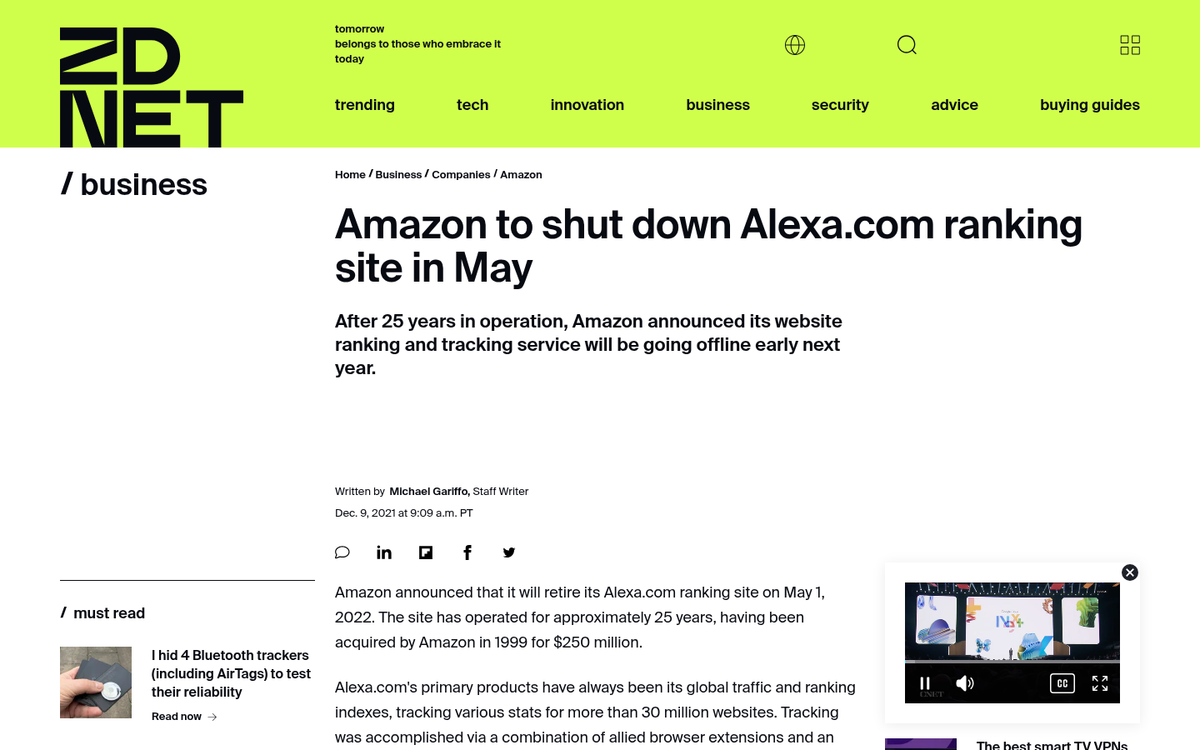
This is no longer a debate about whether Alexa rank matters. On December 8, 2021, Amazon announced it was shutting down the Alexa ranking service entirely, with the shutdown completed on May 1, 2022. The Alexa Top Sites and Web Information Service APIs were retired on December 15, 2022. Alexa continued publishing its "top 1 million sites" dataset until February 1, 2023, at which point it stopped updating altogether.
It's worth noting that in 2021, Google's John Mueller explicitly confirmed that Google does not use Amazon Alexa Rank as a ranking signal - putting to rest any lingering SEO mythology around the metric.
The service is now fully defunct. The toolbar is gone. The widget is gone. The rankings are gone.
What Replaced Alexa Rank?
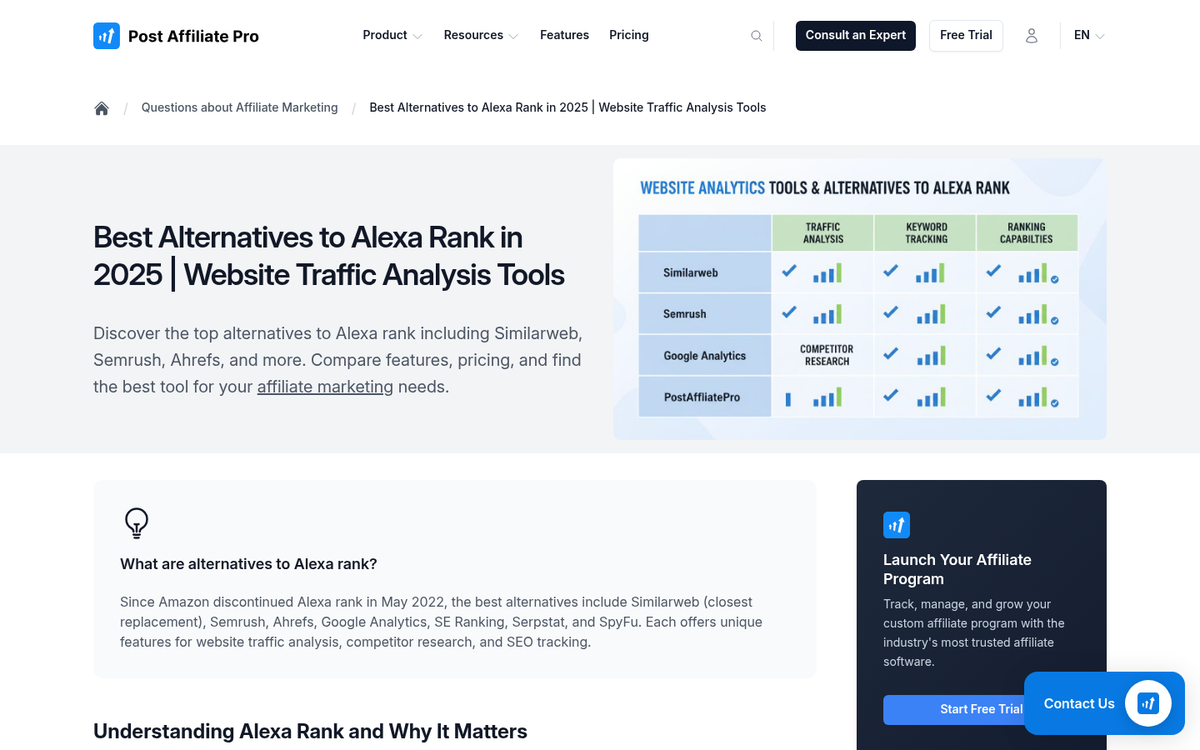
For those who genuinely need competitive traffic intelligence, several tools have stepped into the void - and most of them are meaningfully better than Alexa ever was:
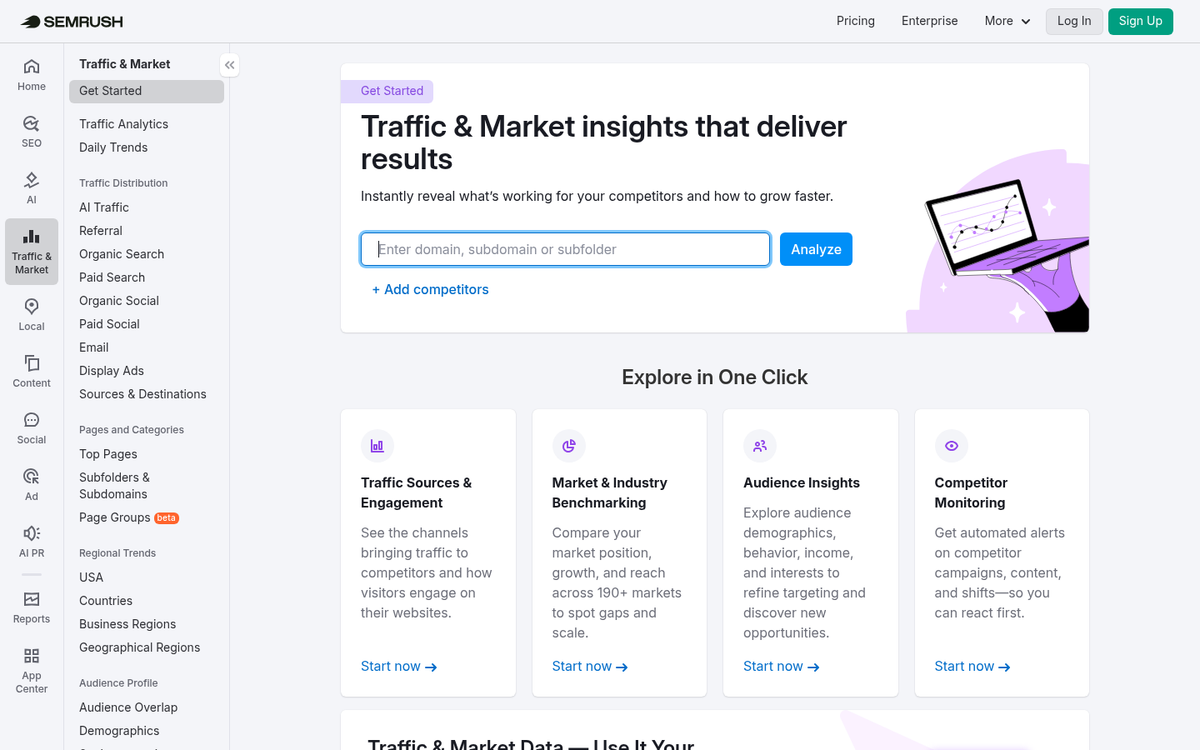
Similarweb is the most direct replacement and is widely used by media buyers, advertisers, and site investors to estimate traffic and audience demographics. If you're trying to decide between tools, this SimilarWeb vs Alexa comparison breaks down which is more precise. It pulls from a much broader and more diverse data panel than Alexa ever had.
Semrush and Ahrefs both offer traffic estimation features alongside their core SEO toolsets. If you're evaluating a site for backlink profile, keyword rankings, and estimated organic traffic all in one place, either of these is far more actionable than Alexa ever was. There are also keyword spy tools worth exploring if competitive research is your primary goal.
Google Search Console remains the gold standard for understanding your own site's search performance - and it's free.
GA4 (Google Analytics 4) replaced Universal Analytics in 2023 and remains the most accurate source of truth for your own traffic data, full stop. If you're getting started with it, the ultimate guide to setting traffic goals in Google Analytics is a solid place to begin.
Does Any of This Still Matter?
If someone is still referencing Alexa rank in 2026 - in a pitch deck, a site listing, a media kit - treat it as a red flag. The data is frozen in time, the methodology was always flawed, and the service no longer exists to update or verify anything.
What does matter is real, verifiable traffic data. If you're buying or selling a site, ask for Google Search Console access and GA4 exports. If you're evaluating a competitor, use Similarweb or Semrush. If you're building your own site, focus on organic search performance, engagement metrics, and actual conversion data.
Alexa had its moment. It's over. The good news is that the tools available in 2026 are substantially more accurate, more comprehensive, and in many cases, free.

4 responses
Thoughtful replies only - we moderate for spam, AI slop, and off-topic rants.
This is a great post, Kenny. I started a website 3 months and everyday there's a ritualistic practice of going to Alexa to see the rank. Sometimes, I'm delighted, sometimes the opposite. Despite having great content, the rank has been struggling around the 150k mark. It stands to reason now since my website is not heavy on tech, and its targeted audience wouldnt be the kinds who've installed the toolbar. That leaves us with one question though, what alternative do we have to judge a website by?
A website or a blog can have different business objects, it can be an ecommerce website for selling products, a lead generation site for securing contact information and sales prospects, a content publishing site wishing to maximize ads shown to visitors or an online info and support site to help customers find information? Find out what your blog's business objective is and determine if its successful in this aspect. That would be a better judge of a site's performance.
Great and useful post.
Everything you mention is absolutely correct.
I wish the whole internet was full of posts like this, so these stupid advertisers will stop using it.
This toolbar should be removed and forgotten by everybody, its existence is harmful.
A site of mine used to be among the 90.000 just 3 months ago with only 800 uniques per day, now after 3 months with 5.000 uniques per day is sinking fast down to 340.000.
It is unbelievable how people insist on this crap.
Thanks for sharing your experience, Alex! Your example perfectly illustrates the problem - 5,000 uniques daily yet a worse Alexa rank than when you had 800? That's exactly why savvy advertisers and bloggers are moving away from it as a metric. Real traffic and engagement numbers tell a far more honest story. Hopefully more people wake up to this soon!