





What is growth hacking? The term itself comes from Sean Ellis, who coined it in a blog post in 2010. In the years since, the concept has evolved significantly and become a cornerstone of modern startup culture and digital marketing strategy worldwide.
The core of growth hacking is to put growth ahead of everything else when launching and growing a business. Rather than invest in a standard advertising campaign through TV, radio and other forms of media, growth hackers attempt to gain the same awareness through cheap or free methods. Social media, viral marketing and word of mouth are the bread and butter of the growth hacker.
Online, you can use growth hacking techniques to drastically increase your incoming traffic for little or no investment beyond time and knowledge. Think of the difference between marketing and growth hacking as the difference between PPC and organic traffic. PPC costs money to bring in traffic, while organic traffic simply requires knowledge of SEO and time spent implementing that knowledge. To put that in perspective, organic search accounts for 53% of all website traffic, and SEO generates 1,000% more organic traffic than social media - making it one of the highest-leverage plays available to growth hackers.
The difference is that growth hacking, unlike organic SEO, can be a very quick process. A single viral exchange can bolster the traffic of a site a hundred times over, with little or no investment. Even a traditional expensive marketing campaign will be slower.
What growth hacking techniques can you put to use? There are many to choose from, some which you might not even realize are growth hacks, given how commonplace they have become.
One thing to remember is that, while many of the following techniques are commonplace in today's online marketing, it's the way you implement them that makes them into growth hacks. Take PPC advertising, for example. You can dump money into the system and get meager returns, or you can take the time to make smart decisions, experiment and test your ads for an always-increasing ROI. When you make smart decisions, you're leveraging the PPC tool for all its worth, increasing your traffic that much faster.
Key Takeaways
- Growth hacking prioritizes rapid, low-cost growth using free methods like social media and viral marketing over traditional advertising.
- SEO and content marketing remain top growth levers, with content leaders achieving 6x higher conversion rates than average.
- Podcasting in underserved niches builds loyal audiences; publishing episodes to YouTube amplifies reach through video search discovery.
- Effective infographics require compelling narratives and data-backed conclusions, paired with embeddable formats and strong publisher outreach.
- Co-marketing partnerships through promo swaps, guest blogging, and thought leader interviews grow audiences without paid advertising spend.
SEO and Content Marketing

These two go hand in hand today. In 2024, 91% of marketers reported that SEO positively impacted their website goals and performance - a clear signal that content-driven SEO remains one of the most reliable growth levers available. It's considered something of a standard today; if you're not running a blog with valuable information, you're falling behind. This is a primary example of what was once a growth hack and has become the standard.
That said, the landscape has shifted. Google's Search Generative Experience (SGE) and AI-powered overviews have disrupted traditional click-through patterns, with studies showing organic traffic drops of 18-64% on some sites due to AI-generated answer boxes. However, the top 5 organic results still capture 70% of all clicks, meaning that ranking well remains critically important - it simply requires smarter, more authoritative content than ever before.
To turn SEO and content marketing into a growth hack, you need to dig deep into your audience. With 61% of organic search visits now coming from mobile devices and 20% of mobile searches being voice-based, optimizing for conversational queries and voice search is no longer optional - it's essential. Finding a creative way to gather and apply that information makes this a growth hack with lasting potency. Content marketing leaders also enjoy 6x higher conversion rates than average, with case studies being particularly effective for B2B audiences.
Podcasting
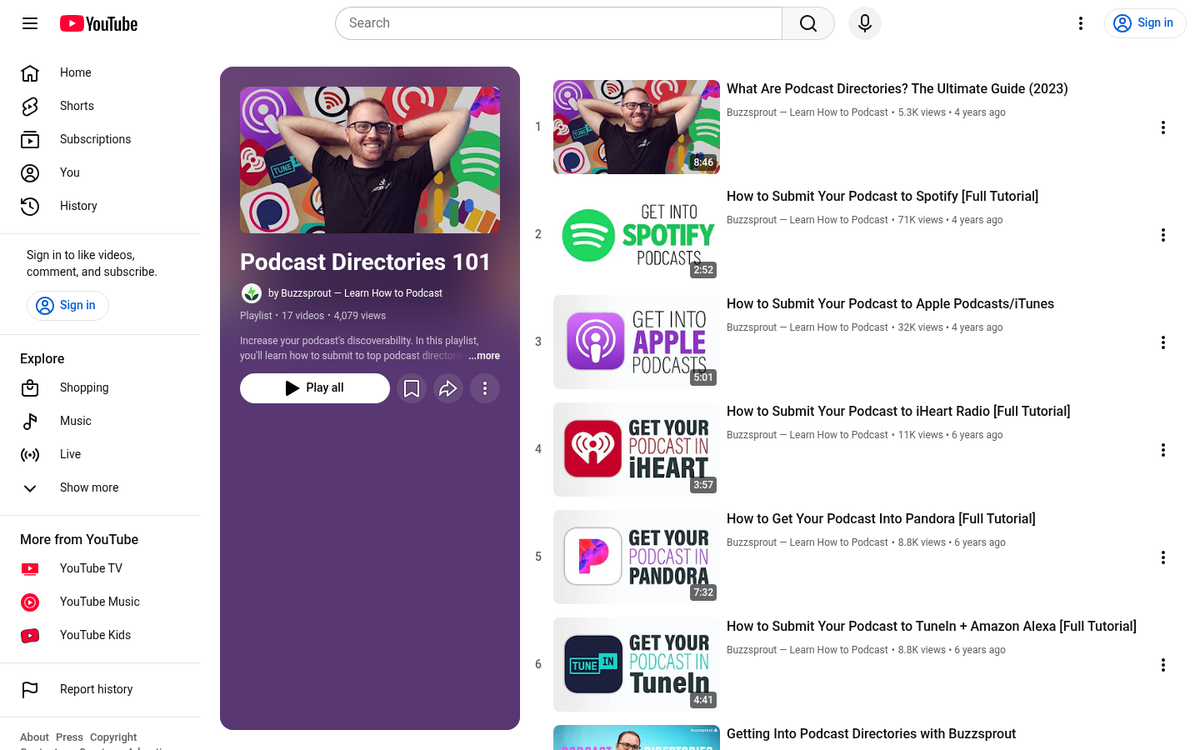
A podcast works much like a blog post, but with some distinct differences. While search engines have made progress indexing podcast transcripts and show notes, the bulk of discovery still happens through podcast directories like Spotify, Apple Podcasts, and YouTube. The audio connection of hearing the voice of someone you respect is potent, and podcasts can be consumed on the go - during commutes, workouts, or travel - giving them an accessibility that written content lacks.
Growth hacking with a podcast is a matter of establishing a niche presence where you can dominate. There are already high-profile, high-budget podcasts in general interest categories. Finding a niche with narrow appeal allows you to dominate a space otherwise underserved. Publishing full episodes to YouTube with proper titles and descriptions has become an especially effective tactic, combining the reach of video search with the loyal audience-building nature of podcasting.
Infographics

Infographics are easy to create. They are also easy to fail. For every viral, compelling infographic, there are hundreds that look like little more than a PowerPoint slide stacked with pie charts.
Infographics take advantage of the natural flexibility of imagery on the web. You have the benefit of infinite creativity to produce something utterly unique. If all you're doing is putting bar graphs in a grid with captions, you're not growth hacking.
A creative infographic requires a good topic. You can't just cover boring industry statistics; you need to pick something noteworthy and interesting. You need to find or aggregate enough data to support your graphic. Most compelling infographics also include a certain amount of narrative - reasoning to go from point A to point B, with the data to back it up. You're not just presenting data, you're presenting conclusions and actionable information.
In today's landscape, interactive and AI-assisted infographics have raised the bar considerably. Static infographics still perform well for shareability and backlink generation, but pairing them with an embeddable format and a strong distribution strategy - including outreach to relevant publishers - is what separates a growth hack from just a nice graphic.
Mutually Beneficial Advertising

One popular growth hack is the ability to piggyback on the marketing efforts of another established business. Identify a business that shares your target audience, but who isn't a direct competitor. As long as you're a potential partner, rather than a threat, you can get away with a lot. Approach these businesses and ask for advertising partnerships.
One great idea is the promo swap. Promote each other through email newsletters, social media posts, video introductions and co-hosted events or webinars. Your audiences, already very similar, will mix and merge. Co-marketing has become increasingly popular as organic reach on social platforms has declined, making these direct audience exchanges more valuable than ever.
You can also establish partnerships through guest blogging, as long as your niches are complementary. Become a contributor to each other's blogs through guest posting. This gives you a legitimate means of building authority and linking between sites in a way that adds genuine value rather than triggering search engine penalties.
Another option is the thought leader interview. Interviews lend legitimacy to both sides involved. Users give you more credibility for conducting an interview, because you must be worth respect if someone agreed to appear on your platform. Conversely, if someone approached you for an interview, you must have thoughts of such value that they're worth listening to. Video interviews published to YouTube and repurposed as podcast episodes have become a particularly efficient format, giving you multiple content assets from a single conversation.


1 response
Thoughtful replies only - we moderate for spam, AI slop, and off-topic rants.
I think SEO with unique and high quality content is the best way to get good traffic. If traffic from search engines is retained and we made them direct traffic, nothing can complete this method. Because direct traffic is the best way to be safe from search engine penalties like a panda and penguin