Dietary supplements, as well as pharmaceuticals and other medicine-adjacent products, are tricky to advertise online. It's not so simple as just finding the right ad network that will take your business. It's almost as bad as gambling, which we covered here.
Key Takeaways
- Supplement advertising is heavily regulated by the FDA and FTC, requiring advertisers to follow strict compliance guidelines.
- Google Ads allows supplement promotion but requires meeting specific requirements or obtaining direct permission from Google.
- SellHealth, GourmetAds, eHealthcareSolutions, AdClick Media, and Conversant are five networks accepting supplement advertisers.
- Conversant offers a 99% human traffic guarantee, while eHealthcareSolutions provides access to highly vetted healthcare publisher sites.
- 7Search's shutdown in 2017 highlights the importance of diversifying ad traffic sources across multiple platforms.
The Perils of Snake Oil
The concept of "snake oil" comes from old Chinese medicine and folklore, from the early 1700s. The idea was that a liniment containing an extract from snakes could be used to alleviate some pains, like arthritis and bursitis.
And, indeed, actual snake oil could do this. The Chinese water snake oil contains a compound that has analgesic and anti-inflammatory properties. The problem was, the "snake oil" marketed and sold to workers around that time contained no actual snake extract. It was ridiculed and mocked by various druggists and chemists at the time, and eventually common use transformed the phrase into the charged term we have today.
Snake oil is not the first false medicine in history, nor will it be the last. Even today, we have a wide range of fraudulent and potentially fraudulent products aimed at gullible people seeking cheaper alternatives to medical treatment. Ever heard of Black Salve? It's a so-called "cure" for skin cancer that simply destroys the surrounding flesh. Or what about HeadOn, which you apply directly to the forehead for headaches, and is essentially nothing more than a stick of wax?
In an effort to combat charlatans and frauds, a lot of effort has been put forth over the years to establish laws and regulations on the advertisement of various health-affecting products. In the US, where most of you are advertising, the Food and Drug Administration and the Federal Trade Commission have a lot to say about it. If you're running paid campaigns, it's also worth understanding the most common Google AdWords mistakes that can get your ads flagged or rejected.
You do have to pay attention to these rules when you advertise anything health or supplement related, but for the most part the onus is on the manufacturer. As long as you're getting your products from a reputable manufacturer - and not obscure, unverified chemical suppliers - you should be safe as far as most of the rules and regulations are concerned.
Even so, if you're trying to market any kind of supplement, I highly recommend browsing through the rules and the advertising guide that the FTC publishes. You can find it published on the web here, with a PDF available to download and peruse at a later date.
How Ad Networks Handle Supplements
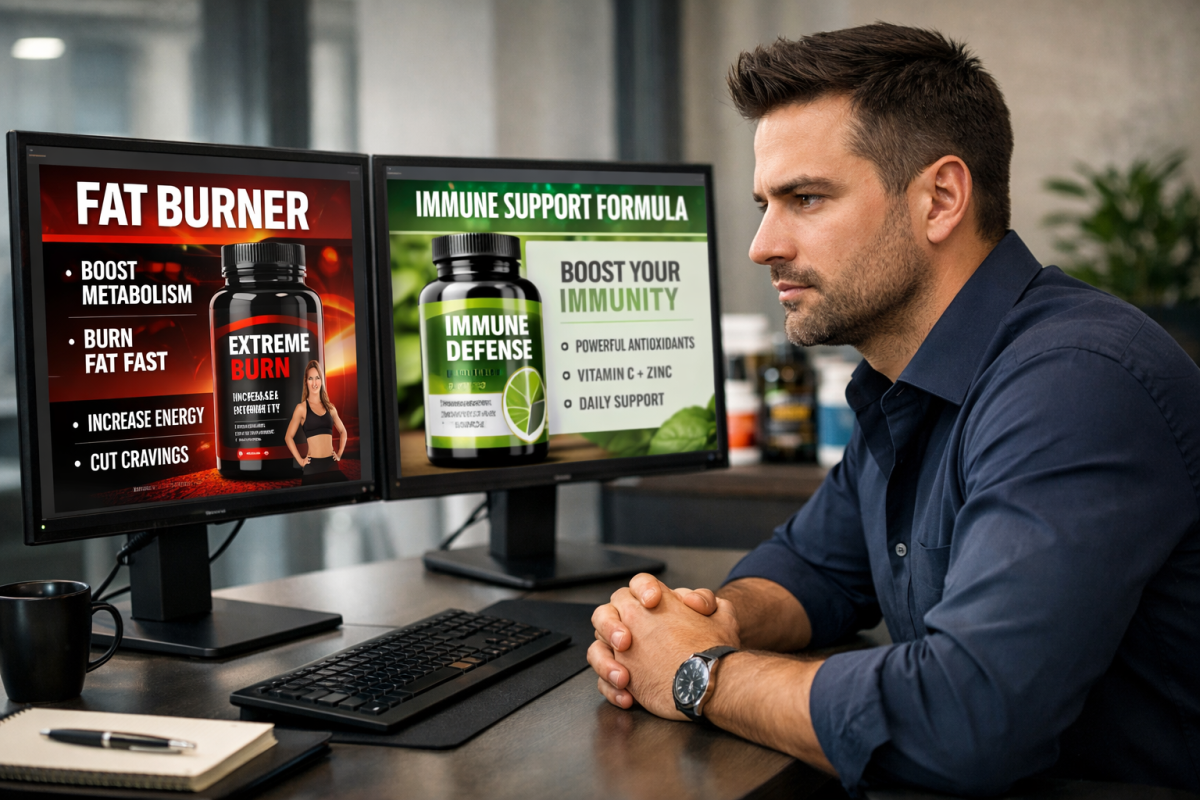
You can see, though, why ad networks might be a little nervous to accept supplements. Even Google Ads, one of the more open - with permission - ad networks out there, has a lot of regulations. Here's a quick rundown.
Actual pharmaceuticals can be promoted only by manufacturers or by authorized sellers - think CVS, not an online-only shop - and only in certain countries. For example, prescription drugs can only be promoted in Canada, New Zealand, and the United States. Over the counter medications are a little more permissive, with a list of other countries available, including Australia, Japan, Mexico, Brazil, China, France, Germany, and more.
Even if you're allowed to advertise prescription drugs, you can't use certain drug terms in your ads or landing pages. Only certain businesses - typically the manufacturers or major pharmacy chains like CVS or Rite Aid - are allowed to use them. More importantly, those businesses need to apply for permission directly with Google Ads. You can read more on the page linked above.
That said, there is a large list of things you cannot advertise, with or without manufacturer permission. Google maintains a list of banned products, including blanket bans on anything containing ephedra and anything considered an anabolic steroid. You can read the full list here, but be aware that Google reserves the right to add anything to the list at any time. If they decide a product is too close to fraud or snake oil, they will add it to their list without hesitation.
So, consider this a free additional ad network option. Google Ads can allow you to promote supplements, but in order to do so you either need to meet their requirements or obtain prior permission directly from Google. Here are five other ad networks and platforms you can try if you don't want to jump through those hoops.
1. SellHealth
SellHealth is one of the most established health supplement affiliate networks in the industry, having been in operation for over 20 years and paying out more than $100 million in commissions to its partners. Their focus is exclusively on health and wellness products, which means their entire infrastructure - from compliance to creatives - is built around the supplement space.
The network features over 50 high-converting health offers across niches including cognitive health, erectile dysfunction, weight loss, and general wellness. With a global network of over 100,000 advertising partners and commission structures of up to 60% per sale, it's one of the more attractive options for affiliates and media buyers who want to monetize health traffic without fighting uphill battles on general ad platforms.
Because SellHealth operates as an affiliate network rather than a traditional display ad network, it functions a bit differently - you're driving traffic to specific offers rather than placing banner ads across a publisher network. That said, it's one of the most reliable and longest-running options in the supplement space, and the high commissions make it worth serious consideration.
2. GourmetAds / HealthyAds
GourmetAds and HealthyAds are two sides of the same coin. GourmetAds is the advertiser-facing platform, while HealthyAds is oriented toward publishers. If you want to run ads on your website, HealthyAds is the route. If you want to pay for ad placement, GourmetAds is the way to go.
This ad network is largely focused on the health and food vertical. This makes it ideal for businesses selling health supplements, vitamins, health foods, some weight loss products, and other wellness-adjacent products. You can expect ads to appear on properties like Vegetarian Times, the Yoga Journal, and similar health-conscious publications.
The network maintains a tight level of quality control for ad approval, ensuring congruence between the content on publisher sites and the advertising being displayed. After all, you don't want weight loss supplements advertised next to a piece debunking weight loss products.
GourmetAds counts many recognizable brands among its advertisers, including Nestle, Kraft, General Mills, and Campbell's. This can make certain niches more competitive on the bidding side, though most of these brands don't operate heavily in the supplement space, leaving room for smaller advertisers to find their footing.
3. eHealthcareSolutions
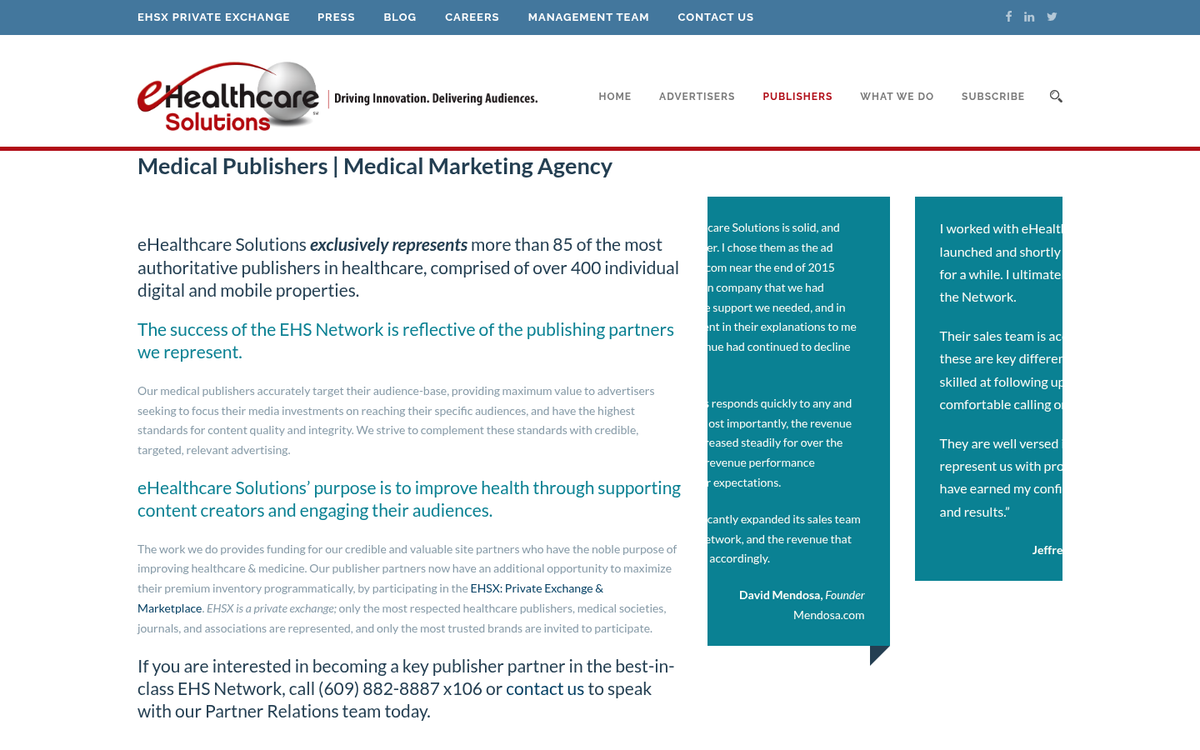
EHS is a healthcare and pharmaceutical specialist advertising network with a roster of highly vetted publisher sites, including Drugs.com, EmpowHER, MedHelp, and Psychology Today. Rather than operating a broad open exchange, they run a curated, proprietary network focused on quality over quantity.
On the advertising side, EHS has developed unique targeting technology in-house. This includes a geographic and medical combination targeting system that helps put relevant supplement and medication advertising in front of people who actually need it. They also employ a custom medical-focused contextual content analysis engine to ensure specific pieces of content are matched with congruent advertising. Mobile and in-app advertising options are available alongside traditional web placements.
From the publisher side, EHS maintains high barriers to entry. As they describe it, only the most respected healthcare publishers, medical societies, journals, and associations are represented - and only the most trusted brands are invited to participate. This exclusivity makes it harder to break into the network with a newer brand, but if you can get in, the audience quality is exceptional.
4. AdClick Media
AdClick Media is a broad-category network that accepts a wide range of verticals, ranging from dating to automotive, from health to niche hobbies like golf.
Advertisers using AdClick Media can take advantage of photo text ads, banner and display ads, full page interstitials, email advertising, and variations on those formats. They do have requirements for each format. Email advertising, for example, requires a targeted opt-in list rather than a general interest list, with a minimum content threshold. They require a phone conversation to vet mailing lists specifically because email advertising carries such a high risk of blacklisting.
One of the primary benefits of this network for advertisers is its fraud prevention infrastructure. Publishers are required to report participation and ad performance metrics, and traffic statistics are monitored both algorithmically and through manual spot checks. Email campaigns carry an additional layer of approval as well.
5. Conversant
Conversant absorbed several health-focused ad brands over the years - including AdRX Media - and rolled them into a broader healthcare-oriented vertical within their larger network.
They offer unique audience verification methods, including UPC purchase history data, consumption of health-related content, and household demographic signals. All targeting is handled without personally identifiable information, which is important when operating in a space with strict health advertising regulations.
Perhaps the best feature for advertisers is their 99% human traffic guarantee, backed by detailed filtering that ensures the vast majority of your ad impressions are coming from real people rather than bots.
6. 7Search

I'm including this one as a sixth entry because it has historically been one of the most commonly mentioned ad networks willing to work with medical, health, and supplement advertisers. The reason it's worth mentioning now is simply as a cautionary tale: they shut down. As of July 31, 2017, they ceased accepting new advertisers or publishers and have since fully wound down their platform. One of the larger, older ad networks in the space simply stopped being profitable enough to sustain operations - a reminder that no platform lasts forever, and diversifying your ad traffic sources is always a smart move.