There are two schools of thought when it comes to picking a niche for a business. They are, unfortunately, diametrically opposed. You have to pick one to move forward, though, so what are they?
The first is the "follow your passion" route. Everyone has something in their life that they love, be it a hobby, a sport, a craft, or something else. This is the logical conclusion to the statement that "every hobby should pay for itself." When you love what you do, you never work a day in your life. Or, you know, so the saying goes.
The problem with this method is that oftentimes the thing you love isn't something you can really monetize. How many thousands of Etsy sellers run shops that don't turn a profit? How many people invest in craft supplies but never produce enough to sell? How many writers are perpetually stuck in "working on my novel" mode? Once you do produce something, can you possibly sell it for enough to cover your costs and your time, or is it just a way to recoup some of your losses?
Worse, many of the things the average person is passionate about are things that already have businesses dedicated to them. If you're a young adult passionate about video games but unable to break into the developer role, you'll probably look at content creation - YouTube, Twitch streaming, or building a niche gaming site. That's fine, but then you're competing with massive platforms, established creators with millions of followers, and a whole ecosystem of media companies that have been doing this for years. Finding a foothold is genuinely hard.
That's why the other method is the method I prefer, and it's the method I'm going to teach you. You don't bring your passion and try to monetize it; you find a lucrative niche and build up passion. Mark Cuban, one of the most successful entrepreneurs in the world, has famously said that "follow your passion is easily the worst advice you could ever give or get." His view is that passion follows mastery and success - not the other way around.
The best framework I've seen is to chase a lucrative niche even if you're not passionate about it from day one, because it's easier to learn the basics, the marketing, and the skills necessary to succeed when you're not struggling for pennies. Once you have the foundation and the cash flow, then you can build a brand around something you genuinely care about - without making the classic newbie mistakes that sink most first-time entrepreneurs.
Why does passion matter at all, then? It comes through in how you run your business, how you write or create content, and how you carry yourself throughout the industry. People are a lot more willing to buy from someone who seems genuinely invested in the topic than from someone who's clearly just chasing a payday. Even if monetization is your primary goal, having authentic energy behind your work will help you connect with your audience in a way that converts.
Key Takeaways
- Choose a lucrative niche first, then build passion around it-not the other way around, as Mark Cuban advises.
- A good niche either solves a serious problem or serves people passionate about a topic they love.
- Niches must be specific enough to reduce competition but broad enough to support a viable business audience.
- Verify monetary potential using keyword research, affiliate marketplaces, and active social media communities before committing.
- AI-generated content floods most niches, creating opportunity for genuine human expertise and personality to stand out.
What is a Niche?
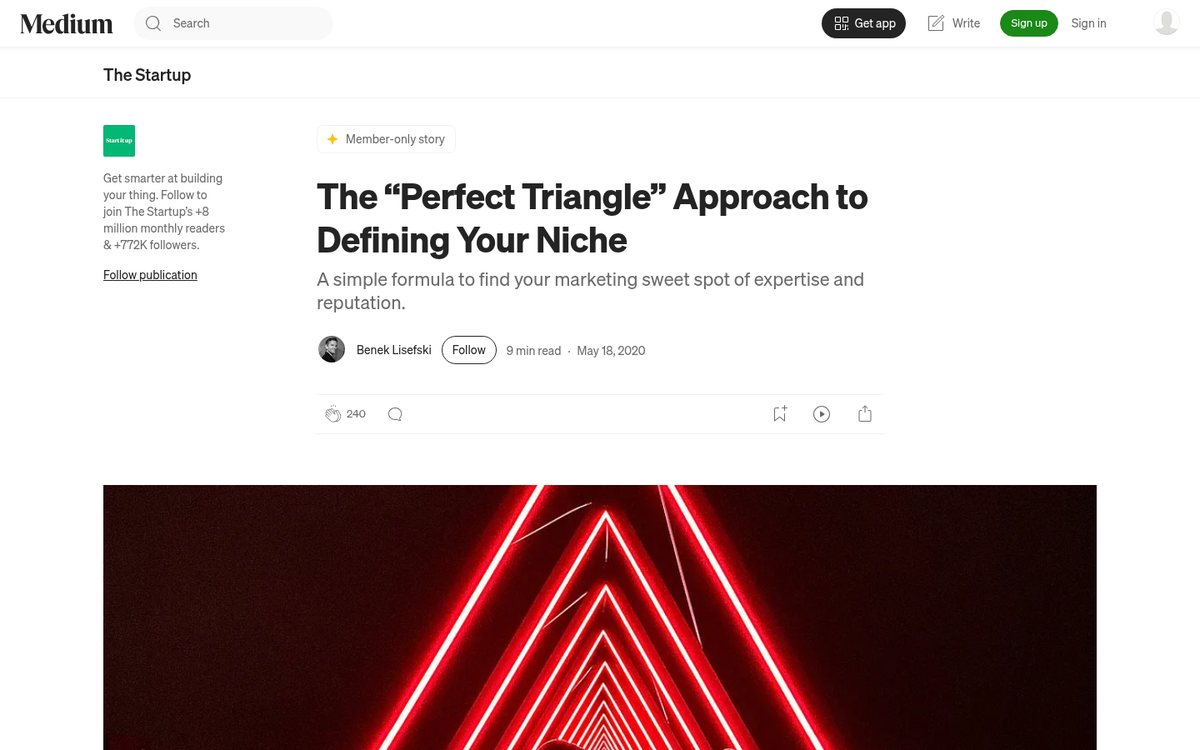
A niche is a specific sub-section of a market, which itself is a sub-section of an industry. Let's continue with the gaming analogy, shall we? The industry as a whole is gaming, but gaming is very, very broad. You have video games, you have tabletop games, you have board games, you have casino games and card games, and more.
Drill down within the broad gaming category and you have video games, and within that category you have different types of games. You have PC games and console games and mobile games. Within those categories, you have genres, like racing games or adventure games or RPGs. Then within, say, racing games, you have different types of those. Realistic racing games, F1 games, open world racing games, off-road racing, and on and on. You even have oddball titles that carve out their own sub-genre entirely - games that blend mechanics in ways that defy easy categorization.
A niche, then, would be something like "off-road dirt bike racing games." It's narrow, but it's still broad enough to have appeal to a wide selection of users who are into that kind of game.
You can do the same thing with any industry. Weight loss is a huge billion-dollar industry, but a specific niche like "weight loss for people with autoimmune conditions" is a far narrower, far more targeted niche.
Why do you need to choose a niche? At the end of the day, it's the key to getting a target audience to pay attention to you. If you're just trying to focus on something as broad as weight loss, you end up being just one more out of thousands of sites, competing with giants - established media brands, AI-generated content farms, and major health platforms. If you're focusing on a narrow niche like the autoimmune example, you may be one of very few voices speaking directly to people dealing with that condition. As such, they feel that you genuinely understand their unique situation, and that you have products and solutions that work specifically for them.
You can drill down inside any industry to find a specific niche. Right now, the viability of that niche isn't important. What's important is brainstorming ideas. You could start with pets and drill down to dogs, then to senior dog care, then to joint supplements for large breed dogs. You can start with travel, and drill down to solo travel for people over 60 on a fixed income.
If you go too deep, your audience gets too small to support a business. There are very few people who want to backpack in Europe without wearing shoes, who are also under 25 years old and who are named Steve.
On the other hand, if you're too broad, you have too much competition and too little specific appeal. You're not going to out-SEO WebMD or out-rank Amazon overnight, but you absolutely can carve out a profitable corner of an industry if you approach it strategically.
So what makes a niche good? It has to fit one of two categories.
- It's a niche that covers a problem that people dealing with it consider serious. It could be diet or weight, it could be money management, it could be computer or car repairs, it could even be something as nebulous as "dealing with burnout." Your role would be providing support, products, and advice to help cope with or solve the problem.
- It's a niche that covers a topic that the people involved are passionate about. This is something they enjoy or get pleasure from doing. This covers things like collecting items, crafting, playing sports, "extreme" anything, and travel. Your role is to provide support, products, and advice to help people get as much bang for their buck out of it as they can, to maximize their pleasure.
You have to decide, then, whether your niche is solving a problem or providing pleasure. This will help you determine how lucrative the niche can be, and how you can monetize it. It will also guide the tone and framing of all your content.
Finding Your Niche

A lot of people have the impression that online marketing is impossible to break into today because every niche has already been claimed. And to be fair, the landscape in 2026 is more competitive than ever - not just from human competitors, but from AI-generated content flooding search results across virtually every topic imaginable.
But here's the thing: that same AI content wave has created a new opportunity. Most of it is generic, shallow, and devoid of real experience or personality. Audiences are actively seeking out genuine human expertise and perspective. The niches aren't full - they're just full of noise. Your job is to cut through it.
There are no truly undiscovered niches, but there are plenty of niches you haven't found a way to own yet. If you're still exploring options, take a look at ways to make money online or dig into the highest paying niches for CPA offers to help narrow your focus.
Step 1: Brainstorm Niche Ideas
There are a lot of ways you can go about this. You're not drilling down to specific niches yet; that comes later. For now, get ideas.
- Examine your life and look for two things: passions and problems. What are you passionate about? List hobbies and interests. What problems do you struggle with, in health, finances, relationships, or another area? List those down too.
- Spend a day looking at the people around you and society at large. Watch the news, scroll through Reddit, browse Facebook Groups and Quora. Note the recurring problems, frustrations, and questions people have. These can be broad or hyper-specific.
- Take a look at trends in technology, culture, and business and look for gaps, holes, or underserved audiences. AI tools, remote work, longevity and health optimization, sustainable living - these are areas exploding with opportunity right now.
- Harvest niche data from existing marketplaces. Go to Amazon and explore the sub-sub-categories. Browse affiliate networks like Impact, ShareASale, or ClickBank. Look at what's selling and follow the money.
- Use tools like Google Trends, Exploding Topics, and even Reddit's search to find emerging topics before they hit peak saturation. Getting into a niche on the way up is far easier than fighting for position at the top.
At the end of this process you should have anywhere from 50 to 1,000 niche ideas, if not more. That's fine - you're at the "harvest bulk data" step. The next step is to narrow it down to the profitable ones.
Before you start filtering, eliminate anything you absolutely know you don't want to pursue. Even if there's money in it, if you have a hard line against certain industries, remove them now and don't second-guess it.
Step 2: Verifying Monetary Potential

Every niche needs a few things to be viable. It needs something - a product, a service, a course, a subscription, or some other offer - that can be sold to capitalize on the niche. And it needs enough people interested in it to support a real business. Here's how to check:
- Use keyword research tools to look at search volume. Google's Keyword Planner still works, but tools like Ahrefs, Semrush, or even free options like Ubersuggest give you a clearer picture in 2026. Look for healthy monthly search volume - generally 10K+ for core terms and 50K+ across related keywords - as a baseline indicator of audience size. More volume means more potential, but also more competition.
- Check Amazon, ClickBank, Impact, and ShareASale for products and affiliate offers relevant to your niche. You want to see that there are already things to sell - ideally with strong reviews, reasonable commissions, and clear demand. If monetization options are thin, that's a red flag. Our huge list of affiliate sites with recurring commissions can help you find options across many niches.
- Look for existing competition. This is actually a good sign. Competition validates demand. Use keyword spy tools as a map - study what's already working, where the gaps are, and how you can do it better or differently.
- Check social media and community activity. Look for active subreddits, Facebook Groups, YouTube channels, TikTok hashtags, and Discord servers around your niche. An engaged community means a real, reachable audience. It also gives you a window into exactly what problems and questions people have, which is invaluable for content planning.
Doing this for dozens or hundreds of niches is time-consuming, so prioritize your most promising ideas first. If something disqualifies a niche early, move on - don't go searching for reasons to justify it anyway.
Step 3: Determining Your Role
Now that you have a few niches that have traffic, audience interest, and monetization potential, you need to figure out where you fit in. What can you do differently or better than what's already out there? Here are some angles to consider:
- Can you produce better content? In a world flooded with AI-generated articles, genuinely helpful, experience-backed content stands out more than ever. If competitors are publishing thin, generic posts, you can win by going deeper, adding real-world examples, using original data, or incorporating video and multimedia.
- Can you build a stronger community or personal brand? In 2026, people follow people as much as they follow websites. If you're willing to put your face and voice behind your brand - through video, podcasting, newsletters, or social media - you have a distinct advantage over faceless content sites.
- Can you pick a complementary sub-niche that doesn't directly compete with the established players, but instead fills a gap they've ignored? This is a smart way to get initial traction and potentially build a relationship with larger brands in the space.
- Are the competitors coasting on outdated SEO tactics or thin content? Google's algorithm has evolved significantly, and sites that built their traffic on low-quality content are increasingly vulnerable. If a niche's top players look shaky, there's real opportunity to move in.
At this point, you get into specific testing and execution. If you want to validate quickly before committing, you can build a small test site - a handful of solid articles, a couple of affiliate links, and a simple landing page - and run a modest paid traffic test across Meta ads or Google to see how the audience responds.
Ideally, by the end of this process, you will have spent a minimum of time and money but gained a clear picture of which niches are worth pursuing and how you can realistically compete. All that's left is to build a site, develop a content strategy, and execute a marketing plan. That's the easy part, right?