





How much traffic do you have right now? A few hundred visitors each month? A few thousand? A hundred thousand? How much would your business change if your traffic doubled? The good news is that doubling your traffic is still very achievable - but the playbook has evolved significantly. Here's what actually works in 2026.
Key Takeaways
- Keyword research remains critical; target specific, moderate-competition keywords with clear buying intent over high-volume ambiguous ones.
- Content with proprietary data earns 51% more organic traffic and 34% more referring domains than standard posts.
- Publish three to four quality posts weekly; list posts earn 218% more shares than how-to articles on average.
- Giveaways work best when prizes solve your audience's specific pain points, not generic prizes attracting unqualified visitors.
- LinkedIn dominates B2B traffic; email newsletters and content syndication remain high-converting distribution channels worth prioritizing.
Step 1: Keyword Research
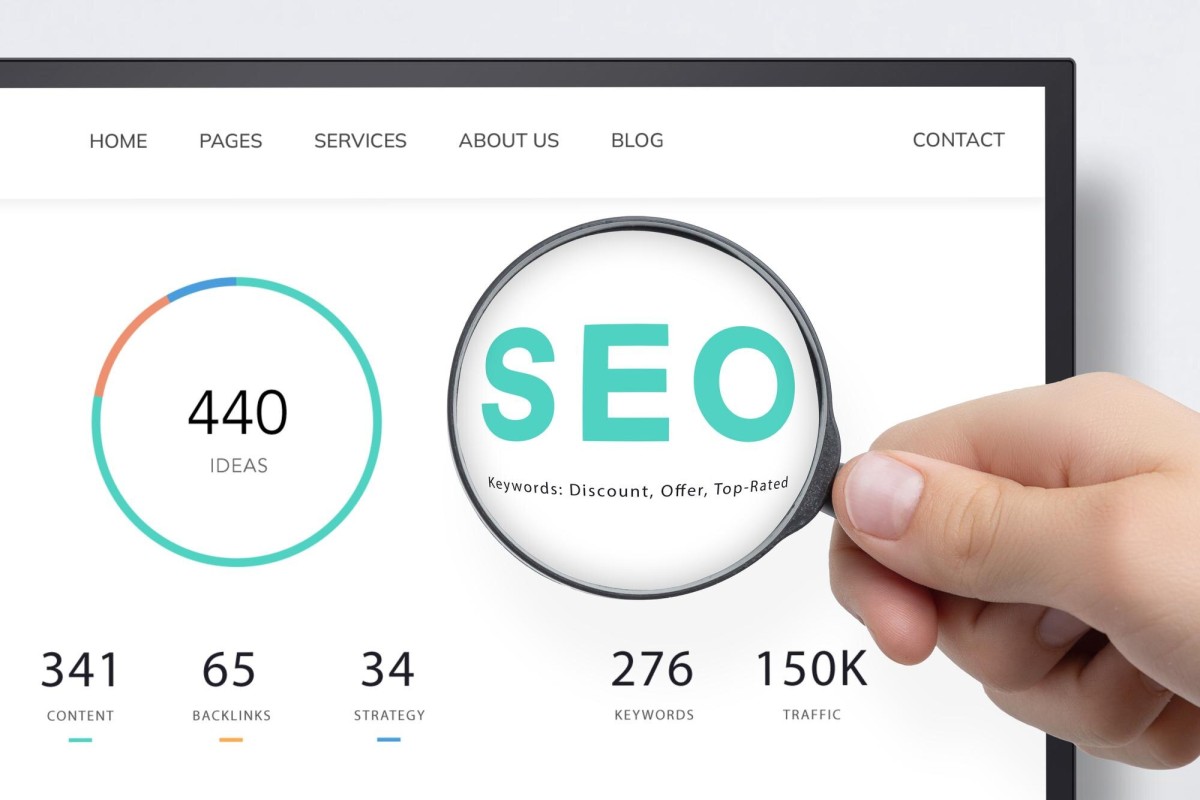
If you haven't done serious keyword research recently, now is the time. Even if you did it a year or two ago, the landscape shifts fast enough that a fresh pass is almost always worth it. With over 5.44 billion internet users worldwide and 53% of all website traffic still coming from organic search, getting your keyword strategy right remains one of the highest-leverage things you can do.
Avoid these two traps:
- Situation 1: Your keyword choices are lucrative but buried under high competition, with well-funded competitors who've been ranking for years and aren't going anywhere.
- Situation 2: Your keyword choices are low competition but also so low in volume that even a top ranking barely moves the needle.
The sweet spot is finding keywords that are specific enough to convert, but broad enough to actually drive meaningful traffic. If you sell cheap flights to Germany, targeting "cheap flights to Germany" will serve you far better than chasing "flights to Europe" - and far better than something so granular it gets a dozen monthly searches.
For research, use a combination of tools. Google Search itself is still invaluable - look at autocomplete suggestions, People Also Ask boxes, and related searches at the bottom of the results page. Tools like Ahrefs, Semrush, or Moz give you volume and difficulty data. Pay attention to search intent, not just search volume. A keyword with 2,000 monthly searches and clear buying intent will often outperform one with 20,000 searches and ambiguous intent.
One underrated tactic in 2026: look for keywords where you can produce content backed by proprietary data or original research. Analysis from Siege Media found that keyword-driven posts with proprietary data earn 51% more organic traffic and 34% more referring domains than those without. If you have internal data, case studies, or unique insights, build content around them deliberately.
To validate your targets, run a small paid search test via Google Ads. Point traffic to a relevant existing page, accumulate a few hundred clicks, and measure impressions, click-through rate, and conversions. It's a fast, low-cost way to confirm demand before you invest heavily in content. If you're new to this, common AdWords conversion mistakes are worth reviewing before you spend.
Step 2: Establish or Boost a Content Schedule

You need a consistent, sustainable content schedule - and in 2026, quality and depth matter more than raw posting frequency. The old advice of "publish every day no matter what" has given way to something more nuanced: publish as often as you can while maintaining genuine quality.
For most sites, three to four well-researched posts per week is a strong target. If your niche moves fast - finance, tech, AI - you may need to post daily to stay relevant. If your niche is evergreen and relationship-driven, two excellent long-form pieces per week can outperform five thin ones. There are real pros and cons to writing based solely on evergreen topics worth considering before you commit to a strategy.
An editorial calendar is non-negotiable. Whether you use a WordPress plugin, Notion, Trello, or a dedicated tool like CoSchedule, the goal is the same: never scramble at the last minute to find something to publish. Plan two to four weeks ahead at minimum.
For content creation, your options in 2026 are broader than ever:
- Write posts yourself, drawing on your expertise and direct experience.
- Hire freelance writers or ghostwriters for scale.
- Use AI writing tools as a drafting aid, then edit heavily for accuracy, voice, and original insight - Google has gotten very good at identifying thin AI-generated content with no added value. If you go this route, learn how to use AI to write blog posts in bulk without losing quality.
- Bring on staff writers who publish under their own names, adding E-E-A-T (Experience, Expertise, Authoritativeness, Trustworthiness) signals Google weighs heavily.
- Source guest posts from credible industry voices to fill gaps and add fresh perspectives.
On post length: aim for 1,500 to 2,500 words for competitive topics where depth is rewarded. Shorter posts of 800 to 1,000 words can still work for simple, focused queries. For truly comprehensive topics, don't be afraid to go long - but only if every section earns its place. And consider your content format carefully: Backlinko's analysis of 912 million articles found that list posts earn an average of 218% more shares than how-to posts and 203% more shares than infographics, so when the format fits your topic, use it. Tools that help you create article topics and titles can make planning these formats much easier.
Step 3: A Giveaway or Lead Magnet
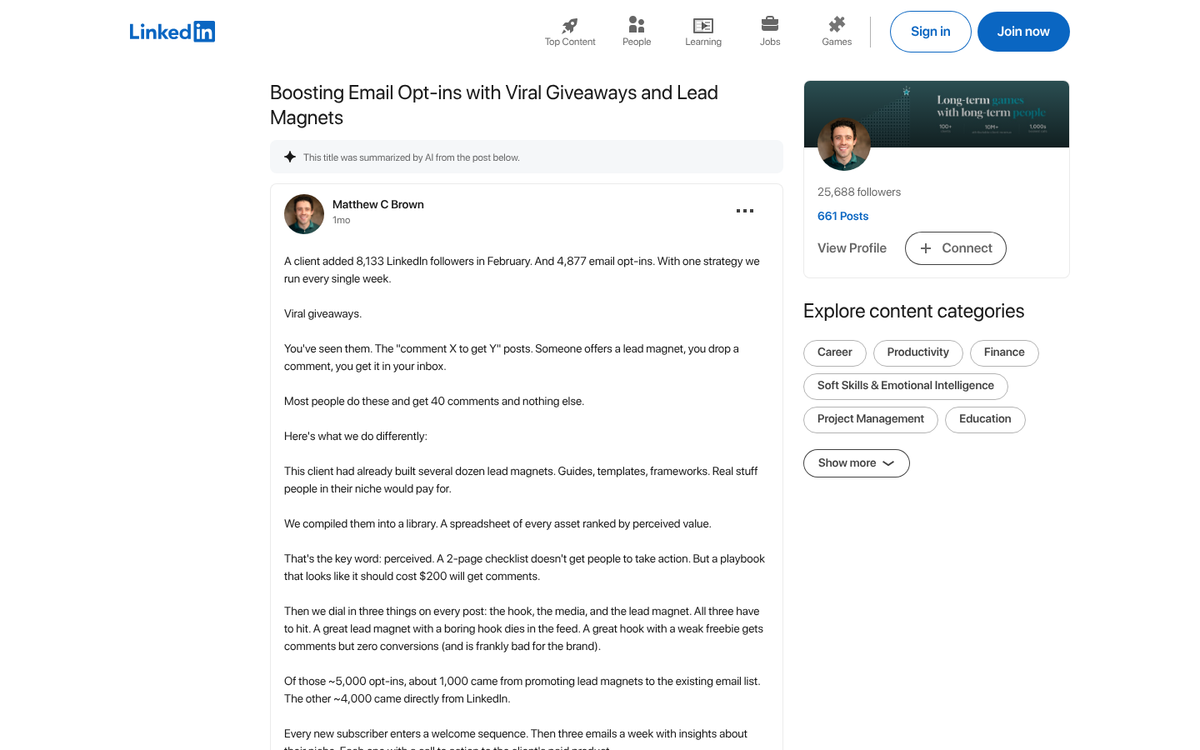
A giveaway is still a powerful tool for generating a surge of new visitors and subscribers - but it has to attract the right people, not just anyone with a pulse and a desire for free stuff. Giving away a generic prize like an iPad or gift card will flood your list with people who will never buy anything from you and won't come back.
The better approach: survey your existing audience first. Send a short, personalized email asking what their single biggest problem related to your topic is right now. Read the responses carefully, find the most common and most urgent pain point, and build your giveaway around solving that exact problem. This could be an in-depth ebook, a templates pack, a mini course, a private community, a tool, or a live workshop - whatever genuinely addresses the problem.
Gate it behind something simple and low-friction: an email opt-in, a referral, or a social share. The result is a list full of people who actually care about your topic, which is the only kind of list worth building.
Step 4: Social Media and Distribution
The social media landscape in 2026 looks meaningfully different from just a few years ago. Twitter/X has fragmented its audience, with many users migrating to Bluesky, Threads, or LinkedIn depending on their niche. TikTok's future in certain markets has remained uncertain. Short-form video continues to dominate engagement across Instagram Reels, TikTok, and YouTube Shorts.
The core principle hasn't changed - be present where your audience actually spends time - but the channel mix has shifted. For most B2B businesses, LinkedIn is now arguably the most valuable single platform. For consumer-facing brands, Instagram and TikTok still drive significant discovery. YouTube remains one of the strongest long-term traffic drivers because of its search functionality and the longevity of video content.
Regardless of which platforms you use, the fundamentals hold:
- Post consistently and with purpose, not just for the sake of posting.
- Lean into native formats - short video, carousels, and interactive content all tend to outperform plain text links on most platforms.
- Avoid making every post a pitch. Lead with value.
- Curate content from others in your industry alongside your own - it builds goodwill and keeps your feed active without burning out your content team.
- Engage genuinely with comments and conversations rather than broadcasting one-way.
- Post at times when your specific audience is active - most platforms now offer native analytics to help you identify this.
Finally, don't overlook distribution beyond social. Email newsletters have seen a strong resurgence and remain one of the highest-converting traffic channels you control. Content syndication, strategic guest posting on authoritative sites, and community participation in niche forums or Slack groups can all drive meaningful referral traffic that compounds over time.
With solid keyword research, a consistent content operation, the right giveaway strategy, and a modern approach to social and distribution, doubling your traffic isn't a fantasy - it's a project with a clear plan behind it.

1 response
Thoughtful replies only - we moderate for spam, AI slop, and off-topic rants.
How long does this normally take to happen? I'd love to double my traffic and I've been trying for a while but I'm not sure what I'm getting myself into. Any help at all is appreciated!