Key Takeaways
- Long-tail keywords make up 91.8% of Google searches and convert at 3x the rate of short-tail keywords.
- Target middle-ground keywords: generic terms are too competitive, ultra-specific ones have nearly zero individual traffic volume.
- Google Autocomplete, "People Also Ask," and "Searches Related To" provide free, real long-tail keyword ideas instantly.
- Tools like SEMrush and Ahrefs help filter keywords by volume, difficulty, and word count to find winnable targets.
- Reddit, Quora, and competitor analysis reveal how real audiences phrase questions, uncovering valuable long-tail opportunities.
Understanding Long Tail Keywords in 2026
Long tail keywords come from an old illustration comparing a lizard or dinosaur tail to the peak and curve of traffic by word for SEO keywords. The concept has been around for decades, but it's more relevant than ever in 2026.
The concept is simple: hyper-generic keywords, things like "shoes" or "computers," tend to have very high traffic. They're also very, very hard to rank for, and they carry enormous competition. You can't rank for "books" when Amazon and Barnes & Noble have dominated that space for years.
As you go down the curve, you end up with more specific keywords. Things like "running shoes" or "children's books." These are more specific, and thus have less competition and are easier to rank for. On the other hand, they're also lower traffic, so it's harder to pull in the volumes you need to build a successful site.
Go even further down the curve and you have much more specific keyword terms. Things like "two year old black Nike running shoes" or "best children's books for reluctant readers age 7." According to Ahrefs, 95% of all U.S. search queries get fewer than 10 searches per month - meaning the vast majority of what people type into Google is extremely specific. These keywords are easy to rank for, but individually they yield virtually zero traffic.
Naturally, you want to target keywords in the middle. The generic keywords are too competitive for most sites to ever earn a meaningful share of traffic. The ultra-specific keywords have such low individual volume that they're barely worth pursuing one at a time. It's the middle of the road - and a smart cluster of related long-tails - where the real opportunity lies.
And the numbers back this up. Long-tail keywords collectively make up 91.8% of all Google searches, and pages optimized for long-tail keywords move up an average of 11 positions in rankings, compared to just 5 positions for head keywords. On top of that, long-tail keywords convert at 3x the rate of short-tail keywords - meaning the traffic you do get is far more likely to turn into a customer or subscriber.
The hardest part is identifying which long-tail phrases are the right ones for you. You need to find phrases that are:
- Related to your primary subject closely enough that your site is genuinely relevant as a search result, making it possible to rank highly for the term.
- High enough in search volume that you're pulling in a reasonable number of users who can become regular readers or paying customers.
- Low enough in competition that you're not fighting for every scrap against more dominant, established players.
So, how do you actually find these keywords? Here are the most effective methods available right now.
Google's Autosuggest and People Also Ask

When you start typing something into Google, Google surfaces suggestions for what you might want to search for. These are real queries people are typing, making them excellent long-tail keyword ideas. Type in "running shoes" and Google might suggest "running shoes for wide feet" or "running shoes for flat feet women" - these are ideas you can use directly.
Beyond autocomplete, pay close attention to the "People Also Ask" box that appears mid-results. This feature has expanded significantly and now surfaces layered follow-up questions that reveal exactly how real searchers think about a topic. Each question is essentially a long-tail keyword handed to you on a plate. Try using a People Also Ask outline generator to turn these questions into structured content quickly.
Don't forget to scroll to the bottom of the results page either. The "Searches related to..." section still delivers solid related keyword ideas that you can fold into your content strategy. Tools like keyword spy tools can help you go even deeper and uncover what's driving your competitors' traffic.
Dedicated Keyword Research Tools

Google's free tools are useful, but if you want volume data and competition metrics, you need a proper keyword research tool. In 2026, the two most widely used are Ahrefs and SEMrush - and both are genuinely excellent.
SEMrush draws from a database of over 27.2 billion keywords, and you can filter specifically for long-tail opportunities by setting search volume between 0-1,000, keyword difficulty between 0-29%, and word count to 3 or more words. This combination surfaces realistic, winnable keyword targets quickly.
Ahrefs offers similar filtering and is particularly strong for analyzing what keywords your competitors are already ranking for - which leads us to the next method.
Search Q&As and Community Sites
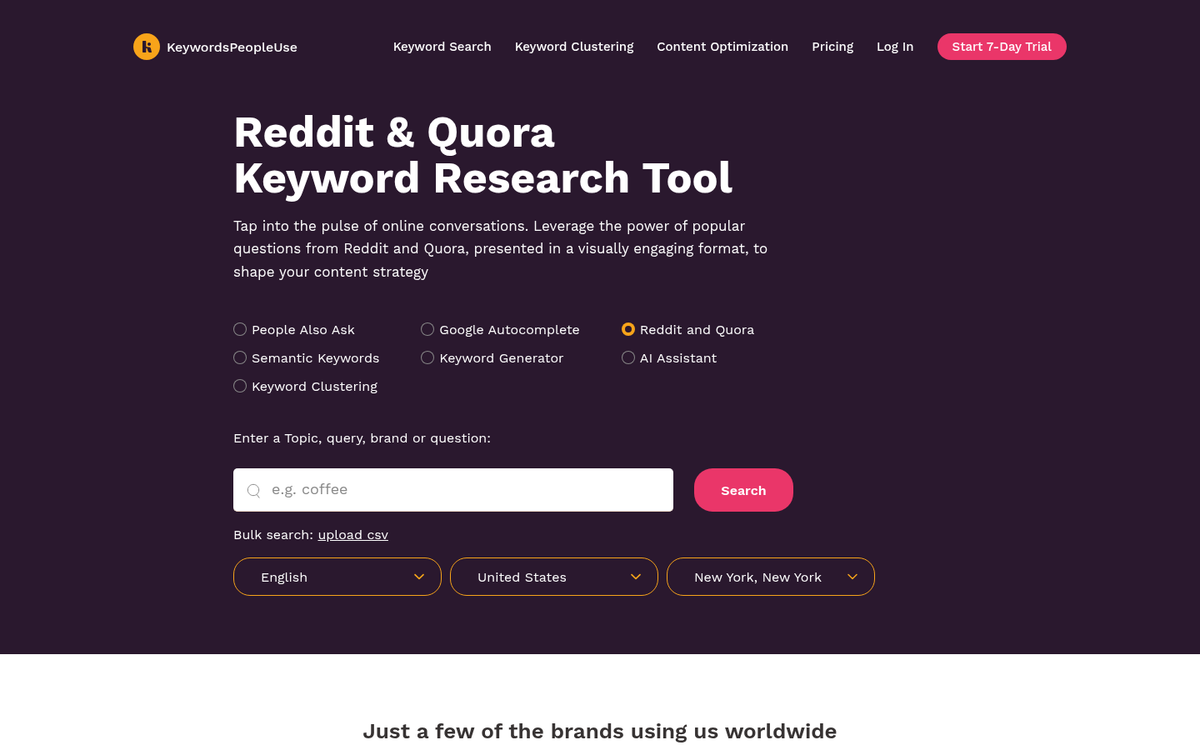
Sites like Quora and Reddit are goldmines for long-tail keyword research. Search for topics in your industry and look at the exact questions people are asking. The way someone phrases a question in a forum is often exactly how they'd type it into Google.
Questions make for outstanding long-tail targets. You already know there's genuine demand for the information, and if you write a focused, high-quality answer on your site, you have a real shot at ranking for it. "People Also Ask" in Google ties directly back to this - questions are increasingly driving search behavior. You can also get free traffic from Q&A sites like Quora by answering questions directly on the platform while linking back to your content.
Wikipedia is still worth skimming too. The subheadings inside Wikipedia articles on your topic are often content ideas hiding in plain sight. You won't necessarily cover the topic better than Wikipedia's editors, but as an industry-specific source, you can earn more niche authority and targeted rankings. For community-driven sites, it's also worth understanding whether forum links can still help boost your rankings.
Monitor Your Competitors

There are two ways you can go about borrowing keyword research. The first is to watch your direct competitors and see what they're targeting. Tools like Ahrefs and SEMrush make this easy - you can plug in a competitor's URL and see every keyword they're ranking for. You can also find your competitors' traffic sources to understand which channels are driving their growth. Target the same phrases with better, more thorough content and you have a legitimate shot at outranking them. Remember: borrowing research is fine, copying content is not.
The other is to monitor high-volume content farms and answer sites that chase keywords at scale. These sites often rank for huge numbers of long-tail queries with thin content, which means they're easy to beat if you can produce something genuinely useful on the same topic. If you want to dig deeper, learning how to increase your links by snooping on competitors can give you an additional edge.
Search Social and Forums

Social platforms remain a useful source of raw keyword inspiration, though the landscape has shifted. Reddit is arguably the most valuable social research tool for SEO right now - Google has significantly increased the visibility of Reddit threads in search results, which means the language people use in subreddits often mirrors high-performing long-tail queries. If you want to go deeper, check out our ultimate guide to using Reddit for traffic generation.
TikTok and YouTube autocomplete are also worth checking, especially if your audience skews younger or your topic lends itself to video. The search suggestions on both platforms reflect how people are actually phrasing their questions in 2026. You can also explore strategies for increasing views on your YouTube videos as part of your broader content research process.
Twitter/X still offers some value for trending topic research - including understanding what percentage of Twitter users are on mobile devices - and niche forums and Facebook Groups in your industry can surface the exact language your target audience uses - which is, ultimately, what long-tail keyword research is really about.