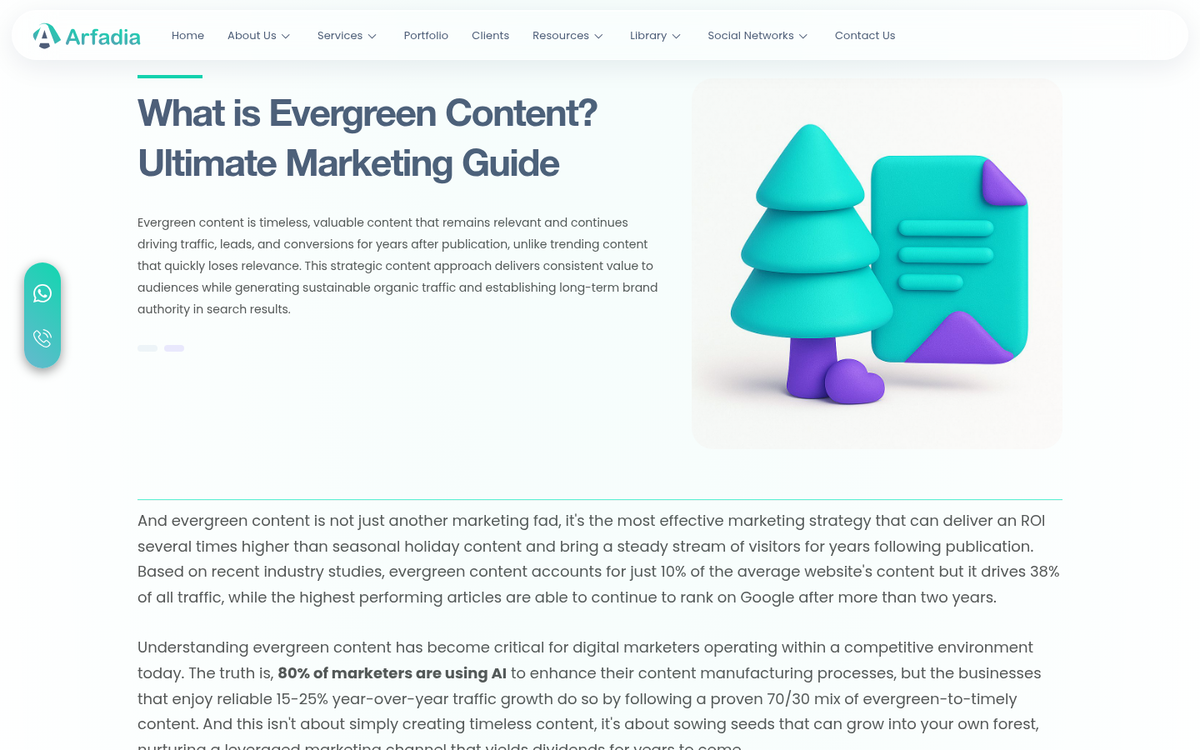
Evergreen content is called such because, like evergreen trees, it stays green and valuable throughout the year. This is in contrast to timely content, which is like deciduous trees - looking fresh and vibrant for a short season before losing their leaves and relevance come winter.
Evergreen content is genuinely powerful. It brings in users consistently over time, builds backlinks exceptionally well, and can serve as a foundational pillar of your content strategy for years. A 2024 Ahrefs study found that evergreen content accounts for 60% of sustained organic traffic, and top-performing evergreen posts can hold Google's top 10 positions for over two years. Some people take this to mean they should write nothing but evergreen content. That's still a mistake - but it's worth understanding exactly why, and where evergreen content truly shines in 2026.
Key Takeaways
- Evergreen content accounts for 60% of sustained organic traffic and can hold top Google positions for over two years.
- Refreshing existing evergreen posts can increase traffic by over 106%, making updates a high-ROI activity.
- Beginner-focused evergreen content is highly reliable since new audiences constantly enter every niche seeking foundational knowledge.
- Expert-level evergreen content is risky: two of three likely outcomes-too basic or too narrow-work against you.
- Solely publishing evergreen content causes missed relevance signals, creative stagnation, and vulnerability to keyword cannibalization over time.
Pro: Evergreen Content Lasts Forever
With a little upkeep, a piece of evergreen content lasts indefinitely. Take, for example, a comprehensive guide on setting up a home network, or a breakdown of how compound interest works. The fundamentals don't change. Someone discovering that topic next year - or five years from now - will find your guide just as valuable as someone reading it today.
Or consider a historical retrospective of an industry. You could write a deep, well-researched analysis of the evolution of digital advertising or the history of supply chain logistics. Even as those industries continue to evolve, their history doesn't disappear. Anyone researching the past will see your resource as equally relevant no matter when they stumble upon it.
What makes this even more compelling is the update effect. Refreshing and updating an evergreen post can increase its traffic by over 106% - meaning the content you already have is often your biggest untapped asset. A few hours of updates can breathe entirely new life into a post that's been sitting still.
Con: Evergreen Lacks the Traffic Spike of Timely Content
This is not to say evergreen content can't generate substantial traffic - it absolutely can. But the traffic pattern is fundamentally different. Think of it this way: evergreen content is a long, low, gradual slope. It climbs steadily for miles, slow and consistent, with no abrupt end in sight. Timely content, on the other hand, is the sharp mountain peak - rising dramatically out of flat terrain before dropping just as quickly on the other side.
Trending content typically peaks within days or weeks and becomes largely irrelevant after one to three months. Evergreen content doesn't spike the same way, but it also doesn't crash. It's the tortoise to timely content's hare - and in the long race for organic traffic, the tortoise has a surprisingly strong track record.
The real risk of relying solely on evergreen content is that you miss out on relevance signals. Google in 2026 factors in content freshness and engagement patterns more than ever. A site with zero timely content can start to feel stale to both algorithms and readers.
Pro: Evergreen Beginner's Content is Exceptionally Effective

When writing evergreen content, you need to think carefully about your target audience. If you're writing foundational, beginner-level content, you've hit upon one of the most reliable formulas in content marketing. Beginner audiences are always replenishing - there's a constant stream of new people entering any given niche who need the basics explained clearly.
A Moz study found that 72% of marketers rate evergreen content as highly effective at attracting new audiences, and beginner-focused content is a big reason why. Topics like "how to start investing," "what is SEO," or a beginner's guide to a new skill never run out of fresh readers. There will always be someone for whom it's their first time.
Con: Evergreen Expert Content is Often Too Narrow
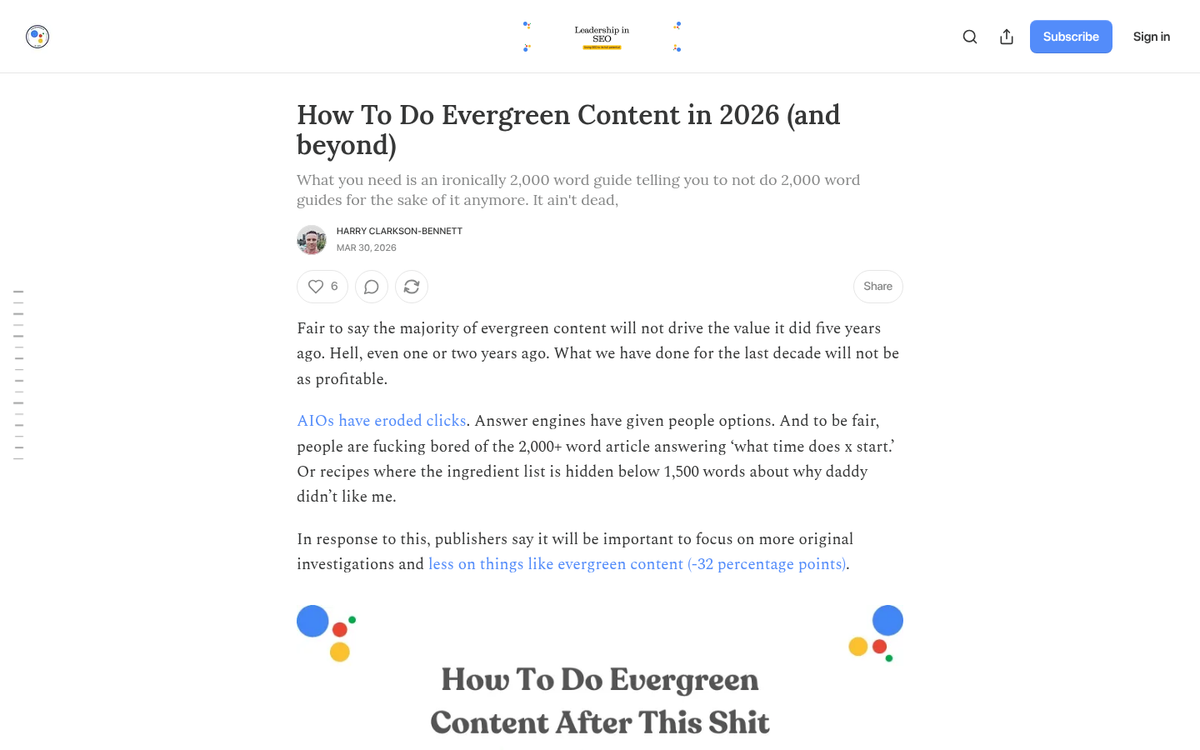
The deeper you go into evergreen content, the more you find yourself navigating a minefield of advanced, niche topics. And writing evergreen content for expert-level audiences tends to produce one of three outcomes:
- Your content is perfect. Advanced users genuinely learn something new, and intermediate users bookmark it as a resource to grow into. This is the ideal outcome.
- Your content is too basic, and advanced users dismiss it immediately as something "everyone already knows." Your credibility takes a hit rather than gaining one.
- Your content is too advanced, meaning the pool of people interested in it is extremely small. Traffic potential is minimal and long-term growth flatlines.
Two of the three outcomes work against you. That's the fundamental challenge with targeting experts through evergreen content. It's not impossible to do well, but the margin for error shrinks considerably the more specialized you get.
Pro: You Can Build Deep Content Ecosystems Around Narrow Topics
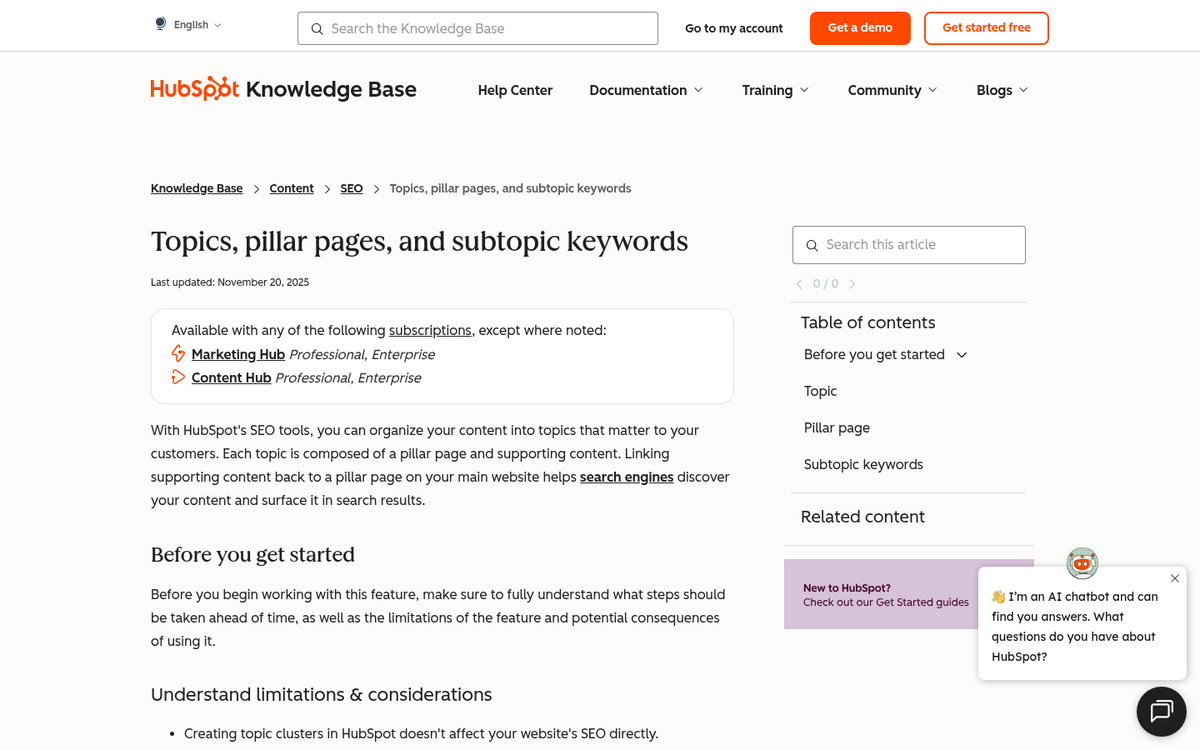
Evergreen content is an excellent vehicle for going deep on a subject as part of a larger content strategy. The most effective approach is to take one broad topic, brainstorm every possible angle, sub-topic, and related question, and then structure that list like a table of contents. You can use tools to help generate article topics and titles for each entry, then turn them into thorough evergreen articles, and link them all together from a central "ultimate guide" or pillar page.
This approach - often called topic clustering - is one of the most proven SEO frameworks in 2026. It signals topical authority to search engines, keeps users navigating within your site, and gives each individual page a better shot at ranking. Be mindful, though, of topical map cannibalization as you build out your cluster. Done well, a single topic cluster can dominate an entire niche in search results.
Con: Your Ability to Overlap Content is Limited
That said, this kind of structured approach requires upfront planning. If you're building out a content ecosystem retroactively, you'll likely face some reorganization - which can mean temporary losses in backlinks and rankings during the transition.
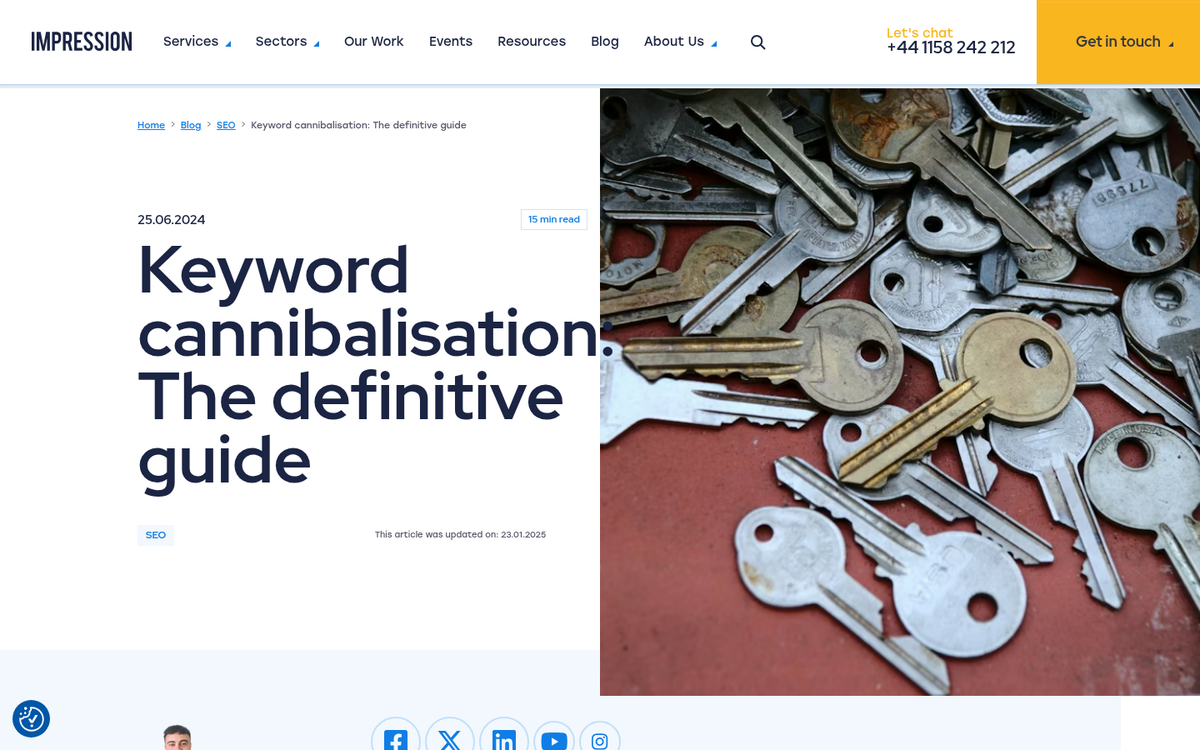
The "permanent" nature of evergreen content that makes it so valuable also creates a constraint: you can't revisit a topic too closely without risking keyword cannibalization. Two similar pages compete against each other in search, splitting authority and user attention rather than concentrating it. In a world where 96.55% of web pages attract zero organic traffic from Google, you can't afford to dilute the pages that are actually working.
Pro: Updates and Refreshes Compound Your Returns
One of the most underrated advantages of evergreen content in 2026 is how well it responds to updates. Unlike a news article that's contextually locked to a moment in time, evergreen content can absorb new data, new examples, new tools, and new perspectives without losing its foundational value.
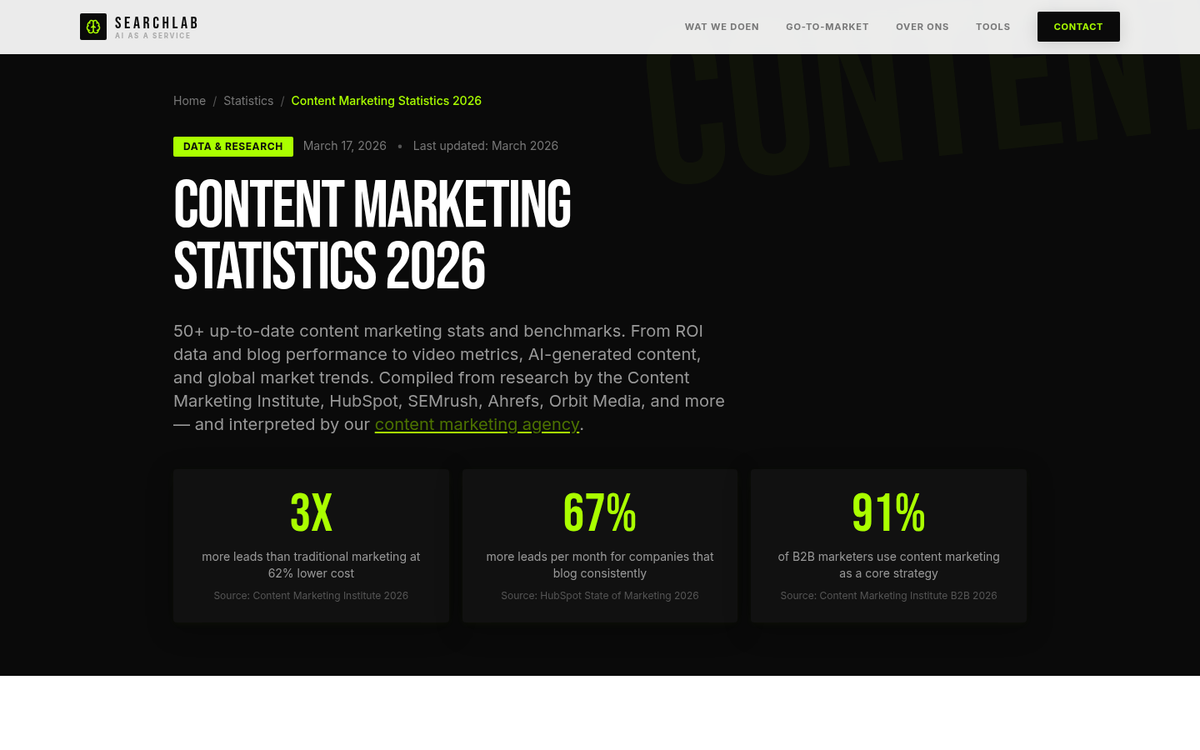
Strategically refreshing your evergreen content - updating statistics, adding new sections, improving internal links - is one of the highest-ROI activities available to content marketers. Evergreen content already delivers four times higher ROI than seasonal or trending content and can account for 38% of a site's total organic traffic. Regular updates push those numbers even higher. Marketing professionals today generally recommend that at least 75% of your blog content be evergreen to maximize these long-term compounding benefits. If you're scaling your output, learning how to use AI to write blog posts in bulk can help you build that evergreen foundation faster, while tools covered in our roundup of the best free marketing tools can support the refresh process without adding significant cost.
Con: Brainstorming New Ideas Gets Harder Over Time
There's a real creative and strategic cost to a heavily evergreen content library: it fills up. Once you've written the definitive guide on a topic, you can't really write another one. You can update the original, but the landscape of "what's left to cover" keeps shrinking as your archive grows. You have to keep finding genuinely new angles, which becomes progressively more difficult - especially in competitive niches where the obvious ground has already been covered by you or your competitors.

This is another reason why a balanced content mix matters. Timely content keeps your creative muscles flexible, introduces your brand to new audiences during trending moments, and provides fresh material that can eventually be distilled into new evergreen resources. If you're struggling to generate new angles, an AI optimization prompt library can help spark ideas you might not have considered.
In practice, the most effective content strategies in 2026 use both. Evergreen content forms the backbone - the durable, high-ROI foundation that compounds over time. Timely content provides the pulse - the bursts of relevance, shareability, and engagement that keep a site feeling alive. Very few successful content-driven sites operate on one type exclusively, and those that do are typically structured less like blogs and more like dedicated reference resources or news operations with large editorial teams. Understanding how competitors drive their traffic can also reveal which content types are working best in your niche.