Key Takeaways
- AI Overviews and zero-click searches have made search volume alone an unreliable metric for keyword strategy.
- Top tools like Ahrefs and Semrush now show which keywords are dominated by AI Overviews, reducing organic click potential.
- Google Search Console is free and increasingly valuable, surfacing data on AI Overview appearances for your content.
- Marketers now use ChatGPT and similar AI tools for initial ideation, then validate findings using data-driven keyword tools.
- Reddit research provides unique qualitative insight into audience language that traditional keyword tools cannot replicate.
In the early days of content marketing, keyword research felt almost effortless. Google Analytics and the Keyword Planner handed over generous amounts of search data - large and localized - making it easy to find what we were looking for and where opportunities existed. Then, slowly, "keyword not provided" crept in and swallowed nearly everything. SEOs adapted, third-party tools emerged to fill the gap and an entire industry built itself around the problem.
Fast forward to 2026 and the community has shifted dramatically again - this time because of AI. Tools like ChatGPT, Gemini and Perplexity are now taking care of a share of search queries that never reach Google at all. AI Overviews dominate the top of Google's results pages. Zero-click searches have exploded. The concept of "keyword research" itself has had to evolve past search volume and CPC data into something that accounts for intent, topic authority and how AI systems interpret and surface content.
That's what this post is about. What tools do content marketers actually use in 2026 for keyword and topic discovery, now that the game has fundamentally changed?
1. Ahrefs
Ahrefs has established itself as one of the most capable keyword research tools available. Its Keywords Explorer tool pulls data across Google, Bing, YouTube, Amazon and more, and it gives you search volume, keyword difficulty, traffic potential, click-through rate estimates and parent topic groupings in one place.
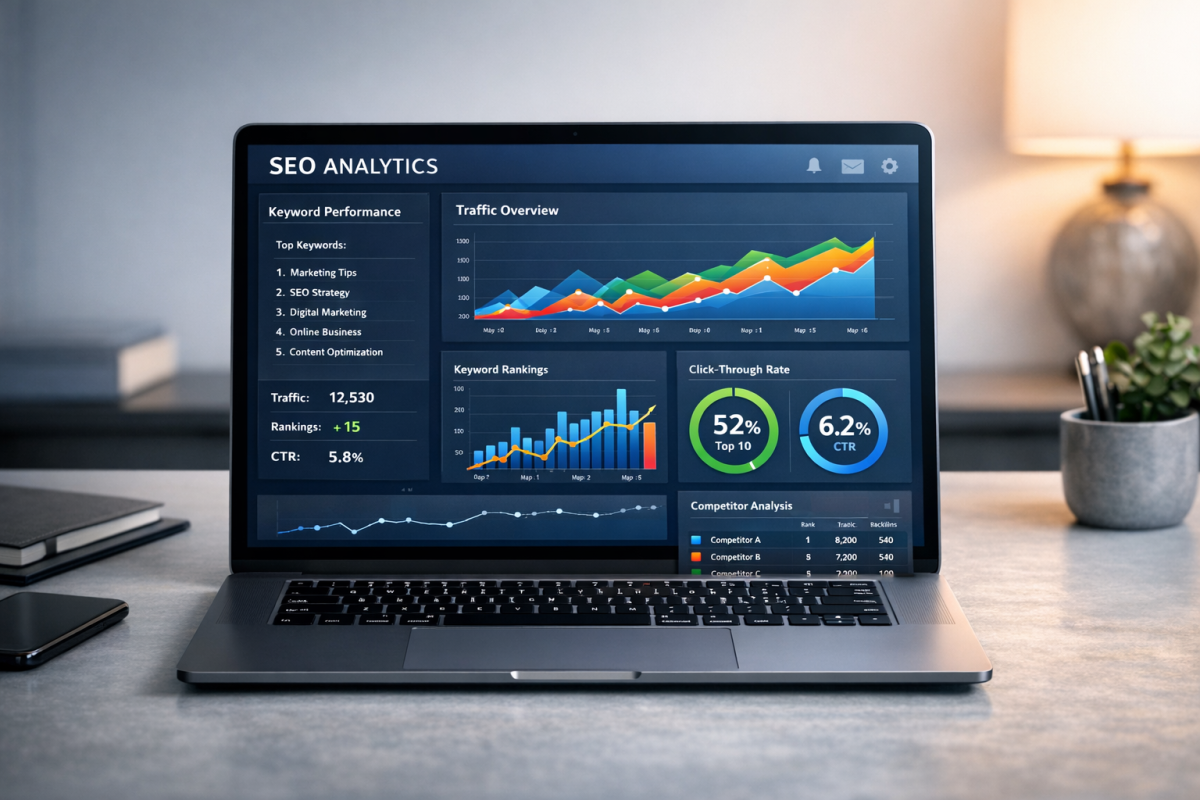
What makes Ahrefs especially helpful in 2026 is its AI-driven content gap analysis and its ability to show you which keywords are being won by AI Overviews versus traditional organic results - this matters enormously now, because ranking #1 for a keyword dominated by an AI Overview gives you a fraction of the clicks it once did. Ahrefs helps you find where organic traffic potential still exists.
Pricing starts at around $129 per month for the Lite plan, with higher tiers for agencies and bigger teams - it's not cheap. But for marketers it's usually considered worth it.
2. Semrush
Semrush has grown well past keyword research into a full marketing intelligence suite. But its keyword tools remain among the best available. You get organic and paid search volumes, CPC data by region, trending information, keyword clusters and competitive gap reports - all in one dashboard.
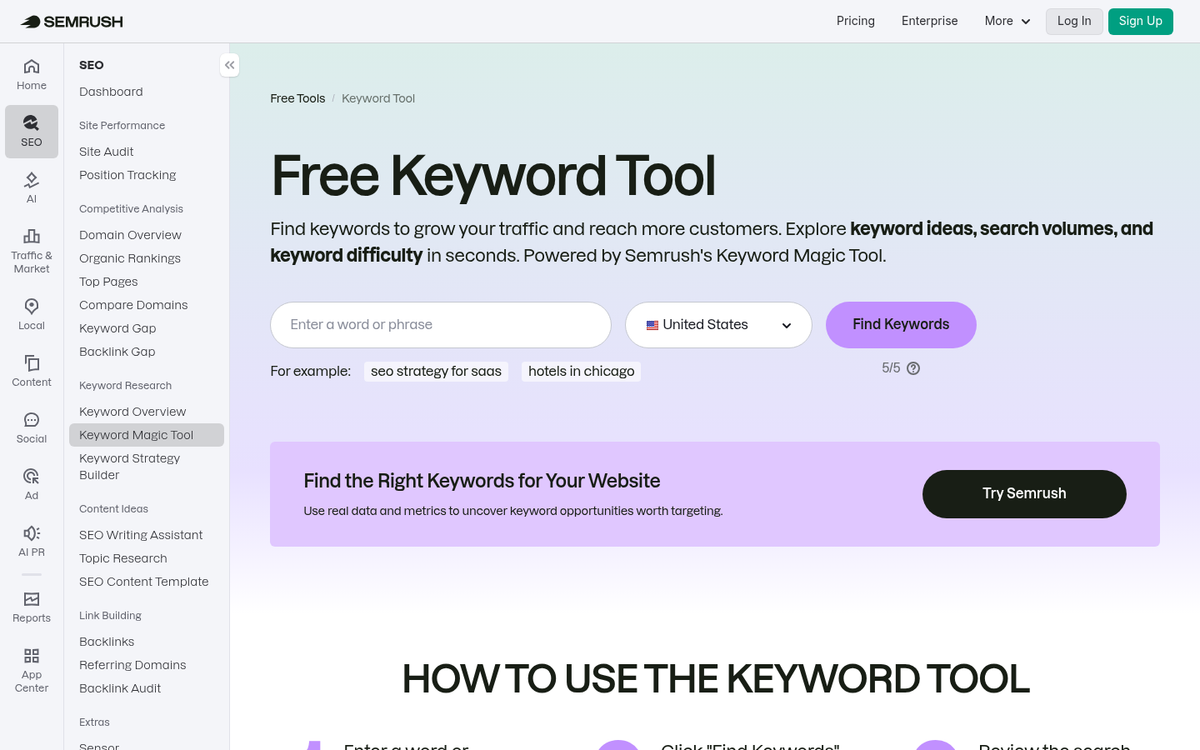
In recent years, Semrush has added AI-powered keyword intent classification and topic cluster mapping, which aligns well with how Google's systems now evaluate content. Rather than targeting individual keywords in isolation, Semrush pushes you to think in clusters - a change that goes well with how modern SEO actually works.
Plans start at around $140 per month. If you're running content at any scale, it's worth every dollar.
3. Google Search Console
Often ignored in lists like this, Google Search Console remains one of the most reliable free sources of keyword data available. Unlike third-party tools estimating search volume, GSC shows you the queries that are bringing your site impressions, clicks and average position.
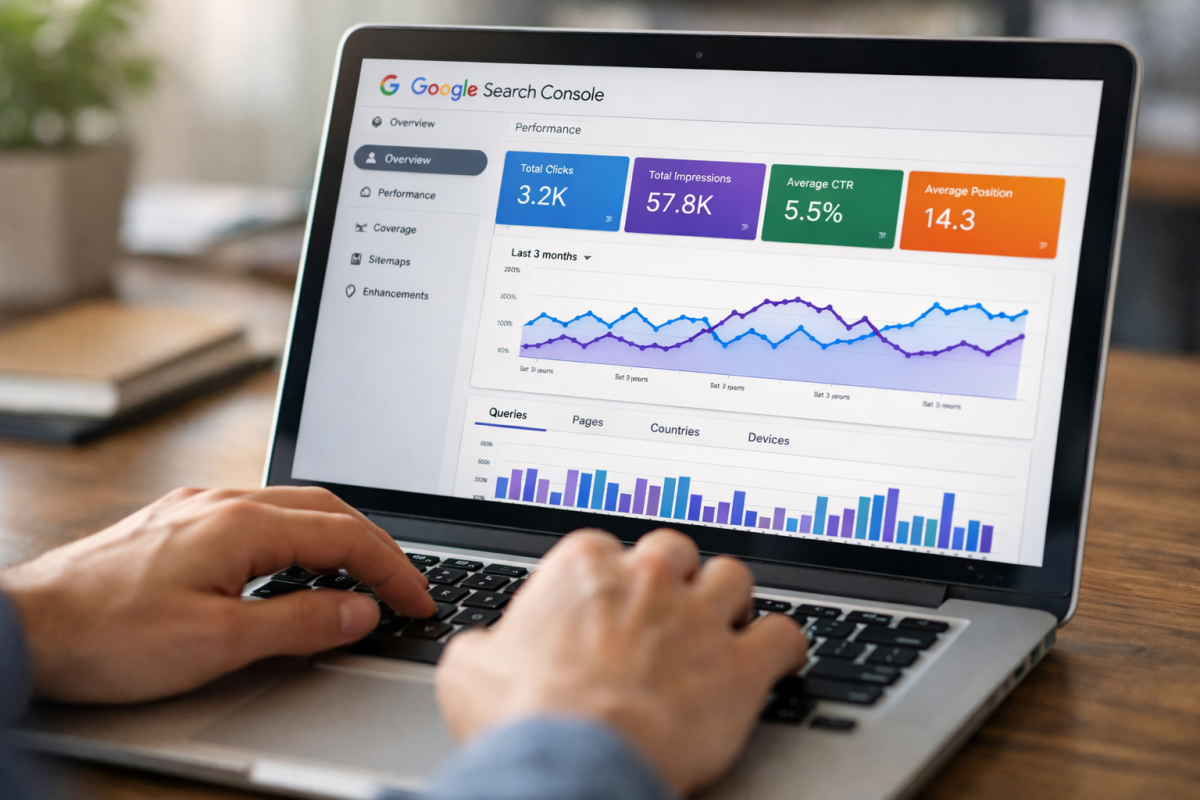
In 2026, GSC has become even more valuable because it now surfaces data related to AI Overview appearances - and it lets you see which of your pages are being cited inside Google's AI-generated replies. It's essential intelligence for understanding where your content is gaining visibility even when traditional click-through rates are declining.
It's free, it's accurate for your own domain. If you're not mining it, you're leaving information on the table. There are several ways to get more out of it once you know where to look.
4. Ubersuggest
Ubersuggest, now owned and developed by Neil Patel, has matured considerably from its early days as a simple autocomplete scraper - it now has keyword suggestions, search volume, SEO difficulty scores, content ideas and competitor analysis - all with a reasonably generous free tier.
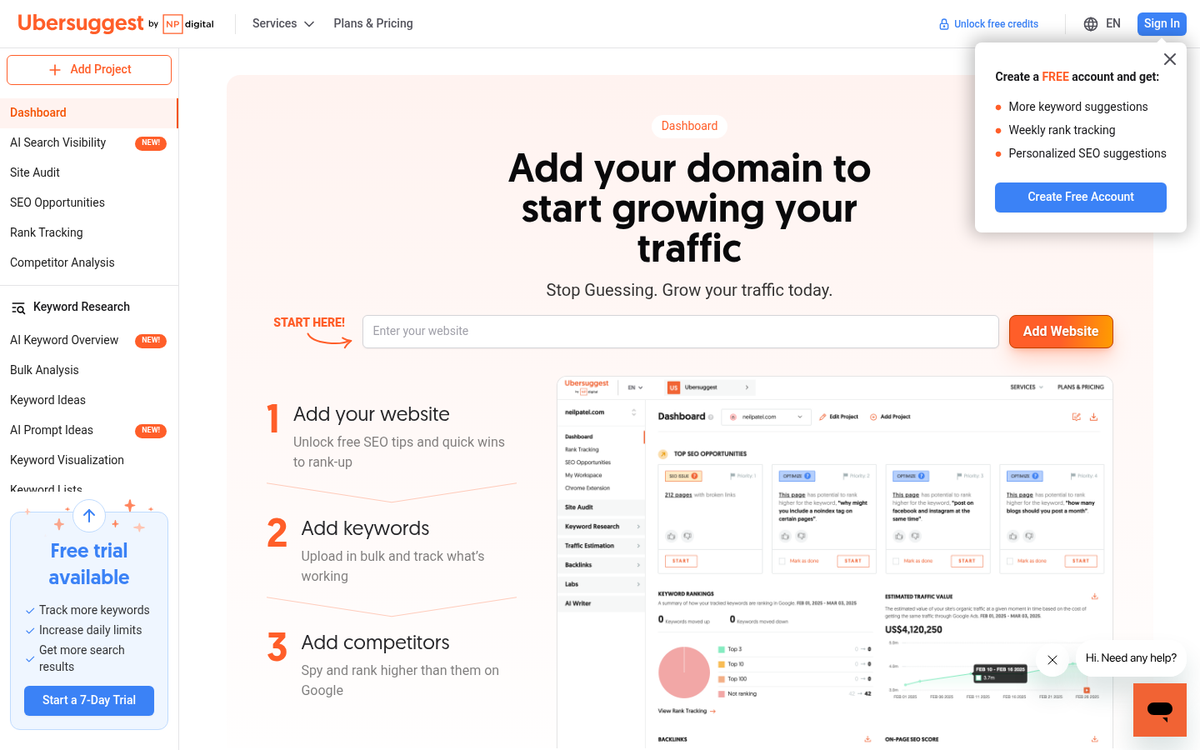
The tool has incorporated AI-assisted content suggestions that tie keyword data to content briefs, which is a helpful addition for teams that want research and planning in one location. The free version is still quite usable for lighter research and paid plans are cheaper than Ahrefs or Semrush, which makes it a solid choice for smaller operations or solo content creators.
5. AlsoAsked
This tool has become genuinely valuable in the AI era. AlsoAsked scrapes Google's "People Also Ask" data and maps it visually, showing you how questions branch and relate to each other around any given topic - this matters because question-based queries are heavily targeted by AI Overviews and voice search, and the question landscape around your niche tells you what informational intent looks like in practice.
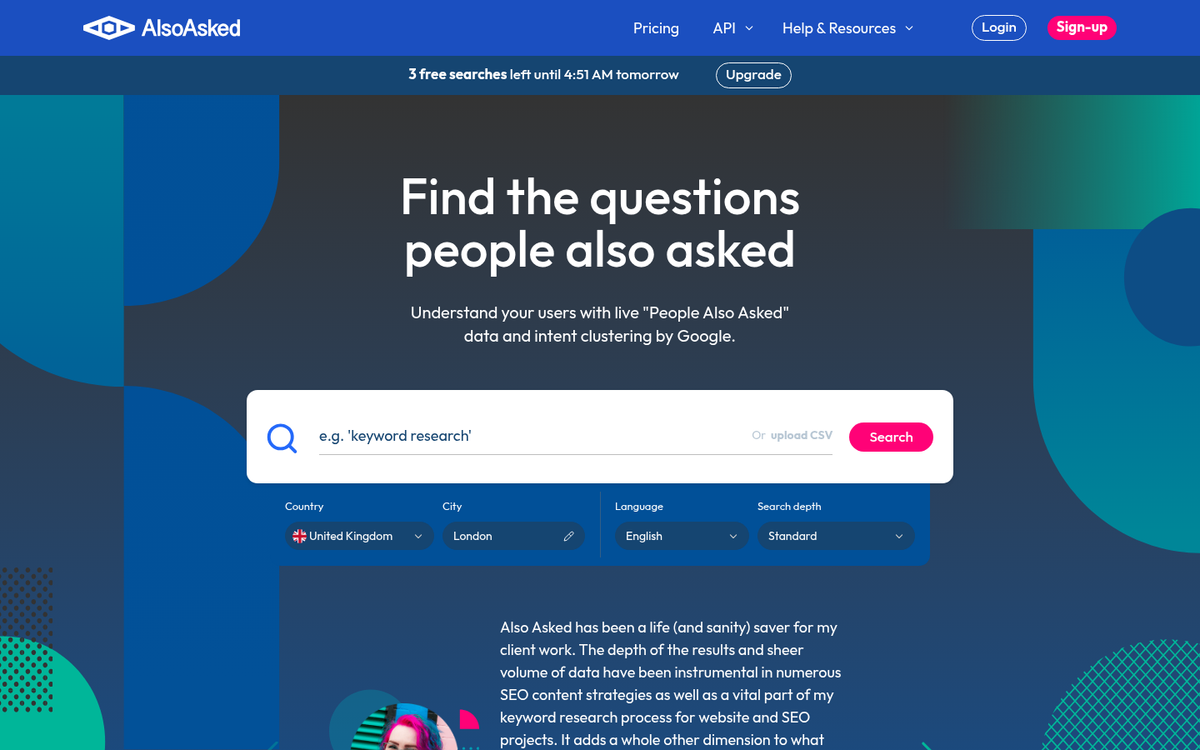
The free version gives you a limited number of searches per day. Paid plans are reasonably priced and well worth it if question-based content is part of your strategy - which in 2026 it should be.
6. ChatGPT and Other AI Tools for Ideation
It would be dishonest to write a 2026 keyword research list without acknowledging that content marketers are now using AI assistants as a first step in the research process. ChatGPT, Claude and Gemini are used to brainstorm topic angles, find related subtopics, surface audience pain points and generate seed keyword lists before those seeds are validated in a keyword tool.
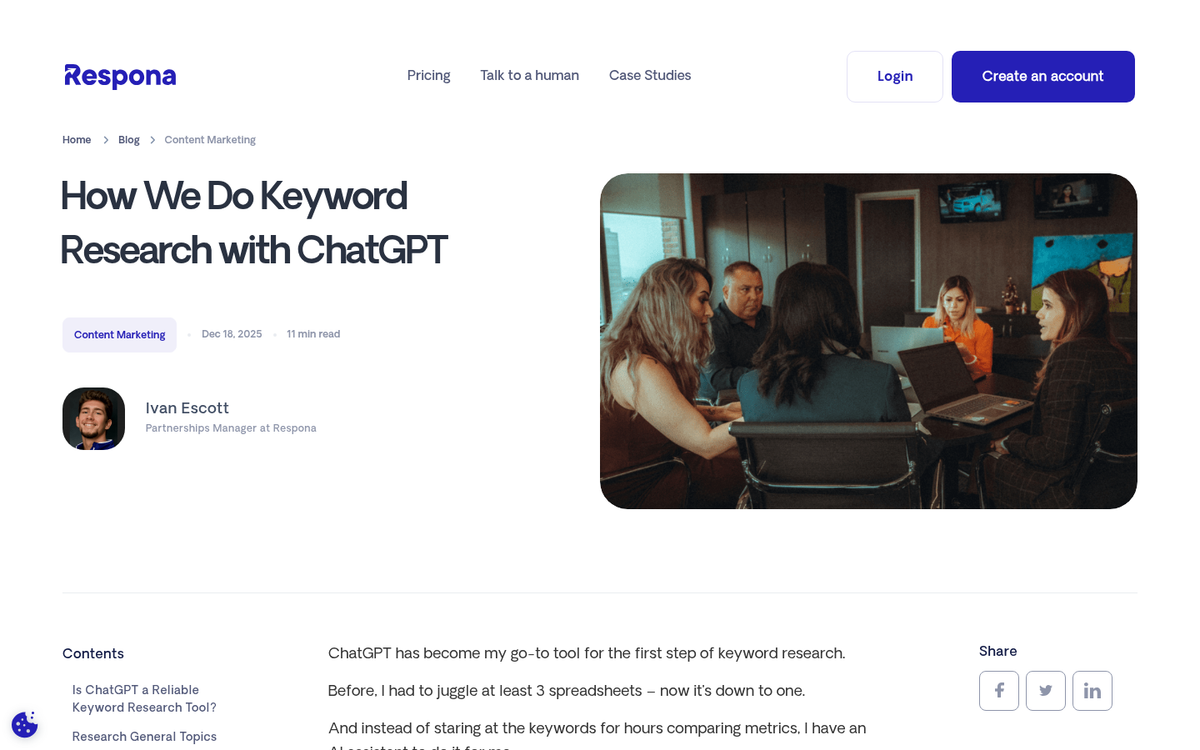
This isn't a replacement for search data - AI models don't have live search volume figures and can hallucinate specifics - but as a creative and strategic starting point, they've become a legitimate part of the modern keyword research workflow. The strategy is to use AI for ideation, then validate everything through tools with data.
7. Keyword Tool.io
Still going strong, Keyword Tool.io pulls autocomplete data from Google, YouTube, Bing, Amazon, Instagram and the App Store - this multi-platform approach remains legitimately helpful for marketers who need to know keyword opportunities across different channels rather than just web search. If you're building out a content strategy, pairing this with a content editorial calendar can help you stay organized.

The tool generates keyword suggestions using the same letter-by-letter expansion strategy it always has, but has added question-based filtering and trend data to keep pace with how search behavior has evolved. The free version is functional; paid plans unlock search volume, CPC and competition data. Once you've identified strong keywords, you may also want to focus on building free backlinks to your blog posts to help them rank.
8. BuzzSumo
BuzzSumo remains one of the best tools available for understanding what content is actually resonating with audiences. Rather than focusing on raw keyword metrics, it shows you social performance, backlink acquisition and engagement data for content that's already ranking and spreading in your niche.
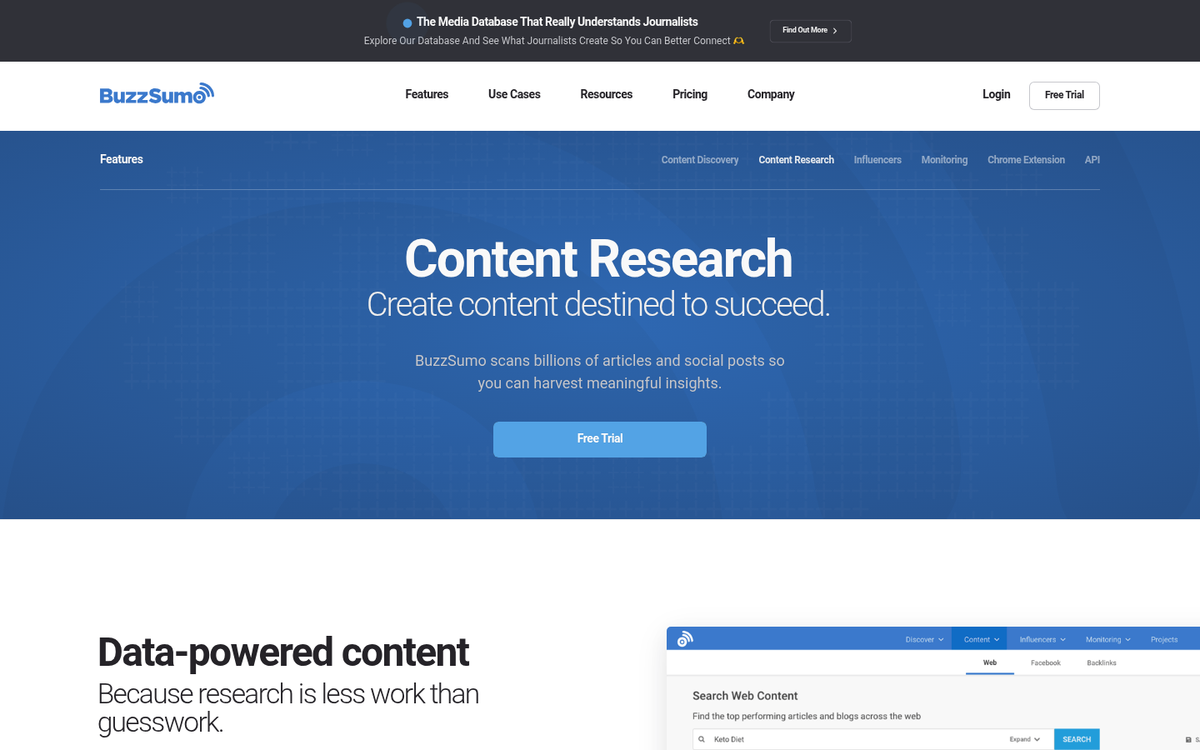
In 2026, BuzzSumo has added trend-tracking features that help identify upcoming topics before they peak in search volume - helpful for content teams that want to get ahead of trends instead of chase them. If competitive content analysis and social performance matter to your strategy, BuzzSumo is still worth the subscription.
9. Reddit and Community Research
Reddit has only grown in relevance as a research tool. Google now surfaces Reddit threads prominently in search results and AI systems frequently draw on Reddit discussions when generating replies - it means the language and questions being used in active Reddit communities have a more direct relationship with search and AI behavior than ever before.

The research strategy is the same as it's always been - find the relevant subreddits, read the threads with the most engagement and pay attention to how people describe their problems and questions. Tools like Reddit's own search and third-party analyzers can help surface popular threads faster - it requires more manual effort than a keyword tool. But the qualitative insight you get about audience language can't be replicated any other way.
10. Wordtracker
Wordtracker is one of the longer-standing tools in the keyword research space and continues to offer a clean, accessible interface to find keyword data and related terms - it's especially friendly for those newer to keyword research, with a simple search-and-explore model that doesn't overwhelm with data.
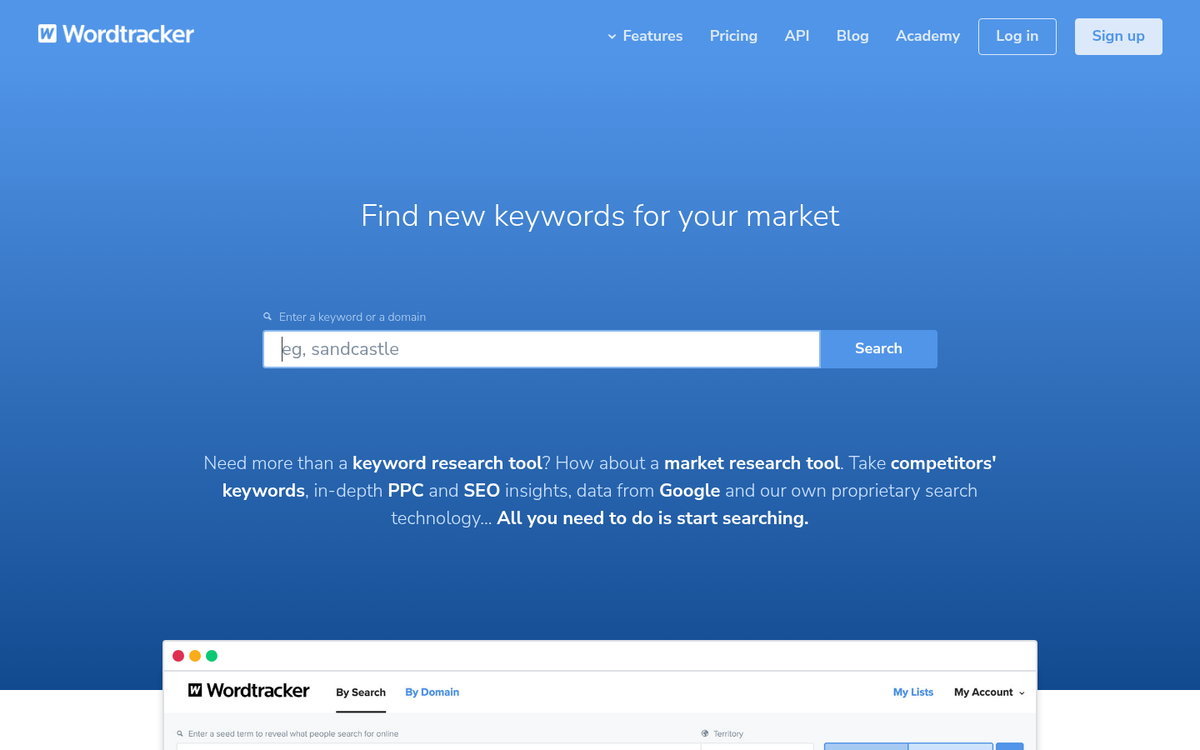
The free version gives a limited number of results, but paid plans - starting at around $27 per month annually - unlock more. It's not the most powerful tool on this list, but for straightforward keyword discovery without a steep learning curve, it remains a reliable option.
The core lesson of keyword research in 2026 is that volume alone is no longer the right metric to optimize for. With AI Overviews absorbing clicks, zero-click behavior rising and search intent becoming more nuanced than ever, the best content marketers are combining traditional keyword data with topic authority strategy, question mapping and a genuine understanding of what their audience actually needs. The tools above, used together intelligently, give you everything you'll need to build that picture. If you're still finding your footing, these expert tips for new bloggers and content marketers can help you put it all into practice, and it's also worth understanding how long content marketing takes to start working so you set realistic expectations from the start.