





CPM and CPC are two sides of the same general advertising coin. They're both payment schemes relating to how you spend your money and what you get out of it. CPC is cost per click - you pay only when someone clicks your ad, meaning impressions alone cost you nothing. CPM is cost per mille, or cost per thousand impressions - you pay every time your ad is shown to a thousand people, regardless of whether anyone clicks.
So which method is better? On the surface, CPC sounds like the obvious winner. A click is far more valuable than a passive impression. But that's just the mechanics. The real answer depends heavily on your goals, your ad quality, and what the data actually shows.
Key Takeaways
- CPC charges per click while CPM charges per thousand impressions, making each model suited to different campaign goals.
- Research showed CPC delivered 2.8x more clicks than equivalent CPM spend, making it more efficient for conversion-focused campaigns.
- CPM works best for brand awareness campaigns where reach and visibility matter more than direct clicks or conversions.
- Strong ad creative is critical for CPM success; poor creative burns budget fast, while high CTR ads can undercut CPC costs.
- Split-testing copy, visuals, placements, and audiences helps determine which model and creative approach performs best before committing budget.
Costs of Business
The primary difference between CPC and CPM, once you've gotten past the mechanics, is what your money actually buys - and recent research has shed some interesting light on this.
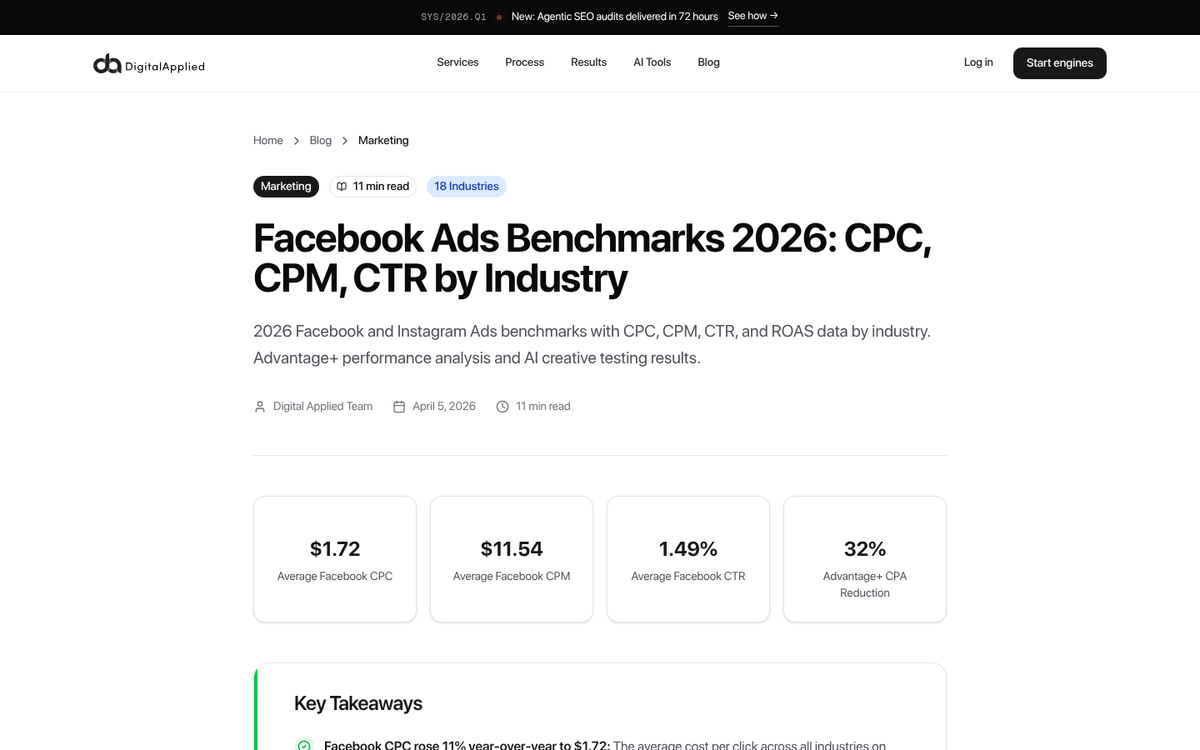
A study by Two Six Technologies ran two identical ad sets on Facebook to directly compare the two models. The results were telling: CPM came in at roughly $0.90 per 1,000 impressions, while CPC averaged about $0.05 per click. More importantly, the CPC campaign delivered 2.8 times more clicks and 1.8 times more impressions than the equivalent CPM spend. The same number of clicks that cost $414 under a CPM model required only $146 under CPC - that's nearly a third of the cost.
Think about it in terms of an overall budget. Say you have $5,000 to spend on ads. Under a CPC model at $0.05 per click, that budget could theoretically deliver 100,000 clicks. Under CPM at $0.90 per thousand, that same $5,000 gets your ad shown to roughly 5.5 million people - but only converts at whatever your click-through rate actually is. If your CTR is strong, CPM can be incredibly efficient. If your CTR is weak, you're essentially lighting money on fire.
At a 1% CTR on a CPM campaign reaching 5.5 million impressions, you'd pull in around 55,000 clicks. That's impressive - but if your CTR drops to 0.1%, you're looking at just 5,500 clicks for the same $5,000 spend. CPM's upside is high; so is its downside. average click-through rate benchmarks vary widely by industry, making it essential to know your own numbers before committing to either model.
The Trials of CPM
CPM ads are far more volatile by nature. With CPC, you're essentially buying a guaranteed outcome - spend $5,000, get a defined number of clicks. It doesn't matter if your ad is mediocre or brilliant; the platform keeps running it until the clicks roll in. Your budget is predictable, your results are predictable.
With CPM, your ad quality is everything. A compelling, well-targeted ad can deliver clicks at a fraction of the cost of CPC. A poor ad burns through your budget with almost nothing to show for it.
This is why ad quality scoring matters. Google's Quality Score system has long rewarded better ads with lower costs and better placement. Meta's ad platform similarly uses optimization signals - what used to be called OCPM has evolved into Meta's broader advantage and automated audience tools, which use behavioral and interest data to serve your ads to people most likely to engage. In practice, this can meaningfully improve your effective CTR on CPM campaigns without changing the ad itself.
CPM also remains the go-to model for brand awareness campaigns. If your goal is reach and visibility rather than direct clicks or conversions, paying per impression makes logical sense - you're buying eyeballs, not actions. If you're looking for the highest earning CPM networks to maximize that reach, there are plenty of options worth exploring.
Making the Choice
So which is better - CPC or CPM? The honest answer is that it depends on your goals and your creative quality.
If you're running a direct response campaign - driving traffic to a product page, a lead form, or a checkout - CPC gives you more control and, based on recent data, often delivers a better cost-per-click than CPM. The Two Six Technologies research makes a strong case that for conversion-focused campaigns, CPC is frequently the more efficient buy.
If you're running a brand awareness campaign, launching a new product, or working at the top of the funnel where a click isn't the primary goal, CPM makes more sense. You're paying to get seen, and impressions are exactly what you're buying.
The middle ground is where things get interesting. If your ad creative is genuinely strong - high CTR, compelling visuals, sharp copy - a CPM campaign can undercut CPC costs significantly. The efficiency gains are real when creative performs well.
Optimizing Ads
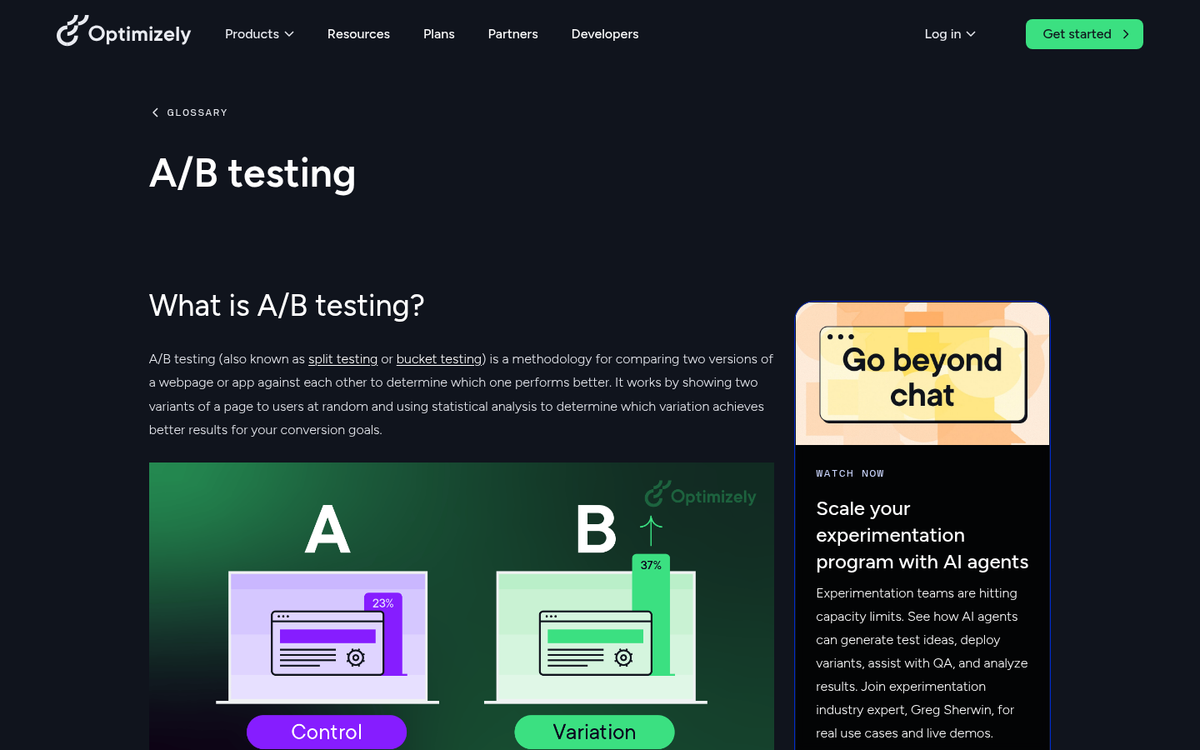
If you're not confident in your ad quality, it's time to start split-testing before you commit serious budget to either model. Split testing - running two versions of an ad simultaneously with one variable changed - remains one of the most reliable ways to improve performance over time.
What can you test?
- Copy. Headlines, body text, calls to action - even small wording changes can shift CTR meaningfully.
- Visuals. Images, video thumbnails, graphic styles - creative format matters enormously, especially on social platforms.
- Ad format and placement. Feed ads, Stories, Reels, sidebar - different placements carry different engagement patterns and costs.
- Audience targeting. Sometimes it's not the ad that's underperforming - it's who's seeing it.
You can also optimize what happens after the click.
- Is your landing page aligned with the ad? Mismatched messaging kills conversions.
- Are you going for an immediate sale or nurturing leads over time? Your funnel structure should match your intent.
- Test your offers and incentives - discounts, free trials, and lead magnets all perform differently depending on the audience.
- If you're running email follow-up sequences, those deserve just as much testing attention as the ads themselves.
Ultimately, CPC and CPM aren't competitors - they're tools. Knowing when to use each one, and pairing whichever you choose with strong creative and a well-built funnel, is what separates profitable campaigns from expensive experiments.

2 responses
Thoughtful replies only - we moderate for spam, AI slop, and off-topic rants.
Good explanation. It sounds like CPC is a bit more straightforward. If Google Adwords prefers CPC, then that's what makes most sense to me.
Hi Peter, yes, I prefer CPC as well =] every traffic supplier / ad network is different, though.