





In website marketing, the terms impression and click come up time and again. They're both means of measuring one thing: the effectiveness of your advertising. What's the difference, and which is better?
Key Takeaways
- Impressions are simply ad views; clicks occur when users actively engage, making clicks far more valuable for conversions.
- CTR (clicks ÷ impressions) varies widely: search ads average 6.64%, display ads 0.35%, email ads 10-20%.
- Google's AI Overviews can reduce the #1 organic position's CTR by over 50%, disrupting traditional SEO traffic strategies.
- Ranking position dramatically affects clicks; the #1 Google result averages 31.7% CTR, roughly 10 times higher than position #10.
- CPC generally outperforms CPM for performance goals, but success requires ongoing testing, keyword refinement, and campaign optimization.
Impressions
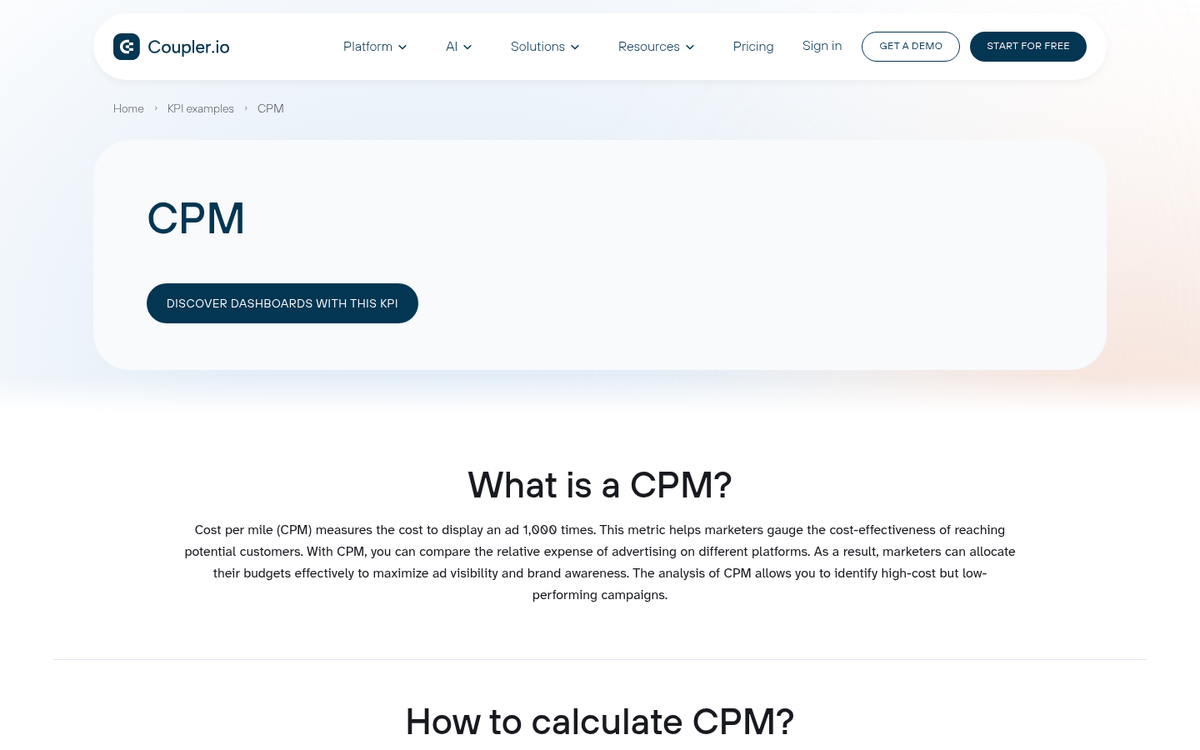
Impressions are the most basic, utterly mundane interaction you can have with a page. In fact, it's hardly even an interaction. An impression is a view. When your ad loads and displays in front of a user, that is one impression.
What's the point of impressions? Well, you can't have clicks without impressions. Users need to see your ads before they can decide whether or not to click them.
This is typically referred to as CPM, or Cost Per Mille, where Mille means thousand. So if you're paying $1.50 CPM, $1.50 will earn you 1,000 impressions on your ads. One thousand people will see your ads, and all you had to do was pay under two dollars.
Fun fact: mille is Latin for "thousand" and is the root of the word millennium.
Some advertisers will pay you for a certain number of impressions. This works the opposite way; you pull in views, and the advertiser will pay you per thousand, typically in the sub-$1 range. This is because it's incredibly easy to get views, but it's hard to get anything meaningful out of them. It's worth noting that the vast majority of queries a site ranks for - around 90.3% - generate only 10 impressions or fewer, which puts into perspective just how thin impression volume can be for most content. If you're looking to maximize revenue from views, check out our list of the highest earning CPM networks, or learn more about earning from CPM ads with paid traffic.
Clicks

Now for clicks. A click, simply enough, is whenever a user actually clicks on your ad or listing. This is a bit more involved than it sounds, however.
Like CPM, CPC - Cost Per Click - goes both ways. You can pay for X number of clicks on your site, or you can run advertising that pays you for every X number of clicks. Either way, the click is the basic unit of measurement.
The relationship between impressions and clicks is expressed as Click-Through Rate, or CTR, calculated simply as: CTR = Clicks ÷ Impressions. Industry averages vary significantly by ad type. Search ads average a CTR of around 6.64%, while display ads sit far lower at roughly 0.35%. Email ads, by contrast, can achieve 10-20% CTR. For context, the first ever online display ad - shown for AT&T on HotWired back in 1994 - had an astonishing 44% CTR. Today, banner ad CTRs have collapsed to around 0.2-0.3%, down from 3% in the 1990s. Across all U.S. industries, Google Search Console reports an average CTR of 2.66%.
There's also a bit of filtering going on behind the scenes. Imagine if you were paying $3 for 1,000 clicks. A competitor decides they want to drain your budget, so they sit on your website and click your ad repeatedly, thousands of times. This would normally drain your account. With click fraud filtering, however, those only count as a single unique click.
Clicks are much, much more important than impressions for one core reason: they have the potential to lead to conversions. You need an impression to get a click, and you need a click to get a conversion. People can find your website through other means and convert directly, but all clicks carry conversion potential, which is what makes them so valuable.
One important caveat in 2026: Google's AI Overviews have significantly disrupted organic click-through rates. Research shows that AI Overviews can reduce the CTR of the #1 organic position by 50% or more, as users get answers directly on the search results page without ever clicking through. This has made the competition for high-ranking positions both more intense and, in some cases, less rewarding in terms of raw traffic.
For ads that pay by the click, you can also consider affiliate ads. Affiliates pay you by the click, but they also place tracking on the session of the user who clicked to monitor whether that user goes on to convert. If they do, you earn a higher payout. You can learn more about how to run affiliate links through paid advertising to maximize these opportunities.
The Importance of Position
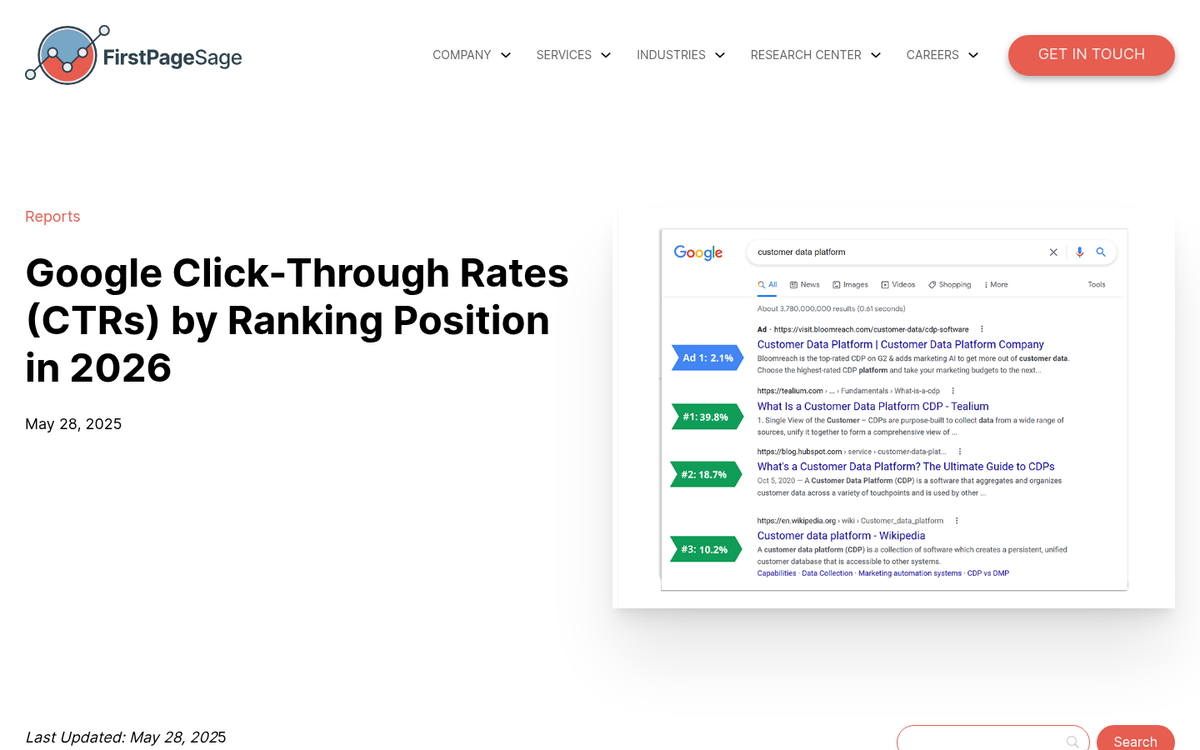
When it comes to organic search, not all clicks are created equal - position matters enormously. According to Backlinko, the #1 ranking position on Google averages a CTR of 31.7%, which is roughly 10 times higher than position #10. Moving up just a single ranking spot increases CTR by approximately 30%. This makes the pursuit of top rankings not just a vanity exercise, but a direct driver of traffic volume. Combined with the growing impact of AI Overviews suppressing clicks even at position one, the stakes around rankings have never been higher or more complicated.
Meta Ads and Optimized Bidding
Clicks and impressions are the essential currency of ads on most platforms, but Meta (formerly Facebook) adds more nuance to the mix with its Advantage+ and optimized bidding options.
Rather than simply paying for raw impressions or clicks, Meta's ad platform uses machine learning to find users most likely to take a desired action - whether that's clicking an ad, liking a page, or completing a conversion. This means you're not blindly dumping budget into the first thousand people who see your ad; the platform attempts to qualify its own audience on your behalf.
The trade-off is one of control versus efficiency. Handing optimization over to the platform means trusting its algorithm to spend your budget wisely. Testing remains the only reliable way to determine what works for a given campaign, and the relative performance of impression-based versus click-based versus conversion-based bidding will vary depending on your audience, creative, and objectives.
DIY Optimization

On any platform, you're going to have to make smart decisions about how you structure and optimize your campaigns. CPC is generally the stronger choice over raw CPM for performance-driven goals, but only if you do it right. You have the potential to burn through a significant budget with no returns, but it's not hard to optimize your ads to maximize returns when you approach it methodically.
- Start with broad targeting and narrow down over time. If you start with 100 keywords to target, you can find the 10 best. If you start with 10, you might only find one or two effective keywords.
- Make use of geographic components in your ads, keeping in mind various traits of the location, such as climate and local events.
- Test different placements for different ads, to see if one will work better than another.
- Don't abandon keywords just because they don't work right away; they might have seasonal fluctuations or simply be out of style for the moment.
- Make use of negative keywords whenever possible, to eliminate the possibility of showing your ad for queries involving your keyword but unrelated to your product.
- Test different copy and, when relevant, images. You can run a number of variations at a time; you're not limited to just two.
- Pay attention to your Quality Score when using Google Ads. This directly affects your bid costs and ad placement.
- Factor in the impact of AI Overviews on organic CTR when planning your paid vs. organic strategy - paid ads may now carry more relative value for high-intent queries where AI answers dominate organic results.
- Learn when it's time to stop testing and start investing in your best performers whole-hog.
There's a lot you can do to optimize your ads, but a lot of it just comes down to testing, experimentation, iteration, and repetition.


9 responses
Thoughtful replies only - we moderate for spam, AI slop, and off-topic rants.
Thank you, answered my question.
You're welcome, James!
Thank you!
You're welcome, glad my article helped =]
I am looking for difference as my google analytics show higher impression rather than few clicks. This article give idea that what is difference between impression and click
I still don't understand the difference. Everyone keeps saying an impression is a view, but how do you view anything w/out first clicking on something to view it? What does it mean to view an ad before clicking on it ?
you are the one who explained me the difference thank youuu
Hey, can you please tell me. If the user does not click on ad and i've got 1000 impressions, then AdSense will pay me or not? i mean, do i get money just for impressions?
This was very informative. You just broke it down in an easy to understand way. Thank you!