





Native advertising is really interesting. See, Google doesn't like it when you hide ads. If you try to pass off an affiliate link as a natural link, you can earn a bit of a penalty. If you do it too much, you can even end up deindexed. If you persist in doing it for too long across too many high profile businesses, the FTC can even get involved. Advertising generally needs to be disclosed and obvious.
That seems to go counter to what native advertising is. Native advertising is advertising that appears to look just like the content of the site you're browsing. I guarantee you've seen it, and you might not even realize it. How might you have seen it? Here are examples of what native advertising can be.
- Sponsored articles on a blog.
- Paid reviews that promote a product.
- Infographics that the creator paid to put on the site hosting it.
- Sponsored videos.
- Related post widgets that link to a content network rather than on-site content.
- AI-generated sponsored content designed to blend seamlessly with editorial material.
If you read that list and thought to yourself "well, that could be anything then!" you're right! It can be anything. Native advertising is just a way of saying sponsored content or paid content that looks a lot like the content normally posted on the site. There's often very little difference between a paid sponsored post on a blog, a guest post on that same blog, and an organic post.
One important distinction between native ads and traditional ads is that native ads don't use landing pages. Rather, they tend to direct the user to a blog post or article of some sort. The off-site related posts box is a good example of this; you still end up on the article, it's just not on the same site.
Advertisers love native ads. They're the One Weird Trick to Getting Higher Clickthrough Rates. Research from IPG Media Lab found that native ads generate an 18% higher lift in purchase intent and a 9% lift in brand affinity compared to traditional banner ads. Their CTR on mobile sits at 0.38% versus just 0.11% for standard display ads - a significant gap. Readers engage more because they don't instinctively tune out what doesn't look like an ad.
The only time native ads come back to bite you is when a user notices they're ads and feels betrayed. It's usually a matter of disclosure, at least in the eyes of the law. That's why the FTC cares; they have disclosure rules for advertising, and those rules have only gotten stricter over time. As of 2026, the FTC has sharpened its enforcement posture around influencer marketing and AI-generated sponsored content, making clear disclosure more important than ever.
On a more abstract level, there's the issue of bias. If a high-profile publication were to accept payment in exchange for writing a glowing review of a competitor's product, you then have to wonder: any time afterwards, when that publication mentions the brand, was it a paid mention or a genuine recommendation? All such mentions become tainted. It's a credibility problem that compounds over time.
All of that said, native advertising is certainly here to stay. It's too beneficial for advertisers to ignore, and it's too lucrative for publishers to ignore. Native ad spending has grown dramatically over the past decade - from projections of $44 billion in 2019 to well over $100 billion globally by the mid-2020s. The social media dimension has also exploded: a large majority of ads served through Facebook's Audience Network are native in format. At the end of the day, it's too effective for too many people for anything short of widespread governmental intervention to cut it off - and even increasing regulatory scrutiny hasn't slowed it down much.
So, let's take a look at native advertising in action, and see how it can be effective, or not. That's right; even with all of the advantages native ads have over traditional ads, they aren't always very effective.
Key Takeaways
- Native advertising blends seamlessly with regular content, appearing as sponsored articles, paid reviews, infographics, or related post widgets.
- Native ads outperform traditional ads, generating 18% higher purchase intent and 0.38% mobile CTR versus 0.11% for display ads.
- Publishers risk credibility damage when native ads feel misaligned with their audience, as The Atlantic's Scientology controversy demonstrated.
- Top publishers like NYT's T Brand Studio and Forbes BrandVoice succeed by maintaining genuine editorial quality within sponsored content.
- AI-generated sponsored content has intensified native advertising's core tension between effectiveness and trust, prompting stricter FTC disclosure requirements.
1. The Atlantic's Scientology Gaffe
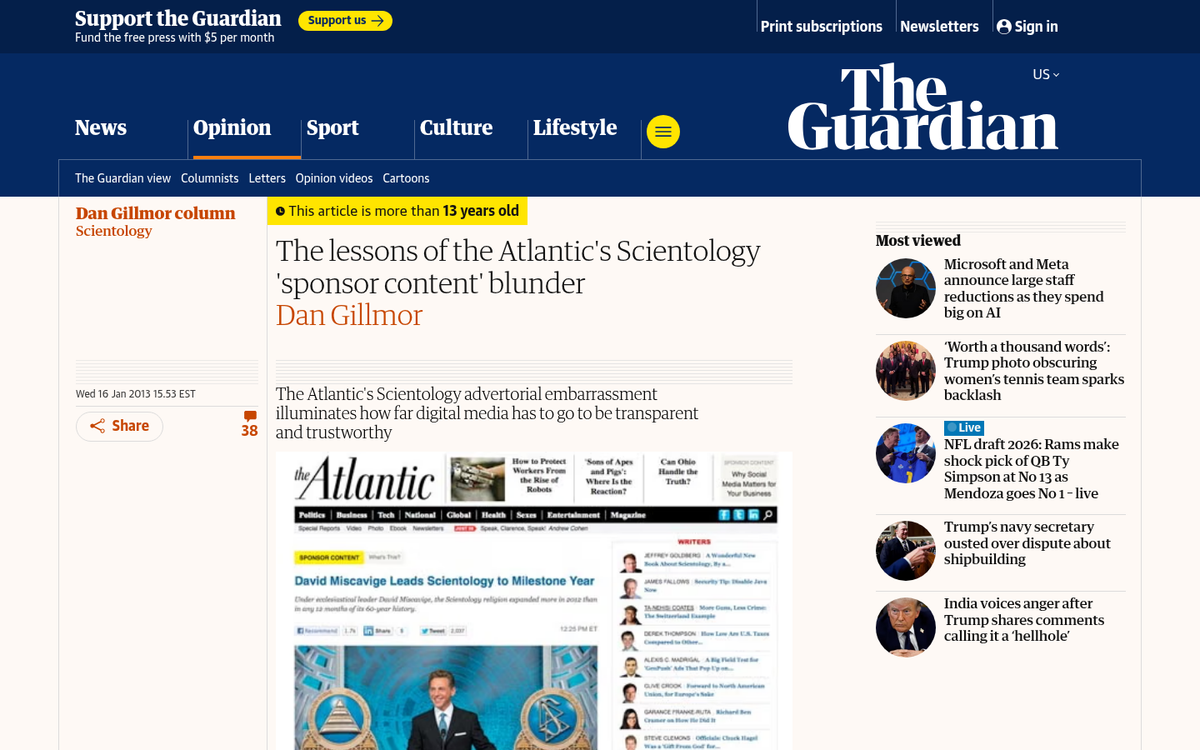
I can't link you directly to this one because it was so bad they took it down. It remains one of the most cited cautionary tales in native advertising history. The Atlantic published an article praising Scientology - an organization widely regarded with deep skepticism - to an audience that was clearly not receptive to the message. The sponsored label was easy to miss, and when readers realized what they were looking at, the backlash was swift and severe.
The lesson here is that no matter how good the money may be, native advertising shouldn't be on your site if it isn't something you would promote on your own. Think of the payment as an added bonus, not as the sole reason to publish. Brand safety matters - both for your readers and your long-term credibility.
2. Buzzfeed's Brand Publishers
Buzzfeed pioneered the brand publisher model, allowing companies like Purina, GE, and many others to publish content directly on the platform under their own names. Rather than a traditional ad interrupting the experience, brands created quizzes, lists, and articles that matched BuzzFeed's signature tone. The content wasn't always promoting the brand directly - sometimes it just put their name in front of an audience in a positive context, building familiarity and goodwill.
This model became a template others would follow. The key to its success was that the best examples genuinely fit the platform. When the content felt forced or off-brand, readers noticed immediately. When it landed, no one complained - they just engaged. If you're looking for inspiration, check out some of the best explainer video examples for marketing to see how brands communicate effectively without feeling intrusive.
3. Forbes BrandVoice
Forbes BrandVoice is one of the longest-running and most visible native advertising programs in the business press space. Brands including IBM, Oracle, SAP, Salesforce, and others have published under this program, producing editorial-style content that lives alongside Forbes' own journalism.
The model gives brands a byline, in-content links, and the credibility halo of appearing on a major business publication. The best BrandVoice posts are substantive - real analysis, real data, real perspective - rather than thinly veiled product pitches. The worst feel exactly like what they are: corporate marketing copy dressed up in a blazer. Forbes has continued refining the program into 2026, and it remains a go-to channel for B2B brands looking to reach executive audiences.
4. Everything Outbrain and Taboola Do

Every time I mention one of those "related posts" widgets that links to off-site content as native advertising, I'm talking about one of two things: Outbrain or Taboola. Between those two, they have that niche very well covered. You can see them on all sorts of publishers, from small blogs to Rolling Stone and CNN. Usually, their links are made to look like related post boxes for the site itself - you end up with a mixture of related content, some on-site, some off.
It's worth noting that Taboola and Outbrain attempted a merger in 2019-2020, but the deal ultimately fell apart. Both companies have continued operating independently, and as of 2026, they remain the two dominant players in open-web native discovery. Taboola went public via SPAC in 2021 and has been expanding its publisher partnerships aggressively, while Outbrain has focused on premium publisher relationships and performance-based ad products.
The primary way these networks succeed is through serious oversight of the content posted in their ecosystems. High-quality, relevant content is the standard - when they enforce it. The clickbait problem that plagued both networks in the mid-2010s has been partially addressed through tighter content policies, though anyone who has scrolled past their widgets recently knows there's still room for improvement.
5. The Onion's Sponsored Content
The Onion took a unique approach to native content: since their entire identity is built on humor, they couldn't let brands come in and publish something painfully unfunny under their banner. So instead of letting sponsors write the posts, The Onion writes them - the brand just sets the general topic or provides a loose brief. Past examples include tax-season humor sponsored by H&R Block, and similar thematically matched pairings.
The Onion's parent company has changed hands several times in recent years, but the sponsored content model remains a core part of their business. If you're exploring similar revenue streams, learning how to acquire new sponsors for your website can help you build the right brand partnerships. The lesson is straightforward: know what your audience came for, and don't betray it just because there's a check involved.
6. Cracked's Native Ads
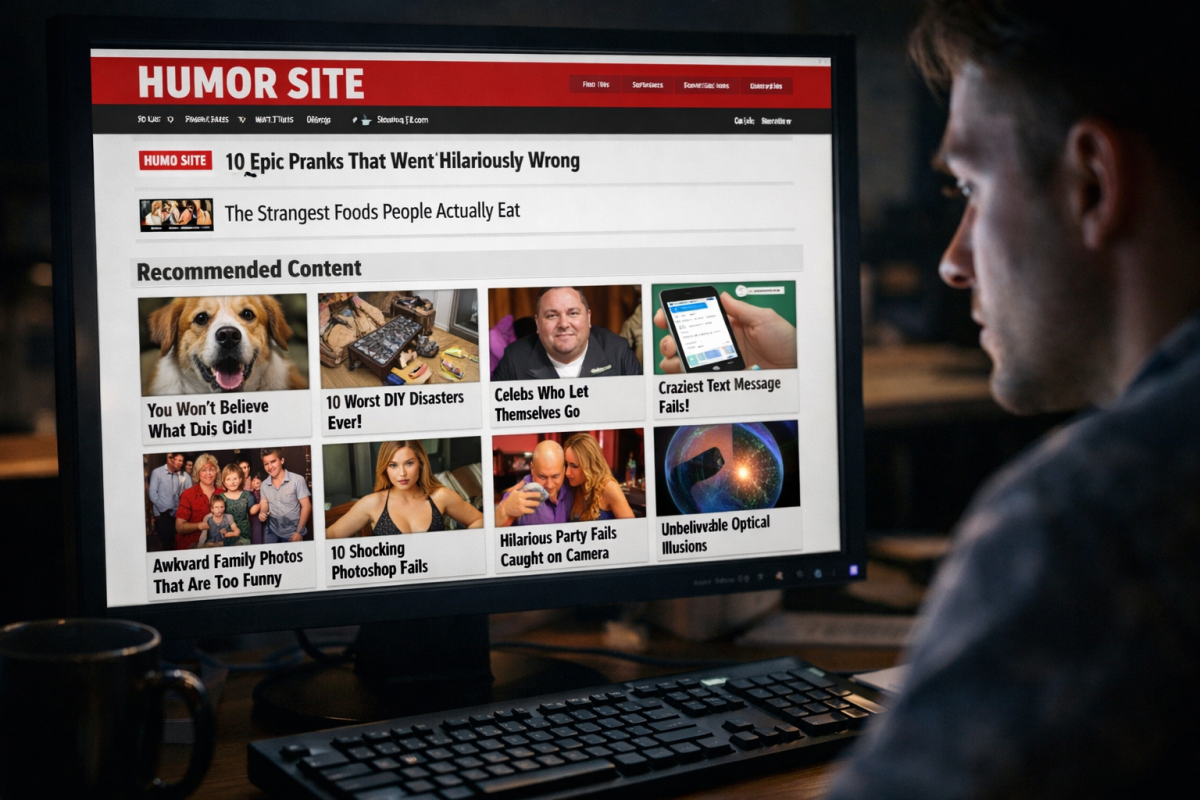
Cracked built its entire business model around keeping people on the site for hours, clicking from article to article. Native advertising fit naturally into that ecosystem - both the brand-sponsored articles they wrote themselves and the Taboola-powered "From Around the Web" widgets at the bottom of every page.
Cracked underwent significant changes after its parent company Literally Media acquired it, and the site looks quite different today than it did in its heyday. But the native ad model it helped popularize - content that earns clicks by being genuinely interesting, with sponsorship disclosed but not front and center - has been widely replicated across the web.
7. Motor Trend
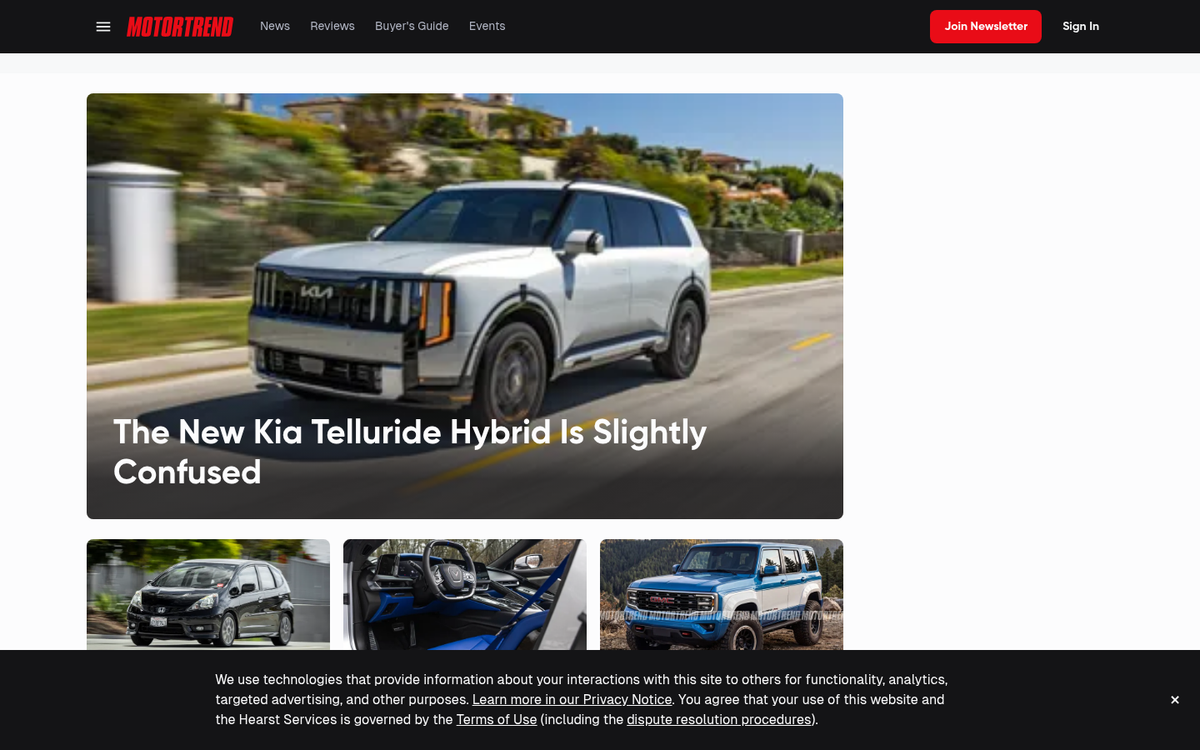
Motor Trend is an automotive review and industry news publication, which means editorial credibility is everything. The bias issue is in full play here: if Motor Trend published a clearly sponsored glowing review of a manufacturer, readers would reasonably question every other piece of coverage. As such, their native advertising tends to be carefully contained - sponsored sections clearly labeled, native display units in sidebars, and a firm wall between paid content and editorial reviews.
Motor Trend has grown significantly as a streaming and media brand since launching Motor Trend+, and their approach to sponsored content has evolved accordingly - including branded video content and sponsored segments that are disclosed but still produced to their editorial standards.
8. Yahoo's Homepage
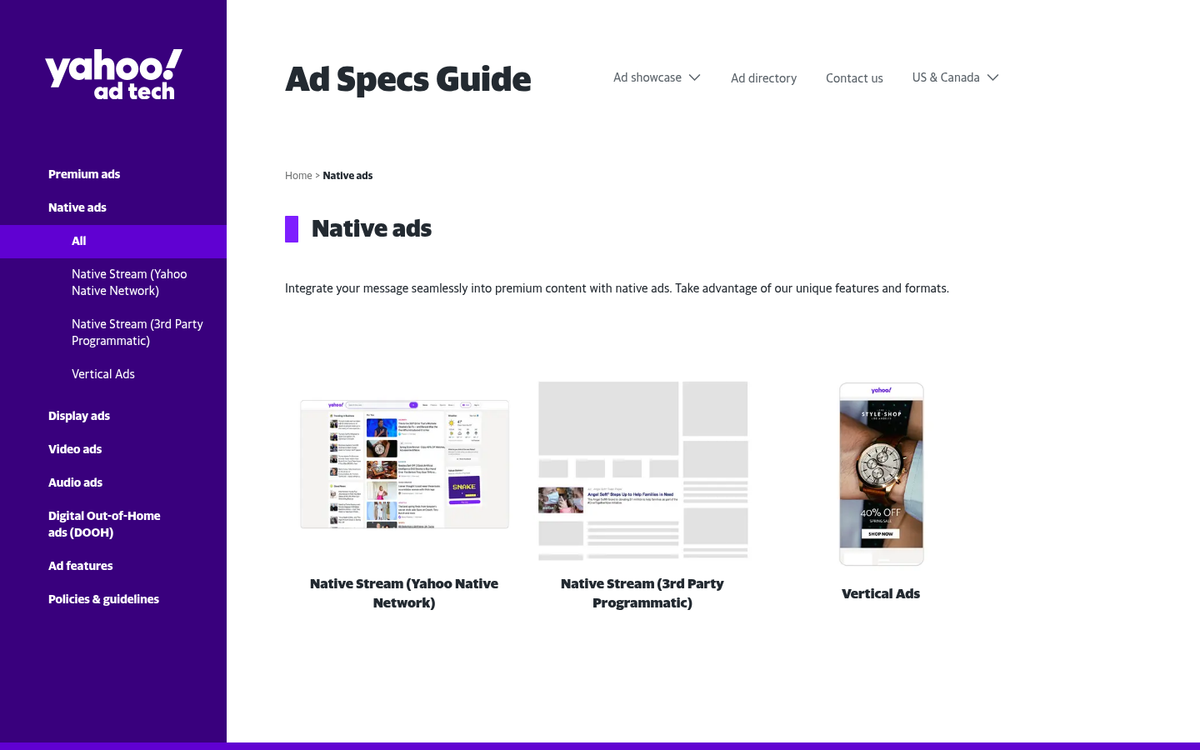
Yahoo's homepage has always been a chaotic mix of news aggregation, native content, and display advertising - and that hasn't changed much in 2026. The homepage pulls from dozens of publishers, and the line between organically aggregated content and sponsored placements can be genuinely difficult to spot.
Yahoo's ad business is now part of Yahoo Advertising (formerly Oath, formerly Verizon Media), and it continues to serve native ad formats at scale. The interesting thing about Yahoo's model is that its sheer volume of content makes sponsored placements easy to miss - which is either a feature or a bug depending on which side of the disclosure debate you're on.
9. The New York Times and Netflix: T Brand Studio
The New York Times' in-house native advertising division, T Brand Studio, became a gold standard for what sponsored journalism can look like when done well. Their early collaboration with Netflix - a richly produced interactive piece about women in the prison system tied to the release of Orange is the New Black - showed the industry what was possible when a publisher with editorial chops takes native content seriously.
T Brand Studio has continued producing high-quality sponsored content in the years since, and the model has been widely imitated. Netflix has remained one of the most sophisticated native advertisers in the media landscape, consistently using the format to spark genuine cultural conversations rather than just push product.
10. Wired and Long-Form Sponsored Features

Wired has continued to be a home for ambitious sponsored content, particularly in the technology and science space. When brands align with Wired's subject matter and bring real substance - data, original research, or genuinely interesting perspectives - the result is content that readers engage with earnestly. When brands treat it as a vanity play, the gap between the sponsored pieces and Wired's editorial work is obvious.
The lesson Wired demonstrates over and over is that production quality and editorial authenticity are not optional if you want native advertising to actually work. A logo in the corner means nothing if the content underneath it is hollow.
11. Slate's Sponsored Journalism Model
Slate has run sponsored journalism partnerships with major brands over the years, often covering topics that the brand has a stake in but that are also genuinely newsworthy. The best versions of these feel like reporting that just happened to have corporate backing - the worst feel like press releases with bylines. Slate's track record sits more toward the former, which is why the model has continued to attract partners.
The key ingredient: the content has to stand on its own as something worth reading, independent of the sponsorship. If the only reason to read it is because a brand paid for it to exist, readers will feel that, and they won't come back.
12. Gawker's Meta Newcastle Ad
This one is a piece of native advertising history. Gawker published a piece that was openly, transparently a Newcastle ad - stream-of-consciousness nonsense that admitted it was an ad while being an ad. Newcastle's broader campaign at the time leaned into self-aware absurdism, and this fit perfectly. It was weird enough to be memorable and honest enough to sidestep the usual backlash around undisclosed sponsorship.
Gawker itself is long gone, having shut down in 2016 following the Hulk Hogan lawsuit. But this particular example lives on as a case study in using meta-humor and radical transparency to make native advertising work.
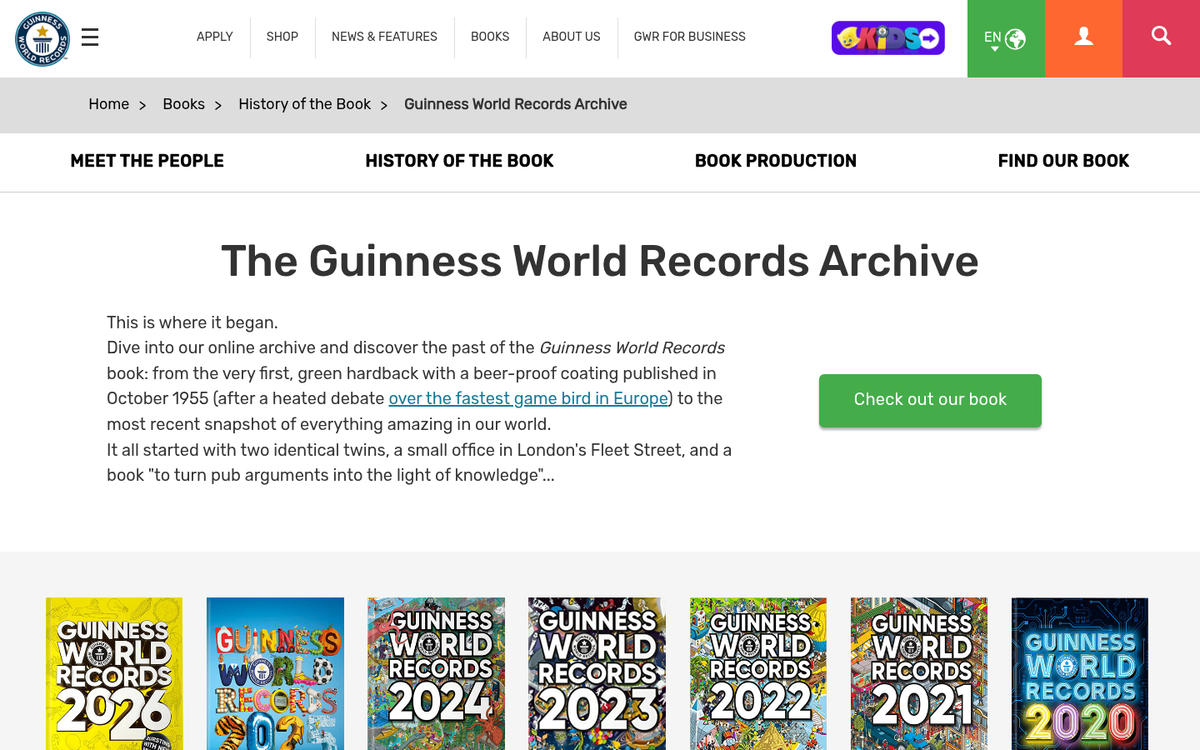
13. Guinness Guides
The Guinness print guide model - pairing the brand with authoritative content about food, culture, or experience, published in third-party magazines rather than Guinness's own channels - is a classic example of native advertising that predates the digital era but translates perfectly to it. The brand association does the work quietly, without a hard sell anywhere in sight.
In 2026, the equivalent is brand-sponsored editorial verticals, newsletters, and podcast series. The medium has changed; the principle hasn't.
14. UPS and Fast Company

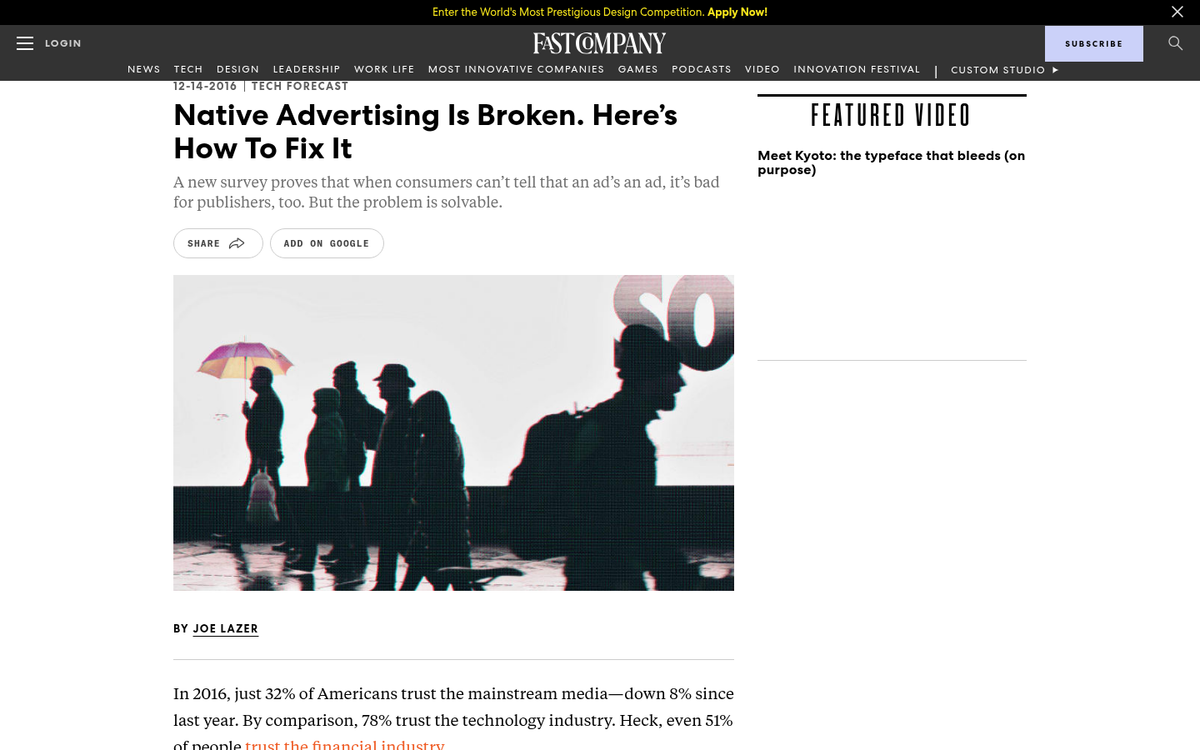
This is probably the simplest example of native advertising done right: a branded infographic or sponsored article that fits naturally into a publication's existing content, disclosed clearly at the top, and valuable enough on its own that readers don't feel cheated. UPS has a legitimate claim to expertise on supply chain topics, and Fast Company's audience cares about that subject. The match makes sense.
The interesting tension here is one that applies to every native ad: if the content is good enough to stand alone, why does it need the paid placement? The answer, of course, is distribution and consistency. Organic reach is unpredictable; a paid placement on a high-traffic publisher is not. That predictability is worth the check.
15. Dell and the New York Times: What Not to Do
On the other end of the spectrum, paid posts that are over-disclosed, clearly corporate in tone, and devoid of genuine editorial value serve as a reminder that throwing money at a platform doesn't automatically produce good native advertising. When the writing feels like it was produced by committee, when the opinions feel like they came from a brand brief rather than a human being, and when the content adds nothing the reader couldn't have gotten from a press release - that's money spent poorly.
The lesson: native advertising fails not when it's too well disguised, but when the content underneath the disguise isn't worth reading in the first place.
16. AI-Generated Sponsored Content: The 2026 Problem
No overview of native advertising in 2026 would be complete without addressing the elephant in the room. The widespread availability of AI writing tools has made it trivially easy to produce large volumes of content that looks, at first glance, like editorial journalism. Brands are using these tools to flood publishing platforms and content networks with sponsored material at a scale that was previously impossible.
The FTC has responded by tightening disclosure requirements specifically around AI-assisted and AI-generated advertising content. Publishers are grappling with how to maintain editorial standards when the economics of content production have been completely upended. And readers - at least the ones paying attention - are getting better at spotting the telltale signs of machine-generated filler dressed up as journalism.
The fundamental tension of native advertising hasn't changed: the closer it looks to real content, the more effective it is - and the more it risks eroding trust when the illusion breaks. AI has simply turned that tension up to eleven. The brands and publishers navigating it best in 2026 are the ones treating quality and transparency as non-negotiable, especially those using AI to write blog posts in bulk while still asking whether AI-generated content can pass E-E-A-T guidelines - regardless of how cheaply they could produce something that merely looks the part.


