





The hardest part of an eBook is writing it. The second hardest part is marketing it. The third hardest part is deciding on a price point. We've written plenty about the first two, so let's examine the third.
There are, when it boils down to it, two different prices you can charge for your eBook. These are "money" and "not money."
On the money side, you can price your eBook anywhere from one penny to whatever the market will bear. My guess is that if you swing too far in either direction, you're leaving money on the table. Price it too low and you might sell copies but miss out on real profit. Price it too high and nobody clicks buy.
On the not-money side, you have alternate forms of payment. For example, you might ask people for their email addresses, or you might ask them for information about their company and their role, so you can better understand your audience and those who are genuinely interested in your topic. It all depends on what information you want to gain and what your readers are willing to give.
In every case, you have a sliding scale. The longer and more valuable your book is, the more you can get away with charging. A 2,000-word primer on content writing might not sell for more than $2.99, because short-form content guides are everywhere. A comprehensive, 300-page deep dive into SEO strategy, featuring interviews with a dozen industry thought leaders, could reasonably pull in $20 to $30 per copy, though the average eBook today falls somewhere between $9 and $19.
Key Takeaways
- eBooks can be priced for money or information like email addresses, depending on your goals and audience knowledge.
- On Amazon KDP, pricing between $2.99 and $9.99 earns a 70% royalty; outside that range drops to 35%.
- The most popular eBook price point in 2026 is $3.99, balancing impulse purchases with meaningful royalty earnings.
- Sell for information if you lack audience data or name recognition; sell for cash if revenue or exclusive content justifies it.
- Building a catalog over time matters more than one book; the 2026 eBook market rewards consistency and depth.
Choosing the Compensation
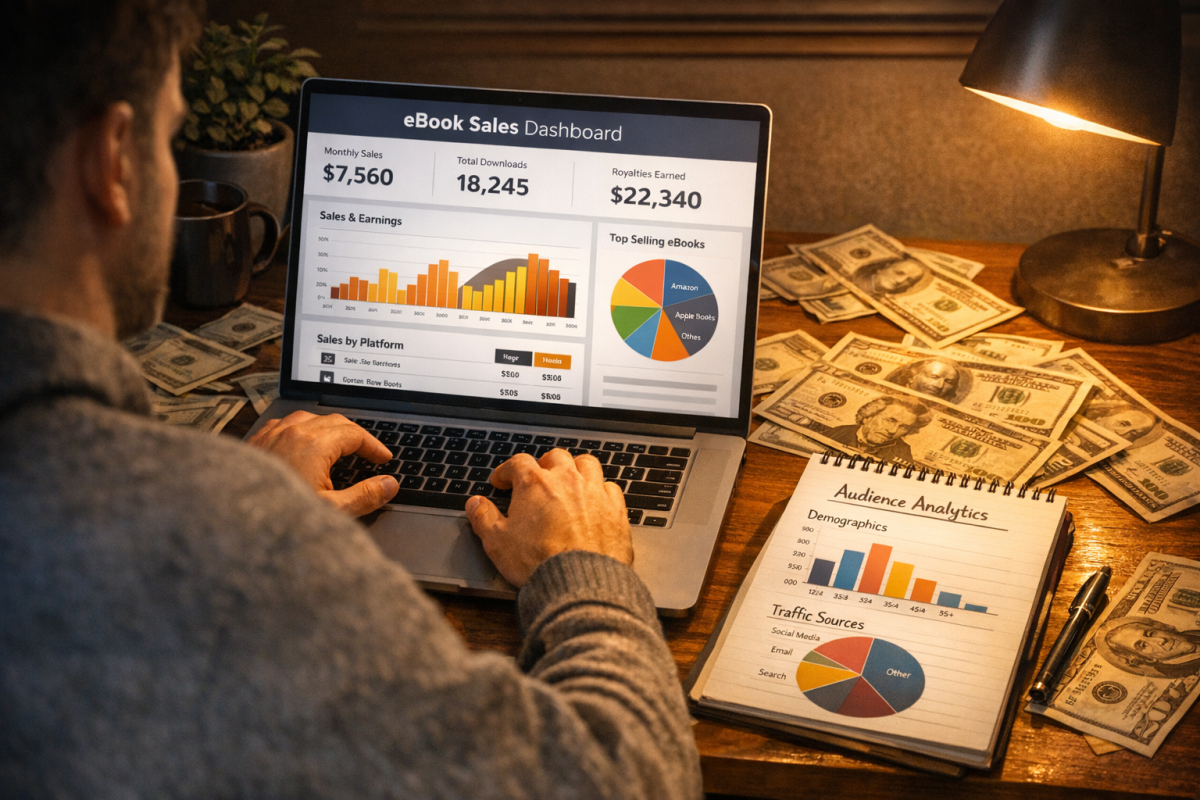
When you're selling your eBook, you have to decide if you want to sell it for money or for information. When you sell it for money, it's possible you might be able to get an email opt-in or account registration out of the deal, but most of the time you'll just get the cash. When you're selling for information, you won't be able to tack on a price; users will reject it.
You also have the option to take your normally paid eBook and give it away free, for either a certain subset of users or all users for a limited time. This is typical of eBooks during a promotional push. It also works well for authors publishing through Amazon Kindle Direct Publishing (KDP), where promotional free days can generate a burst of downloads, reviews, and algorithmic visibility. If you want to maximize your eBook sales and downloads, understanding this balance is key.
Now, do you want the cash, or do you want the information? Honestly, either one is a good option. If you go for the cash, you have profits to reinvest in other parts of your business. If you go for information, you learn more about your audience. Of course, if you're selling a book for cash, you can always give it away later. You can't easily go vice versa.
I recommend selling for information, particularly if your eBook is your first offering, if you don't have any name recognition behind it, or if you don't know much about your audience yet. If you know your audience well, you're in need of revenue, or you've packed your book with exclusive insights or expert interviews, selling for cash makes more sense. Authors on Amazon may also want to explore ways to increase Kindle book sales to get the most out of their efforts.
Selling Through Who
You also have to choose where you're listing your book. Free books, or books sold in exchange for information, should be hosted on your own site. You can't harvest customer data when selling through a third-party platform like Amazon. If you want to sell an eBook directly through WordPress, there are free plugins that make it straightforward.
Amazon KDP is still the dominant platform for eBook publishing, accounting for over 80% of global eBook sales as of 2026. That's not a stat you can ignore. But you do have other options worth considering. Payhip gives you 100% of your royalties but has a fraction of Amazon's audience. Draft2Digital (which absorbed Smashwords) lets you distribute to multiple retailers simultaneously, including Apple Books, Barnes & Noble, and Kobo. Give your readers options where it makes sense, but don't spread yourself so thin that you lose focus.
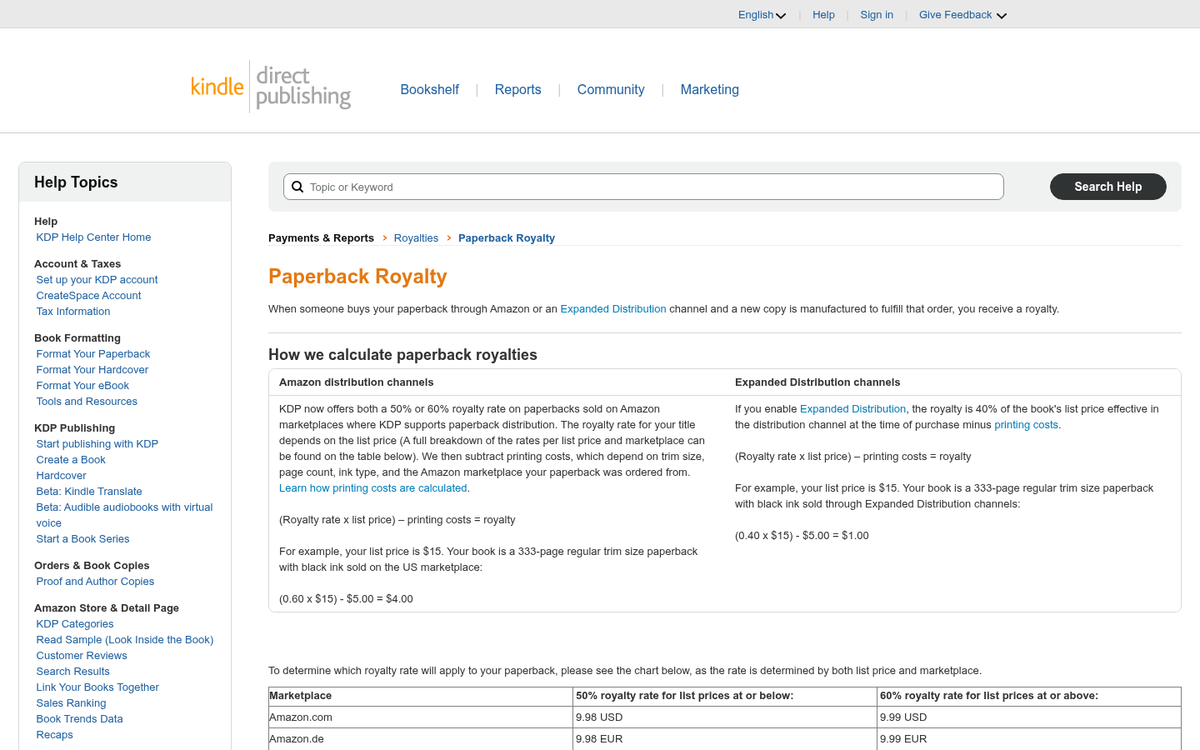
When you sell on Amazon KDP, your royalty is directly tied to your price point. If you price your eBook below $2.99 or above $9.99, you earn only a 35% royalty. Price it anywhere between $2.99 and $9.99 and you earn 70% per sale. Keep in mind that Amazon also charges a delivery fee of $0.15 per MB for eBooks in the 70% royalty tier, so a heavier file with lots of images can eat into your margins. If you're struggling to move copies, it may be worth reviewing why your eBook isn't getting enough sales. Still, staying in that $2.99 to $9.99 window is almost always the smarter financial play.
Low or High?
When pricing your eBook to sell for cash, you have some real decisions to make. I'm going to assume you're publishing on Amazon, in much the same way that SEO assumes you're talking about Google - the user base and tools available are simply too dominant to ignore.
Amazon's algorithms promote books to users who have bought similar titles in the past. More popular books get more visibility, which means early momentum matters enormously. That's where pricing strategy comes in.
The most commonly purchased eBooks in 2026 are priced between $2.99 and $3.99, with $3.99 emerging as the single most popular price point. That sweet spot is no accident. It's low enough that readers don't hesitate, high enough that you're still earning a 70% royalty, and it signals enough value that people don't assume the book is junk.
Here's how the low-price strategy works: you price your book at $2.99. A large number of people see it and buy it, willing to risk a few dollars on an author they might not know yet. You build up reviews, your sales rank climbs, and Amazon's algorithm starts putting your book in front of more readers organically. More visibility leads to more sales, which leads to more visibility. It's a flywheel, and a low price point is often what gets it spinning in the first place.
Pricing higher gives you a better per-unit royalty, but you'll see fewer impulse purchases because readers are more cautious about spending $15 or $20 on an unknown quantity. A higher price makes more sense when your book already has strong pre-order interest, a well-known author name attached, or genuinely deep, reference-grade content that justifies the premium. Also worth noting: fiction eBooks under 50,000 words are generally expected to be priced under $2.99 - readers in that space have clear expectations, and violating them will cost you reviews. If you want to encourage more positive feedback, it's worth learning how to solicit Amazon customers for 5 star reviews.
One more thing to keep in mind: publisher-driven price increases have continued to push traditional eBook prices upward. Kindle prices rose roughly 1.8% in 2024 alone, with major publishers like Simon & Schuster leading the charge. As an independent author, this actually works in your favor - your $3.99 eBook looks like an even better deal when a comparable traditionally published title costs $14.99. For a broader look at how high vs low priced products affect your earnings, the same principles often apply across digital marketplaces.
Keeping It Up
Once you've published a book and have been selling for a while, it's time to write another. Keep in mind how you can continue to leverage your existing catalog for visibility and profit. Publishing an updated edition of an older book is a legitimate way to generate repeat sales, as long as the update is substantive and clearly communicated. Publishing entirely new books lets you experiment with different price points, different compensation models, or different platforms entirely.
The eBook market in 2026 rewards consistency and catalog depth. One great book is a good start. A growing library of them is a business.


1 response
Thoughtful replies only - we moderate for spam, AI slop, and off-topic rants.
The question of pricing your book is usually a very tricky one.
Often because the value of your book is not decided by you, it's decided by your readers.
If they don't think much of it, then it doesn't matter how much you think it's worth.
The best bet is to try different prices and check the numbers.
Always start with a lower price and up the price once you are sure there is a real demand for it.
Get the first buyers to give you positive reviews and it becomes easier to make new sales.
Happy selling!