When you're trying to sell affiliate products through Clickbank, you have a few decisions to make. The most impactful of all of them is the selection of what products you want to sell. Do you go for high commission products or lower priced, lower commission products? Let's talk about it.
Key Takeaways
- Always calculate actual earnings per sale, not just commission percentage - higher percentages don't always mean more money.
- Conversion rates matter more than price; a cheaper product selling 30 times can outperform a pricier one selling five times.
- Recurring commission products compound monthly earnings over time, but cancellations and audience saturation must be factored in.
- High-ticket products require more traffic, trust, and content investment, with conversion rates often below 1%.
- Promoting both high and low-priced products together provides stable baseline income plus occasional high-value sales spikes.
Price Vs. Commission
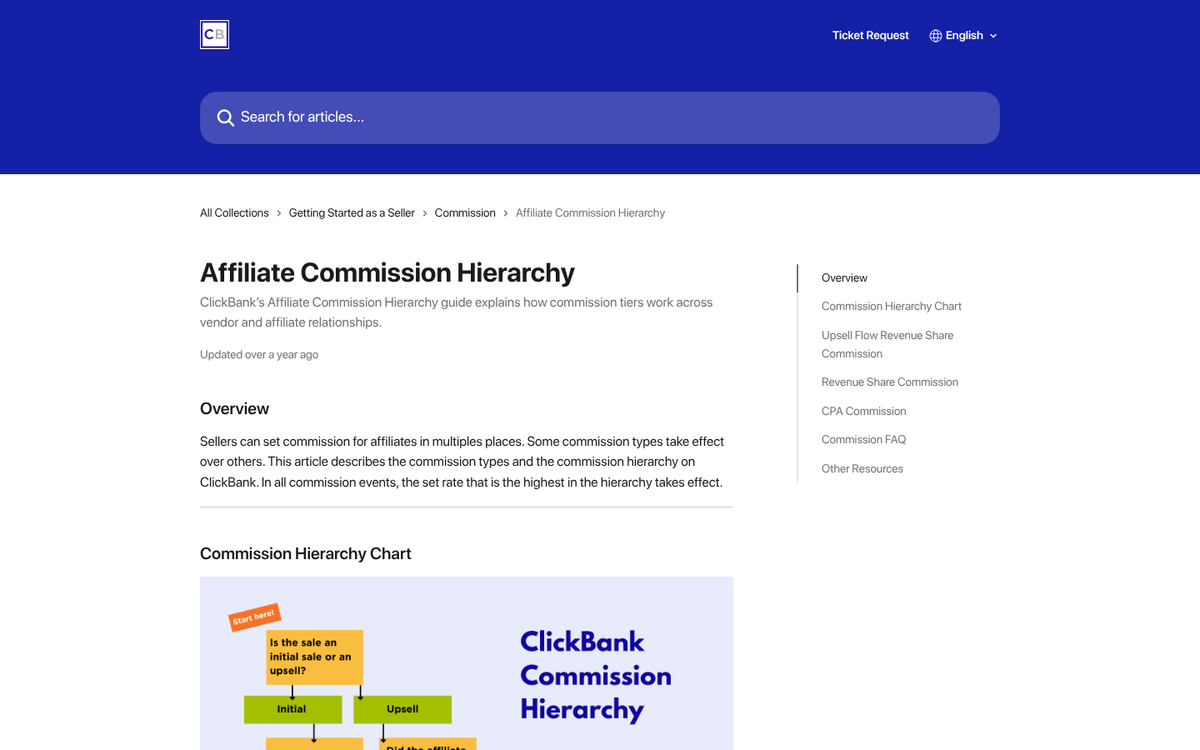
The first thing you need to be aware of is the difference between the price of the product and the commission for the sale. If you're selling a product that has a sale price of $89, and you get a 50% commission, that means every sale is making you $44.50. On the other hand, if you're selling a product that sells for $17 with a 75% commission, you're only making $12.75 per sale - that's 3.5x less per customer, even though the commission percentage is higher.
This might seem obvious, but when the numbers are smaller and closer together, it's easier to slip and not notice which ones are really the better deals. A higher commission percentage doesn't always mean more money in your pocket. Always do the math on what you actually earn per sale, not what percentage you're getting.
When you're comparing products you might want to sell, I recommend making a spreadsheet and doing some testing. The first three columns of your spreadsheet should be the product name, the sale price of the product, and the commission for the product, so you can see directly how much you actually make per sale, rather than how much the product sells for.
One more thing worth noting here: ClickBank has paid out over $7.1 billion in total affiliate commissions, so there's clearly real money to be made on the platform. But it's also worth knowing that their own data shows it takes an average of 570 days from account creation to a first affiliate paycheck. This isn't a get-rich-quick game - it rewards patience and strategic product selection.
Conversion Rates
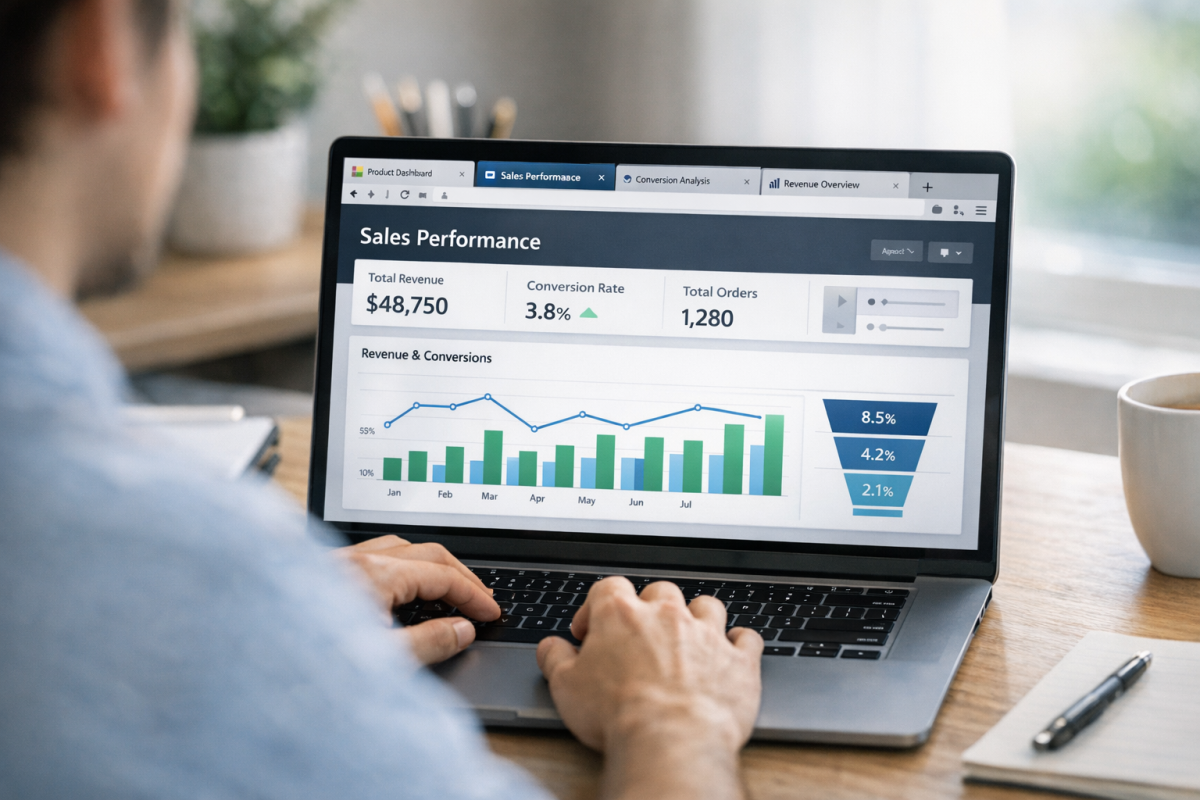
The second factor you need to keep in mind is the conversion rate for the product. This will, of course, vary depending on your ability to sell the product to your audience. This is where your testing comes in. If you have the luxury of setting up a small test affiliate site for individual products, you can run tests in a relatively static environment. On the other hand, you won't have a high volume, because you won't have an established audience.
It's generally best to find items that at least fit your niche. If you're running a site with a bunch of personal finance affiliate products, you'll have a lot of related content and can attract a money-minded audience. Testing another financial product is easy; testing some kind of kitchen gadget or something probably isn't.
Conversion rates are important, so testing in as controlled an environment as possible is extremely valuable. Which of these products would you choose?
- A product that has a sale price of $100, a commission of 70%, and a conversion rate that gets you 5 sales per month.
- A product that has a sale price of $20, a commission of 80%, and a conversion rate that gets you 30 sales per month.
The first product will get you $70 per sale and a total of five sales per month, which results in $350 per month. The second product will get you $16 per sale, but with 30 sales per month, you end up making $480 per month.
This is why pricing can be deceptive. The smaller product ends up making you more money in the long run.
Of course, if you can boost the conversion rate of the first product, each additional conversion is worth more. On the other hand, the same actions might be able to boost the conversion rate of both products, so you never know which one is going to perform better.
It's also worth factoring in refund rates when you think about conversion quality. ClickBank flags products with refund rates exceeding 10-12% of total sales as damaging to affiliate performance. A product with a great conversion rate but a sky-high refund rate is going to eat into your earnings more than the numbers initially suggest. Always check the refund rate before committing to promoting a product.
If you're filling out your spreadsheet, this is where you want to add a column for the number of conversions you get in an average week or month, the estimated refund rate, and a column with the average total you actually keep in a month. This will give you a good at-a-glance reading of which products truly work better for your site.
Recurring Payments
Another factor you might consider with affiliate offers through Clickbank is recurring commissions. With normal affiliate products, you get paid once and you're done with that customer. Often times the customer isn't in the market for more similar products, and while you might have related products you can sell to them, you won't sell any individual product repeatedly.
This tends to be worse with the higher priced products, because a higher priced product is generally designed to last longer than a lower priced product. If someone buys a piece of software outright, they're likely to use it for years. You won't be selling the same thing to them again any time soon. On the other hand, a lower-cost consumable might be cheaper per transaction, but you can sell it repeatedly.
Recurring commissions are monthly sales that pay you each month as long as the customer is still subscribed. Subscription software and membership programs often work this way and can be very lucrative. Take those two products from above, and add this third one on to it:
- A product that has a sale price of $30 per month, a commission of 50%, and a conversion rate that gets you 10 sales per month. It has recurring commissions as long as the subscriber remains subscribed.
This product will compound upon itself. Each individual sale is worth $15 to you, so with 10 sales per month, each month is $150. Except you have recurring commissions. The first month that product is getting you $150. The second month it is getting you $300. The third month it is getting you $450, and so on.
Now, there will generally be an end-of-life for the commission, and there will always be cancellations. After six months, maybe the user unsubscribes. However, even if all of the users from month 1 unsubscribe at month 6, you still have six months of compounded earnings on a rolling basis - that's $900 a month ongoing. If you can retain subscribers longer than that, it's even better.
Recurring commissions can be extremely lucrative, but you also have to be aware of all of the factors involved. Cancellations, caps on commissions, and audience saturation are all important. Audience saturation is especially important; if you have 10,000 monthly readers and you have successfully sold to all of them, you're basically stuck. You need to grow your audience and reach new people to keep new commissions rolling in. Of course, this is true of basically any commission-based affiliate system, so growing your site with the right affiliate programs is always going to be important.
High-Ticket Products and APV Thresholds
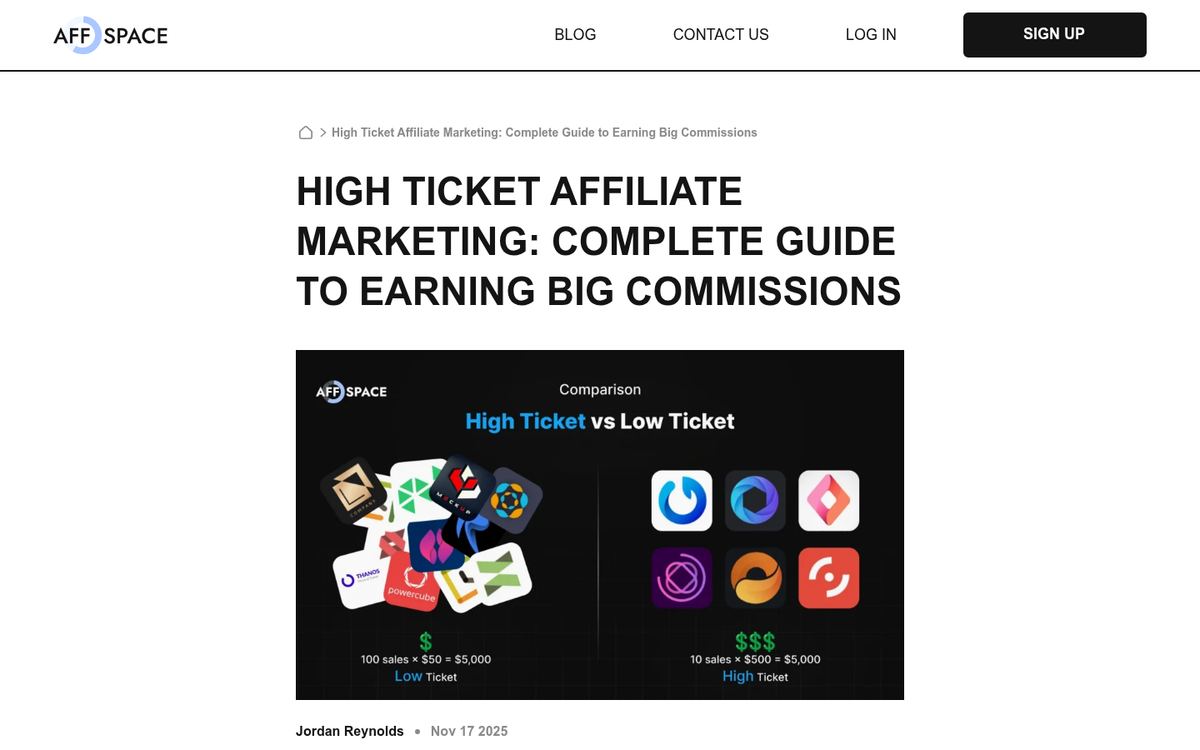
One thing that doesn't get talked about enough is the concept of average payout value (APV) and how it affects which products are actually worth your time to promote. ClickBank's internal data shows that supplement offers typically need an APV of $120 or more to attract serious affiliates, while lower-ticket digital products can be viable at a $50+ APV.
Some high-ticket offers on ClickBank and similar platforms also offer CPA (cost per acquisition) structures rather than percentage commissions. For example, a top-performing high-ticket offer might pay affiliates up to $200 per CPA or an 85% revenue share. These numbers can be extraordinary, but the conversion rates are naturally lower - we're talking sub-1% in many cases. At a 0.83% conversion rate, you need a lot of targeted traffic to make those numbers work.
The takeaway: high-ticket products require more traffic, more trust, and often more content investment to convert. They're not a shortcut - they're a different game entirely.
Competition
The competition for your affiliate offers is a big factor that is very hard to quantify. Every product on a site like Clickbank is going to have at least some competition. That's simply the nature of using an affiliate marketplace.
The stronger the competition, the harder it's going to be to get your place in the niche carved out. A larger established site is going to be able to out-spend you in advertising. They'll have a better search engine ranking because they have an older domain, more content, and more readers. If they're promoting the same offer you are, you don't have anything unique to offer your readers, so they aren't necessarily likely to trust you over the more established rival.
Competition doesn't mean you have to avoid an offer; like I said, there will always be people promoting every offer you see. You just need to be able to successfully promote it to your audience.
Ease of Sales/Interest in the Products
This is a big one. It ties into your conversion rates. Some products are simply much easier to sell than others.
Think about it. It's a lot easier to sell a broadly useful productivity app than it is to sell a highly specialized enterprise tool, because the potential audience is so much larger. One has a mass-market appeal; the other requires a very specific buyer.
You need to think about different aspects of the product you're going to sell. Here are some considerations:
- The price of the product. Products with a very high price require more thought before a user can convert. They also require an audience with more disposable income. It's easier to sell a $10 browser extension than it is a $2,000 online course.
- The potential audience for the product. Some products are generically useful to basically everyone, while others are more extremely specialized. You can target just about any business, large or small, to sell a subscription to an email marketing tool. On the other hand, you have to target a specific type of business if you're selling an enterprise-grade ERP system.
- The age of life for the product. Some products are consumable. Others decay quickly. Still others are long-term investments. Selling a supplement is a product users can come back to and reorder monthly. Selling a one-time digital download means you only get to sell to each person once.
- The research necessary to decide to convert. Some kinds of products don't require much effort to sell. Everyone knows if they want a $9 ebook and can easily impulse buy it. On the other hand, people will spend weeks or months researching which software platform they want before committing to an annual subscription.
All of this needs to be balanced against the size of the commission you receive. You can make an extremely good living selling high-ticket coaching programs or premium software, even if conversions are lower. A commission that pays you $500 or more per sale means you can spend significant time and ad budget on one single conversion. On the other hand, you can build very stable income with a large enough audience for a lot of small, recurring commissions. It's all a balancing act.
Making the Decision

Honestly, I don't think you should be asking yourself whether you want to sell cheap products or expensive products. I think you should be broadening your scope and selling both. Your audience is going to be made up of a lot of different people who have interests throughout your range of content.
Let's say you're a site focused on fitness and health. You'll find plenty of people in your audience who are beginners just wanting an affordable workout guide or a basic supplement stack. You'll sell a lot of entry-level products. You might also have a segment of your audience that's more serious - people who will invest in premium training programs, high-end equipment, or ongoing coaching memberships.
You can also expand into higher-end territory. You can promote premium supplement bundles, one-on-one coaching offers, or annual fitness app subscriptions with recurring commissions. Even if you don't close many of those high-ticket sales, the content around them brings people into your site. Maybe you write a review of an expensive fitness tracker and only sell a handful, but those visitors end up buying a $49 workout program that pays you a recurring commission. You never know!
High priced, high commission items are big ticket sellers, and selling a few a month can seriously move the needle. The interest comes and goes, however, and conversions are less predictable. On the other hand, you might not make much per sale with lower-priced products, but the interest is much broader and you'll sell a lot more of them consistently.
Having a wide range of lower-priced products gives you a solid foundation of relatively stable income. Having high-ticket items allows you to spike up, live comfortably, and have plenty of money to reinvest in your site. It's better to have both rather than focus on one or the other - and in 2026, with more competition than ever on platforms like ClickBank, a diversified product mix isn't just smart, it's essential.