"You need a blog, if you want to succeed." Sound familiar? Is it true? There are great reasons to blog, but if you don't do it properly, it can hurt you more than it can help. Just like any investment in your business, you need to stack the deck in your favor. This mostly involves following standard blogging rules and keeping it up even when it seems like it might not be bearing fruit. If you need more convincing, though, here are more reasons you should blog in 2026.
Key Takeaways
- A business blog builds brand awareness, establishes authority, and humanizes your company - 70% of people prefer articles over ads.
- Blogs drive significant traffic; companies with blogs generate 55% more website visits and 434% more indexed search pages.
- Blogging is cost-effective, generating 3x more leads than outbound marketing at 62% less cost, with brands seeing 13x more ROI.
- Blog content fuels social media, can be repurposed into videos, podcasts, and ebooks, multiplying the value of every published idea.
- Each blog post collects user behavior data, helping optimize your sales funnel, landing pages, and overall content strategy.
1. Your Blog is a Public Face for your Business

When a personal user blogs, it's like an ongoing resume. It's an illustration of your thoughts, your qualities and your preferences. When a business blogs, it works in the opposite direction. It's a display of company culture. It's a showcase of what matters, and how it matters to your business. It's a demonstration of your technical and industrial proficiency. According to HubSpot's 2025 State of Blogging Report, 66% of businesses blog specifically for brand awareness - and it works. A business blog allows you to convince both possible employees and possible customers to take the next step, if they like what they see. If you're just getting started, it helps to have a solid ultimate marketing plan for a brand new website in place before you launch.
2. Your Blog is a Public Relations Platform

Companies can have stances on issues. Sometimes it's a controversial stance and can win or lose you fans, depending on who subscribes to the same ideology. While we don't recommend going out and posting about your ideas of religion and sexuality on your blog - at least, not if you're not working in those industries - it's still a good forum for opinions that humanize your brand. Users like to buy from brands they trust, and it's a lot harder to trust a faceless megacorporation than it is to trust a business with a genuine, relatable voice. A blog gives you that voice. In fact, 70% of people would rather learn about a company through articles than advertisements.
3. It's Fuel for Social Media

Social media often goes hand in hand with the first line of this article. If you're using social media, you may have encountered one big issue: you don't know what to post about. Well, a blog solves that issue. It gives you a constant stream of content to share, it gives you a basis upon which you can share future content, and it gives you topics to spin off into stand-alone posts. HubSpot's 2025 State of Blogging Report also found that 53% of businesses blog specifically for customer engagement - and social media is one of the primary channels where that engagement happens. A blog, basically, is fuel to keep your social engines burning.
4. It Drives Traffic
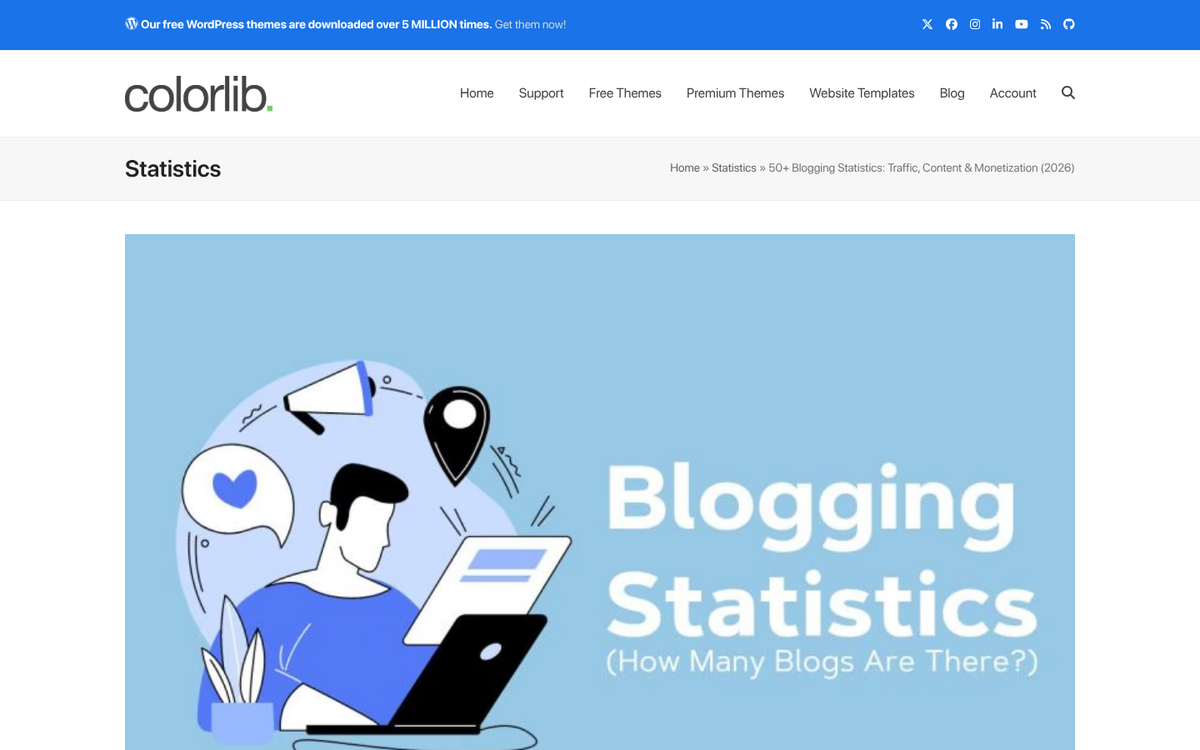
At the end of the day, it's all about numbers. You want to increase your profits. To do that, you need more customers. To get more customers, you need to increase your visibility and your sheer number of visitors. The data here is hard to ignore: companies with blogs generate 55% more website visits than companies without blogs, and 434% more indexed pages in search engines. More indexed pages means more entry points for potential customers to find you organically. A blog is an excellent tool both for attracting users and for keeping them around, with blog posts converting users or pushing them toward pages that will convert them.
5. It Positions You as an Authority
Once again, it comes back to trust. Who would you rather trust with, say, a medical issue? Would you trust a guy you passed in the street? Or would you rather trust a doctor in his office? The blog is like your office - it's a place that you use to instill a sense of authority and knowledge in your users. This matters even more in B2B: 71% of B2B buyers read blog content during their purchasing journey, meaning your blog isn't just nice to have, it's often a deciding factor in whether someone chooses you over a competitor. If you're targeting business buyers, learn more about how to promote a B2B wholesale business effectively.
6. It's Residual Income
When you post an entry on your blog, it immediately begins working for you. It can bring in new users. It can convert users into customers. It can open up partnerships with others. And it never stops. A blog, as long as it's up and active, is always working for you. You can generate leads and bring in profit while you're on vacation, asleep or working on something else completely. Brands that prioritize blogging see 13x more ROI than brands that don't - that's not a marginal difference, that's transformational.
7. It's Incredibly Cheap
How much do you estimate it would cost to run a blog? Chances are you're quoting a high number. You already have hosting and a domain name for your website. A blogging platform like WordPress is free. You don't need to run specific blog-focused ads; they can work into your existing budget. If you write yourself or get an existing employee to write, you don't need to buy content or hire writers. Content marketing in general generates over 3x as many leads as outbound marketing and costs 62% less - making a blog one of the highest-return, lowest-cost investments available to a business of any size.
8. It Displays Reliability

Keeping to a regular blog schedule - even if you do so by writing multiple posts at once and scheduling them out over several months - shows you're reliable. You can start something and keep up with it. You can support the things you start. You're informing customers that you're ready and willing to put that reliability to work for them. Consistency also pays off in leads: B2C organizations that blog 11 or more times per month receive 4x more leads than those blogging just 4 to 5 times per month.
9. You Learn and Improve

Blogging is a very specific form of communication that requires thought. You can't just slap a post together and expect it to perform. Blogging makes you take a step back and really think about how to best formulate your message, and it makes you go back over that message and make sure it works. Over time, the discipline of regular blogging sharpens your understanding of your own industry, your customers, and your value proposition in ways that few other activities can.
10. It has Infinite Growth Potential

Right now, if you were to put together a brand-new blog with no audience and try to sell it, you wouldn't get much. Dedicate the time and effort to building an audience, however, and that changes dramatically. Established, high-profile blogs have been sold for literal millions of dollars. Beyond outright sale, a successful blog can become a platform for courses, consulting, sponsorships, affiliate income and more - revenue streams that simply aren't available without the foundation a blog provides.
11. It Fosters Awareness
In order to become a successful blogger in your industry, you need to have a keen awareness of the rest of that industry. You need to know who else is blogging and what they're blogging about. You need to be aware of modern developments. You need to know your industry inside and out, and that kind of awareness gives you insight that you can then leverage for other benefits throughout your business.
12. It Spreads Your Message
Today's culture is all about consuming and sharing content online. When you post something genuinely useful or interesting, it can reach hundreds, thousands or even millions of people through shares, links and search. The organic reach alone can be worth thousands of dollars in equivalent ad spend - not to mention the leads generated when that content finds the right audience at the right moment in their buying journey.
13. Every Post is an Opportunity
From a purely numerical standpoint, look at your site. How many individual pages do you have? Each page is a chance for a user to link to you and share your business. Each page is a chance for a user to decide to convert. Each page is a chance to be picked up in search. Companies with blogs have 434% more indexed pages than those without - and each of those pages is compounding your visibility over time. With a blog, you're creating more and more opportunities, and those opportunities build on each other as people stick around and explore. To make the most of each post, follow a marketer's checklist for SEO friendly blog posts and consider whether updating old blog posts can help those existing pages work even harder for you.
14. Blogs can be Leveraged

When you're blogging, you often dig deep into content. Yet the average reader's attention span means you can't go too deep in a single post without losing them. You can use these posts as a starting point for other forms of media - videos, podcasts, webinars, or ebooks - that go into greater detail. In 2026, repurposing blog content across formats is one of the most efficient content strategies available, letting you multiply the value of every idea you publish.
15. It Gives You Information
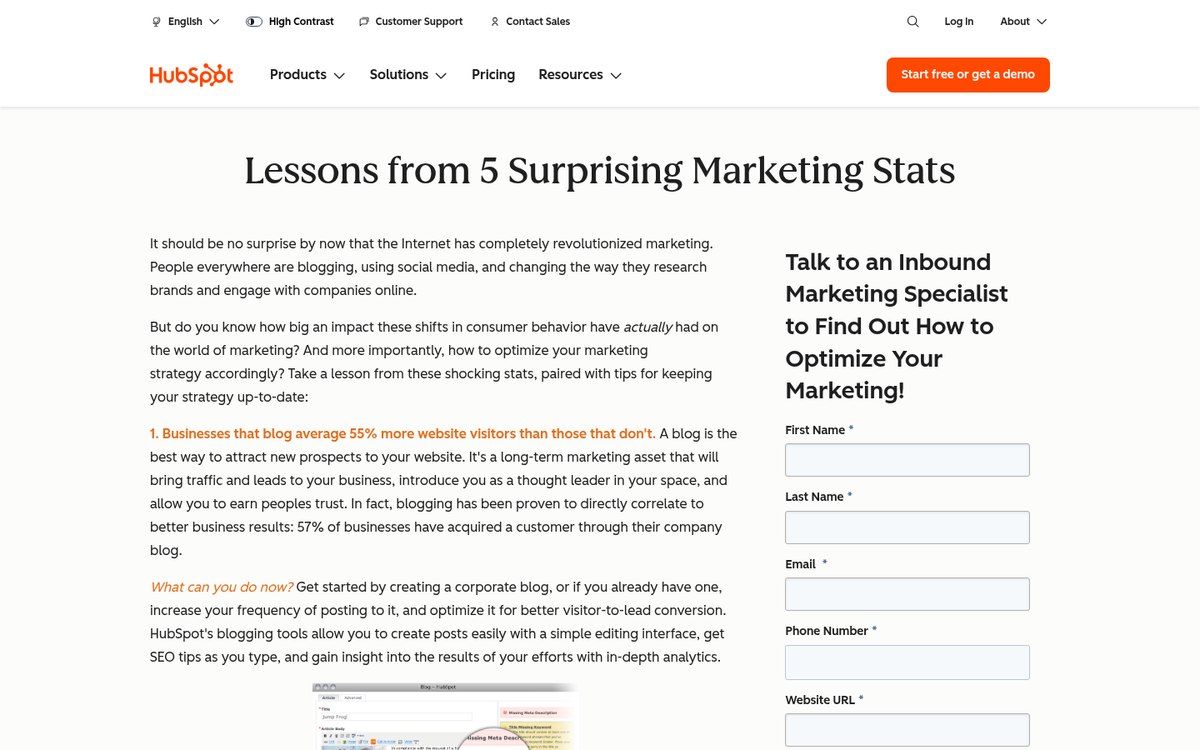
Blogging brings users to your site, and you can measure their behavior while they're there. Every user is a data point, and you can use that data to optimize your sales funnel, your on-page SEO, your landing pages, your layout and everything else. Companies with blogs generate 67% more leads monthly than those without - and the analytics behind those leads tell you exactly what's working, so you can do more of it.