





AdSense can be a good method for monetizing a blog, but it does have some issues. Foremost among them is the issue of volume. Since AdSense is a pay-per-click network with relatively low cost-per-click rates, you really need a lot of volume to make any significant amount of money. Some sites achieve this through sheer masses of content, with thousands of monetized pages. Others focus on having content go viral, generating that volume from a relatively few posts.
In order to get this kind of volume, people start looking for methods to drive more traffic to their sites. One such method that comes up in pretty much every article on the subject is paying for traffic. So, you might be tempted to pay for traffic so you can earn more from your monetization setup, but the question is: should you do it?
Key Takeaways
- Google doesn't prohibit buying traffic for AdSense sites, but fake or bot traffic violates policies and risks account suspension.
- Low-quality bulk traffic rarely clicks ads, potentially earning just $1-$2 RPM versus $10+ RPM from genuinely engaged visitors.
- Paid traffic must generate positive ROI; spending $80 for traffic earning $20 in AdSense revenue is simply a net loss.
- High-CPM niches like finance, insurance, and legal consistently outperform entertainment or lifestyle niches for AdSense earnings.
- Converting paid visitors into email subscribers or returning readers reduces long-term dependence on paid traffic sources.
Google's Rules
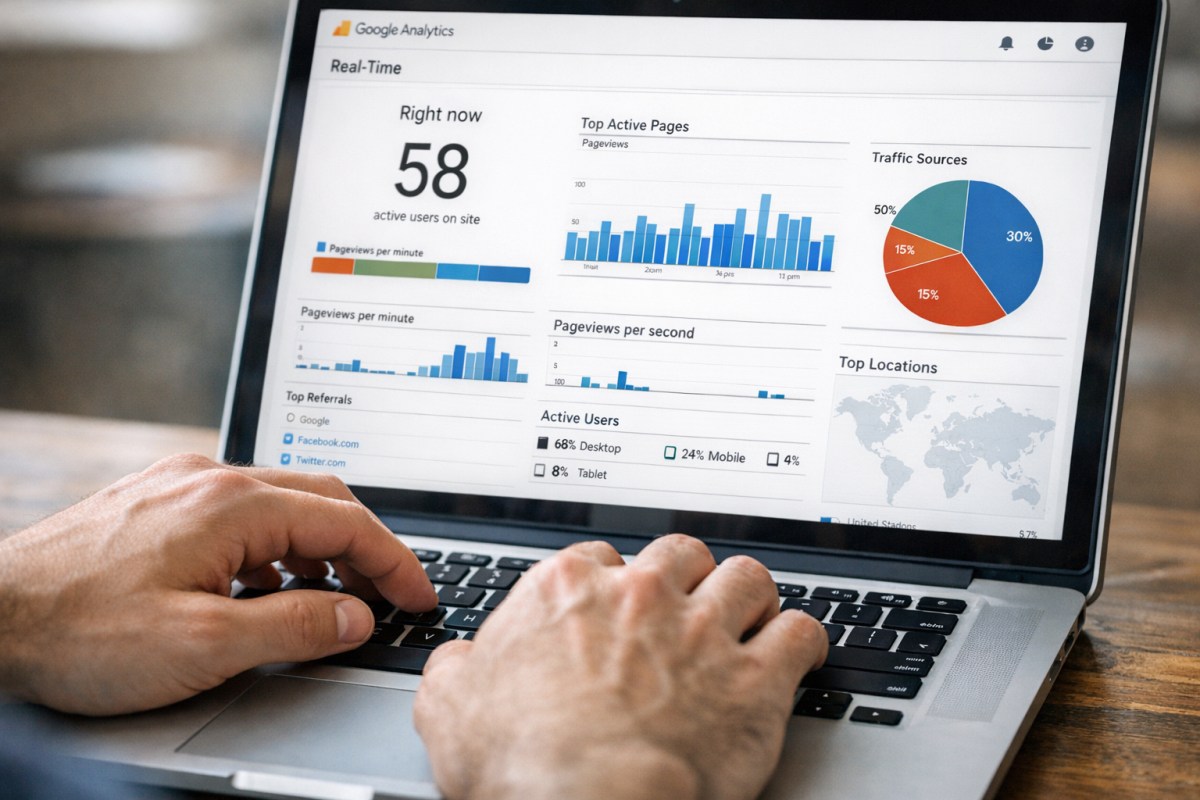
The first question you should ask yourself is not "should I do this?", it's "is it safe to do this?" If it's going to get you banned from AdSense, it's certainly not something you want to do. There's no sense in jeopardizing your entire monetization structure just to make a few extra dollars this month.
Google doesn't directly prohibit buying traffic to a site that has AdSense as a monetization method. They specifically say you're welcome to promote your site however you want, so long as those methods don't violate their program policies. The only policy violation you're likely to encounter is buying bot traffic or fake traffic that trips Google's invalid traffic filters, which can get you removed from the program entirely.
What this generally means is that while you can buy traffic, you should avoid low-end sellers on platforms like Fiverr or shady bulk traffic sites. If you're getting thousands of "unique" visitors for next to nothing, you can be fairly certain you aren't getting real users. Real, engaged users cost more - and for good reason.
Traffic Quality

When you're buying traffic with the express purpose of monetizing it through AdSense, you have to be acutely aware of the quality of that traffic. AdSense pays on a combination of clicks and impressions, but the bulk of your earnings still come from clicks and engagement. Traffic that is nothing more than empty pageviews won't meaningfully move the needle.
Fake traffic doesn't click ads. Low-quality clickfarm-style traffic rarely clicks ads, and essentially never converts on the other side of those ads. Worse, suspicious click patterns look like intentional fraud to Google's systems and can get your account suspended far faster than bot traffic alone.
It's also worth understanding how AdSense revenue actually breaks down. Google keeps approximately 32% of revenue for content sites, meaning if an advertiser pays a $10 CPM, you as a publisher earn roughly $6.80 RPM. In practice, AdSense pays somewhere between $2 and $40 per 1,000 page views depending on your niche, audience location, and ad placement quality. US and Canadian traffic typically earns 2-3x more than traffic from Asia-Pacific or other lower-CPM regions, due to higher advertiser competition and spending power in those markets.
Average AdSense CTR ranges from 0.5% to 3%, with 1-2% being typical for most sites. Websites with lower but highly targeted traffic tend to earn 2-3x higher RPM compared to high-traffic, low-intent sites. This means you're far better off buying targeted, relevant traffic than cheap bulk visitors.
You need to buy the highest quality, most targeted traffic you can find. Of course, this means spending more per visitor, which raises your costs and makes achieving a positive return more difficult. You should also consider how much traffic you actually need to earn on AdSense before scaling up any paid campaigns.
Yes, you need to spend money to make money - but you need to keep one crucial thing in mind:
Remembering ROI
Your Return on Investment is the critical measurement when considering buying traffic to monetize with AdSense.
Let's use a realistic example. Say your site earns an RPM of $10 (reasonable for a mid-tier niche with decent US traffic). If you're getting 5,000 pageviews per month, you're earning around $50/month. Now say you find a traffic source selling 10,000 visits for $80. If that traffic is low quality with minimal engagement, your effective RPM on those visits might be $1-$2, earning you perhaps $10-$20. You've spent $80 to earn $20 at best.
That's a loss of $60. Not a good proposition.
Of course, the exact numbers will vary widely based on your niche, traffic source, and ad setup. The point of the exercise is to illustrate that the math has to work in your favor before you commit to paying for traffic. Purchased traffic also has no compounding effect - it exists for exactly as long as you're paying for it. Once you stop, it stops.
There are, however, a few ways to tilt the odds in your favor.
Ensuring Positive ROI

You can make a profit from buying traffic, but you need to approach it carefully and strategically. One wrong move and you risk losing significant money while also potentially endangering your AdSense account.
1: Make sure your traffic is as high-converting and targeted as possible. The higher the percentage of traffic that genuinely engages with your content and ads, the more you earn per thousand visits, and the better your chances of a positive return.
This is a delicate balancing act. Higher quality, more targeted traffic tends to come from sources that know their value and charge accordingly. You need to find the middle ground - traffic that's targeted enough to engage, but affordable enough to leave room for profit.
Meta (Facebook/Instagram) ads remain a strong option here for detailed audience targeting, particularly if you can narrow down to US, Canadian, or UK audiences in high-CPM niches. Google Ads itself can also work, though the economics are tight. Pinterest and Reddit ads can be surprisingly cost-effective for the right content categories. The key is testing small before scaling anything.
2: Make sure your ads are paying as much as possible. There are many factors you can optimize to increase your effective RPM on AdSense. Traffic quality is one, but content topic matters enormously. Niches like finance, insurance, legal, and technology consistently command the highest CPCs, while entertainment or general lifestyle niches tend to earn far less.
Use tools like Google Keyword Planner to identify high-CPC keyword areas relevant to your content. Optimize your ad placements for viewability - ads that users actually see perform significantly better than ads buried below the fold.
It's also worth noting that if your site grows to over 50,000 sessions per month, you should seriously evaluate premium ad networks like Mediavine or Raptive (formerly AdThrive), both of which typically pay 2-4x more than standard AdSense. Staying on AdSense simply because it's familiar can cost you substantial revenue at scale.
Keep your content quality high and your ad density reasonable. Overloading pages with ads while providing thin content is a reliable way to trigger Google's quality filters and hurt both your rankings and your ad revenue.
3: Carefully monitor and cut underperforming ad categories. AdSense allows you to block specific advertisers, ad categories, and other elements of the program. If certain categories are consistently not resonating with your audience - showing up but never generating clicks - block them. That ad space can then be filled with categories more relevant to your readers.
Watch your fill rate as well. Fill rate is the percentage of time an ad unit is actually serving an ad. You want this as close to 100% as possible. A low fill rate means pageviews are occurring with no monetization opportunity attached.
Test different configurations regularly. Sometimes fewer, better-placed ads outperform a page stuffed with units. The only way to know what works for your specific audience is to test it.
4: Attempt to convert paid visitors into recurring, non-paid traffic. This is arguably the most important long-term strategy. Every visitor who arrives via a paid source is a potential reader you can convert into someone who returns organically - costing you nothing on subsequent visits while continuing to generate ad revenue.
How do you convert paid visitors into loyal, returning readers?
- Content. High-value, evergreen content is your best tool. Reference guides, tutorials, and in-depth resources are the kind of content users bookmark and return to. If someone arrives via a paid click and finds genuinely useful content, there's a real chance they'll come back on their own.
- Email Lists. Converting visitors to email subscribers means you can reach them directly at no additional cost. Email subscribers are typically your most engaged audience segment, with higher CTRs and better conversion rates than almost any other traffic source.
- Strong Branding. A distinct name, consistent visual identity, and clear niche positioning make you memorable. If a visitor associates you with a topic they care about, they're more likely to think of you the next time that topic comes up.
- Remarketing. With proper tracking in place, you can build audiences from paid visitors and retarget them in future campaigns. Retargeted audiences are already familiar with your brand, tend to cost less to reach, and convert at higher rates than cold traffic.
All of these strategies compound over time, improving your traffic quality, reducing your dependence on paid sources, and increasing the revenue you generate per visitor.
So, should you pay for traffic when you're using AdSense to monetize your site? The answer is a qualified yes - but only if the math works. If you can consistently achieve a profitable ROI by buying targeted, high-quality traffic in a strong CPM niche, it can absolutely be a viable growth lever. If your numbers don't support it, you're simply paying to lose money. Run the numbers honestly before you spend a dollar, and test small before you scale.


2 responses
Thoughtful replies only - we moderate for spam, AI slop, and off-topic rants.
Can i make money from Growtraffic Visitor? Growtraffic visitor is real or fake???
Hey Sagor! GrowTraffic typically sends bot or low-quality traffic, which won't generate real AdSense earnings. Google is very good at detecting fake traffic, and using such services can actually get your AdSense account banned. It's simply not worth the risk. Focus on organic traffic through good content and SEO instead - that's the kind of traffic that actually converts and keeps your account safe!