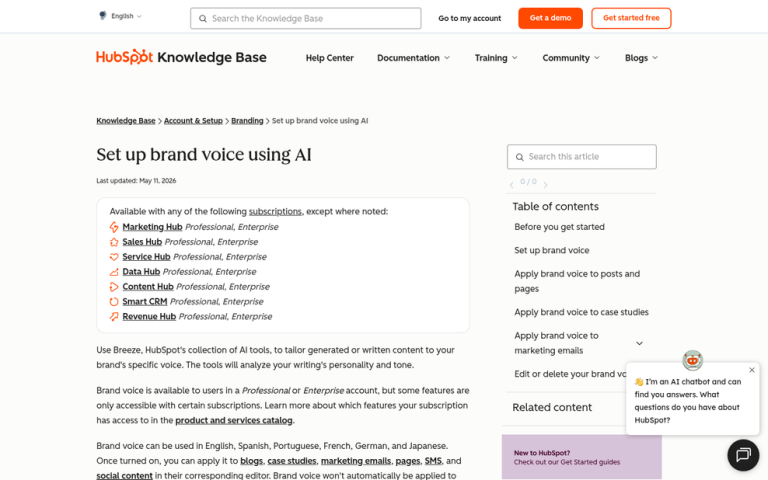
AI tends to produce sentences that are remarkably similar in length and shape, one after another, paragraph after paragraph.
Researchers have seen this too. A 2025 Nature study found that ChatGPT averages 13.2 words per sentence, compared to 21.7 words per sentence for human writers. That gap isn't a stylistic footnote - it's the mechanical heartbeat underneath content that technically checks every box but still loses readers before the second scroll.
For anyone publishing blog content, this matters beyond style. Editors see it. Audiences feel it - even if they can't articulate why they clicked away. And as AI content saturates more corners of the internet, the writing that actually holds attention will be the writing where a human being had something to say - not a language model filling space between keywords.
The good news is that sentence rhythm is one of the more learnable, fixable elements of the writing craft - this post walks through how to find repetitive structure in AI output and what to do about it - whether you're editing generated drafts, prompting more intentionally, or building a revision workflow that produces content worth reading.
Key Takeaways
- AI averages 13.2 words per sentence versus 21.7 for humans, creating flat, monotonous rhythm that loses readers.
- Human-written content earns roughly 60% more clicks than AI-generated content, partly due to varied sentence rhythm.
- Reading drafts aloud and checking repeated sentence openers like "The," "This," or "It" quickly reveals structural repetition.
- Adding specific prompt instructions like "mix short punchy sentences with longer ones" reduces repetitive output before editing begins.
- A quick pre-publish checklist targeting sentence length, openers, and rhythm catches structural sameness without requiring full rewrites.
Why AI Writing Falls Into Sentence Pattern Loops
At its core, a large language model doesn't write the way a person does - it predicts the next most likely word based on patterns in its training data, and that process pulls it toward safe, familiar structures. Short sentences. Subject, verb, object. Repeat.
This isn't a flaw - it's just how the technology works. The model is rewarded, in a sense, for being statistically predictable. But predictable word patterns produce predictable sentence rhythms, and those rhythms compound across an entire blog post in ways that feel flat to a human reader.
A 2025 Nature study found that AI-generated text averaged around 13.2 words per sentence, compared to 21.7 words per sentence in human-written content. That gap reveals something important: AI tends to break ideas into the shortest possible units instead of letting them breathe and connect.
The result is writing that reads like a list even when it isn't one. Each sentence delivers one idea, ends, and then the next sentence delivers another idea in almost the same shape. There's no variation in weight or pace, and nothing to pull the reader forward.

A helpful question to sit with before editing AI content is whether your blog post sounds like talking or like reading bullet points aloud.
Human writers combine longer, more connected thoughts with shorter punchy ones. They build tension and then release it. AI doesn't do this instinctively because it's not thinking about rhythm or reader experience - it's completing a sequence. Every sentence ends up roughly the same length and weight, which makes the whole piece feel monotonous even if the information inside it is legitimately helpful.
Once you understand why the pattern happens, you can see it in your own content and know what to change. Human editing in AI content pipelines often comes down to fixing exactly these kinds of structural issues.
What Repetitive Structure Actually Costs You in Clicks and Reach
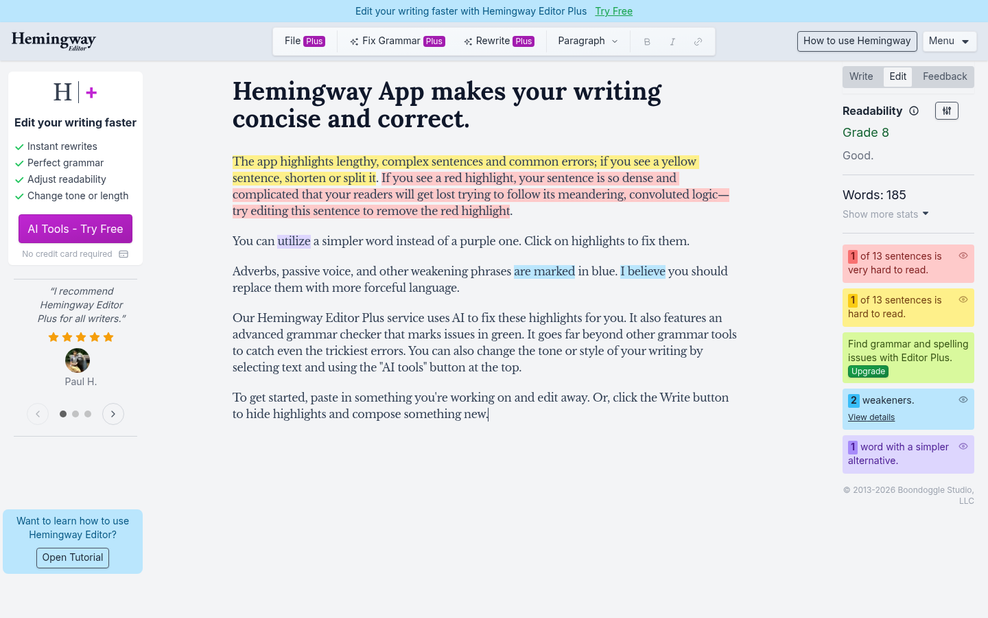
The pattern problem isn't just a visual one - it has a direct effect on how your content performs. A study by Amra & Elma found that human-written ads earned roughly 45% more impressions and around 60% more clicks than AI-generated ones; it's not a small gap, and it seems like something readers are responding to even when they can't name it.
Most don't consciously register repetitive sentence rhythm. They just start to feel restless, and then they leave. The writing isn't bad in an obvious way. But the sameness creates a friction that makes it hard to stay involved. Short sentence. Short sentence. Short sentence - it adds up without the reader knowing why.
| Writing Type | Avg. Sentence Length | Click Performance |
|---|---|---|
| AI-Generated | 13.2 words | Baseline |
| Human-Written | 21.7 words | ~60% more clicks |
The difference in average sentence length here is worth mentioning. Human writers move between shorter punchy lines and longer ones that carry more context, and that variation is part of what keeps readers moving through a piece. AI output tends to flatten that rhythm into something more uniform, and uniform is forgettable.
There's also a less obvious cost here. Predictable writing patterns can trigger AI detection tools, and that's a problem for non-native English writers in particular. Research has shown that these writers get flagged at a rate of around 61.3% even when they wrote the content themselves - this happens because structured, steady sentence patterns look like AI output to detection algorithms, and that can damage credibility with editors, clients, or publishers before anyone even reads the work.
The damage runs in two directions: readers disengage, and detection tools flag the content as generated. Both results trace back to the same root - writing that moves in too predictable a way.
How to Spot Structural Repetition in Your Own AI Drafts
Before you can fix anything, you'll have to see the pattern. Structural repetition is easier to find than most writers expect, if you know where to look.
Read your draft out loud - it's one of the most reliable ways to catch it. Your ear will pick up the rhythm before your eye does. When sentences start to feel like a drumbeat - same length, same beat, same shape - it's your signal something is off.
Then do a quick scan of your sentence openings. Pick any paragraph and look at the first word of each sentence. If you see a run of "The", "This", "It", or "You" repeated back to back, that's a strong sign the structure has gone flat. AI tools love to start sentences the same way, and it adds up across a full post.
Sentence length is the other thing to check. Count the words in five or six sentences in a row. If they all land between 15 and 20 words, the draft needs variation. A short sentence changes the pace. A longer one that builds across an idea gives the reader somewhere to go.
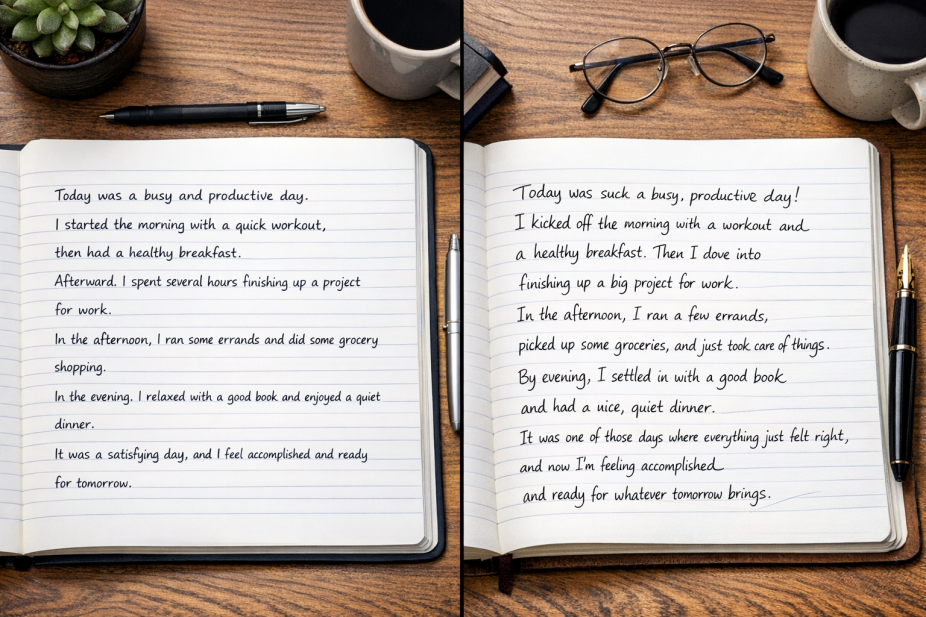
The Hemingway Editor is a free tool worth trying here. Paste your draft in and it shows sentences by difficulty and flags readability problems - it won't tell you everything. But it gives you a visual map of where your sentences cluster and where the writing starts to feel uniform. If you want more options, there are also ways to spell and grammar check your blog posts that can catch additional issues.
One more thing to look for is verb placement. In AI drafts, passive constructions tend to appear in ways that are easy to miss on a first read. Sentences like "This is used to" or "It can be seen that" repeat a quiet structural habit that weakens the writing without drawing attention to itself.
This pass isn't rewriting yet - it's a picture of what the draft is actually doing at the sentence level. Tools like distraction-free writing apps can also help you stay focused when you move into revision mode.
Sentence-Level Rewrites That Break the Monotony
Once you know what to look for, the fix is mostly about variety. You want to mix up how sentences start, how long they are, and how much weight they carry.
The easiest place to start is sentence openings. AI drafts like to front-load every sentence with the subject - "It is," "This means," "They are." Try starting with a time phrase, a condition, or just a short declarative idea. "For most readers, this matters more than anything else" lands differently than "This is very important to most readers."
Length matters just as much as structure. A long flowing sentence that builds toward a conclusion feels satisfying when it follows two short ones. One word. Done. That contrast is what gives writing its rhythm and keeps a reader moving forward without any effort.

Fragments work too - as long as they are intentional. Most style guides push back on fragments. But in blog writing they can land a point cleanly and fast. Use them after a longer setup sentence to drive a conclusion home.
Passive voice gets a bad reputation. But it earns its place when the action matters more than who did it. "The report was released in three stages" puts the focus on the report. "The team released the report in three stages" puts it on the team. Neither is wrong - it depends on what you want the reader to see.
A before-and-after comparison makes this concrete.
| Before (flat) | After (varied) |
|---|---|
| AI tools are fast. They are accurate. They are easy to use. | AI tools are fast and accurate. Most people find them easy to pick up within a day. |
| This approach saves time. It also reduces errors. It improves output quality. | This approach saves time and cuts down on errors. Better output quality follows naturally. |
| The data was analyzed. The results were recorded. A report was created. | After the data was analyzed, the team recorded results and built a report from them. |
These changes are not dramatic on their own. Together, though, they stop the reader from feeling like every sentence is the same shape handed to them again and again. If you find yourself going back to revise older posts with this in mind, that kind of editing pass is almost always worth it.
Prompting AI to Generate More Varied Sentence Rhythms From the Start
The cleanest fix is to stop the problem before it starts. How you write your prompt shapes the rhythm of what comes back, so a little extra instruction up front saves rewriting later.
Most people prompt AI with topic and tone in mind but say nothing about sentence structure. The AI then defaults to whatever pattern it finds most statistically comfortable, which tends to be medium-length sentences that all land with the same weight. You can break that default by asking for something different.
One of the most helpful things you can do is paste a sample paragraph you like and ask the AI to match its rhythm - this works way better than describing rhythm in abstract terms because the AI has something concrete to pull from. Even a two-sentence example gives it a target.
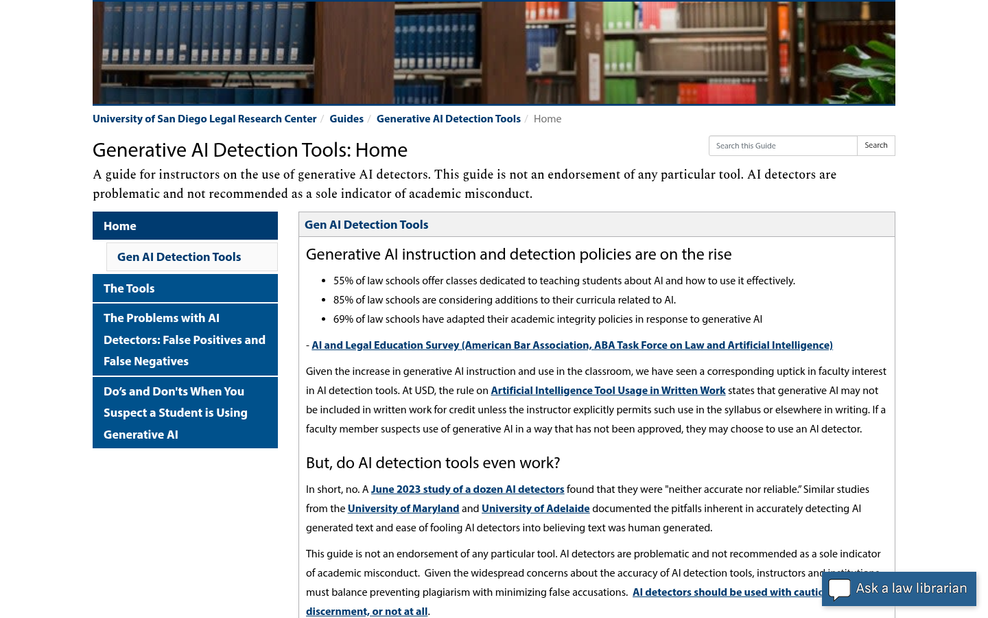
You can also build structure requests directly into your prompt. Here are a few additions that change the output.
| Prompt Addition | What It Does |
|---|---|
| "Mix short punchy sentences with longer explanatory ones." | Breaks up uniform sentence length |
| "Start some sentences with a transition word and others with the subject." | Adds variety to how sentences open |
| "Vary the sentence length throughout each paragraph." | Prevents paragraphs from feeling like a list |
| "Write one or two very short sentences for emphasis." | Creates contrast and lets key points land harder |
| "Match the rhythm of this paragraph: [paste example]" | Gives the AI a structural model to follow |
None of these take long to add and the difference in output is big. The AI is not trying to bore your readers; it just needs more direction to do something interesting with structure.
These prompt additions work as a quick style guide you can carry from draft to draft. Once you find a combination that works for your writing, you can reuse it without much thought.
Building a Light Editing Habit That Catches Structural Sameness
You don't need a full rewrite every time AI helps you produce a post. What you do need is a quick pass before you hit publish - something closer to a 10-minute scan than a deep edit session.
You want to train your eye to catch structural patterns instead of content problems. Read through the draft and ask if the sentences all feel the same length. Notice if too many of them start with "The," "This," or "It." These small things are easy to fix once you know to look for them.
It's also worth knowing that AI detection tools flag clean, human-edited content as AI-written in as many as 12% of cases. Sentence variety reads better and cuts back on that risk in a measurable way.
A simple checklist works way better than trying to hold everything in your head at once.
| Check | What to Look For | Quick Fix |
|---|---|---|
| Sentence length | Three or more same-length sentences in a row | Break or combine one |
| Sentence openers | Repeated starting words (The, This, It) | Flip structure or reorder clause |
| Rhythm scan | Flat, even cadence throughout | Add a fragment or rhetorical question |
None of these fixes take long. To break a repetitive run of same-length sentences, you only need to split one or merge two. To fix repeated openers, move a clause to the front of the sentence instead.
Writers who are pressed for time sometimes skip this step entirely, which is understandable. A fast structural pass is one of the highest-value things you can do in the final few minutes before a post goes live - a small habit with a big payoff.
Your AI Draft Is the Starting Line, Not the Finish
These fixes are not tough. Vary your sentence length. Break the subject-verb-object pattern when it starts to feel mechanical. Read your draft out loud and trust what sounds flat. Swap a few of the confident declarative statements for a question, a fragment, or a beat that lets the reader breathe. None of this requires rewriting everything - it just requires reading with intention before you hit publish.
Here is a small challenge worth trying: take the next AI-generated draft you work with and read only the first word of each sentence, line by line. If you see the same word repeating more than twice in a row, that's your edit waiting to happen. Fix those moments and the whole piece will feel sharper without you touching anything else.
Good writing does not announce itself - it just reads. That is the goal and it's within reach nearly every time you treat AI as the starting point instead of the finish line.