Key Takeaways
- Nearly 61-80% of organic traffic comes from older posts, making neglected content a significant missed opportunity.
- Outdated or thin content should be deleted, noindexed, or expanded depending on its remaining value and quality.
- Updating old posts with fresh keywords, images, and links can improve search rankings by as much as 70%.
- Old content can be repurposed into lead magnets, videos, podcasts, or infographics to reach entirely new audiences.
- Posts with strong existing backlinks and traffic can be re-promoted as fresh content without starting from scratch.
One of the biggest reasons why evergreen content is so in focus right now is because it's content that lives forever. The alternative - and the content most blogs have for the majority of their posts - is content that lives for a few weeks or months before it's supplanted by something else. After a few years, or half a decade of running a blog, you're left with old content that's not pulling its weight anymore - it may have been helpful in its day, it might still be sitting on some decent backlinks. But no one finds it in search and no one reads it anymore.
This isn't a small problem. According to Databox, nearly half of surveyed marketing experts report that 61-80% of their organic traffic comes from older blog posts. That means the content you've already written is doing most of the heavy lifting - and if it's outdated or thin, you're leaving a massive amount of traffic on the table.
When a blog fills up with stale, neglected content, you have a choice on your hands.
- Do you ignore it and keep running your blog like normal?
- Do you delete the least valuable content to raise the overall quality of your blog?
- Do you go back and refresh old posts to make them new and valuable again?
Remove Ancient Personal Blog Content
First of all, if you're looking at your ancient blog traffic, you might remember that at some point you were a personal blogger - not a business blogger - this happens if you started writing for fun and eventually leveraged it into a site with ads, sponsors, and products. You might find old posts that are poorly written, overly personal, out of date, and valueless to your latest audience.
None of these posts have any value you can extract from them.
You can keep them out of sentimentality if you want, though you might consider noindexing them so they don't surface in Google or in your own site search. If you find them embarrassing and they have the potential to tarnish your public image, you might as well delete them.
Just remember that nothing is ever deleted on the Internet. If someone wants to view an old post they can always head to the Wayback Machine and check out an archived version. Don't delete content because you want it gone forever; delete it because it basically isn't worth keeping.
Remove Content with No Links and No Traffic
A lot of your old content may have been posted before your blog grew to any meaningful size, and that content had time to live and die without ever gaining an audience. In the time since, no one has looked at it - it gets zero hits, it has no incoming links, and it's not helpful enough to bother promoting.

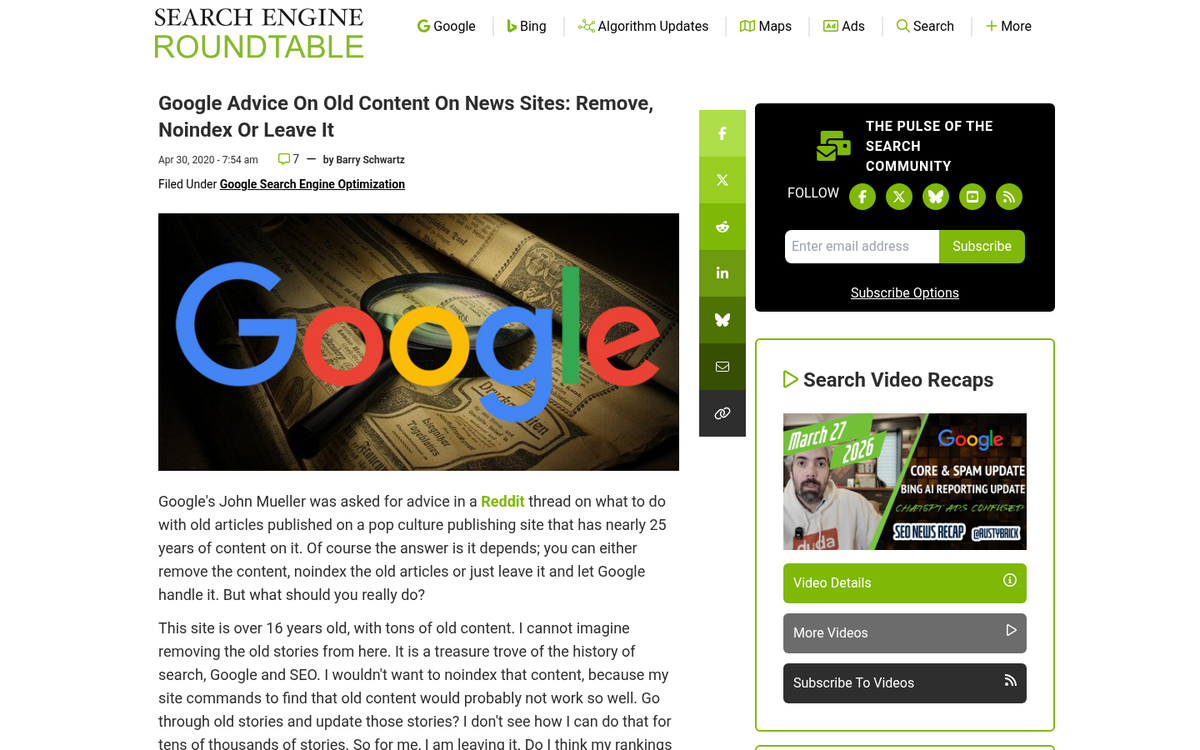
This sort of content is basically just dead weight. There's no strong reason to remove it. You can leave it if you want - it's not actively doing you harm, as long as it's not spammy, thin, or duplicated content. But there's one helpful reason to remove it: blog comments. If you have comments enabled, every old post can become a possible vector for spammers. You may as well remove the post so they have one less place to target and you have one less thing to moderate. Alternatively, you can simply disable comments on that post individually, if your platform allows it.
Remove Thin, Poor Quality Content
Back in 2011, Google's Panda algorithm update shook the blogging world and sites went through urgent content audits as a result.
Google's input has long been steady: if you can't improve thin content, delete it. This remains true. Most of this content is valueless and removing it can cause measurable improvements to your blog post rankings and traffic. Chances are, you've been quietly penalized for having it and cleaning house is one of the highest-value things you can do.
That said - not all thin content is a lost cause - so review before you hit delete.
Update Potentially Valuable Outdated Content
Often you'll find that you had a legitimately helpful piece of content that has since become useless simply because of the passage of time - this happens constantly with guides for software, social platforms, and CMSs. Whenever a company changes how something works, old how-to guides become misleading at best and actively harmful at worst. Think about any old guide referencing features that no longer exist - outdated Twitter API instructions, old Facebook tab apps, pre-rebranding platform workflows - it now leads readers astray.
They might still get clicks. But no engagement and no return visits because the content doesn't deliver anymore.
This content is ripe for a makeover. Update these posts to reflect how things actually work - it's one of the most efficient things you can do, because the structure, the intent, and 90% of the work is already done. Update it, re-promote it, and give it a second wave of life. According to available data, updating old content can improve search rankings by as much as 70% - making it one of the highest-ROI activities in content marketing.
Expand and Update Thin, Poor Content
Remember when I said some old thin content can be revived instead of deleted? Here's what I mean. There are two types of thin old content. The first type is pure filler - content that was written purely to target a keyword with no substance behind it. It's garbage and should be deleted.
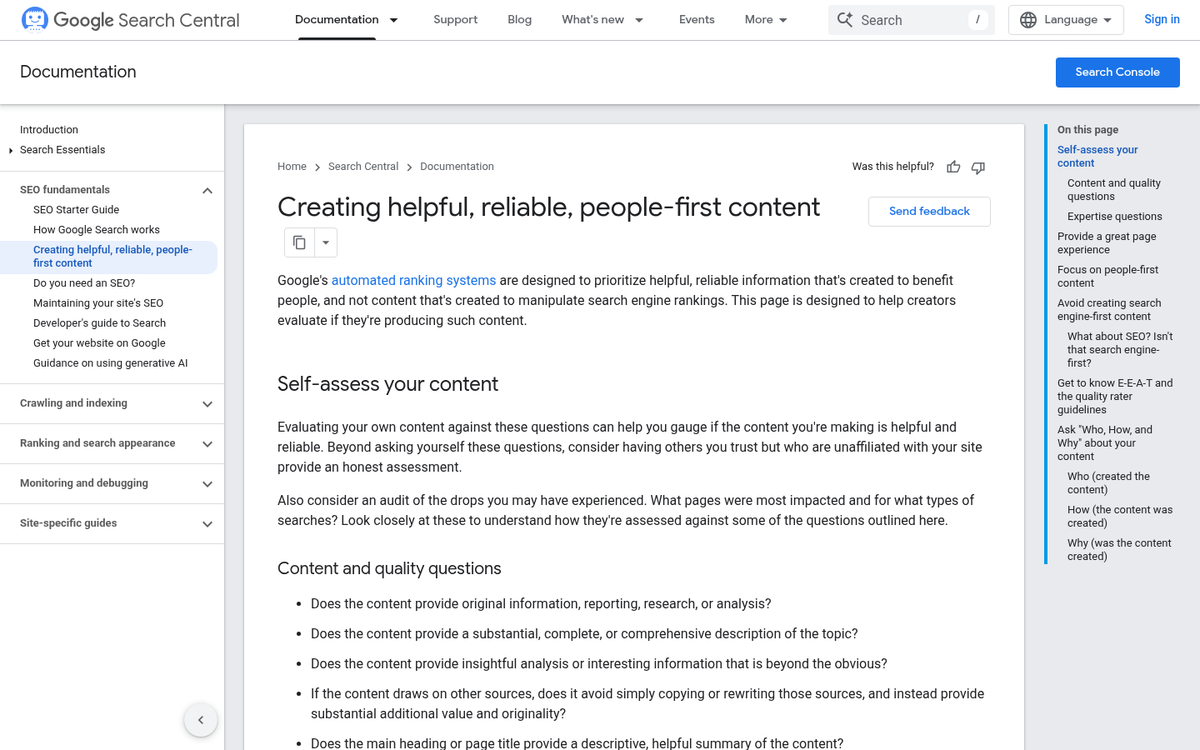
The other type is old, legitimately helpful content that just happens to be too short to perform well in modern search. This is often the case with easy Q&A style posts. You had a question, you answered it. But it only took a couple hundred words, and that's frequently not enough to compete - Google increasingly rewards depth, expertise, and comprehensiveness - especially in the wake of its standard E-E-A-T (Experience, Expertise, Authoritativeness, and Trustworthiness) emphasis.
There are two methods you can use to bulk up this content. The first is to consolidate it with similar posts - especially helpful with old FAQ-style content where each question lived on its own page. Merging these into one thorough resource, then redirecting the old URLs to the new one, is a well-proven tactic. The second option is to simply expand on the topic: answer the question, give context and background, provide examples, build a mini-tutorial around it. How you do it can depend on the content. But the goal is the same: make it legitimately more helpful.
Edit Older Content for Modern SEO
One problem with old content is that it may still be serviceable, but it's targeting keywords and phrases that have fallen out of common use. Search language evolves. The way people searched in 2015 is not the way they search in 2026, and content that was optimized for old query patterns may be nearly invisible in modern search.
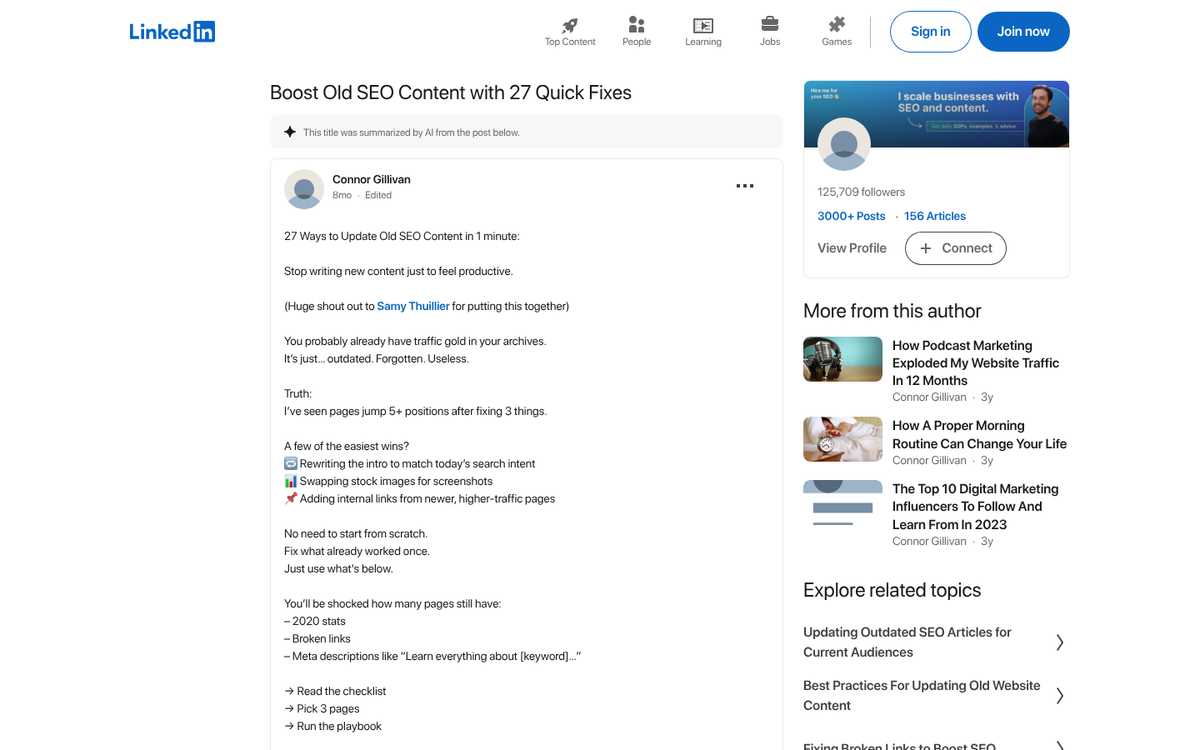
The fix is going to need a bit of work, but it's not actually tough. Identify what the old target keywords were, then do fresh keyword research to find what phrases people are actually using to find the same information.
Once you've integrated the updated keywords, treat it like a new post in terms of promotion. Give it another push across your channels and let it build fresh momentum with tools like Zapier to automate your blog post promotion.
Update Images, Links, and Headlines for Old Posts
This is a supplemental tip that goes hand-in-hand with the other refresh strategies above. While you're in there fixing the text, take care of the surrounding elements as well.
- Old images may be improperly sized, visually outdated, or sourced in ways that don't hold up to modern copyright standards. Replacing them with fresh, properly licensed visuals - or original graphics - can significantly improve the look and feel of a refreshed post.
- Check every link in the post. Make sure they still lead to relevant, live destinations. Broken links, redirects to parked domains, and links pointing to outdated or irrelevant content all hurt the reader experience and can affect how Google evaluates your page.
- Headlines often need updating when you change your keyword targets, but even if they don't, a fresher and more compelling title can make a meaningful difference in click-through rates from search results.
Write Updated Versions and Link From Old Posts
Sometimes your old post has accumulated enough authority, backlinks, and steady traffic that you don't want to overhaul it and risk disrupting whatever is still working. In these cases, a smart move is to write a new, updated version of the content and then prominently link to it from the top of the old post.

This works especially well for evergreen guides that have simply aged out. Add a short note at the top of the old post - something like: "This guide has been popular for years, so we've published a fully updated version with current information and new insights. Check it out here." You preserve the old post's link equity while funneling readers to something actually helpful.
Update Tutorials for Modern Processes
Old tutorials can still drive traffic long after they were written, largely because they've accumulated authority over time. But if the instructions no longer reflect how things actually work, that traffic is wasted - readers arrive, see the guide is wrong, and leave immediately.

Sometimes this is as easy as taking new screenshots. Other times, it means reworking entire sections because the underlying platform or process has changed substantially. In either case, an old post that still holds decent search rankings is worth the time investment to bring it up to date.
Find Old Valuable Content and Remake it as a Lead Magnet
A well-designed lead magnet - whether it's a PDF guide, a checklist, a mini-course, or a resource kit - remains one of the most effective ways to grow an email list and bring new readers into your world. And if you already have old content that covers a topic in depth, you have a head start.
Look for older content that's still very relevant and legitimately helpful - even if it's no longer driving much search traffic. Guides, tutorials, and research-backed posts are especially strong candidates. Figure out how you might expand on what's already there - doubling or tripling the depth and practicality - and package it as a premium downloadable resource. You're essentially creating a bonus version of content you've already invested time in, and if it was helpful before, there's a good chance your audience will respond well to a more polished version of it.
Promote Old Posts as New Posts
"What about all my old posts that still have solid value, traffic, and links?" There's a simple answer: promote them again as if they're fresh. Some blogs don't display a publication date. But even those that do find that most readers never check - unless they're specifically skeptical about whether the information is current. If your post is helpful and still accurate, give it another round of promotion across your social channels, email list, and any paid amplification you use.
As an added bonus, the post already has links and baseline traffic from its first run. You're not starting from scratch - you're building on an existing foundation. And if the post already has comments - even better. One of the hardest parts of gaining traction on a piece of content is that first engagement. If you already have a comment section with conversation, the social proof is already there. social proof is already there.
Create Collections of Old Posts
If you have a number of strong older posts, here's a simple but effective idea: create a new post that links to them intentionally and prominently. Not soft internal links buried in paragraphs - a dedicated roundup that says, in effect, "here is the best work this blog has produced."

Start by going to your analytics and identifying your top 10 or so posts. You can segment this by year if you want and pull together the top performers from each year you've been publishing. Create a new post listing each of these, with a link, a quick summary, and ideally a note on why you think it resonated well. New readers and newer bloggers in your niche love this post - it gives them an instant map of what's worth reading and what content in your space actually looks like.
A variation on this is a "worst of" or "lessons learned" post - covering the posts that flopped and what you took away from them - it's not as evergreen. But it can be a legitimately interesting and honest piece of content that resonates with readers who like transparency.
Recreate Old Posts as New Forms of Media
Another way to breathe new life into old content is to change its format entirely.
Take an old post and distill it down to its core points, then turn those points into a visual - an infographic, a carousel post for LinkedIn or Instagram, or a short-form video for YouTube, TikTok, or Reels. Short-form video in particular has become one of the dominant content formats of the mid-2020s, and repurposing a well-researched post into a tight, informative video is a very efficient way to reach audiences who would never find you through search alone.
Podcasting remains strong as well. Adapting an old post into a podcast episode - either as a solo explainer or as a jumping-off point for a guest conversation - gives the underlying ideas a whole new audience. And tools available in 2026 make it easier than ever to produce polished audio and video content without a large production budget.
Redo Old Research for a Changed Perspective
Sometimes old content is built around data or research that was accurate when it was published but is now out of date. The good news is that if the methodology was sound, you can sometimes run the same study or analysis with current data and publish an updated version - either as a standalone new post or as a significant revision of the original.
Some of the most high-performing content online does exactly this: an annual or biannual study that tracks how something changes over time. The content marketing statistics cited throughout this very post are a good example - figures from 2023 and 2024 paint a very different picture than figures from five or six years ago. If you have a topic where patterns change meaningfully, committing to regular updates of a core research post can earn you reliable traffic, links, and industry credibility year after year.