Key Takeaways
- Around 90% of influencer marketers run gifting programs, making product reviews a legitimate and growing revenue stream for bloggers.
- Choose a review niche that aligns with your existing content, ensuring authenticity and relevance to your current audience.
- Businesses treat product gifting as advertising, so having traffic data and audience demographics ready strengthens your pitch.
- Product gifting platforms like Daily Goodie Box can help build a review track record before you have a large audience.
- FTC laws require disclosure for any sponsored post, including when products, coupons, or compensation are received.
You would be surprised at how lucrative it can be to review products for a blog. It's a hard start; you starting out as either a lifestyle blog or a niche industry blog, of which you usually monetize with affiliate links. Eventually, as your site grows, you can use your earnings and your review quality to get free things. You can even get paid for your reviews.
The market for this has matured. Around 90% of influencer marketers are currently running gifting programs, with the remaining 10% planning to start one soon. According to CreatorIQ's 2024 Influencer Marketing Trends report, 66% of marketers invest in influencer gifting and 92% of marketers agree that gifting products increased brand awareness, with 76% saying it caused direct sales. For bloggers who are already earning in the $7,500-$25,000/month range, sponsored reviews account for roughly 12.2% of income, with affiliate links making up another 42.2%. In other words, this is a legitimate and growing revenue stream worth pursuing.
Step 1: Pick a Focus
I'm assuming that you already have a blog that you want to monetize in this manner. If you don't, well, the first step is to start a blog. In either case, you'll have to choose the angle of your reviews.
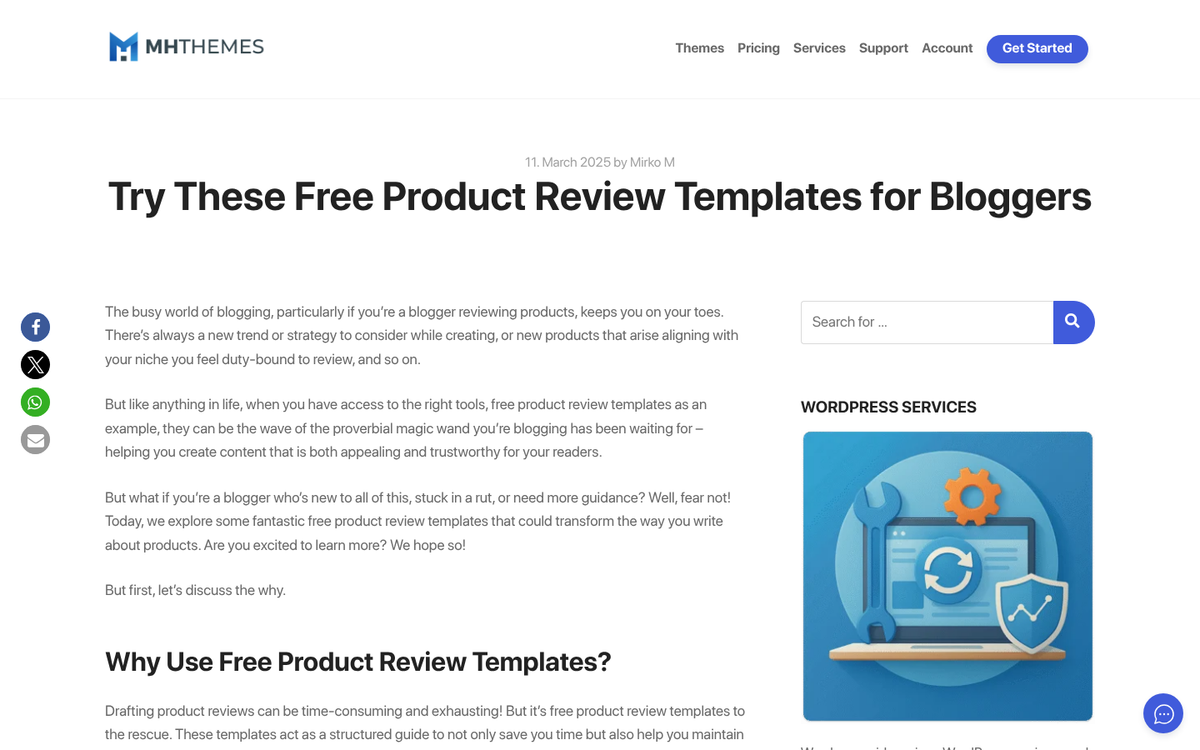
Here are some ideas.
- Lifestyle blog? If you routinely blog about family, household projects, and trips you take, you can review products that work around the house. A new vacuum, a new blender, a special can opener, fancy foods or one of those meal delivery services; you have a lot of options open to you.
- Tech blog? You can review computer components, peripherals, games, gaming devices, even pre-built machines if you have the resources. This tends to be very high resource cost, though; you often need consistent software for benchmarking hardware, and rigorous testing procedures to have anything more than a superficial review.
- DIY blog? You can review tools and products you use in your projects, anything from a fancy hand saw to a wood glue to a Raspberry Pi. You can also review instructions for projects and kits.
What matters is to choose a niche that plays well with the content you're already making. You've already built up an audience, but it may be small. If you pivot to start looking over products that are basically the most available or the most lucrative, your audience might not want to read those reviews. If you're a narrative-focused blog, like one that follows your family, it might even come across as disingenuous. You need to review products your audience will find helpful - and making money through blogging works best when that trust is genuine.
Step 2: Learn to Write Great Reviews
I mean great reviews as in great quality content - not necessarily "this product is great." You might need to start learning how to make a 4- or 4.5-star review, instead of giving fives to everything. You'll also occasionally want to pepper in negative reviews that aren't paid for, to make the opinions across your site more authentic. Nobody is ever appreciative of everything, and no one ever avoids encountering a bad product once in a while.
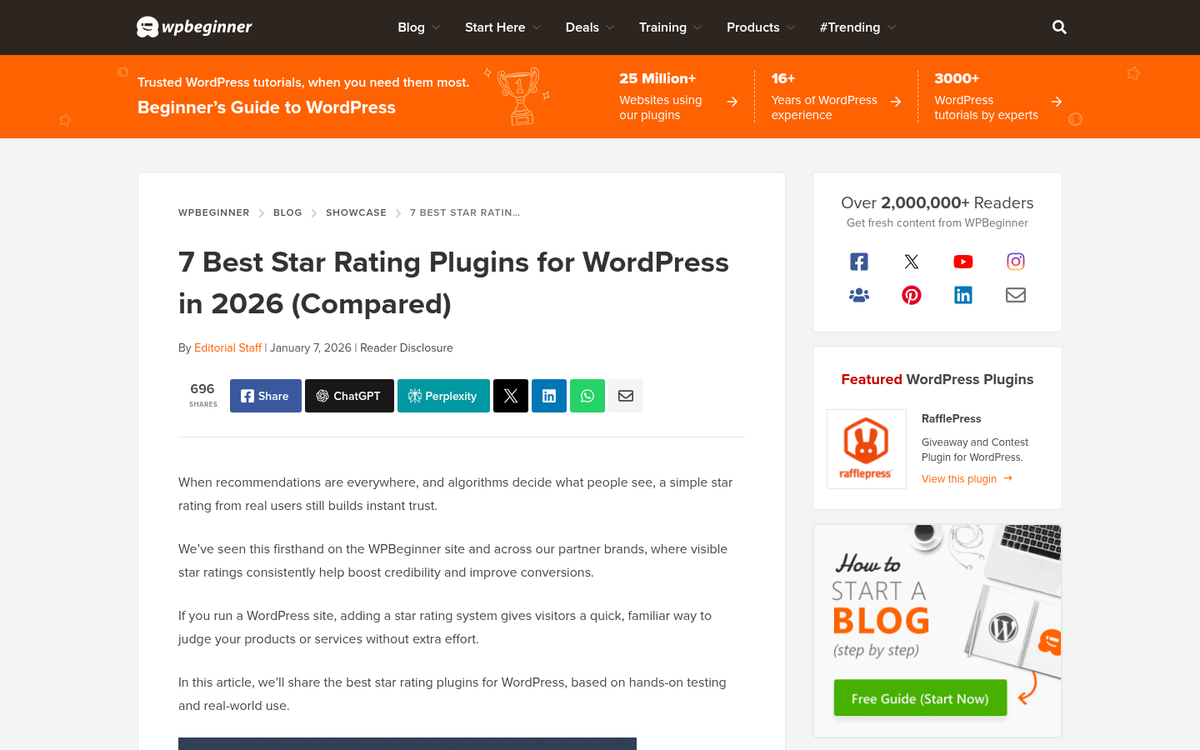
You might want to use a plugin to manage specifically-formatted review posts on your site. If you're on WordPress, just to give you an example, there are a few review plugins available. Pick a format and stick with it. Usually stars are the most common. But points work well too. Whatever you choose, consistency matters more than which format you pick.
What makes a product review post?
- A frame tale. In literature, a frame tale is the story wherein the characters are telling the main story. If you've ever read Frankenstein, it starts and ends on a boat in the arctic; everything we know of the Frankenstein tale is told by the doctor to the captain of the boat. You see this on casual food blogs a lot; you get a story of why the food was being made, before jumping into the recipe. A frame tale gives your review some context and sets it apart from the rest of the reviews of that product on the web.
- Good images. I'll cover this in the next step.
- A consistent format. When people read your reviews they want to be able to get the information they want, and they want to know where that information is. A good format typically starts with a summary and overall verdict, then goes into each section of content individually. How was the product at performing what it was supposed to? Were the instructions for assembly or use clear? Does it seem fragile, or did it break? How does it compare to similar items you have reviewed in the past? Are there particular benefits or flaws to the product that might be relevant to users?
- A conclusion. Tie it all together at the end. You can review something positively and still mention that you're not likely to use it because you don't have a place for it in your routine. Final impressions and a wrap-up summary are important.
You'll be able to pick apart their structure and learn how they're put together - it helps if you can produce a bit of a template or outline you can use to compose posts - even if it's just a series of basic subheadings.
The key to writing a review, or any content, is a voice.
Step 3: Learn to Take Good Pictures
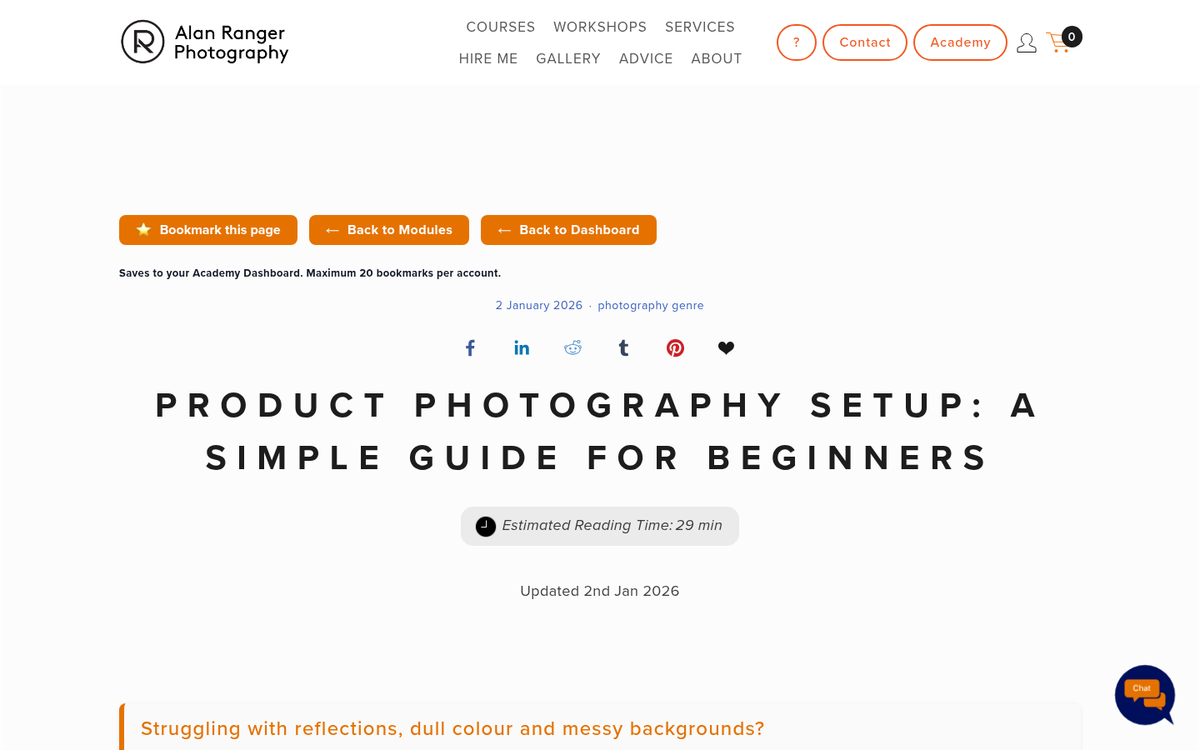
Taking pictures of the products you're looking over is almost the most important part of the whole process. You want to make the product look good, and for that, you need quality photos. While modern flagship smartphones have closed the gap considerably compared to even a few years ago, a dedicated camera with macro features and plenty of manual control will still give you an advantage for product shots. More than that, you'll have to learn how to use whatever equipment you have well.
You're also going to need to learn how to edit images afterwards to make them more desirable; it's the secret to the best images you see online. Nobody just takes a perfect photo; they touch them up, adjust color balance, and usually edit the image to make it pop. If you plan to share your product shots on Pinterest, it's also worth learning how to size your blog images for Pinterest to get the most out of each pin.
Since I primarily write about web services and software, I don't need to take photos myself. Rather than try to parrot some random information about being a better photographer, I'll just send you to a person who knows what they're talking about. Do some research into product photography basics, and then dig into any elements you need more help with from there.
Step 4: Gather Traffic Data and Audience Demographics
Everything up to this point has been largely on the creative side of things. But if you want to get businesses giving you products to review, you'll have to make a business case for it - it means you'll have to have analytics installed on your site - Google Analytics is fine - and you'll have to have data on hand.
A business giving you a product to review is basically paying for advertising on your site. Much like any other form of paid advertising, they want to know that they're likely to get a return on their investment. That means they want to know what audience they're looking at. Are they going to be seen by a few hundred? A few thousand? A hundred thousand? The bigger your audience, the more they're likely to give you and pay you for the sponsored position. Data suggests that influencers with more than 10,000 followers create over half of all gifted posts, so reaching that threshold tends to be where businesses start paying closer attention.

At the same time, they need to know demographics. They might know that their product doesn't do well with an audience of young females, so if that's the primary audience on your site, they'll be less likely to want to give you a product to review, or they'll give you a different product from their catalog.
Mostly, you just need this information on hand for if and when a business asks for it. Some will only care about traffic numbers. Some will want more information. The important thing is that you have the information available if they need it to choose.
Step 5: Reach Out to Brands
With a site under your belt and data in hand, it's time to start reaching out. Most businesses aren't going to go out looking for bloggers to give products to; they have all kinds of other marketing going on and don't need to put in the legwork. You'll have to instead go to them.
The first step, then, is to look for businesses that have products that will be relevant to you and your audience. You can build a wishlist, but keep in mind that businesses might not want to give out review copies. Maybe they've been burned before, or maybe it's just a policy issue. You never know.
One thing you can do is go look at other websites in your niche that write reviews. I know I mentioned this up above as a way to get a feel for the review format, but now you're looking for products that are reviewed. Are there brands or businesses that like to show up on almost every site? You can bet these businesses are more willing to work with bloggers for sponsored posts.
It's also worth a deeper look at product gifting platforms, which have grown substantially. Daily Goodie Box, for one example, has partnered with over 500 businesses and has free products for members to test and review. Platforms like it can be a legitimate way to start building a track record of reviews before you have the audience size to pitch businesses cold.
When you're contacting a company that has more than one product, try to focus on products in their catalog that aren't well represented with reviews online. If a brand has three products and the first two have a dozen different reviews but the third only has two, you're more likely to get a copy of the third to review. The company doesn't necessarily need more reviews of the first two for marketing purposes.
Of course, this only applies when the products are roughly equivalent. If they have a $5 product, a $10 product, and a $100 product, you can bet the $100 product probably has fewer sponsored reviews - the reason is simple, of course; the brand just doesn't want to hand out their expensive flagship product on a whim.
When actually contacting businesses, you'll have to get good at writing pitch emails. You need to have a strong subject line that breaks through the chaff of customer service requests immediately. You need to get right to the point; you have a blog, you're interested in writing a sponsored post, you'd like X product but are willing to work with whatever they have. Your traffic numbers and so forth are available. If you have proof of past businesses working with you successfully, include it.
Many businesses will reply with a form letter denial or will ignore your request. You can follow up with them by emailing their marketing department, if you can find them. Check LinkedIn. You can send messages via social media as well, and even direct mail if you want to work with one company in particular.
You will probably need to work out the details with the company directly, and you might need to sign a contract. Make sure that the terms of any contract you sign are favorable, and that you aren't poised to be penalized if your post doesn't hit a performance benchmark.
I should also note here that you should stay in touch with any company you work with. Keep them apprised of the process, with an email when you receive the product, one when your post goes live, and at least one later with an analysis of the results on your end. They likely will be watching performance from their end, so it's good to have data from both sides. The more you stay in touch, the more likely they are to work with you again.
Step 6: Remember Disclosure
The Federal Trade Commission has laws requiring disclosure for any sponsored post - that means if you're paid for the post, if you get products in exchange, if you get a coupon, gift cards, or compensation for an event admission. Just like affiliate links, you need disclosure. The FTC has continued to enforce and update these laws, so it's worth checking their site directly to make sure you're up to date, and that's especially important as laws around social media and influencer content have been refined.

In most cases, all you need is a "this is a sponsored review" note at the top of the post. That's usually sufficient, but you can go ahead and read about it directly from the FTC.