




When an AI assistant or answer engine grounds its response in web content, it's picking sources to surface. That means your site either makes the cut - or it doesn't. Web grounding is, in effect, one of the mechanisms that determines if your content gets cited, referenced, or recommended by AI systems to users.
The sections ahead break down the mechanics behind it and give you helpful steps to make your content the kind that AI systems trust enough to reach for.
Quick Answer
Web grounding refers to the process of connecting an AI language model to live internet data, allowing it to retrieve and reference current, real-world information beyond its training cutoff. This helps reduce hallucinations and outdated responses by anchoring answers in verifiable, up-to-date web content. It is commonly used in AI assistants and search-augmented systems to improve accuracy and relevance.
Why AI Answers Go Wrong Without It
AI language models don't look things up the way a search engine does. They generate answers from patterns learned during training, which means everything they know has a cutoff date. Once that training window closes, the model has no way to know what has changed.
This is where hallucinations come in. Research puts the hallucination rate between 3 and 27 percent of AI interactions, depending on the model and the job; it's a wide range. But even the low end represents a volume of confidently wrong answers being served to users.
The core problem is that stale training data and confident-sounding outputs are a bad combination. A model doesn't flag uncertainty the way a person might - it fills gaps with plausible-sounding information instead. So when a user asks an AI about your business, the answer could be based on something that was true a year ago, or something that was never true at all.
Consider what that means in practice. Your pricing changes, you discontinue a product, you rebrand a service - but an AI trained before any of that happened will describe the old version. The user gets a wrong answer and has no reason to question it.
This is a reliability problem for AI and a brand problem for any business that wants AI to represent it accurately. If someone asks a chatbot or an AI search tool about your products and gets outdated or incorrect information, that shapes their impression before they ever visit your site. Understanding why engagement metrics don't always reflect reality is a related challenge many site owners face.
The difference between what an AI was trained on and what is actually true is called the knowledge gap, and it grows over time. A model trained 18 months ago is working with a snapshot of the world that predates decisions your business has made since then.
Without a way to connect AI replies to live, verified content, there's no mechanism to correct that drift. The AI isn't being careless - it's doing what it was built to do, which is generate the most likely answer based on what it already knows. The issue is that "most likely" isn't the same as "accurate right now."
How Web Grounding Pulls Live Data Into AI Responses
When an AI system uses web grounding, it sends a request to the web, retrieves relevant pages and parses that content before it writes a single word of its response.
The parsing step is where the technical work happens. Raw web pages are cluttered with ads, navigation menus and scripts that have nothing to do with the content. Tools like Jina Reader's ReaderLM-v2 strip that away to extract just the actual text. That model runs at scale - around 10 million requests every day and roughly 100 billion tokens processed - which gives you a sense of how much live content AI systems are working through at any given second.
Once the relevant text is extracted, the AI uses it as context to generate its answer - it works less like a search engine and more like a researcher who reads the source material first and then writes a summary based on what they just read. The response is shaped by what was retrieved instead of what was memorized months ago.
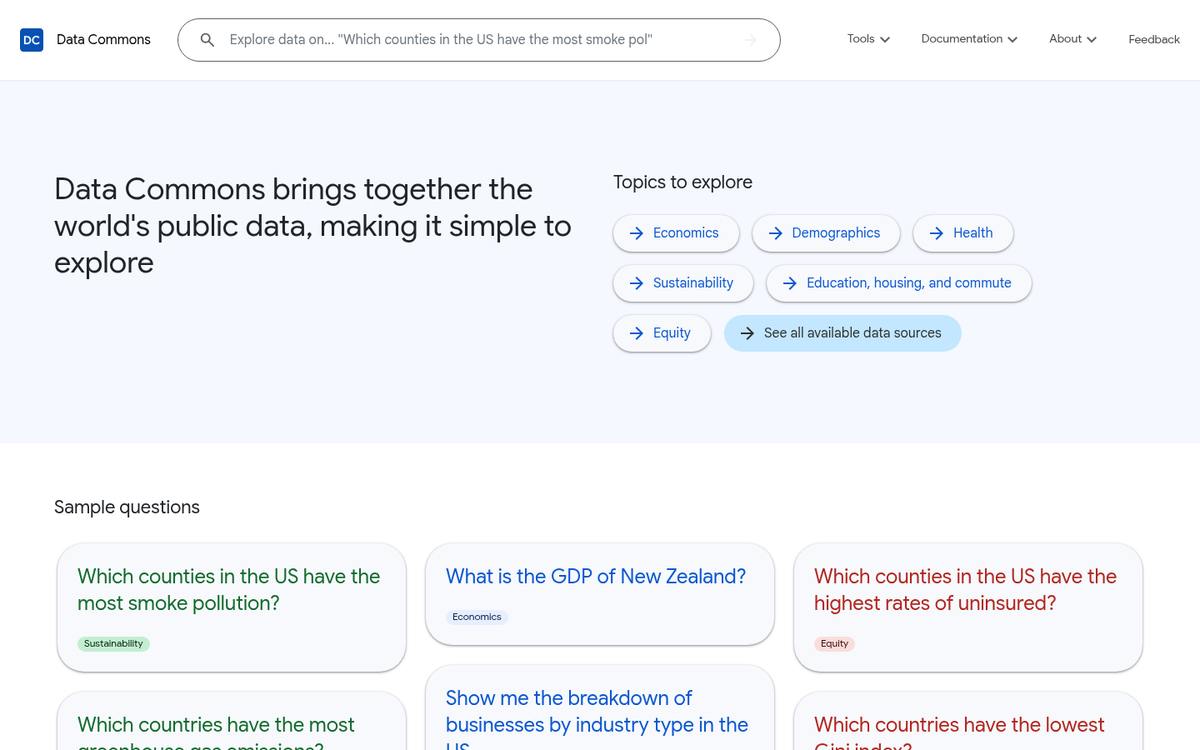
Structured data sources also play a big part here. Google's Data Commons pulls together around 250 billion data points from public sources like government databases and research institutions. When an AI needs to answer something factual - population figures, economic data, public health statistics - a source like that gives it something concrete and verifiable to draw from instead of a rough approximation from training.
The whole process happens fast enough that users don't see it. A query goes out, pages get fetched and parsed, relevant information gets passed to the language model as grounding context and the model generates a response that aligns with what those sources actually say. That chain is what separates a grounded answer from a generated one.
It's also worth mentioning that not every AI uses the same pipeline. Some systems retrieve full pages and some use summarized versions. Some query a handful of sources and some cast a much wider net. The quality of the grounding depends heavily on which sources get pulled in and how well the model is able to use that retrieved content when it writes its response. If you run a blog, understanding how content gets parsed and structured in WordPress can help you make your pages easier for these systems to read.
What Grounded AI Systems Mean for Your Website's Visibility
Those mechanics matter quite a bit if you own or manage a website. When an AI system pulls live content to ground its replies, it has to find that content first - and then it has to be able to read it and trust it enough to cite it.
Research into grounded AI systems suggests accuracy improvements of around 30 to 50 percent compared to ungrounded models. That gap exists because grounded systems check their answers against sources instead of relying on training data alone. For your website, that has a direct consequence: sites that get picked up as sources get those accurate answers and sites that get skipped don't.
That's worth sitting with for a bit. AI can now read your page, pull a fact or explanation from it and repeat that information to a user who never clicks through to your site. Whether or not your content gets used in that process depends very much on how accessible and well-structured your pages are. If you're running your site on WordPress, getting the basics right on WordPress.com is a good place to start.
The table below shows how grounded and non-grounded AI behavior can vary across a few things that are directly relevant to your site's visibility.
| Factor | Non-Grounded AI | Grounded AI |
|---|---|---|
| Accuracy | Relies on training data, which can be outdated or wrong | Cross-references live sources, improving accuracy by 30-50% |
| Citation likelihood | Does not cite external sources | Actively pulls from and attributes crawlable web content |
| Content freshness | Limited to training cutoff date | Can reference recently published or updated pages |
| Site visibility | Your content plays no role in the response | Well-structured pages have a real chance to be used as a source |
The line between being cited and being ignored can depend on whether the AI can process what you have written. A page that's well-organised to crawl is a page that a grounded system can work with. Building broader visibility through approaches like directory submissions with high PR can also help your pages get indexed and found in the first place.
Structuring Your Content So AI Can Actually Ground To It
The good news is that you have control here. Grounding systems look for content they can extract and cite with confidence, so your job is to make that as easy as possible for them.
Start with specificity. Vague content like "many businesses see great results" gives an AI nothing to work with. Swap that for named figures, dated statistics, and direct factual claims. The more precise your content is, the more helpful it can become as a source.
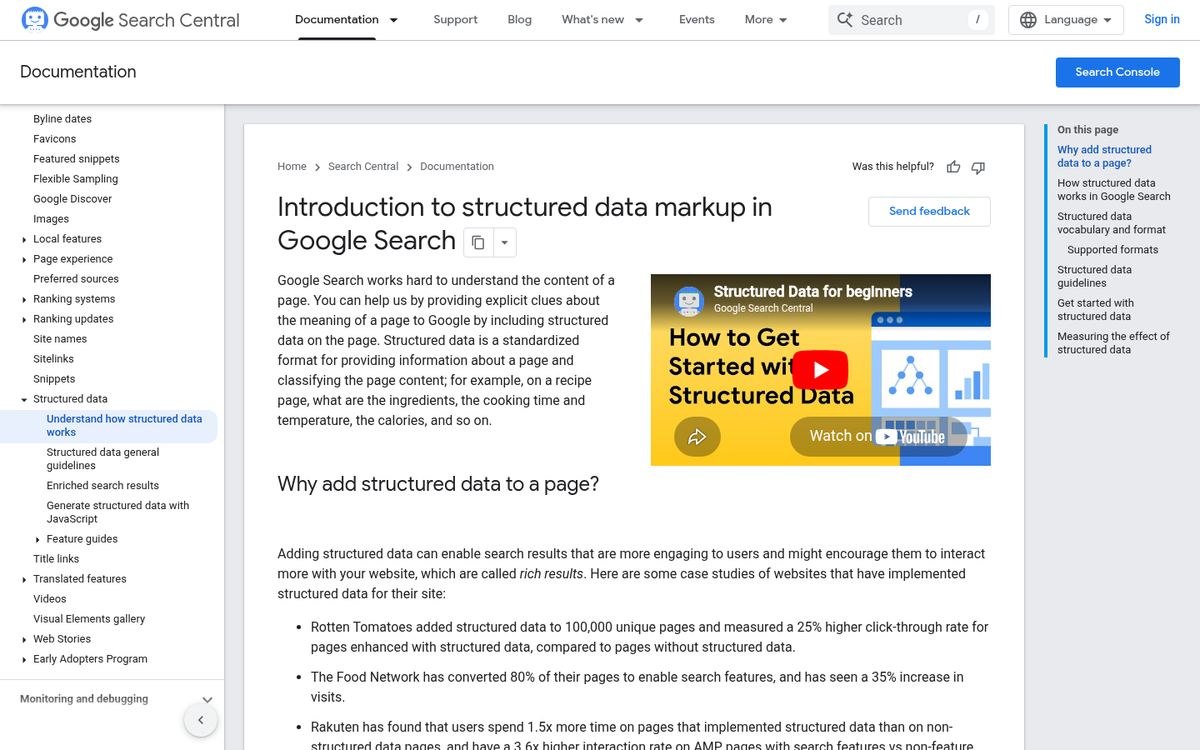
Structured data markup is worth the effort too. Tagging your content with schema markup gives AI systems a clean map of what your page is about. A recipe, a product, an FAQ, a how-to guide - these all have schema types that help machines read your content the way you intend it to be read.

Keep your publishing and update dates visible. Grounding systems want the latest information, and a page with no date is a page they'll pass over in favor of something more traceable. An easy "last updated" timestamp near the top of a post goes a long way.
Clean HTML matters more than you think. Bloated markup, broken tags, and content buried inside JavaScript can all make it harder for a system to parse what you've written. A readable page for humans is usually a readable page for machines too.
| Content Trait | Helps Grounding | Hurts Grounding |
|---|---|---|
| Factual claims | Specific, sourced, dated | Vague or unsupported |
| Page structure | Clean HTML with schema markup | Heavy JavaScript rendering |
| Publication info | Visible dates and authorship | No dates or anonymous content |
| Content focus | Direct answers to specific questions | Long-winded filler text |
It's helpful to audit your own pages with one question in mind. If an AI system landed on this page, could it pull a reliable, citable fact within the first few paragraphs?
Make Your Site a Source AI Wants to Quote
The good news is that the bar for being cited is not mysterious. AI systems tend to favor content that's well-organized and demonstrably accurate. If you apply even a handful of the practices outlined here, you move your site closer to the source these systems are designed to surface. Small, deliberate improvements compound over time.
As answer engines continue to replace traditional search results for millions of queries, grounded content can become the new front page. The websites that show up in AI-generated answers are not necessarily the biggest or the oldest - they are the ones that gave the model something to work with. That is an opportunity worth taking seriously, and it starts with the next piece of content you publish.
FAQs
What is web grounding in AI systems?
Web grounding is when an AI retrieves live web content before generating a response, ensuring its answer is based on current, verifiable sources rather than potentially outdated training data.
Why do AI systems produce inaccurate answers without grounding?
Without grounding, AI relies solely on training data with a fixed cutoff date. This causes hallucinations and outdated responses, with research showing hallucination rates between 3 and 27 percent of AI interactions.
How does web grounding improve website visibility?
Grounded AI actively pulls from crawlable web pages and cites sources, giving well-structured websites a real chance to be referenced in AI-generated answers, increasing visibility without requiring a user click-through.
What content changes help AI ground to your site?
Use specific, dated facts, add schema markup, display visible publication dates, and keep your HTML clean. These signals make it easier for grounding systems to extract and confidently cite your content.
Does grounding make AI responses noticeably more accurate?
Yes. Research suggests grounded AI systems improve accuracy by 30 to 50 percent compared to ungrounded models, because they verify answers against live sources instead of relying on memorized training data.