Running a blog is hard work. It's incredibly time consuming - coming up with a constant flow of topics, producing quality writing, editing, formatting, sourcing imagery, and scheduling posts. Add to that the pressure of staying consistent and relevant, and you're spending entire days just keeping one blog alive. If you manage several blogs across different sites, it's even worse. This is why so many businesses and entrepreneurs turn to freelance writers for help.
There's a lot to consider when it comes to the price of blog content, and a lot has changed in recent years - especially with AI entering the picture. I'll try to cover every angle so you can make the right decision for your situation.
Key Takeaways
- Ghostwriting is typically the most affordable credit option, while hiring a salaried employee writer costs significantly more.
- More writer responsibility-research, topic selection, SEO-means higher costs; briefing writers directly is cheapest.
- Low-tier AI-generated content averages around $131 per post but isn't recommended for brand-building or organic traffic.
- Most businesses should budget $250-$500 per post for experienced mid-tier freelancers who include research and basic SEO.
- High-end outcome-driven content can cost $1,500-$6,000 per post, covering full SEO strategy, formatting, and publishing.
Writer Credits
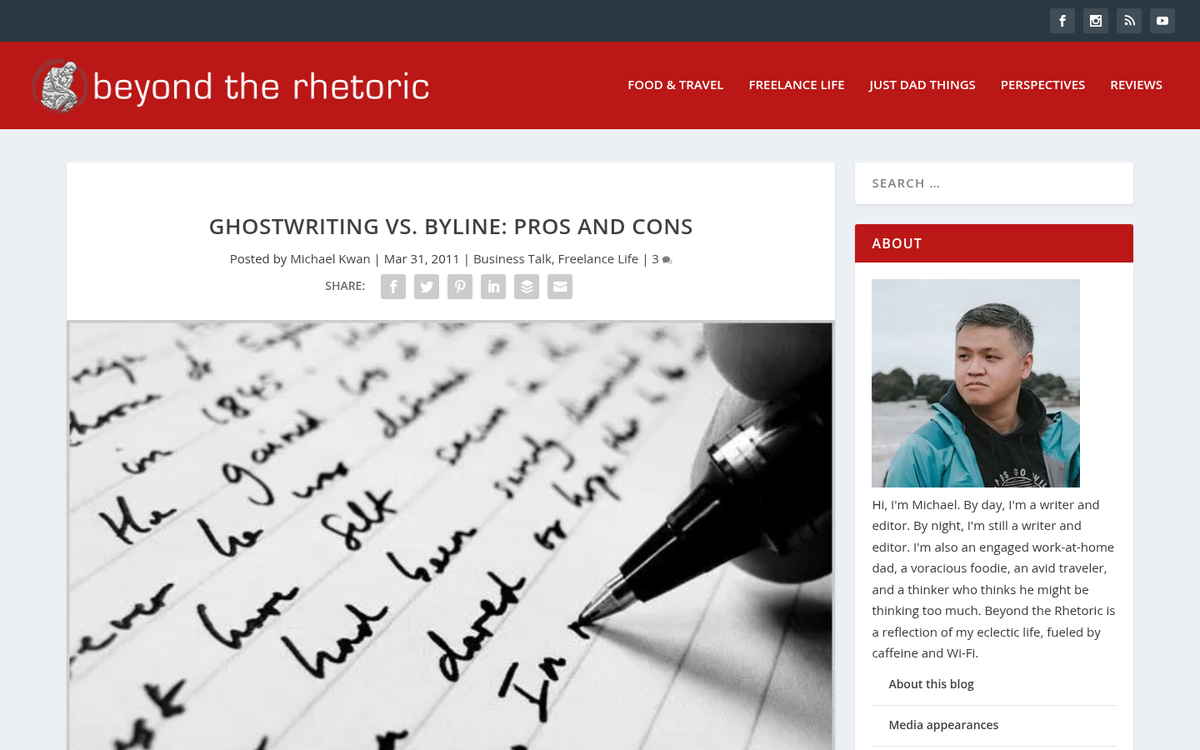
The first thing you have to decide is whether or not you're going to credit your writer. You have three options. The first is to hire the writer as an employee, giving them CMS access and a salary to produce a set number of posts per week on a given range of topics. This is going to be as expensive as you'd expect an employee to be, but it comes with consistency and accountability.
The second option is to hire a writer and give them a byline while keeping them on a freelance basis - no salary, no CMS access. They're paid per post. This lets you build a stable of contributors who write occasionally, which can add variety in perspective and voice across your blog.
The third option is to hire a ghostwriter. As far as anyone but you and the writer knows, everything on your blog was written by you. The ghostwriter creates the content, you pay for it, and you publish it under your name. This is typically the most affordable of the three options, though costs vary widely depending on the writer, the topic, post length, frequency, and contract terms.
Expected Responsibilities

Just like there are different tiers of credit, there are different tiers of responsibility - and the more you ask of a writer, the more it's going to cost.
- You have an idea and the knowledge to back it up. You brief the writer directly, they take your information and shape it into a polished, publishable post. This is the lightest lift for a writer and typically the most affordable.
- You have an idea, but not necessarily the deep knowledge. You give the writer the assignment, they do the research, and they deliver a post ready for review. After any revisions, you have something worth publishing.
- You have a general topic but no specific angle or expertise to contribute. The writer takes full creative and research ownership of the piece. This is typically the most expensive arrangement, because it demands the most time and skill from the writer.
You also have to consider extras. Do you want internal and external links, or will you handle those yourself? Do you want images sourced and formatted? Do you need SEO optimization - keyword placement, meta descriptions, headers structured for search? Some writers include these as standard; others charge additionally. The more you bundle, the higher the price, but also the less work sitting on your plate.
The Ethics of Ghostwriting

There's an implicit social contract between a blogger and their readers. You publish content under your name, and readers generally assume you wrote it. Ghostwriting sits in a grey area ethically, and it gets more contentious in certain industries where readers expect authentic, firsthand expertise.
Anyone can ghostwrite a general beginner's guide to personal finance. But readers would rightfully feel misled if a medical article credited to a physician was actually written by an uninformed freelancer with no vetting. The stakes matter.
That said, ghostwriting is ubiquitous. Small businesses, large corporations, executives, celebrities - ghostwriters occupy every niche and always have. What's newer is the question of AI-assisted writing: content drafted by tools like ChatGPT or Claude, then edited by a human, or in some cases published with minimal human review at all. That's a conversation worth having with any writer or agency you hire, because it affects quality, originality, and your brand's credibility. If you're considering this approach, it's worth reading about how to use AI to write blog posts in bulk without losing quality.
It's worth being clear upfront about your expectations: fully human-written, AI-assisted but human-edited, or something else entirely. As of 2026, many writers use AI as a drafting or research aid - that's not inherently a problem, but transparency matters. The quality of articles you receive can vary significantly depending on the process behind them, so setting clear standards from the start protects your brand.
Low Tier Costs

Yes, I know. You came here hoping for specific numbers. I can't give you exact prices - those are negotiated between you and a writer or platform. But I can give you realistic tiers and what to expect from each.
At the absolute bottom of the market, you're looking at AI-generated content with minimal human editing, running around $131 per post on average. Some budget content mills still operate at similar price points. You might get a technically readable 1,000-word post, but it's unlikely to reflect real expertise, genuine voice, or the kind of depth that builds reader trust or earns search rankings.
A step above that are platforms that pair AI drafts with light human review, or very entry-level freelancers. You're spending a little more but still in the $100-$200 range. I don't recommend this tier for any content meant to represent your brand, drive organic traffic, or build authority. It's more appropriate for bulk product descriptions or templated content where precision and voice aren't priorities.
Mid Tier Costs
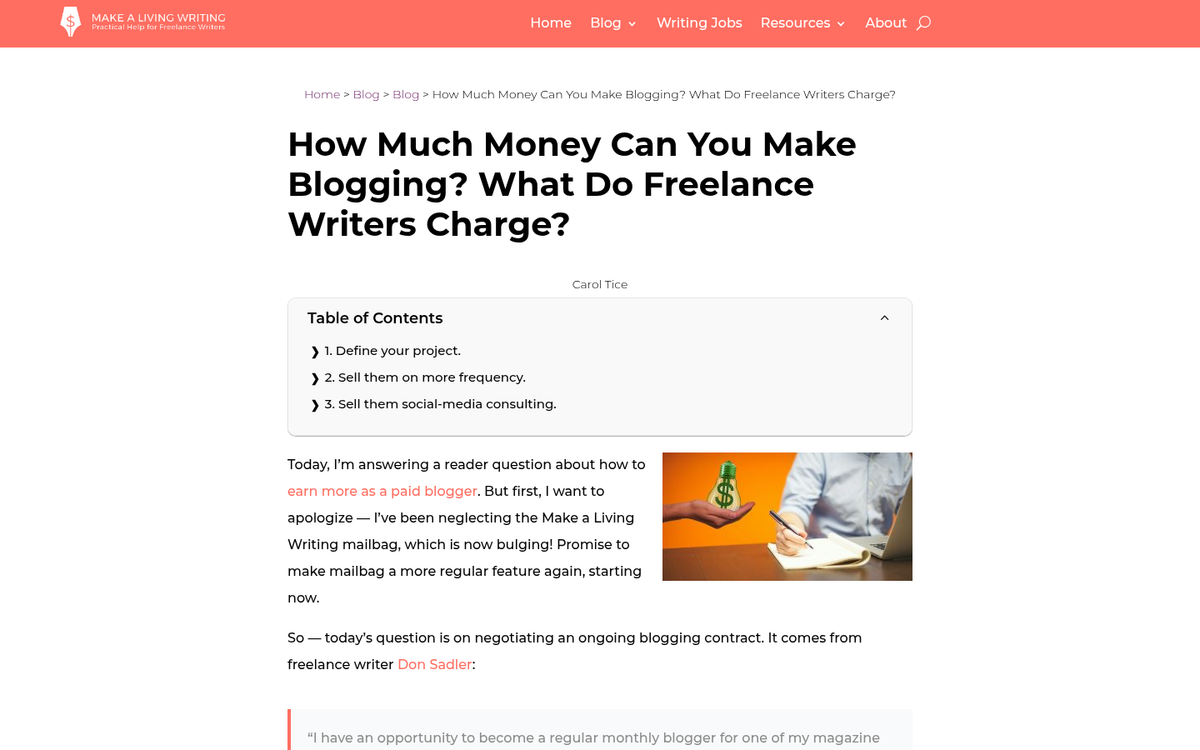
This is where most businesses should be operating. According to current data, the average cost of a blog post ranges from $250 to $500, and for a solid 1,500-word post from an experienced freelancer, expect to pay somewhere in the $250 to $400 range.
Platforms like Writer Access, Constant Content, and similar marketplaces fall into this tier, as do many independent freelancers you might find through LinkedIn, Contra, or direct outreach. At this level, you're getting writers who understand structure, tone, and basic SEO - and who are generally willing to include research, links, and light formatting as part of the package.
Mid-tier freelancers are also where bylines start becoming a conversation. If a writer is producing genuinely strong work and building a reputation, they may ask for credit - or charge more to ghostwrite exclusively. This is worth negotiating early.
High Tier Costs
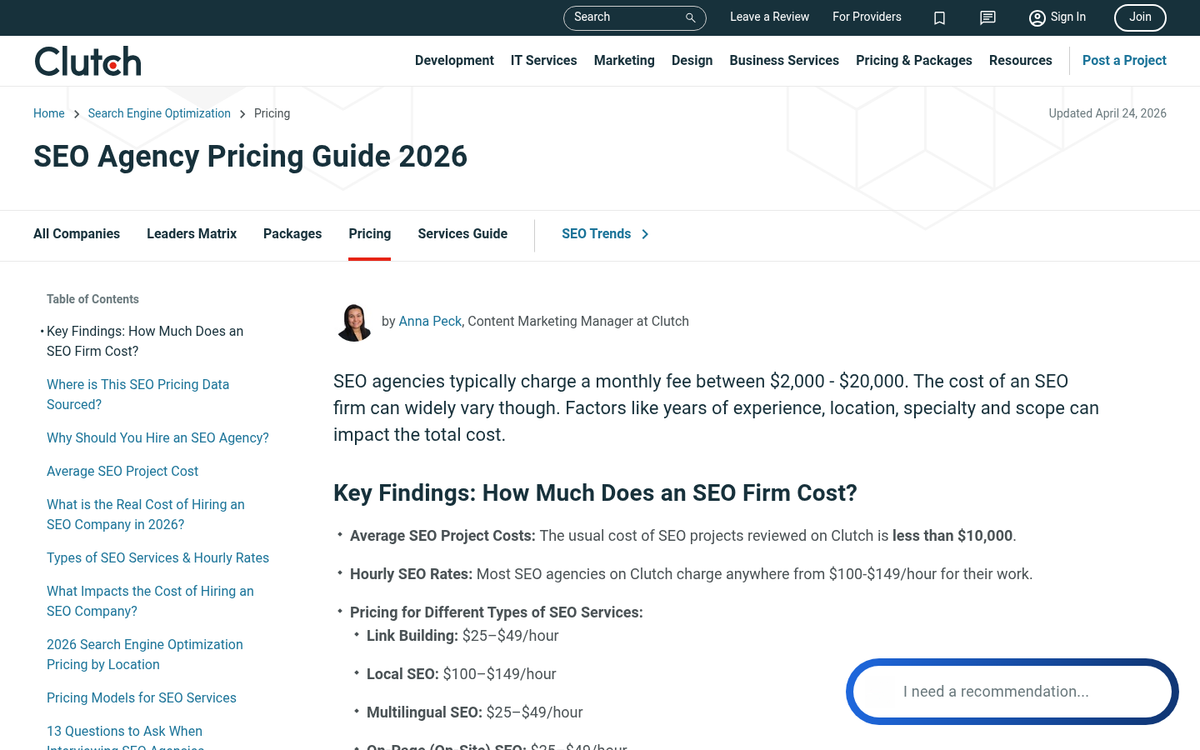
At the high end, costs climb considerably. Outcome-driven blog content - posts built around keyword strategy, conversion goals, and measurable traffic results - can run anywhere from $1,500 to $6,000 per post, according to agencies like Siege Media that specialize in this approach. These aren't just well-written articles; they're assets built to rank, convert, and compound in value over time.
If you're hiring through an SEO content agency or a senior specialist freelancer, you can expect to pay accordingly. A useful benchmark: SEO blog packages typically run around $500/month for one post, or $1,500/month for four posts - though pricing varies widely by provider and scope.
At this tier, you're getting writers or teams who handle everything: research, SEO strategy, internal linking, image sourcing, formatting, and sometimes even publishing. You're paying for results, not just words.
Don't forget - all of these costs are per post. Multiply by your target publishing frequency and the budget adds up quickly. Seven posts per week across multiple blogs is a serious investment. This is why many businesses build a mixed approach: one or two high-quality cornerstone posts per month, supplemented by mid-tier content at higher frequency. Match the spend to the goal, and you'll get far more mileage from your content budget.