For the last several years, Google has been pushing harder and harder for an Internet based on content and quality, not links and keywords. They want as many people as possible to find the content they want to see. They don't want marketers skewing their results using artificial techniques that take advantage of the fact that Google is essentially a giant robot and can't always make qualitative judgments on its own. With the rise of AI-generated content flooding the web, this battle between marketers and the algorithm has never been more intense - and the stakes have never been higher.
Key Takeaways
- Small, specialized sites can outrank larger competitors by focusing deeply on narrow topics with exceptional, comprehensive content.
- Word count isn't a direct ranking factor, but longer content earns more backlinks and satisfies user intent more completely.
- Google's Helpful Content Update targets content made for search engines, raising the quality bar significantly for all publishers.
- High-quality evergreen content compounds authority over time, allowing slow publishers to build rankings gradually through genuine depth.
- Competitive niches like eCommerce can't rely on minimal content strategies-comprehensive, well-optimized content is essentially mandatory from the start.
Pushing Content

What this means is that the most common advice is still to create content. But in 2026, that advice comes with a lot more nuance than it used to. There are a few core problems with the "just create content" approach.
- Content needs to be of a certain minimum quality. This quality standard has risen dramatically over the past few years. Google's Helpful Content Update, which was fully integrated into its core algorithm in March 2024, specifically targets content created for search engines rather than real people. If your content doesn't genuinely help users, it's likely being filtered out.
- Content needs to be posted with purpose, not just frequency. The old "publish as much as possible" mindset has largely backfired for many sites. A smaller number of genuinely useful, in-depth articles will outperform a large volume of thin, repetitive posts in most niches today.
- Content requires an investment. Either someone who owns or runs the site needs to spend serious time writing for it, or they need the budget to hire someone who will. With AI-generated content now everywhere, the bar for what passes as "quality" has shifted upward significantly.
This begs the question: can a site rank well without a lot of content? Is it all about scope, size, and volume?
There is evidence to the contrary. Small sites and local businesses are still capable of outranking larger sites, even when those larger sites have hundreds of times more content. Where a larger site is like a tidal wave, a focused small site is a hydrojet, punching through with precision and depth. That said, there is a limit to how little content you can have and still rank well.
How to Rank in Google Search Results
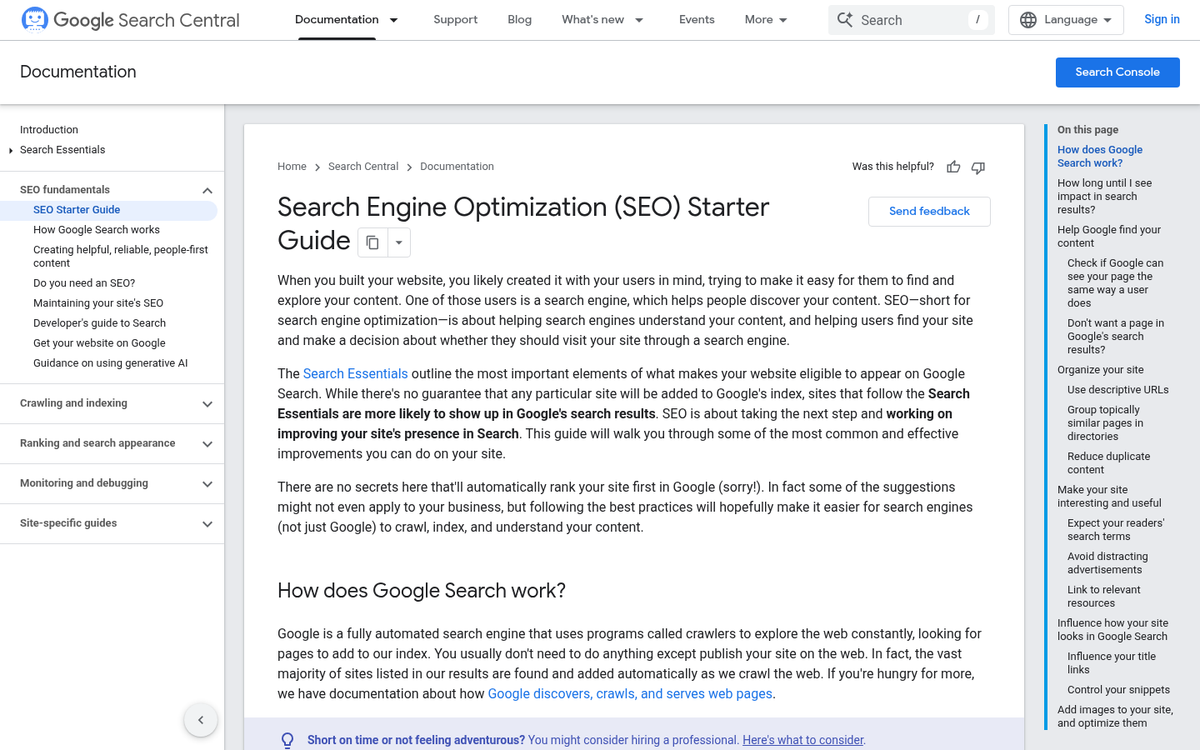
In order to rank in a Google search, you essentially need two things: genuinely helpful content and relevance signals (including keywords). Keywords matter because without them, Google has no clear picture of what queries your content might apply to.
The thing about keywords is that they can be anything. They're no different from the natural language you use throughout your posts. But ranking for obscure, low-volume phrases no one searches for is largely meaningless.
Word count alone is not a ranking factor - Google's own Search Liaison Danny Sullivan stated as much in 2023, saying "The best word count needed to succeed in Google Search is... not a thing!" However, research from Backlinko found that the average first-page result contains around 1,447 words, and articles over 2,000 words generate 77% more backlinks than shorter ones according to Stratabeat. The correlation is real, even if word count itself isn't a direct signal. Longer content tends to cover topics more thoroughly, attract more links, and satisfy user intent more completely - which are the things that actually drive rankings.
Small, Specialized Sites
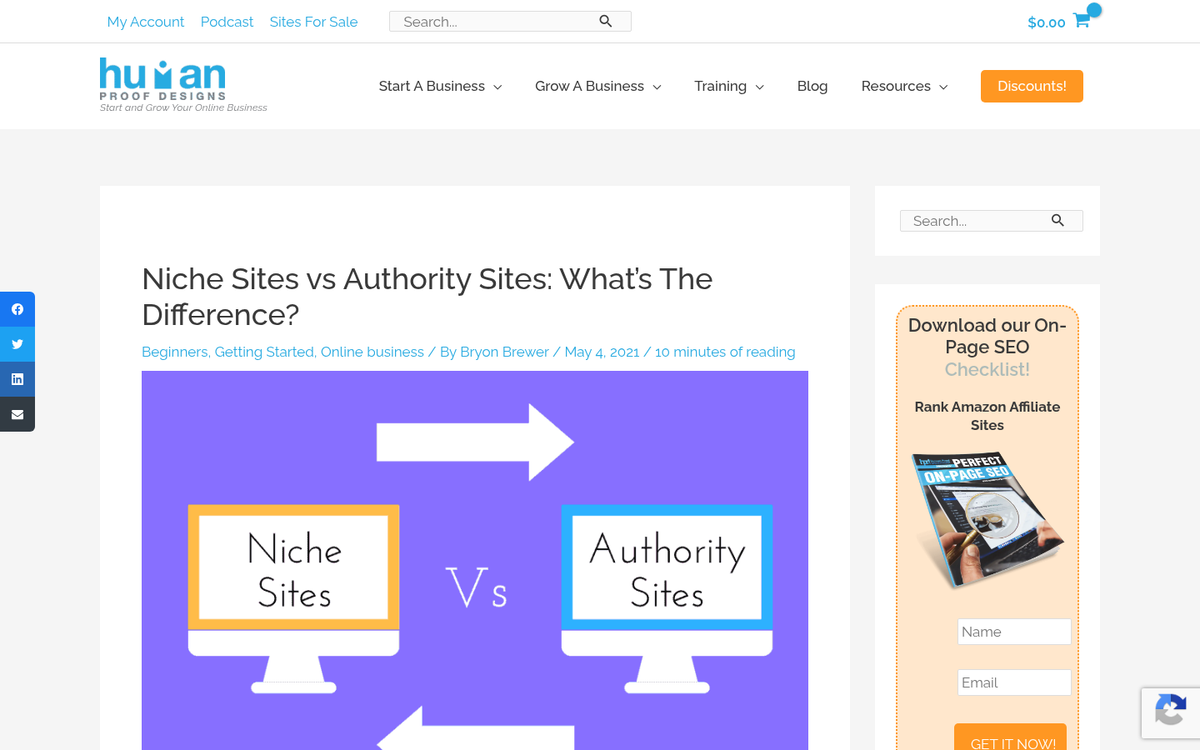
The sites with the highest chance of ranking with limited content are the most specialized. A tightly focused site covering one narrow topic with genuine depth can absolutely compete against larger, more general sites - especially in niches where the big players only skim the surface.
As your competition grows, it becomes harder to rank with less content. A competitor in your niche doing everything you do, at the same quality level, will generally outrank you if they have more comprehensive coverage of the topic. It's not a complex equation.
If you want a small site to rank, the content you do publish needs to be exceptional. If everyone in your niche is covering a subject in shallow 800-word posts, you write the definitive 4,000-word resource with original insight, data, and real depth. You'll have a much stronger chance of ranking based on the authority and links that come from being the go-to resource on the topic.
One important caveat: pages under 1,000 words rarely rank well for competitive keywords, and 300 words is widely cited as the practical SEO floor. Thin content - particularly on eCommerce sites - remains one of the most common ranking killers, with research from Reboot Online finding that over 90% of low-performing eCommerce brands struggle with exactly this problem.
Building Links to Rank
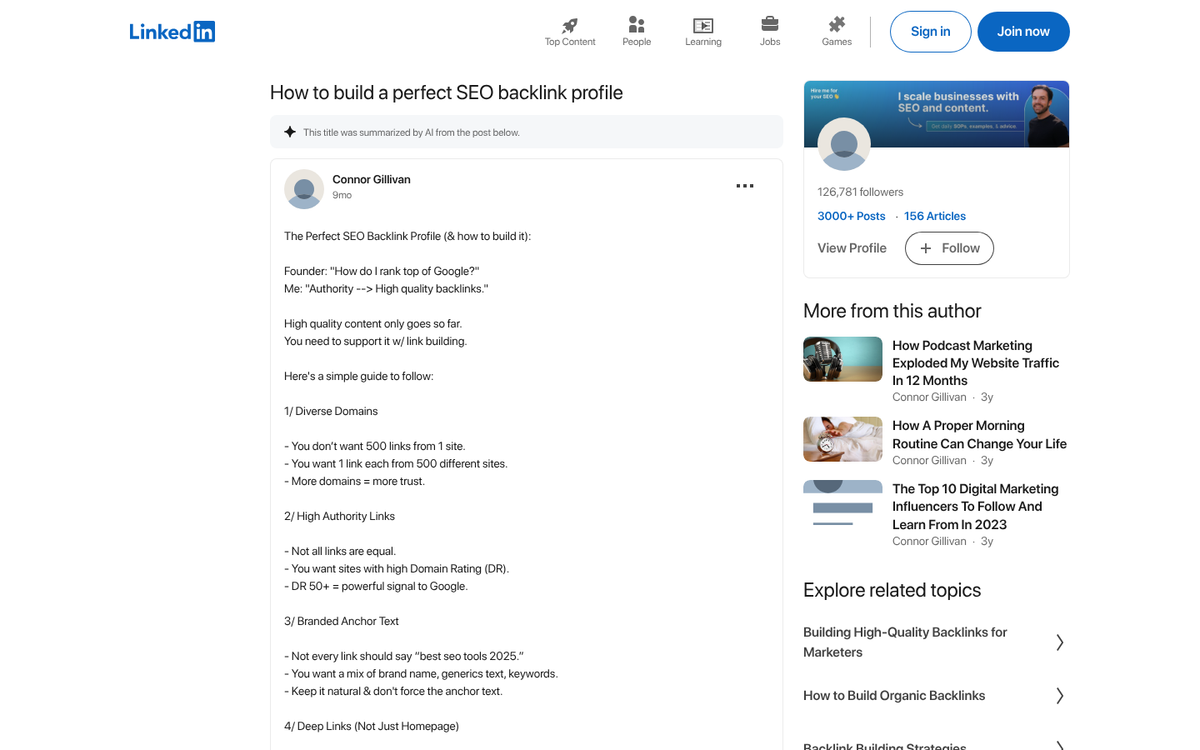
Links are still one of the most powerful ranking signals, and they're harder to earn than ever. Google knows how powerful they are and continues to regulate them aggressively. Links from spam sites are detrimental. Links from unrelated sites carry little value. Links from industry leaders and trusted publications can be incredibly potent. Links earned organically because your content is the best resource on a topic are exactly what Google is designed to reward.
In order to attract this kind of link volume, you need depth and genuine quality. Make yourself a valued resource - the place people turn to when they have a question in your niche. As you build that authority, you gain ranking power that compounds over time.
Snowballing Authority

Here's the thing about content: it's either timeless or it's dying. When you make yourself a trusted resource, what you're building is evergreen content - material that's valuable now, valuable next year, and valuable for years to come. That's the position worth building toward.
With this kind of timeless quality, you can snowball your site's authority. Each strong piece of content builds upon the last. Even when you publish slowly, you're still building momentum - as long as what you're publishing is genuinely worth reading.
The only real problem with this strategy is one of scope. As you expand, you inevitably cover more topics, which means you become less tightly focused. At some point, the balance shifts: you can no longer sustain a slow pace and need to scale up.
Ideally, by the time this transition happens, you'll have built enough authority and revenue that you can afford to invest in content at a higher rate - without sacrificing the quality standards that got you there.
Limitations on Snowballed Authority
There are, of course, some types of sites that simply can't afford to rank with very little content. If you're trying to sell products, for example, you're up against fierce competition - and your competitors almost certainly have broader, deeper content strategies than you do. You have no choice but to compete on quality and comprehensiveness, even if it means a significant upfront investment. Understanding your true cost per published article is essential before committing to that kind of strategy.
Some niches just don't work with the slow build. They need to hit the ground running with strong, well-optimized content from day one. In every case, however, a small amount of exceptional, user-focused content is far better than a large amount of thin, forgettable content - and that has never been more true than it is in 2026.