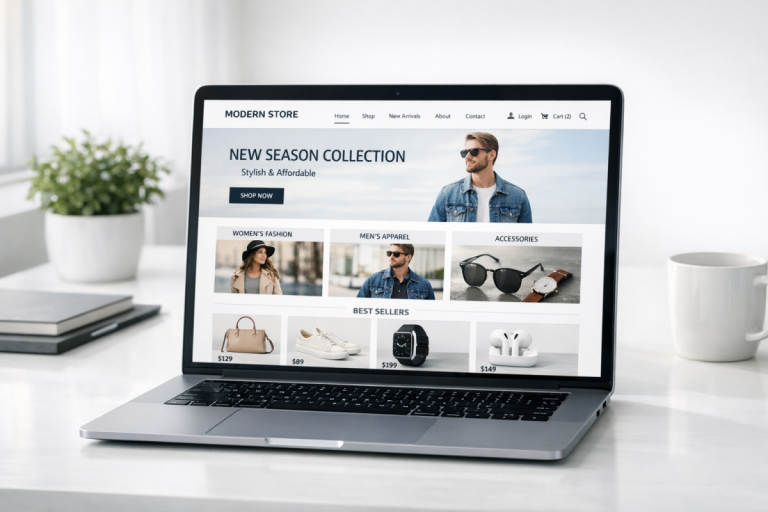
If you're interested in starting up a web business, it's important to have a good idea of what business you might start. What kind of ecommerce category do you fall into? There are important considerations for each different type, and those considerations can vary quite a bit. For example, if you're looking to sell a service, you need to establish yourself as enough of an authority that people will trust you. If you're selling something in a retail format, you need to figure out your inventory and fulfillment processes. Let's explore, shall we?
Key Takeaways
- Ecommerce has four primary transaction types: B2C, B2B, C2B, and C2C, each serving distinct audiences and requiring different strategies.
- Tangible goods models include retail, drop shipping, white labeling, print on demand, affiliate marketing, and manufacturing, each with varying overhead and complexity.
- Intangible goods like software, courses, and digital media often have lower overhead; video games lead online penetration at 79.6% of purchases happening digitally.
- Service-based ecommerce includes freelancing, consulting, training, and XaaS models like SaaS, PaaS, and IaaS, which now dominate modern business infrastructure.
- Choosing an ecommerce business requires deciding on target audience first, then selecting an appropriate business model to match your resources and goals.
B2C Vs B2B Vs C2C Vs C2B
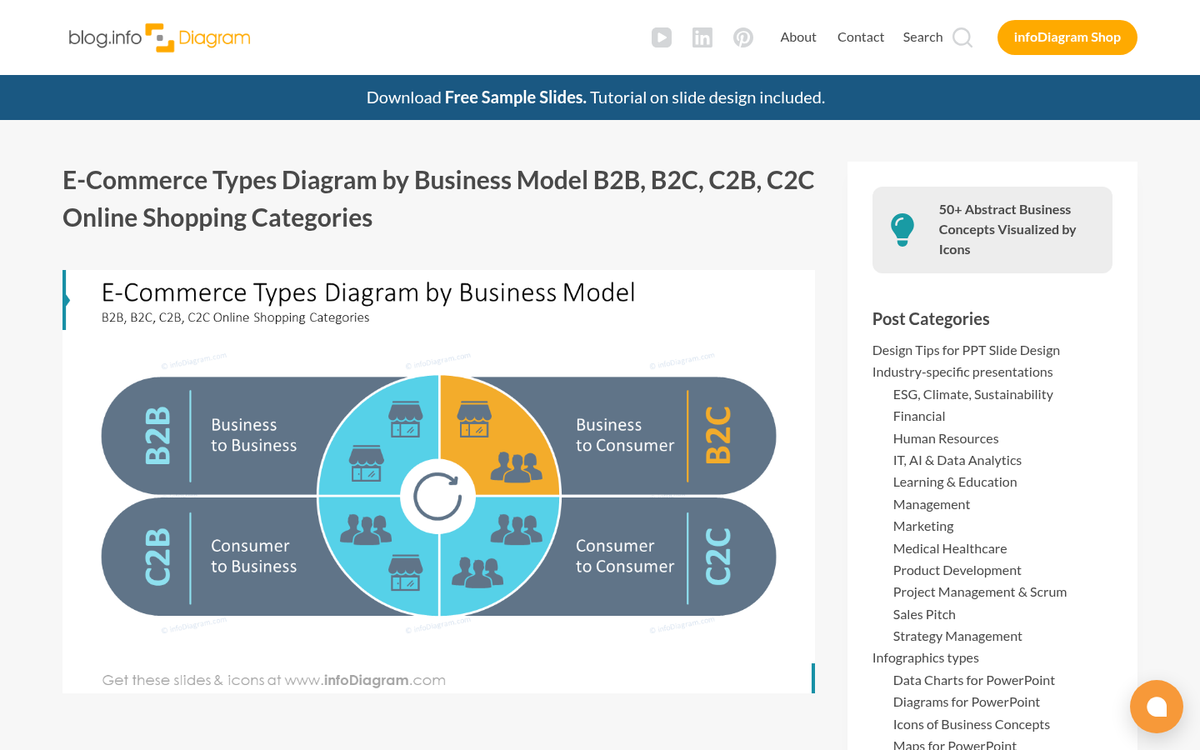
First, let's cover the broad, top-level ecommerce categories. There are four primary ones, though some people consider as many as six; more on those in a moment. The main four are those I've listed in the subhead. So what are they, if you're not familiar with the acronyms?
Business to Consumer is the most traditional type of business you think of when you think about, well, a business. A retail store is a business to consumer brand. Amazon is a large business to consumer operation. A store like Office Depot is a hybrid, catering to home users and to businesses alike. Business to consumer brands are businesses that sell products directly to non-business customers. To put the scale of B2C ecommerce in perspective, computer and consumer electronics alone account for $219.33 billion in U.S. retail ecommerce sales - roughly 21.2% of all U.S. retail ecommerce, according to eMarketer.
Business to Business brands are also very common. Think about any service provider with a business tool to sell you. Google has a lot of business to business tools. Marketing platforms like HubSpot, Mailchimp, or Hootsuite are all business to business companies. A business to business brand is simply a brand that is selling their services to other businesses, either of a specified scale or of any scale with varying pricing and service levels.
Consumer to Business is a less common type of transaction, but it has become increasingly common over the years as the benefits of hiring a full-time employee have diminished, while the benefits of contracting a freelancer have grown. A freelance writer working for a company is a C2B relationship. A website that provides stock photos acts as a middleman; consumers produce the content and businesses can buy it. AI-assisted content creation and gig platforms have expanded this model even further in recent years.
Consumer to Consumer is one of the fastest-growing forms of transaction. There are a variety of different ways this can manifest, from traditional to entirely new. Traditional consumer to consumer transactions include small-scale sales like a yard sale or the transactions facilitated by eBay or Craigslist. It also includes the broader gig and creator economy, ranging from for-contract courier services to Uber to peer-to-peer resale platforms like Depop, Poshmark, and Facebook Marketplace.
Some people also consider B2G or B2A as distinct from B2B. The G or the A stand for Government or Administration. Selling a service to the government as a contractor would be a B2G transaction. Filing and handling tax services would be a B2A service, potentially. These are generally considered a sub-set of B2B, since the government and public administrations function similarly to organizations from a vendor's perspective. It's not strictly necessary or beneficial to make the distinction in most cases.
So, the first thing you need to decide when you're starting a business is what your target audience will be. Are you going to be a freelancer selling your services to companies? Are you a creative, working with whoever will pay you? Are you going to set up a deal with manufacturers or retailers to sell for them or refer customers? You have quite a few options.
The second thing you need to do is pick a business model. Here are three divisions, and the business models you might find within.
Tangible Goods
The first category of ecommerce is the traditional retail sales model, and various related business models. I call it the tangible goods category, because what you would be providing to your customers is a tangible product - something that can be handled physically and requires shipping. Some of the most popular tangible goods categories in ecommerce today include clothing (purchased online by 43% of consumers in a recent survey of over 10,000 participants), electronics, and food and beverages - the latter being the fastest-growing ecommerce category, with a 12.7% compound annual growth rate between 2017 and 2023, compared to an industry average of 8.7%, according to Statista.
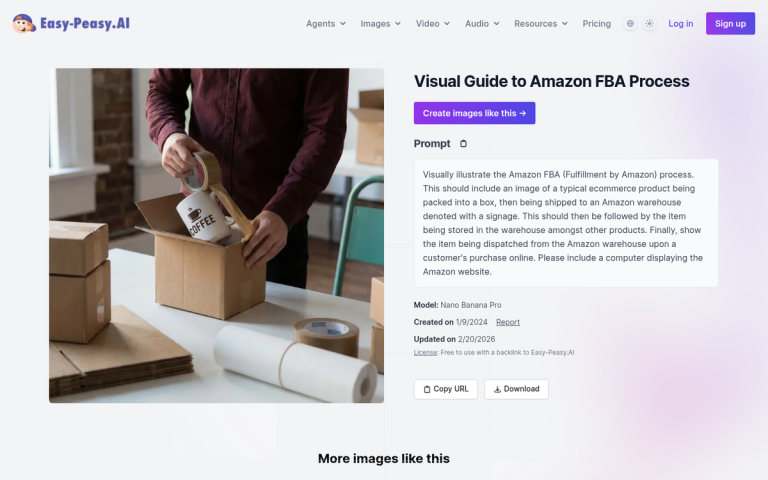
Retail Sales, also known as Wholesaling and Warehousing, is the traditional sort of sales model. You produce, or hire someone to produce for you, physical products. You then store those products somewhere, be it in your spare bedroom or in a warehouse. You create a website with a catalog users can use to browse your products, or you use a third-party system like Amazon or Etsy to showcase your inventory. Customers make an order, and you fulfill the order, handling all of the shipping and support. Amazon offers services like Fulfilled By Amazon (FBA) to ease some of this process and guarantee shipping timelines.
Retail sales can range from B2C, where you're a company selling items to people, to B2B, where you're wholesaling large quantities of products to other retailers who will sell at a markup. Either way, you're the initial provider of the item, not counting whatever factories or suppliers you work with to produce it.
Drop Shipping is a way to streamline the retail sales model. A wholesaler doesn't care about most small customers; it's not worth their time selling individual units to people when they can move truckloads to retailers instead. A drop shipper steps in and says "I will make you a deal; I will aggregate orders from small customers and process them - all you need to do is ship to the addresses I supply." Drop shipping remains popular on platforms like Amazon and through independent storefronts built with Shopify, though increased competition and tighter margins have made it more challenging to succeed in without a clear niche or strong marketing strategy.
White Labeling is similar in some ways to drop shipping. You typically purchase products from a manufacturer or wholesaler and sell them to individuals under your own branding, rather than the original manufacturer's. This is especially common in the health, beauty, and supplement niches, and has expanded into categories like pet products and home goods.
Print on Demand is somewhat similar to drop shipping, though you can be the first-party provider or work through a fulfillment partner depending on your setup. The key difference is that with print on demand, the item is not created until an order comes in - there's no warehouse full of pre-made inventory. This is exceedingly common with apparel, accessories like phone cases, and art prints. Platforms like Printful, Printify, and Gelato have made this model accessible to almost anyone with a design and a website.
Affiliate Marketing is similar to drop shipping, except you're not handling any part of the fulfillment process - only the advertising and referral side. With affiliate marketing, you simply direct customers to a retailer's storefront and earn a commission when your referred visitor makes a purchase. Amazon's affiliate program remains one of the most widely used, but affiliate opportunities exist across virtually every product category through networks like ShareASale, CJ Affiliate, and Impact. It has the lowest overhead of any tangible goods model, but margins can be slim and you're always dependent on the retailer's commission structure.
Manufacturing can be considered the root of all B2B tangible goods sales. Being the company that actually creates the products means you can capture significant margin - but you also need to source raw materials and invest in the infrastructure to produce goods at scale. Most large-scale manufacturing continues to be concentrated in regions like China, Vietnam, and Bangladesh due to lower production costs, though nearshoring and domestic manufacturing have grown in interest among brands looking to reduce supply chain risk.
Many of these ecommerce categories have a supplemental or spin-off type in the form of subscription services. Dollar Shave Club is a classic example - a white-label subscription model that delivers personal care products on a recurring basis. Subscription commerce has expanded well beyond razors and grooming, now covering everything from meal kits to software to curated fashion boxes. For the most part, subscriptions aren't a separate category; they're a recurring billing layer applied on top of existing models.
Intangible Goods

There is a lot of overlap between tangible goods and intangible goods sales. Many of the same business models apply. Affiliate marketing, for example, works equally well whether you're referring someone to a physical product or a digital download.
Digital Product Sales are a form of intangible good where you're simply selling something that has no physical form. Software is the prime example - everything from applications sold through the Apple App Store to indie tools sold on Gumroad counts as a digital product sale. Ebooks, templates, presets, music files, and digital art are all growing segments within this category.
Training Courses are another form of intangible good. It's different from a direct service because you aren't necessarily working with anyone one-on-one; rather, you're providing pre-recorded video lessons, coursework in PDF or interactive form, and whatever supplemental resources are included. Platforms like Teachable, Kajabi, and Thinkific have made it straightforward to package and sell courses at scale.
Media and entertainment deserves a mention here as well. Video games, in particular, now lead all ecommerce categories in online penetration - with 79.6% of U.S. video game purchases happening online, according to Oberlo. Streaming services, digital publications, and licensed content all fall under this broader umbrella of intangible media sales.
Services
The final ecommerce type is being a service provider. Rather than providing a book, you provide the service of writing. Rather than providing a painting, you provide the service of graphic design.
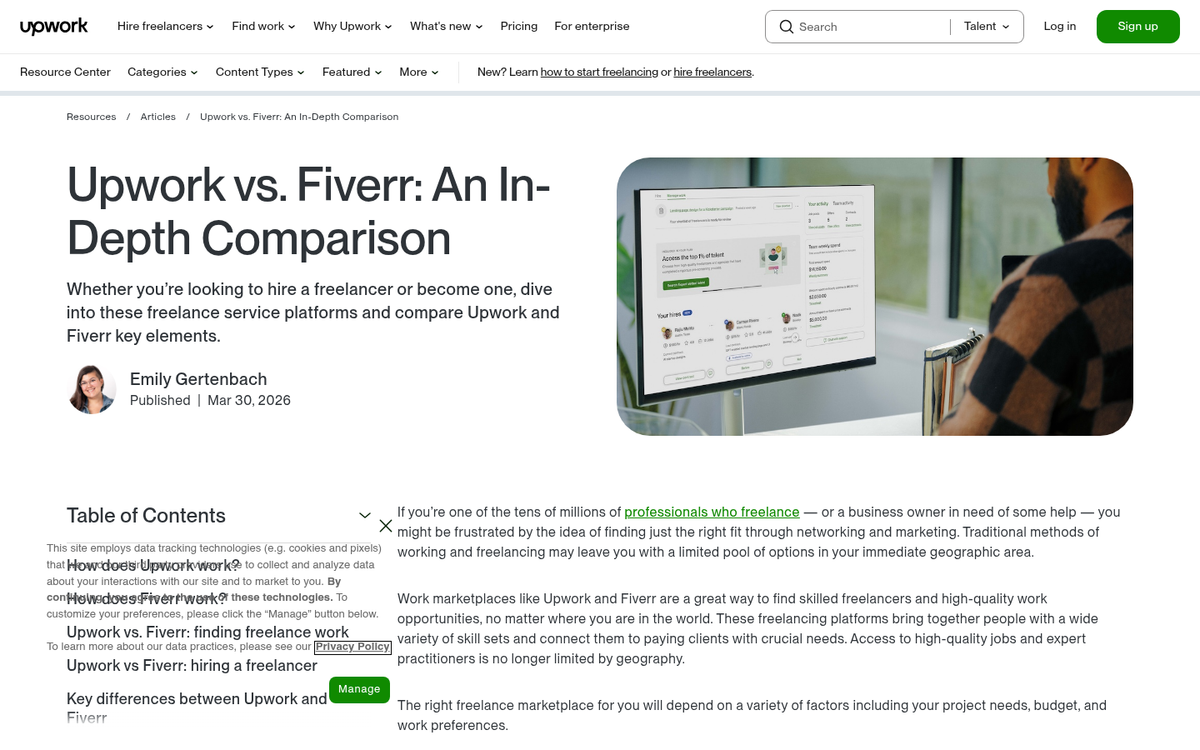
Freelancing is one of the primary forms of service one can provide online. Freelancers can do anything from coding and writing to visual art to marketing and video production. Almost anything a business needs can be done by a freelancer, and the growth of remote work culture has normalized this arrangement significantly. Platforms like Upwork, Fiverr, and Toptal continue to serve as major marketplaces connecting freelancers with clients, though many experienced freelancers build direct client relationships over time and reduce their reliance on these platforms.
Consulting is another form of service one can provide. Rather than doing the work directly, you examine a company's processes, provide strategic recommendations, and offer your expertise to help them improve. Consulting can span industries - from marketing and operations to finance and technology. It's a strong fit for professionals with deep domain experience who prefer advising over execution.
Training is similar to consulting, but more hands-on and instructional in nature. You can hire someone to train your employees in a skill or process. Training is often bundled with tangible and intangible goods as an added-value component.
As A Service (XaaS) is an entire class of internet-based service providers, and it continues to be one of the dominant business models of the current era. Software as a Service (SaaS) covers everything from project management tools like Asana to design platforms like Canva to productivity suites like Microsoft 365. Rather than buying a piece of software outright, you pay for ongoing access to it hosted in the cloud.
Beyond software, Platform as a Service (PaaS) offerings like Google App Engine or Heroku allow developers to build and deploy applications without managing underlying infrastructure. Infrastructure as a Service (IaaS) - provided by Amazon Web Services, Microsoft Azure, and Google Cloud - supplies the raw computing power, storage, and networking that other businesses run on. AI-powered tools and APIs have added yet another layer to the XaaS landscape, with companies now offering everything from language model access to computer vision capabilities as subscription services.
Any as-a-service model relies on uninterrupted internet connectivity and reliable providers to function, which is why many of these tend to be B2B at scale. Still, consumer-facing SaaS products are now thoroughly mainstream.
Once you have chosen your target audience and the category for your ecommerce business, you can start to nail down more of the details. What is your product or service? How are you going to provide it? What kind of infrastructure do you need in place to succeed? Have at it, and good luck finding your first clients!