





Affiliate marketing is a double-sided coin, as all coins tend to be. On this site, we tend to talk most about the publisher side of things - when you're the one running the links and making the money, and when you're the one with concerns about getting paid. We have articles like these:
- What Can You Do if Your Affiliate Doesn't Pay You?
- Which Web Hosting Affiliate Program Pays the Most?
- How to Promote an Affiliate Link Without a Website
As you can see, they tend to be focused on the publisher. There's another side to the story, though, and that's the advertiser. The person on the other end, running the affiliate program. In many cases that's just Amazon - which, for what it's worth, holds a staggering 46% of the global affiliate market share - but the fact is, anyone can start up their own affiliate program. Thousands upon thousands of businesses have their own affiliate or referral plans. Global affiliate spend hit $18.5 billion in 2024, and over 80% of brands now use affiliate marketing to drive leads and sales. You can too.
Key Takeaways
- Affiliate marketing costs real money - platform fees, creative assets, fraud management, and program oversight all add up significantly.
- 99% of affiliate programs use CPA models; affiliate-sourced buyers also show 21% higher average order values than other channels.
- Platforms range from beginner-friendly tools like LeadDyno ($49/month) to enterprise solutions like Impact and Cake with custom pricing.
- SaaS businesses have specialized options like PartnerStack and FirstPromoter, which handle recurring commissions and subscription billing natively.
- Setting competitive commissions requires calculating your margin limits, researching competitors, and reserving headroom for bonuses and top performers.
Understanding Affiliate Marketing

Affiliate marketing functionally works like just about any other kind of paid marketing, with one major difference. That difference is simply that you don't create or control the creative of the advertising being run. You aren't making ads and submitting them to publishers or to ad networks. Instead, you're letting your publisher network create the ads they find most effective.
Oh, it's not a no-holds-barred affair. You can implement restrictions or directives. Many advertisers don't allow the use of their trademarked logos and restrict the sources of their traffic. You might not want to allow people to buy PPC advertising to promote your affiliate link, because you might also be buying PPC traffic and bidding against them. Even then, you get to set your own rules.
The point of affiliate marketing is the return on investment. It doesn't cost you anything when traffic doesn't convert. You don't have to pay for views or clicks that don't result in a sale - which is likely why 99% of affiliate programs today operate on a cost-per-action (CPA) model. A 2024 Awin/Forrester analysis also found that affiliate-sourced buyers have 21% higher average order values than other channels. That's a compelling reason to take this seriously.
It's not free money, though. There are costs.
First of all, you have to manage the affiliate program. That means monitoring traffic, making sure tracking is working properly, patching software as necessary, designing policies, optimizing the program, and making sure it's enticing to potential affiliates. It also means staying on top of fraud, which is increasingly sophisticated in 2026.
This is a significant time investment, no two ways about it. Hiring someone to manage it can range from a contractor doing part-time work to a full-time salary. You can do a lot of it yourself, but you're sacrificing your time to save money. Is it worth it? That depends on how crucial your time is to growing your business elsewhere.
You also have to consider the cost of the affiliate platform you're using. Sure, you can try to develop a custom solution, but unless it's a very basic referral system, it's going to be complex and expensive to build properly. That's why dedicated platforms exist, and why most businesses use them.
Working with an established affiliate network like Awin, ShareASale, Rakuten, or CJ Affiliate is one option, though you'll pay network fees and commissions on top of your affiliate payouts. Buying dedicated self-hosted or SaaS software costs more up front or monthly, but cuts out the middleman. Neither option is universally better - it comes down to your volume, niche, and how much control you want.
There's also the cost of creative assets and branding that goes into running a successful affiliate program. Many businesses provide their affiliates with banners, copy, product images, and other pre-approved materials. The more tried-and-tested content you give them, the more likely they are to succeed and bring sales back to you. This can be a meaningful up-front cost, and you'll want to keep that asset library current.
In short, there are real costs associated with building your own affiliate program. You can go ahead and use a third-party network if you want - there's no shame in it. But this post is focused on dedicated software solutions that let you run and own your program directly.
Deciding on the Details
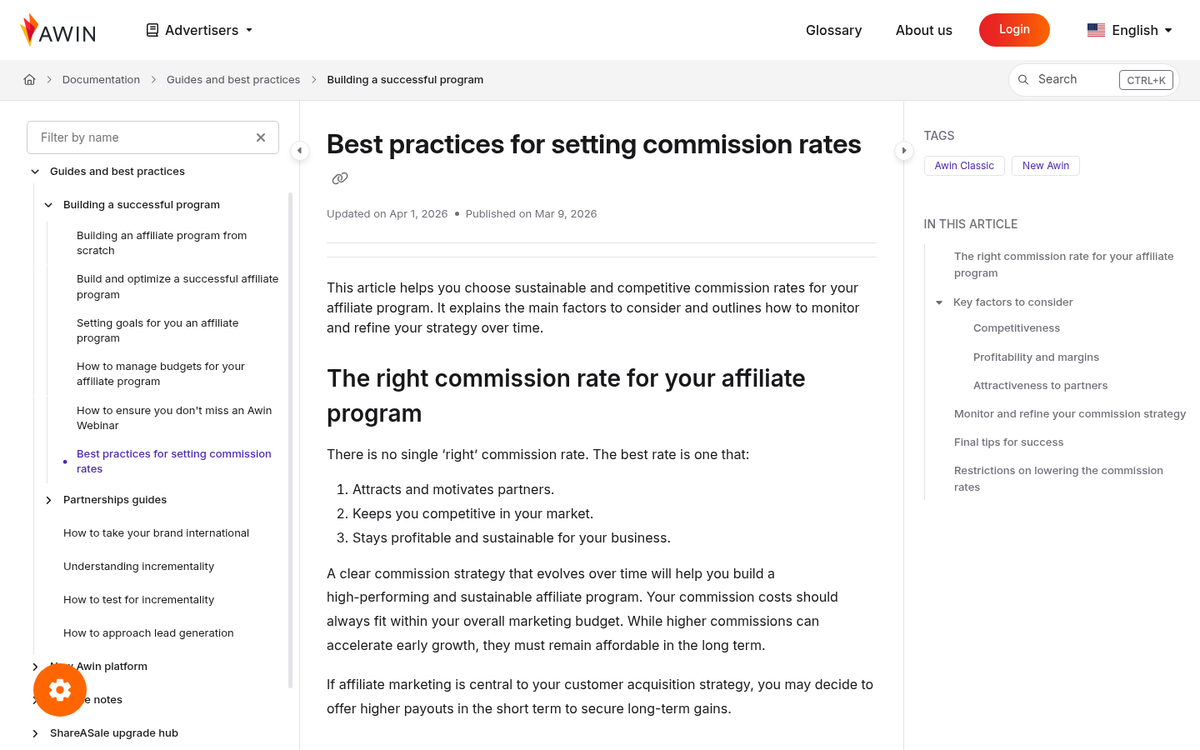
Running an affiliate program is all about the details. First, you have to decide on your commission model. The overwhelming industry standard in 2026 is CPA - cost per action, typically a sale. You only pay out when a user converts, which makes it easy to manage ROI. This is what most small-to-mid-sized businesses should start with.
Pay per lead (PPL) is another option, typically used for higher-ticket products or services where a salesperson closes the deal rather than a checkout page. Think B2B software, financial services, or premium consulting. PPL can work well in those contexts, but it requires tighter fraud controls since not every lead turns into revenue.
Where does the commission money come from? You can absorb it into your existing margins, or you can price your products slightly higher to account for affiliate payouts. The second approach means you're also capturing that extra margin on direct, non-affiliate sales - which isn't a bad deal.
For newcomers, I recommend starting with a straightforward CPA model. Here's how to land on a competitive commission rate:
- Calculate, based on your margins and cost structure, the maximum commission you can afford without eroding profitability.
- Research competitors in your niche - do they have affiliate programs, and what are they paying?
- Build in some headroom below your maximum so you can offer performance bonuses, tiered commissions, or private deals for top-performing affiliates.
With that framework, you can set a commission that's both sustainable and competitive. Keep in mind that 25% of all affiliate programs are in the fashion industry, so commission benchmarks vary wildly by niche. What's competitive in software might be laughable in retail, and vice versa.
Everything else - recruiting affiliates, landing super-affiliates, advertising your program - is a longer conversation. For now, let's focus on the tools. Here are some of the best platforms you can use to build and run your own affiliate program in 2026.
1. Impact (formerly Impact Radius)
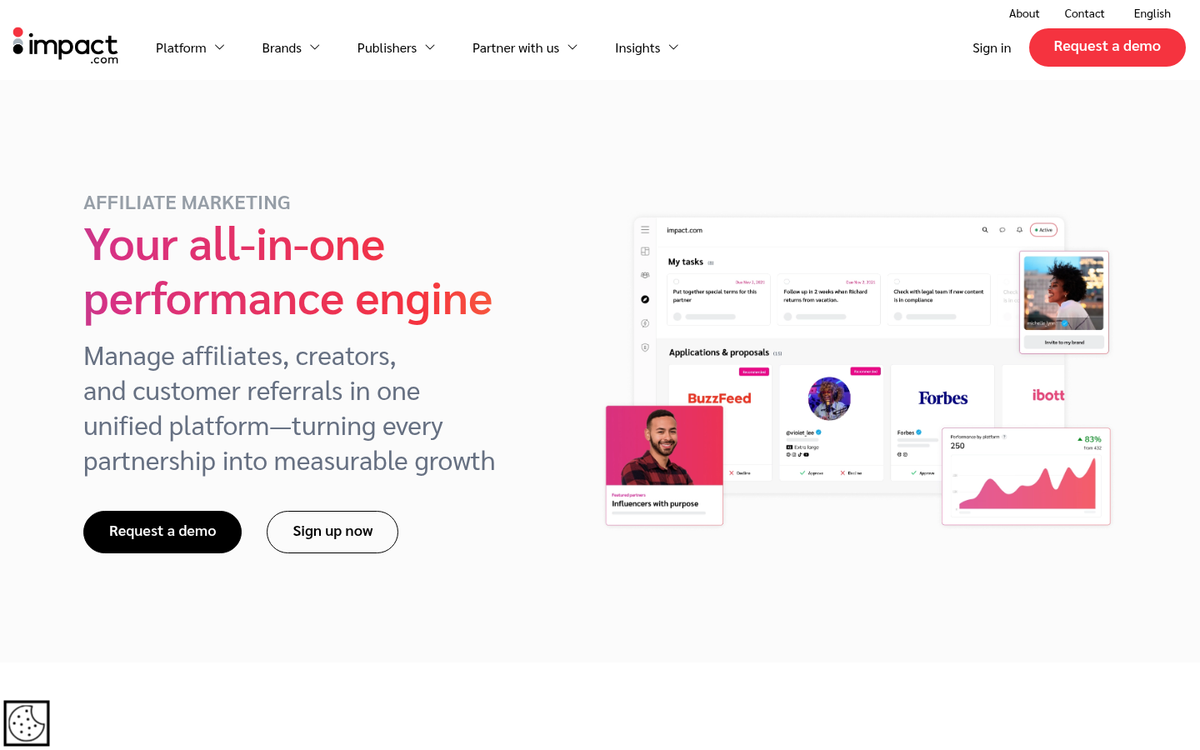
Impact has become one of the most respected affiliate and partnership management platforms on the market. It goes well beyond traditional affiliate tracking, offering tools for influencer partnerships, brand-to-brand deals, and full partnership lifecycle management.
You get real-time reporting, robust fraud detection, flexible commissioning structures, and deep integrations with major ecommerce and marketing platforms. It's built for businesses that want serious control over their affiliate program. Pricing is custom and based on your program's scale, so you'll need to contact their sales team - but it's well worth the conversation if you're serious about growth.
2. PartnerStack
PartnerStack is particularly well-suited to SaaS companies and software businesses, though it works across a range of industries. It handles affiliates, referral partners, and resellers all within one platform, which makes it a strong choice if you want to consolidate your partner programs.
It includes automated payouts, a marketplace where affiliates can discover and apply to your program, and solid analytics. Pricing is quote-based, but the platform's ability to manage multiple partner types simultaneously makes it stand out in 2026. If you're also exploring the best CPA offer networks, it's worth comparing how they stack up against a full partner management solution like this.
3. Tapfiliate
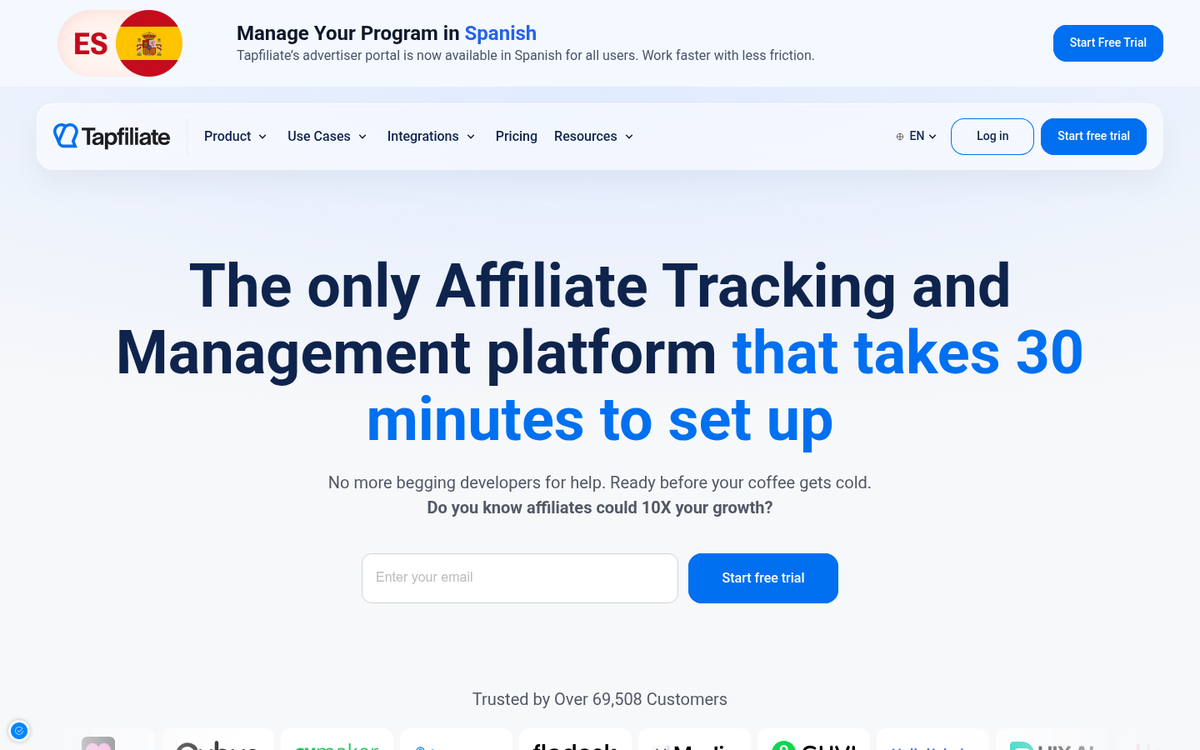
Tapfiliate is a solid cloud-based affiliate tracking platform that's easy to set up and integrates with a huge number of tools including Shopify, WooCommerce, Stripe, and dozens more. It's a good middle-ground option - more capable than entry-level tools, but without the complexity or price tag of enterprise platforms.
You get customizable dashboards, flexible commission structures, multi-level marketing support, and good affiliate-facing reporting. Plans start at around $89 per month, making it accessible for growing businesses.
4. Post Affiliate Pro
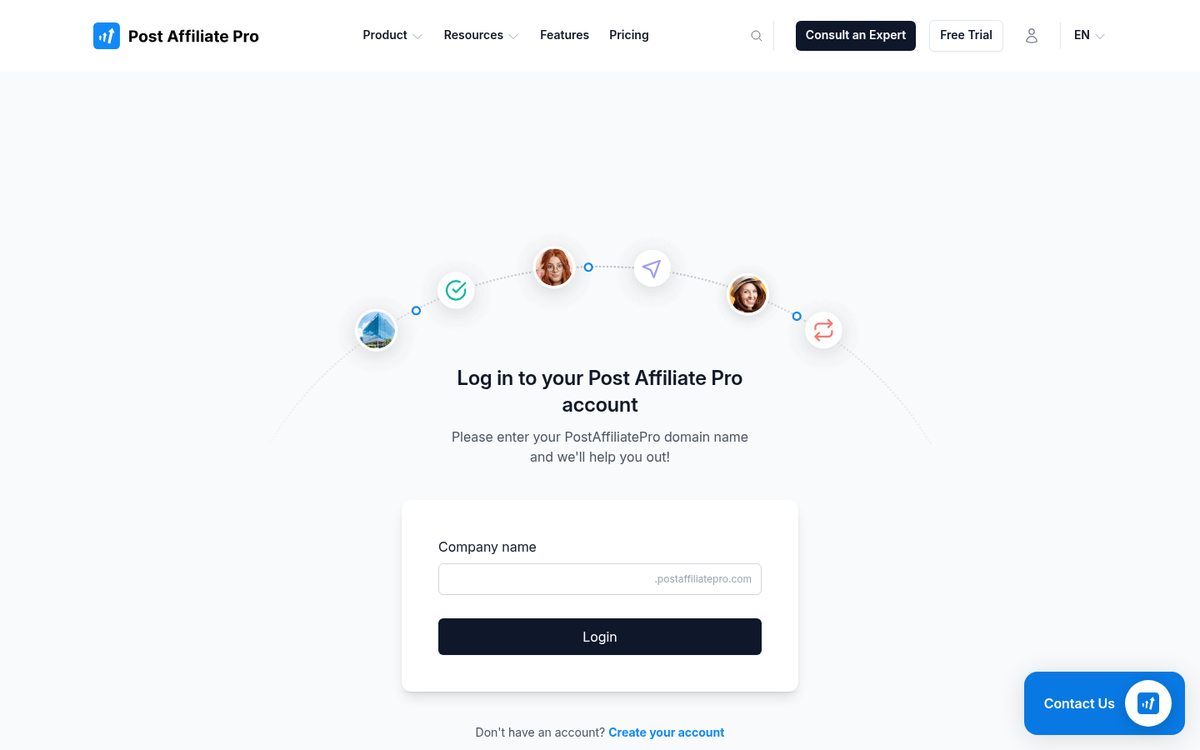
Post Affiliate Pro has been around for a long time and remains one of the most feature-rich self-managed solutions available. The flexibility here is the main selling point - you can configure commission types, tracking methods, promotional materials, fraud prevention, and more, largely on your own terms.
Pricing starts at around $129 per month for their Pro plan, which covers unlimited affiliates, a wide range of tracking options, and lifetime updates. Higher tiers unlock more tracking requests and priority support. It's a good fit if you want deep customization without going fully enterprise.
5. iDevAffiliate

iDevAffiliate has been around for over two decades and is still a credible option, particularly for businesses that want a self-hosted solution with a one-time purchase option. It offers commission variety, customizable dashboards, solid reporting, and integrations with 175+ platforms including Shopify, Stripe, and WooCommerce.
Cloud-based pricing runs around $39 per month. If you prefer to own the software outright, one-time license options are available starting around $199, with additional costs for premium plugins like geotargeting and language packs.
6. Refersion

Refersion has built a strong reputation particularly among ecommerce brands, with deep native integrations for Shopify, BigCommerce, and WooCommerce. Setup is fast, and the interface is clean and approachable - a good option if you don't want to spend weeks configuring things.
It handles affiliate recruitment, tracking, and automated payouts well. The Professional plan starts at $119 per month, which is reasonable given how polished the platform is. Larger volume plans are available for scaling businesses.
7. LeadDyno
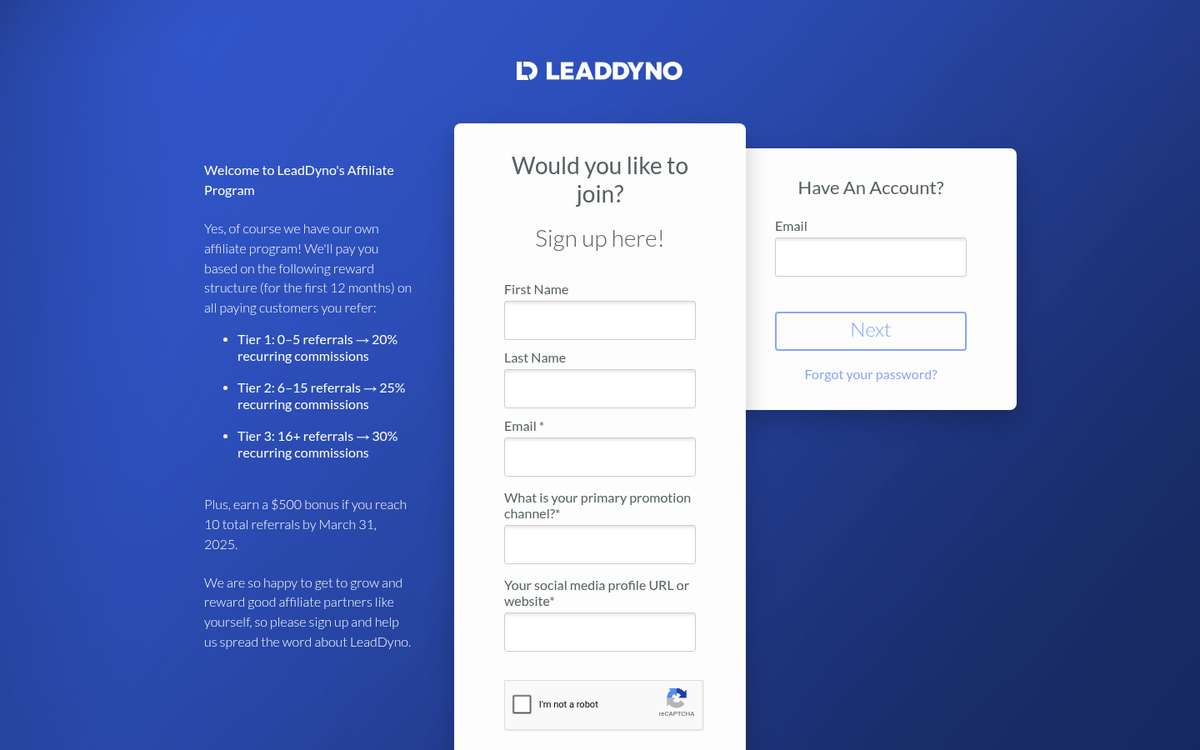
LeadDyno is one of the more beginner-friendly options on this list. It's designed to get you up and running quickly without a lot of technical overhead. You get affiliate tracking, a simple affiliate portal, email marketing tools, and social sharing options baked in.
It integrates with Shopify, WooCommerce, Stripe, PayPal, and several others. Pricing starts at around $49 per month, making it one of the more affordable fully-managed options for small businesses just getting started with affiliate marketing.
8. Cake

Cake remains a strong enterprise-level affiliate marketing platform, particularly suited to performance marketers and networks running high volumes of traffic. It offers deep analytics, fraud prevention, role-based portals, and multi-channel tracking across affiliates, influencers, and media buys.
Cake is on the higher end of the pricing spectrum and requires a conversation with their sales team to scope out a package. If you're running a large-scale program and need granular control over every data point, it's worth evaluating.
9. FirstPromoter
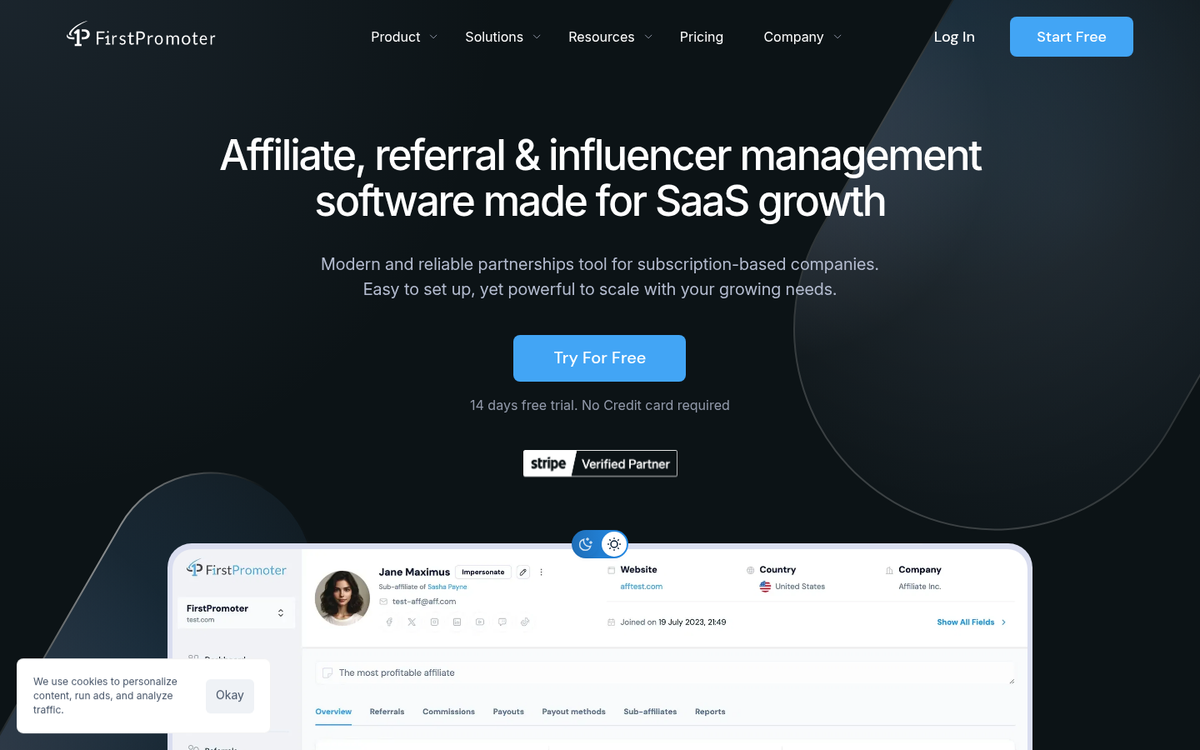
FirstPromoter is specifically designed for SaaS and subscription-based businesses, which makes it a standout in a crowded field. It handles both affiliate and referral programs, tracks recurring commissions cleanly, and manages the nuances of subscription billing like upgrades, downgrades, and cancellations.
If you're running a subscription product and want your affiliate commissions to reflect the actual ongoing revenue you're generating, FirstPromoter handles that natively. Plans start at $49 per month, which is very reasonable for what it offers in the subscription space.
10. HitPath
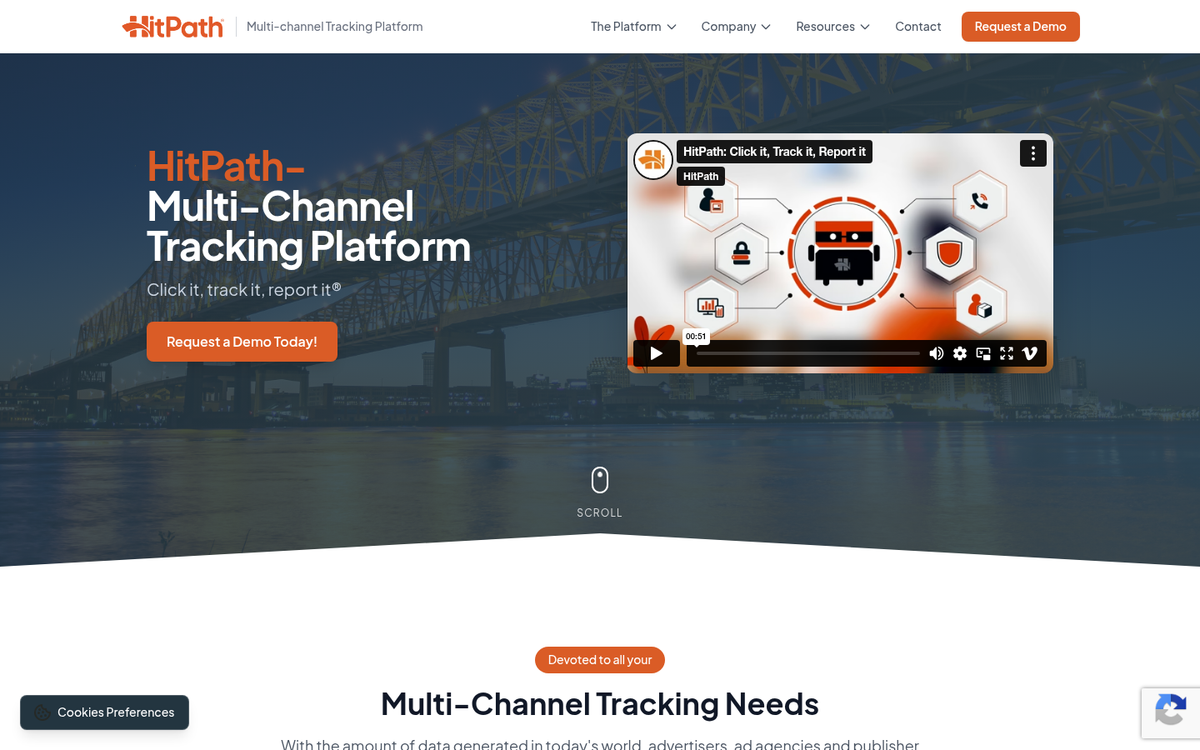
HitPath rounds out this list as one of the most flexible enterprise-level options available. Rather than forcing you into a fixed feature set, they work with you to build a package around your specific needs - you pay for what you use, not a bloated bundle of features you'll never touch.
It's best suited to experienced affiliate managers or agencies running complex programs. Pricing is customized through their sales team, which means it's not the right fit for beginners - but for the right operation, that flexibility is a genuine advantage.


2 responses
Thoughtful replies only - we moderate for spam, AI slop, and off-topic rants.
Great stuff, James...as always.
Does affiliate software exist where the publisher | the blogger distributes the links | the offer to potential advertisers?