





Key Takeaways
- ShareASale connects 700,000 affiliates with 6,500+ brand partners, handling tracking and payments so publishers focus on promotion.
- Recurring commission offers on subscriptions can compound significantly over time, making them among the most powerful affiliate income models.
- Deep linking product reviews within genuine content consistently outperforms banner ads, especially when audiences already trust your recommendations.
- Pay-per-lead programs in finance, insurance, and real estate can pay $50-$100+ per submission, requiring only qualified leads, not closed sales.
- Comparison sites built with real product expertise can generate consistent long-term income, unlike microsites, which typically have shorter natural lifecycles.
How to Make Money with ShareASale in 2026
There are many ways to make money from a website or blog, but they can all be roughly categorized into one of three groups. One is text or display advertising; banner ads, AdSense, and the like. One is selling products, like software you develop or a book you wrote. The third is affiliate marketing, a cross between the two. You promote products to sell, but you don't have to worry about anything beyond promotion and referrals.
Among the many affiliate networks out there, ShareASale remains one of the best, particularly for newer bloggers and content creators looking to monetize their audience.
What is ShareASale
ShareASale is an affiliate network founded in 2000 and acquired by global affiliate network Awin back in 2017 for $35 million. What this means in practice is they are a central hub, a sort of marketplace, where vendors - businesses who want to sell products - list their affiliate offers. Publishers - that's you, as a blogger or content creator - can pick up an offer and refer traffic using the link they're given. When you refer a user who buys a product, you get paid a commission specified by the vendor.
Today, ShareASale boasts over 6,500 brand partners and roughly 700,000 active affiliates, making it one of the largest affiliate networks available. It holds around a 6.46% market share in the affiliate space, sitting just behind Rakuten and its parent company Awin. That's a lot of competition, but also a lot of opportunity.
There are both pros and cons to using an affiliate network. For one thing, many businesses run affiliate programs directly through their own system, meaning going through ShareASale involves a middleman taking a cut. On the other hand, ShareASale offers robust support, tracking tools, and a massive library of offers you might never find on your own. They do the heavy lifting of attracting vendors and managing the entire tracking and payment process, so you can focus purely on promotion.
See, some vendors don't want to manage publishers on an individual basis. Tracking referrals from hundreds of bloggers, figuring out who converted, and paying people accurately is a significant operational burden. Businesses are happy to outsource all of that effort to a network like ShareASale in exchange for a cut of the revenue.
Affiliate networks also have the advantage of attracting businesses who would never run their own affiliate program at all. The pitch is simple: "We have 700,000 publishers ready and willing to promote your products." Businesses find that attractive and create offers you simply can't find anywhere else.
You might think this leads to too much competition, and in a sense it does. A visible offer on an affiliate network means anyone can pick it up. But there isn't a fixed number of affiliate sales per quarter. As long as you can refer people who buy, you can earn. Nobody is stealing your profits - they're just also working the same niche. It's up to you to find a unique angle and execute better than everyone else.
Commissions on ShareASale vary widely depending on the program, but can reach up to 50% on some offers, particularly digital products and subscriptions. Payments are issued monthly on the 20th for the previous month's earnings, with a minimum cash-out threshold of $50.
How The Affiliate Program Works
On ShareASale, there are two main types of affiliate offers worth focusing on: pay per sale and pay per lead. There is technically a pay per click category, but it is essentially a ghost town and not worth your time - it functions more like traditional display advertising than real affiliate marketing.
Pay per sale is the most traditional and by far the most common, with over 6,000 pay-per-sale programs currently listed on the platform. You promote a product and do your best to get people to buy it. When they do, you earn a commission. If they click through, browse around, and leave without buying, you earn nothing. Attribution matters here - if someone clicks your link but then goes to buy the product directly through the brand's website or via Amazon, you typically earn nothing unless you also have an Amazon Associates link set up separately.
Pay per lead is simultaneously easier and harder. It's easier because you only need to get people to express interest - fill out a form, request a quote, or allow a salesperson to contact them. You earn regardless of whether they ultimately buy. It's harder because the products involved tend to be big-ticket items - real estate, financial services, insurance, and similar categories that require a much more deliberate sales process. ShareASale currently lists over 300 pay-per-lead programs, so there's a reasonable selection if this model appeals to you. If you want to explore this approach further, check out CPA vs affiliate marketing and how the two compare.
Using ShareASale as a publisher works much like any affiliate program. You need a platform capable of referring traffic, and you need to find offers relevant to your audience and content. You're not going to refer many sales for a skincare product if you run a blog about model trains. Relevance is everything. Understanding what type of traffic converts to sales the best can make a significant difference in your results.
SAS has a solid search and filtering system for browsing offers, and with over 6,500 brand partners, finding something in your niche is rarely a problem. Try to strike a balance between relevance, commission value, and how well the product actually converts.
Alternatively, you can create focused microsites around specific affiliate offers. The idea is to build a small, targeted website around a high-value niche, rank it as quickly as possible, and maximize referrals before the site's momentum naturally fades. More on that in a moment.
Now that you know the basics, here are some specific techniques you can use - whether you're building a fresh site or creating targeted content across the web.
1. Create Deep Linking Reviews
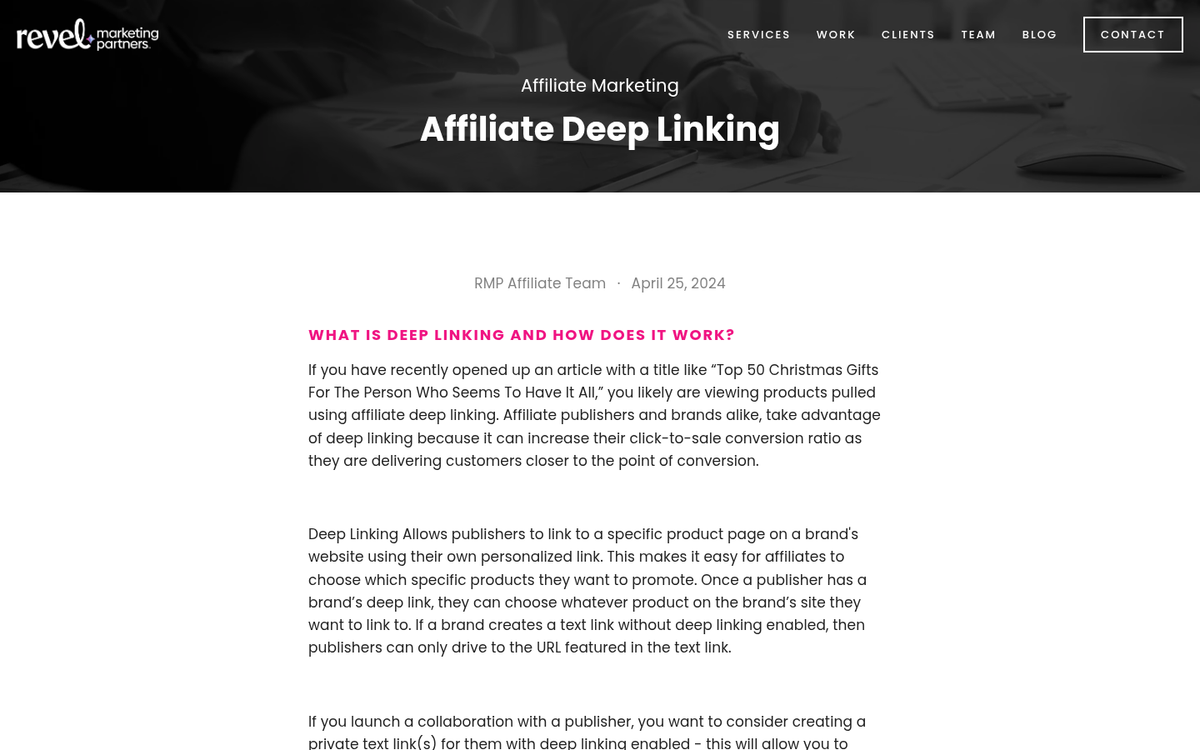
Some of the highest converting affiliate links come from deep links. A deep link is a link embedded organically within your content, rather than sitting in a sidebar ad or a dedicated affiliate page. They convert better because they read as a genuine recommendation rather than obvious advertising.
This works especially well if you have a personal brand or niche authority site. If you're recommending a product because you've genuinely used it, tested it, and believe in it, the affiliate link you include carries real weight.
The goal is to build trust in your opinions above all else. You're not there to advertise - you're just including the affiliate link so readers have a convenient way to find the product, and so you can earn something if they follow through. This is strengthened further when you also recommend products that don't earn you anything. It signals to your audience that you're recommending what's actually best, not just what pays the most.
When your readers trust you, they treat your recommendations as legitimate advice. They're acting on your opinion, not responding to an ad - even if an affiliate commission is involved.
The downside is that this approach requires you to have real, hands-on experience with the products you're recommending. You can't fake it convincingly for long, and in 2026, audiences are increasingly good at sniffing out hollow reviews written purely for commissions. If you're just starting out, learning how to build an affiliate site with little experience can help you develop that authenticity from the ground up. Authenticity is your competitive advantage here.
2. Run Affiliate Display Banners
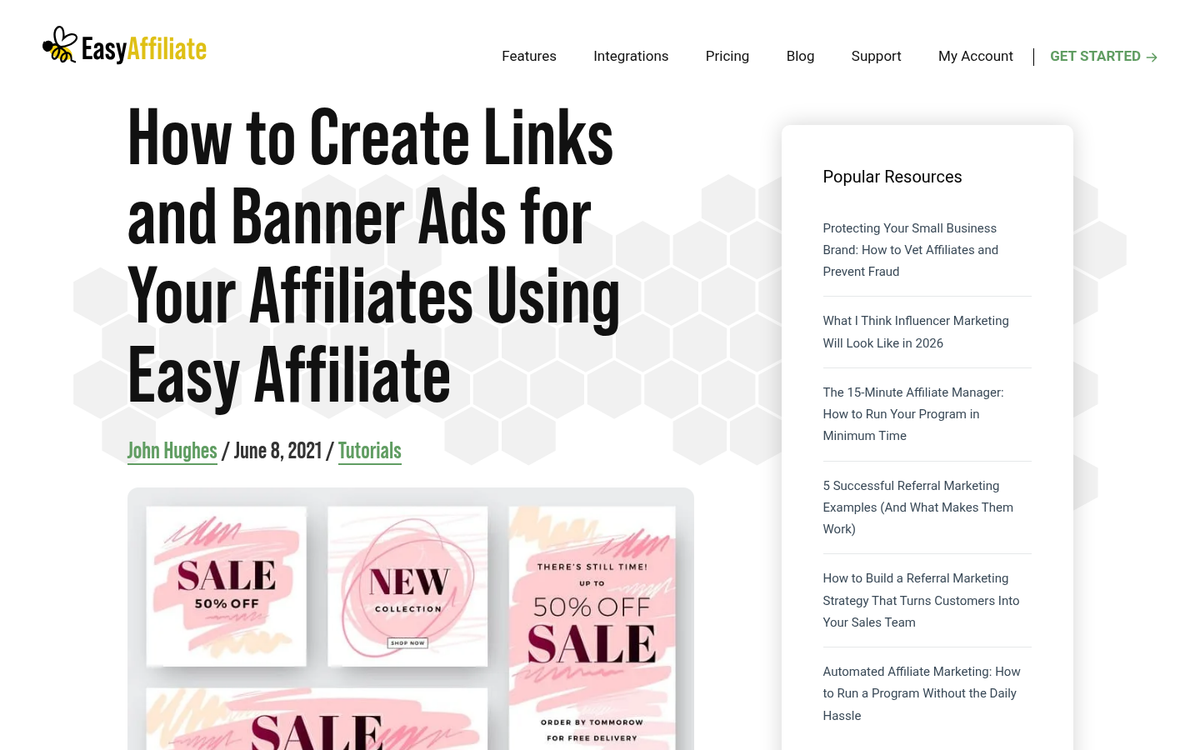
This approach turns your affiliate links into something closer to traditional display advertising. Rather than weaving links into your editorial content, you run banner ads in your sidebar, header, or between content sections. Users understand these are ads, which actually removes some of the disclosure awkwardness of in-content affiliate links.
This tends to work best with broadly appealing, visually compelling products. If you run a photography blog, a banner ad for a lens cleaning kit or camera bag is going to resonate. An ad for an $8,000 camera body, probably not.
The honest downside here is that display advertising was already struggling when this post was first written, and the situation has only gotten harder. Ad blocker usage continues to climb, banner blindness is real, and click-through rates on display ads are generally dismal. A well-placed in-content affiliate link will almost always outperform a banner in the same spot.
That said, banners still have a place - particularly for brand-relevant products your audience is already primed to want. Think of them as a supplementary revenue stream rather than your primary affiliate strategy. If your content is already doing the heavy lifting, a contextual banner can capture the readers who are ready to buy without needing a review to push them over the edge.
3. Make Expired Domain Microsites
This method works even if you don't have an existing site. The idea is straightforward: find a high-value affiliate offer in a niche you can reasonably compete in, build a focused content site around it, and drive traffic to it as efficiently as possible.
Where the expired domain angle comes in is SEO acceleration. Expired domains often carry residual backlink profiles and domain authority, which can give a new site a meaningful head start in search rankings. You acquire a relevant expired domain, launch your microsite on it, and let that existing authority do some of the early ranking work for you.
A word of caution though: Google has gotten significantly better at identifying and discounting manipulative expired domain schemes over the years. Using an expired domain with genuinely relevant historical content and a clean backlink profile is a reasonable tactic. Buying a spam-laden domain and slapping thin affiliate content on it is increasingly likely to result in a manual penalty or simply never ranking at all. Tread carefully and prioritize quality.
Microsites can be highly effective, but tend to have a natural lifespan. They can gain traction quickly, but without ongoing investment they tend to decline after several months to a year or two. At some point, the cost of maintaining the site exceeds what it earns, and you cycle to a new domain and offer.
If you go the microsite route seriously, expect to run a portfolio of a dozen or so sites at various stages of their lifecycle simultaneously. The volume keeps your overall income stable while individual sites rise and fall, and early earners fund the launch of new projects.
4. Sell Recurring Commission Subscriptions

This strategy involves finding and promoting a specific type of offer: recurring or subscription-based commissions. Rather than earning a one-time payment for a single sale, you earn a commission every month a referred customer stays subscribed.
SaaS tools, membership communities, subscription boxes, online courses with monthly billing, and similar products all fit this model. ShareASale has a growing number of vendors in this space, particularly in software and digital services - worth filtering for specifically when you're browsing offers. For more options beyond ShareASale, there are 15 affiliate network alternatives worth exploring.
Say you find an offer for a project management tool at $30 a month, with a 20% recurring commission. That's $6 per month per referred customer. One customer isn't exciting. But refer 500 customers who average eight months each, and you're looking at $24,000 from a single offer over time. Compounding recurring revenue is one of the most powerful income models in affiliate marketing.
The key is finding offers where the product has genuine long-term value so customers actually stay subscribed, rather than churning after a month. The best recurring affiliate products are ones people genuinely rely on - tools they use daily, services they'd miss if they cancelled. Prioritize retention-friendly products and your recurring commissions become increasingly reliable over time. If you're struggling to get traction, it's worth reviewing the most common reasons affiliates aren't earning to make sure your approach is on track.
5. Focus on High Value Pay Per Lead Offers
This strategy is about building a single focused, high-intent site around a premium pay-per-lead offer. These are offers where you earn simply by delivering a qualified lead - someone who fills out a contact form or requests more information - regardless of whether a sale ultimately happens.
The categories that dominate this space are financial services, insurance, legal services, real estate, and high-end B2B products. The payouts per lead can be substantial - sometimes $50, $100, or more per qualified submission - precisely because the eventual sale value is so high.

Your job isn't to close the deal. It's to reach the right audience, educate them enough that they're genuinely interested, and get them to take the first step of raising their hand. The sales team on the other end handles everything from there, and your commission is locked in the moment the form is submitted.
The challenge is targeting. These aren't impulse purchase audiences - you need to reach people who are actively in the market for whatever you're promoting. Paid traffic, SEO targeting high-intent keywords, and content that addresses real buyer questions all play a role. Done well, a single high-converting pay-per-lead site can generate serious income from relatively modest traffic volumes.
6. Create an Industry Comparison Site
This is one of the most durable long-term affiliate strategies available, and it's especially well-suited to ShareASale given the breadth of brand partners on the platform. Unlike microsites, a well-built comparison site can compound in value for years.
The idea is to pick a niche and own it comprehensively through reviews, comparisons, and buying guides. Say you choose standing desks as your niche. You find every affiliate offer you can - through ShareASale, Amazon Associates, direct brand programs - and you systematically review every product worth reviewing. You write honest pros and cons, you compare options across price ranges, and you build genuine authority in the space.
Every review includes an up-to-date affiliate link so that when someone reads your review and decides to buy, you earn the commission. Keeping those links current is important - dead links and outdated offers are one of the fastest ways to kill an otherwise solid affiliate site.
The hard truth is that in 2026, the comparison site space is more competitive than ever. Broad niches are saturated, and thin review sites that clearly haven't touched the products they're reviewing get filtered out quickly - by both Google and by increasingly skeptical readers. To succeed with this model today, you need genuine expertise, real product experience where possible, and a level of depth that casual competitors won't bother matching.
The payoff for doing it right, though, is an affiliate asset that can generate consistent income for years with relatively modest ongoing maintenance. It's one of the few affiliate formats that truly gets better with age when done properly.



1 response
Thoughtful replies only - we moderate for spam, AI slop, and off-topic rants.
thanks Im finding a ton good articles on your site to read.