When you're researching paid advertising, be it on Google, Meta, TikTok, or a third-party network, you'll come across a lot of different guides. Some will be aimed at amateurs, some will be focused on pro-level tips, and many will cover everything in between.
Key Takeaways
- Dedicated landing pages convert at 9.7% on average, versus just 2.35% for homepages, yet 44% of B2B companies still use homepages.
- Too many choices on a homepage causes decision paralysis, leading users to take no action rather than convert.
- Ad relevance is critical - the destination page must match the ad's intent to maximize conversions and maintain Quality Score.
- Single-product businesses can optimize their homepage to function as a landing page, as Dropbox demonstrates effectively.
- Whether homepage or landing page, what matters is a focused message, clear call-to-action, and one obvious next step.
Advice in General
Most of the time, the advice in these guides is wholly correct. You generally want to avoid sending traffic to your home page instead of to a landing page. However, one thing these guides rarely discuss is exactly why. Or, rather, why it can sometimes be okay to send traffic to your home page.
The fact is, it's not about your home page at all; it's about the style of content on the typical webpage versus the content on a landing page.
It's all about clarity of purpose. It's all about intent, and the goal of your ads. You have to give a lot of careful thought to what the experience is when a user lands on your page. What do you want them to do, and what options are you giving them?
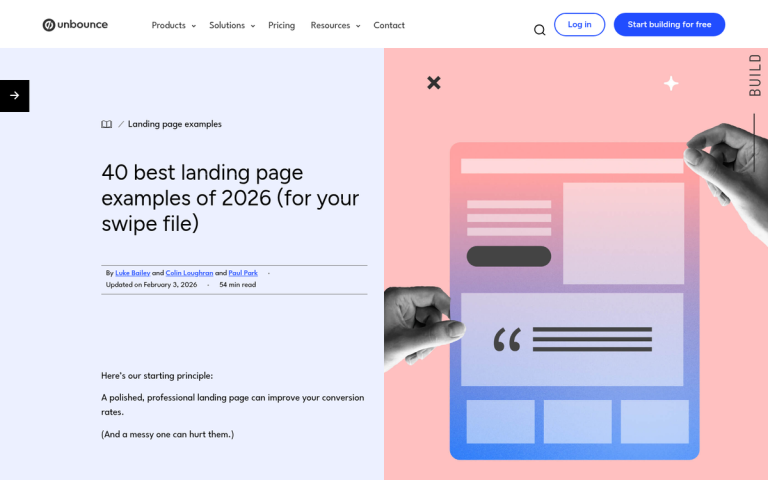
One common piece of advice throughout all of these tips is to never drive traffic to your home page. Without fail, nearly every paid advertising guide will tell you to drive traffic to specific landing pages - and the data backs this up hard. According to WordStream, the average dedicated landing page converts at 9.7%, while homepages typically convert at just 2.35%. That's not a small gap. And yet, remarkably, 44% of B2B companies still send their paid ad traffic to a generic home page, and a full 77% of landing pages in active campaigns are actually home pages rather than dedicated, campaign-specific pages.
So why does this keep happening? And is the advice always right? Not exactly. Converting paid website traffic is rarely as simple as swapping out a destination URL.
What You Want

When you're running ads, you have a purpose in mind for them. That purpose might be to get users to read a specific piece of content, in which case that content is the landing page. The purpose might be to grow your social following, in which case the landing page is your social profile itself. The purpose might be to get users to purchase your product, in which case the landing page should be a focused page aimed at converting visitors into customers.
Every ad has a purpose, and thus the page the user lands on needs to be aimed at serving that purpose.
Now look at a home page for a site like Forbes. You're presented with what is essentially a digital newspaper. You have headlines, navigation links pointing at various sections, and dozens of pieces of content to choose from.
This works for Forbes because they want to give any reader something worth clicking. However, there are dozens - possibly over 100 - different links just from the home page alone, when you count broad navigation categories, individual headlines, author bios, footer links, and everything in between.
When a user clicks on an ad and lands on that page, what do they do? You have no way of knowing. They might click one of the top promoted pieces of content. They might scroll looking for something interesting. They might click through to a content category they prefer.
It's not a carefully curated user experience. It gives users a lot of choice - but choice isn't always a good thing. There is, after all, the concept of decision paralysis.
Decision Paralysis
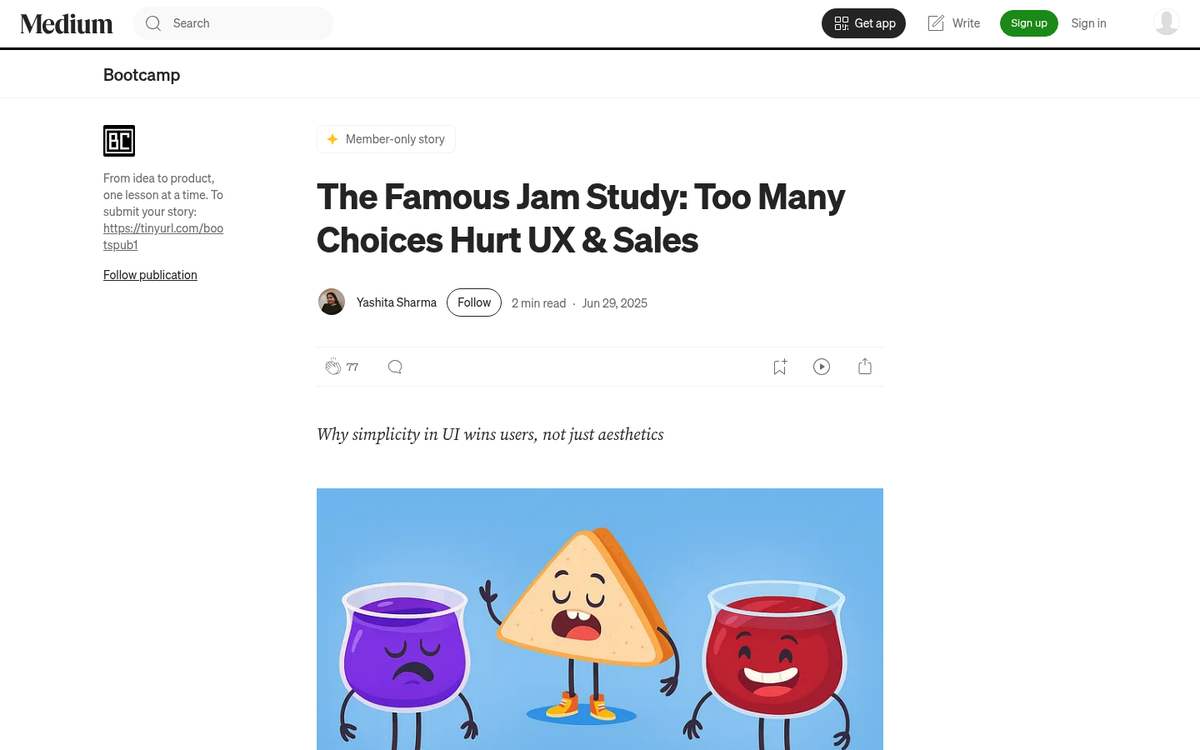
What is decision paralysis? Also known as analysis paralysis, it's a paradox where giving a person more choices actually diminishes the chances of them making any choice at all - let alone a satisfying one.
If I give you a slice of toast and offer you the choice between butter and strawberry jam, you have a clear decision. If you think outside the box, you might realize you have four options: nothing, butter, jam, or both. Simple enough.
Now say I add three different jams - strawberry, apple, and apricot. Suddenly you have more combinations to consider. Maybe you like both strawberry and apple, but it's hard to pick between them.
Now add a time limit. You have one minute to choose. Which do you pick? With so many options present, you might make a snap decision - say, apple jam - and then feel vaguely dissatisfied afterward. What if you'd gone strawberry? Maybe the apple wasn't as good as you expected.
Now imagine instead of four choices, I present you with 20 different jams. A full jelly bar. Strawberry, apple, apricot, orange, mixed berry, fig, and on and on. The time limit still applies. What do you pick?
The more options I present, the less likely you are to make a confident decision in the available time. Many people, faced with a situation like this, simply opt for nothing - they skip the topping entirely, or decide they didn't want toast after all.
Now convert this to a website. The user arrives and is faced with a palette of choices like the Forbes homepage. They don't have a formal time limit, but the attention span of the average web user is notoriously short. When presented with too many choices, many users will simply close the tab rather than make a decision at all. This is a big reason why dedicated landing pages consistently outperform home pages - in one Instapage A/B test, a dedicated landing page achieved nearly 3x the conversion rate of the homepage version, with total conversions more than doubling.
The Home Page Problem
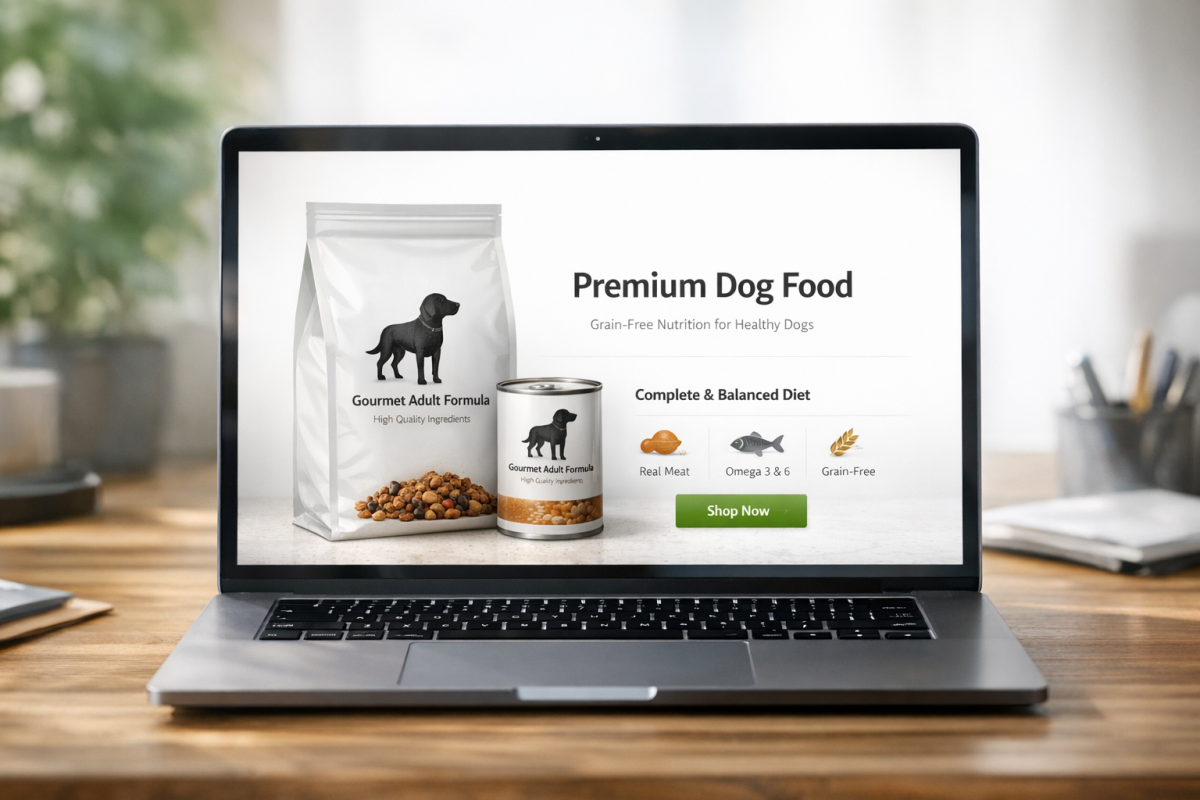
The problem with using your home page as a landing page is the same as the extreme toast scenario. You give people far too many options, and many users end up picking nothing at all. Even those who do click something have a very low chance of choosing the action that matched your original goal.
The crucial thought you need to have comes back down to the key to good advertising: relevance.
Imagine a scenario where you're running a large general pet store like Petco. You run ads for a specific brand of dog food - say, Merrick. A user clicks on that ad. Which of these pages is best for them to land on?
- The Petco home page.
- The Petco category page for dog products.
- The Petco category page for dry dog foods.
- The Petco product listing for Merrick brand foods.
- The Petco product page for one specific Merrick dog food.
Number 1 is obviously not a good choice. The user might have dog food in mind, but they might also get distracted by a cat toy or a dog harness sale and forget why they came at all.
Number 2 is a bit better - it points users toward dog products - but still leaves a lot of other categories to explore, reducing the chances they'll purchase the specific food you advertised.
Number 3 is better still, because it brings users directly to dog food options. You might not sell Merrick in volume from this page alone, but most people landing here are in the mindset to buy dog food.
Number 4 is arguably the best. The user might not want one specific Merrick product, but with all Merrick options on display, they're fairly likely to pick one.
Number 5 might be too narrow. If the price is off, or the formula isn't what they need, or the bag size is wrong, you've sent them to a dead end with nowhere obvious to go next.
This is all for a general storefront, of course. A true dedicated landing page goes even further - stripped of distractions, laser-focused on one conversion goal. Research from KlientBoost found that customized landing pages for B2B clients achieved a 68% increase in conversions compared to generic pages. And HubSpot data shows that companies with 10-15 dedicated landing pages generate 55% more leads than those with fewer than 10 - a strong argument for learning how to create dedicated landing and squeeze pages of your own. The evidence is hard to argue with.
Optimized Home Pages
There's one scenario where linking people to a home page instead of a specific landing page can actually work well. Or, rather, where a home page can be as optimized as a landing page for one specific purpose.
Imagine you're a company with a single core product or service to sell. You don't need category pages. You might have a pricing page, but you give everyone the same free trial to start anyway. You have a blog, but your website is built around your business, not your content.
In that kind of situation, you can optimize your home page to function as a landing page. You present focused information about your product with a clear call-to-action, and you've got a solid page for any visitor who arrives. Dropbox is a classic example of this done well. And when they need to promote something more specific - like Dropbox Business - they have a dedicated page for that too.
When people tell you to never link to your home page, they're assuming your home page looks like a general storefront or a content hub - like Forbes or Petco. When you're a smaller, focused business built around one core offering, your home page can absolutely serve as a landing page, provided it's built and optimized with that goal in mind.
One thing worth noting: page speed matters here too. Whether it's your home page or a dedicated landing page, a delay of just one second in load time can reduce conversions by up to 7%. A beautifully focused landing page that loads slowly will still underperform. Keep that in mind as you optimize.
Relevance is Crucial
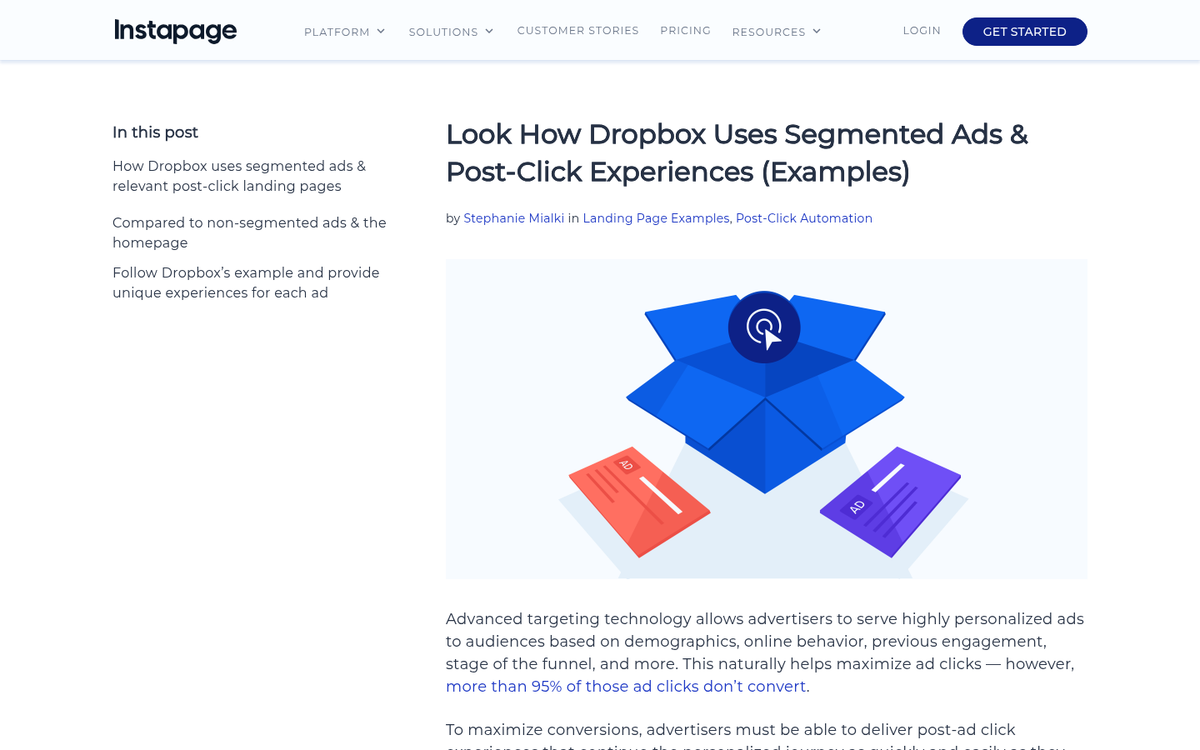
Even with a home page that functions as a landing page, you still need to maintain relevance between your ads and where users land. If your ads are relevant and your destination page matches that intent, you'll maintain a stronger Quality Score on platforms like Google Ads and Meta - which directly affects your cost per click and your ad reach.
It all comes back to clarity of purpose. If you have one product and you want to sell it, it makes sense to build your site and your ads around that one product. If you have multiple offerings, you should use individual, purpose-built landing pages for each campaign goal.
Even a focused business like Dropbox uses multiple landing pages depending on the campaign. Ads aimed at growing their social following point to their social profiles, not their home page. Ads for Dropbox Business point to a business-specific landing page. Ads for a specific feature point to a page explaining that feature.
As long as your landing page is focused on the single conversion action you want users to take, it doesn't matter whether it's a standalone page or your home page. What matters is that the flow is clear, the message matches the ad, and the page gives users exactly one obvious thing to do next. Nail relevance and focus, and the conversions will follow.