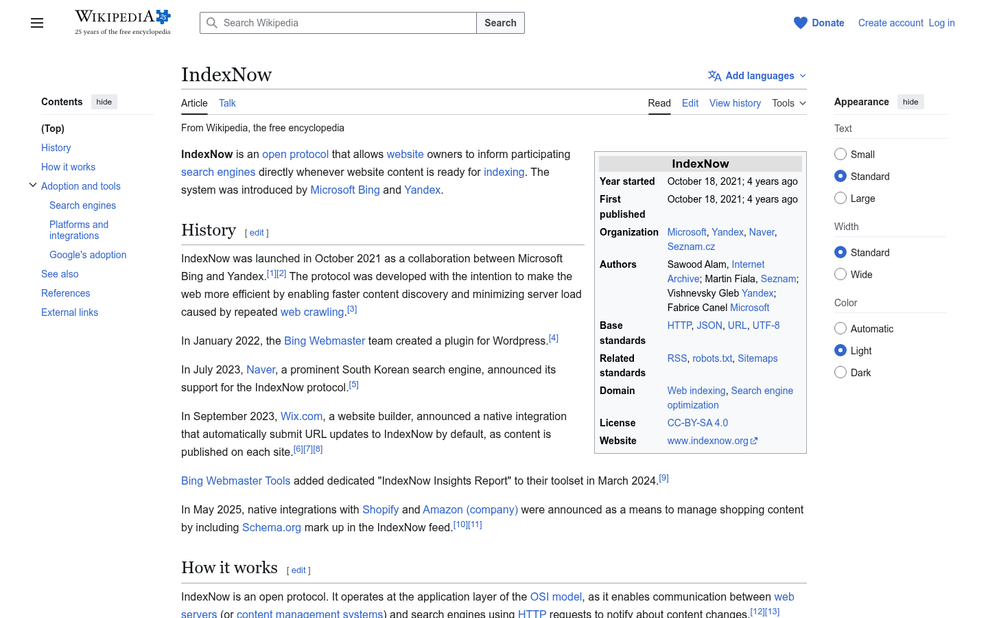
What most people do not realize is that a quiet but significant shift has been happening underneath the surface of how content gets discovered. IndexNow, an open protocol that lets websites instantly notify search engines and AI-driven crawlers the second content changes or goes live, has moved well past its experimental phase. By early 2026, more than 80 million websites have adopted it and URL submissions have surpassed 5 billion - numbers that signal this is no longer a niche technical tool but a standard part of how the modern web communicates with discovery systems.
The protocol itself is simple: instead of waiting for a crawler to eventually wander back to your site on its own schedule, IndexNow lets you send a direct signal that says something here has changed, come look. That single change in how notification works has actual downstream effects on how quickly your content enters the pipelines that feed AI search tools, content aggregators, and real-time knowledge systems.
This article breaks down how IndexNow fits into the latest discovery ecosystem and why its role has grown as AI-integrated search has become the default experience for millions of users, and what publishers at every scale can do to make sure their content is not sitting in a queue while everyone else's is already being read, cited, and surfaced.
Key Takeaways
- IndexNow lets websites instantly notify search engines when content changes, replacing passive crawling with direct real-time signals.
- Over 80 million websites have adopted IndexNow by 2026, with URL submissions surpassing 5 billion, making it a web standard.
- Content indexed via IndexNow reaches AI-powered search results in minutes versus hours or days through standard crawling.
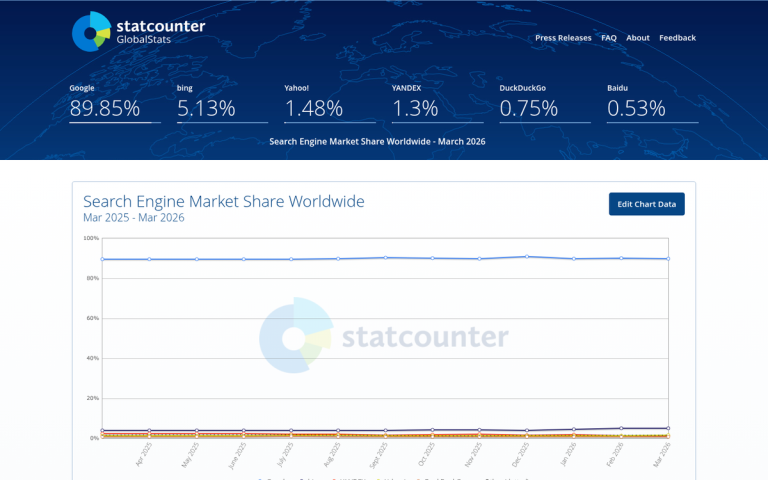
- Google hasn't adopted IndexNow, limiting its direct benefit for publishers whose traffic relies primarily on Google organic search.
- WordPress users can enable IndexNow easily through Yoast SEO, Rank Math, or Microsoft's dedicated plugin without coding.
What IndexNow Actually Does When You Hit Publish
Traditional search engine crawling is a waiting game. A crawler visits your site on its own schedule, finds new or updated pages, and eventually passes that information back to the index. You have no say in when that happens.
IndexNow flips that. Instead of waiting for a crawler to find your content, your server sends a direct notification to participating search engines the second something changes - it works like a text message instead of a letter dropped in a mailbox.
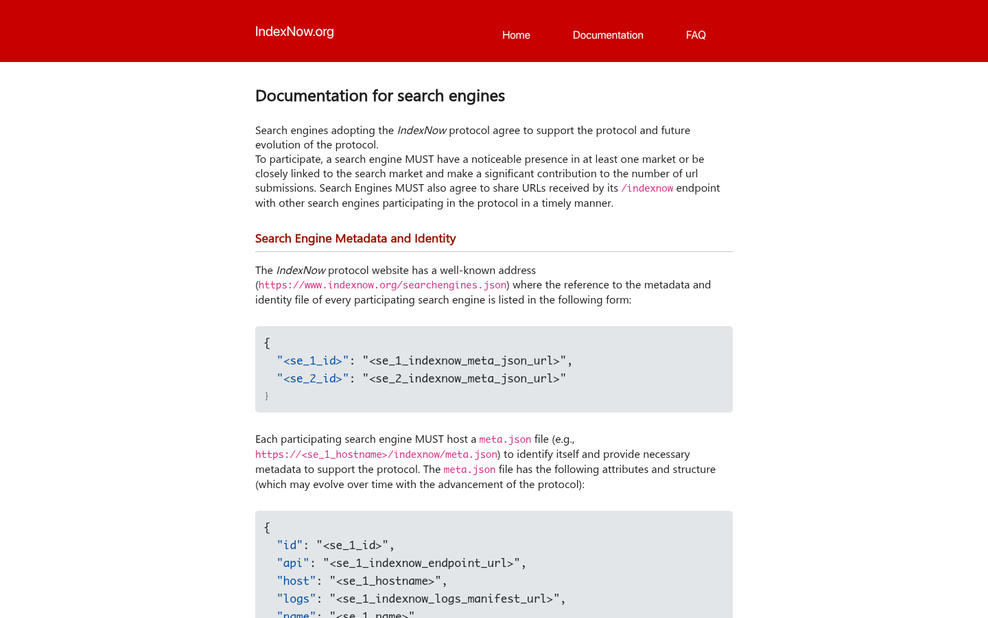
The protocol works through an easy API call. When you publish or update a URL, your CMS or server sends a ping to an IndexNow endpoint - Bing and Yandex are the main participants. That ping includes the URL you want crawled. The search engine receives the signal and can add your URL to its crawl queue with a higher priority than pages it discovers through its own scheduled crawling.
Before any of that can happen, you'll have to authenticate your site. You generate an API key and place a small text file containing that key in the root directory of your domain - this tells the search engine that the ping is coming from a legitimate site owner and not some external source trying to submit URLs on your behalf.
Authentication is a one-time setup, and most modern CMS plugins manage it automatically when you drop in your key.
You can also submit URLs in batches instead of one at a time. The batch limit sits at 10,000 URLs per submission, which makes IndexNow helpful for large sites that push out content changes at once. A single API call can notify the search engine about an entire category refresh or a site-wide template update without thousands of separate pings.
What a submission looks like under the hood is straightforward. Your server sends a POST request with a JSON body that lists the host, the API key, and the URLs to submit. The endpoint returns a status code to confirm receipt. There is no complex handshake or long approval process involved.
The end result is that your content enters the discovery pipeline much faster than it would through passive crawling alone.
How AI-Powered Search Engines Use IndexNow Signals to Prioritize Content
When Bing receives an IndexNow ping, it treats that signal as a reason to fetch your content faster than it would through standard crawling - this matters because Bing's AI-powered search features, like the ones that generate direct answers instead of just links, pull from what has already been indexed.
The data supports this. In February 2026, 22% of clicked Bing URLs came from IndexNow submissions; it's a actual portion of traffic tied directly to the protocol, and it tells you that the pipeline from ping to indexed page to visible result is working at scale.
Yandex operates in the same way. Both engines have built their indexing infrastructure around the idea that real-time signals produce better search results for users who want fresh, relevant content - and their AI answer systems depend on that freshness in a way that older ranking models didn't.
Content that sits un-crawled for 48 hours doesn't get included in AI-generated answers. A user asking a question that your post answers well might get a response that doesn't reference you at all - not because your content is worse, but because it wasn't in the system yet. This is related to why your blog content still isn't ranking even when you've put in the work.
This is where the difference between traditional crawling and IndexNow can become visible in practice. A crawler might get to your page eventually, but AI-driven results need content to be indexed before the query happens - not after.
| Indexing Method | Average Time to Index | AI Result Eligibility |
|---|---|---|
| Standard crawl (Bing) | Hours to days | Delayed |
| IndexNow submission | Minutes to hours | Near-immediate |
| Standard crawl (Yandex) | Hours to days | Delayed |
AI search tools are only as current as their index allows them to be. The engines that support IndexNow have built a fast lane for publishers who use it, and the content in that lane is what their AI features draw from first. Getting your new backlinks indexed as fast as possible follows the same logic - speed into the index translates directly into visibility.
The Google Gap and What It Means for Your Publishing Strategy
Here is the awkward part that most IndexNow guides skip past: Google has not adopted the protocol. Despite participating in early tests back in 2021, Google has stayed on the sidelines while Bing, Yandex, and their connected AI tools have moved forward with it.
That matters quite a bit if your traffic comes mostly from Google. For publishers in that position, the speed benefits of IndexNow apply to a slice of the search community instead of the whole thing. You are basically optimizing for faster discovery on platforms that might not be your primary audience yet.
Google has its own crawl infrastructure, and it has been faster on its own terms. Systems like Google's crawl prioritization and the Search Console URL inspection tool give publishers some ability to push pages forward manually. So the speed gap is narrowing from Google's side too, just through a different and closed-off path.
The honest answer to whether you should invest time in a protocol your biggest traffic source ignores depends on where your readers actually come from. Understanding how much to invest in each channel is worth thinking through carefully.
| Traffic Source | IndexNow Benefit | Worth Prioritizing? |
|---|---|---|
| Mostly Google organic | Indirect at best | Low priority for now |
| Mixed Google and Bing | Moderate and growing | Yes, reasonable investment |
| Bing, Copilot, or AI-first tools | Direct and measurable | High priority |
A lot of publishers assume Google dominance means everything else is a rounding error. But Bing-powered tools like Microsoft Copilot have grown as research and discovery surfaces, and that trend is continuing into 2026. Your analytics might show something different than you expect if you look into referral traffic by source and see which visitors are actually converting.
Google's position on IndexNow is not permanent policy, it's the latest stance. Publishers who have already set up the protocol will be ready if that stance changes, without having to scramble later. It is also worth asking whether your business could survive without Google traffic entirely if the landscape shifts further.
Setting Up IndexNow Through WordPress Plugins Without the Technical Headache
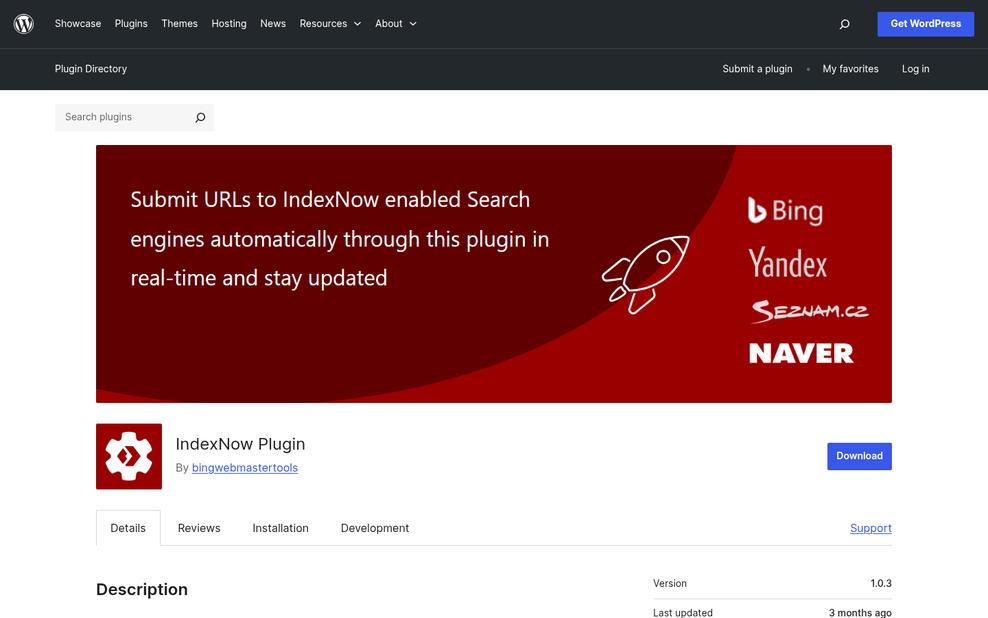
If the word "protocol" makes you want to close the tab, stay with this for a bit. The WordPress setup process is straightforward, and by July 2025, over 10 million active installations were already running IndexNow through plugins like Yoast SEO, Rank Math, and Microsoft's own official IndexNow plugin. You are not doing anything experimental here.
Yoast SEO and Rank Math have IndexNow built into their settings panels. You don't need to touch any code or generate API keys manually - the plugin handles the key creation and verification file placement. Just look for "IndexNow" inside your plugin's settings and flip the toggle to enable it.

What to Check After You Enable It
Once it's active, the plugin will automatically ping IndexNow-connected search engines whenever you publish or update a post. To confirm this is working, Rank Math shows a submission log inside its dashboard. Yoast users can install a companion tool or check their server logs, though Yoast has been expanding its visibility features over time.
One mistake worth learning about: don't submit a URL before the page is ready. If you publish a draft accidentally or push a post live before the final content is in place, IndexNow will flag that URL to search engines immediately. A thin or incomplete page indexed faster is worse than a short delay, so use WordPress's scheduling feature to control when a post goes live.
A Quick Look at Your Plugin Options
| Plugin | IndexNow Support | Where to Find the Setting |
|---|---|---|
| Yoast SEO | Built-in | Yoast SEO → General → Features |
| Rank Math | Built-in with submission log | Rank Math → General Settings → Others |
| Microsoft IndexNow Plugin | Dedicated plugin | Settings → IndexNow after installation |
Any of these three options will get you up and running without needing a developer. The Microsoft plugin is a lighter install if you already have an SEO plugin that handles other tasks separately. Pick the one that fits your existing setup and move on - there's no actual performance difference between them for most publishers.
Your Content Deserves to Be Found Before It Goes Stale
Google's choice to stay outside the IndexNow consortium raises fair questions. But it doesn't hollow out the protocol's value. Bing, Yandex, and a growing list of participating engines feed data into AI pipelines and knowledge systems that change discovery well past their own search results pages. Dismissing IndexNow because it doesn't move the needle directly with Google is a narrower view than the 2026 content community warrants.
The most helpful place to start is your latest SEO plugin settings - look for an IndexNow toggle, as most plugins have added native support and enabling it takes minutes. For bigger sites with high publication volume, it's worth auditing your batch submission configuration to make sure URLs aren't sitting in a queue longer than necessary - one of the legitimately low-effort optimizations still available to publishers right now, and the compounding benefit of fresher indexing shows up faster than expected.