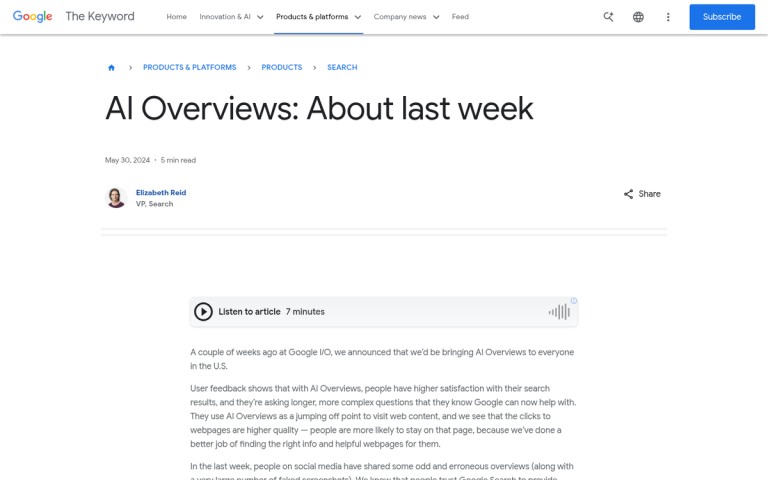
AI writing tools have become a genuine part of how a lot of content gets made, and for good reason. They're fast, they're capable, and they can turn a rough brief into a readable draft in minutes. But they present everything - accurate facts, outdated figures, and fabricated sources - with the same confident, authoritative tone. There's no asterisk. No hesitation. Just a well-structured sentence that may or may not align with reality.
This isn't a fringe issue. A organized review of 30 studies found that humans can only detect AI-generated content with between 28% and 67% accuracy; it's a wide range, and even the upper end means a careful, experienced editor will still miss portions of AI-generated errors. The tools are convincing enough to fool those who are actively looking for problems - which means passive reading won't cut it.
The good news is that fact-checking AI content isn't distrust or paranoia - it's the same quality control that editors have always applied to any draft, regardless of where it came from. What's different now is that AI introduces predictable failure points - and knowing what those are, you can build a review process that catches them efficiently; it's what this guide covers.
Key Takeaways
- AI tools present accurate facts, outdated figures, and fabricated sources with identical confident tone, making errors hard to detect.
- Statistics, named studies, and attributed quotes carry the highest risk of being entirely fabricated by AI models.
- Always trace claims to primary sources - finding the same stat repeated across multiple blogs does not count as verification.
- AI detection tools identify writing patterns, not factual accuracy; they signal sections worth reviewing, not a verdict on truthfulness.
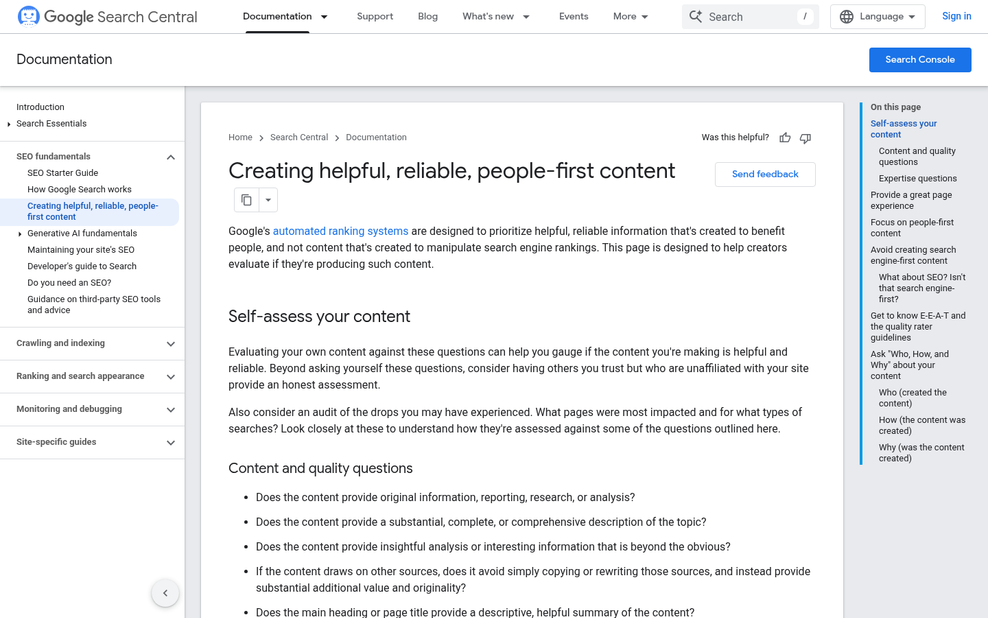
- Publishing inaccurate AI content undermines Google's E-E-A-T signals and erodes reader trust that takes a long time to rebuild.
Why AI Blog Content Fails the Accuracy Test So Often
AI writing tools are not search engines and they are not databases. They are prediction engines. Every sentence an AI produces is built by picking the most statistically plausible next word based on patterns in its training data - not by pulling a verified fact from a reliable source.
This distinction matters quite a bit for writers. When an AI cites a study or drops in a statistic, it's not retrieving that information from somewhere - it's generating text that looks like what a citation or statistic would look like. The number or source name could be entirely fabricated. But it will read as though it belongs there.
This is what scientists call a hallucination - and it's a built-in feature of how these models work, not a bug that will get patched soon. The model has no mechanism to check if a claim is true before it writes it.
There is also a confidence problem. AI does not flag its own uncertainty the way a careful human writer might - it will state a made-up figure with the same tone as a well-established fact. Nothing in the output tells you which parts to trust and which parts to verify. That is entirely on you.
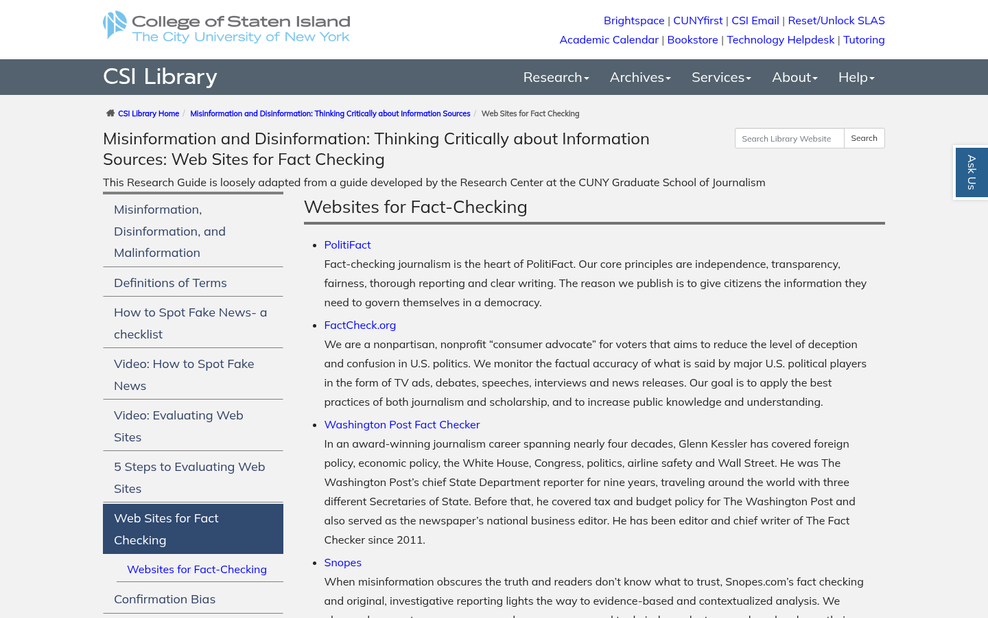
Understanding this helps you approach AI content with the right mindset. You are not just proofreading for grammar or flow. You are auditing claims written by a system that has no concept of truth - only plausibility. Some of what it produces will be accurate, because its training data contained accurate information. But some of it will be wrong in ways that are hard to detect without checking. This problem is also why ChatGPT keeps getting company information wrong - the model generates plausible-sounding details rather than retrieving verified ones.
That is the root of the problem. AI text was built to be convincing - not correct. The more you internalize that distinction, the easier it can become to know what to look for when you sit down to fact-check a draft. Tools like spell and grammar checkers can catch surface-level errors, but they won't save you from a confidently stated falsehood.
The Types of Claims Most Likely to Be Wrong
Not every sentence in an AI-generated draft carries the same level of danger. Some claims are easy to write and hard to verify - and those are the ones that tend to be wrong.
Statistics and percentages are at the top of the list. AI tools will produce a realistic-looking number with total confidence. But that number may come from a misremembered source, a misquoted study, or nothing at all. The same goes for named studies and reports - AI can generate a plausible-sounding title, author name, and year, and none of it may be real.
Quotes attributed to real people are another high-danger area. AI can put words in someone's mouth that they never actually said, and publishing a fake quote from a person is a credibility problem. Always trace a quote back to the original interview, speech, or publication before you use it.
Historical dates and vague claims like "research shows" carry a medium level of danger. But they still need attention. "Research shows" is a phrase worth treating with suspicion every time you see it. Ask yourself: which research, published when, and by whom?
The table below gives you a quick reference for the most common claim types and how to handle each one.
| Claim Type | Risk Level | How to Verify |
|---|---|---|
| Statistics and percentages | High | Trace to original source, not a secondary article |
| Named studies or reports | High | Search the exact title in Google Scholar or PubMed |
| Quotes from real people | High | Find the original interview, speech, or publication |
| Historical dates or events | Medium | Cross-check with at least two credible sources |
| General "research shows" claims | Medium | Ask: which research, when, and by whom? |
A Step-by-Step Process for Cross-Checking AI Claims
A repeatable process makes this much less tedious. Instead of second-guessing every sentence, you work through the content in a focused way and move on.

- Read the full draft first without stopping to check anything. Get a feel for the overall argument and flag anything that feels off - a number that seems too neat, a claim that's stated too confidently, a named study with no context around it.
- Go back and isolate every checkable claim. Pull out statistics, named sources, dates, and cause-and-effect statements. These are the things that need a source, not the general commentary around them.
- Trace each claim to its original source. This is the most important step. Finding the same stat on five different blogs does not count as verification - those blogs may all be copying each other. Go to the primary source: the actual study, the government database, the official report.
- Use at least two independent sources to confirm. If you can only find one place that says something, that's a signal to either cut the claim or dig further before you publish.
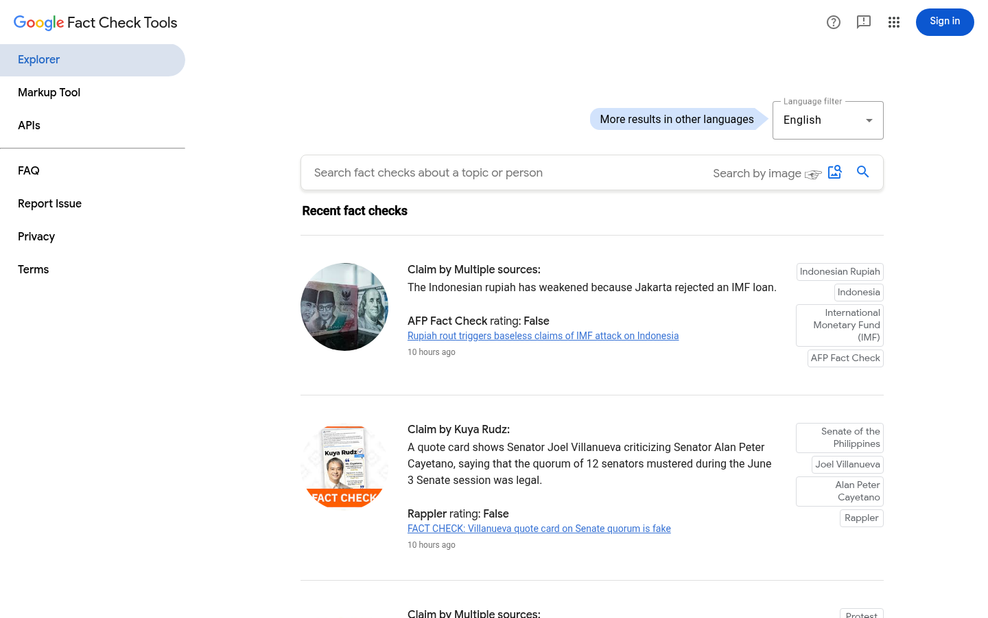
- For disputed or viral-style claims, use a fact-checking tool. Google Fact Check Explorer and Snopes are both useful here. They won't cover every claim in a niche blog post, but they're worth a quick check when something feels like it may have traveled through the internet untouched.
- Make a note of every source you verified. Keep a simple list in a doc or spreadsheet. This makes it easy to add citations and protects you if anyone questions the content later.
The whole process gets faster once it becomes a habit. A focused review of a 1,000-word post might take 20 to 30 minutes the first few times and closer to 10 once you know what to look for.
Where AI Detection Tools Help - and Where They Don't
AI detection tools can be a helpful part of your review process. But it pays to know what they're doing. They look for statistical patterns in text - things like word predictability and sentence structure - instead of checking if the facts are true; it's an actual distinction.
The accuracy numbers are worth learning about. Current detectors sit at around 88% accuracy overall, which sounds good until you see the other side of it. Roughly 14% of human-written content gets flagged as AI-generated; it's a false positive rate, and it matters if you're using these tools to make editorial calls.
AI-written sentences can also slip through undetected, and that's especially the case when the text has been lightly edited or rephrased. So these tools won't give you a clean pass or fail - they give you a probability, and that probability has actual room for error. Human editing in AI content pipelines adds its own layer of complexity to this process.
Where they legitimately help is in flagging sections of a post that warrant a look. If a chunk of your content scores high on AI likelihood, that's a prompt to go back and verify the claims in that section manually. Think of detection output as a signal to investigate - not a verdict.
They're also helpful for catching content that slipped through your production process without a review - especially if multiple people contribute to a blog or you work with freelancers. A quick scan can surface content that needs more attention before it goes live. Tools like free website heatmap tools can complement this by showing how readers actually engage with flagged sections.
What they can't do is tell you if a statistic is accurate, if a source is credible, or if a claim is outdated. That work still falls to you. No detection tool will catch a confidently stated figure that happens to be wrong - it takes a human with a browser and a willingness to spend a few extra minutes on verification. This is especially relevant when you consider the biggest tells that content was written with Claude and similar models.
Protecting Your Google Rankings and Reader Trust
Publishing inaccurate content has consequences that go well past a single bad post. Google's E-E-A-T framework - which stands for Experience, Expertise, Authority and Trust - is one of the ways Google evaluates if your content deserves to rank. When you publish fabricated statistics or cite studies that don't exist, you're actively working against every one of the four pillars.
Google isn't just looking at keywords - it's trying to work out if your site is a reliable source of information, and a pattern of inaccurate content can drag your rankings down over time.
The human side of this matters just as much. A reader who Googles a study you referenced and finds nothing will not give you the benefit of the doubt. That seed of doubt tends to stick, and it changes how they see everything else you've published.
Think about what that means for a brand. One fabricated citation can quietly undo months of work to build an audience - it's not dramatic - it's just a reader closing the tab and not coming back.
The good news is that fact-checking puts you on the right side of this. Content that backs up claims with data from credible sources gives readers something they can verify and trust; it's what E-E-A-T rewards, and it's also just the right way to treat your audience.
Writers who take the time to check their AI-generated content before publishing are protecting something valuable - their credibility. And credibility, once lost, takes a long time to rebuild.
A helpful way to pull this into your workflow is to treat every AI-generated fact, statistic, or source as unverified until you've confirmed it yourself. That mindset alone will catch most problems before they go live. The next section is a checklist to make that process fast and repeatable.
Your Pre-Publish Fact-Check Checklist Starts Here
Before you hit publish, run through this quick checklist:
- Flag suspicious claims - statistics, dates, names, and quotes deserve extra scrutiny
- Verify with two independent sources - if you can't confirm it twice, cut it or caveat it
- Run an AI detection or hallucination check - use hallucination tools as a safety net, not a substitute for your own review
- Apply the E-E-A-T lens - ask whether the content reflects genuine experience, expertise, authority, and trustworthiness
- Do a final read as a skeptical reader - if something feels off, it probably is
AI is a tool for drafting, brainstorming, and the scaling of content production. But once you attach your name - or your brand - to a piece of content, the accuracy of that content becomes your responsibility. The AI won't be around to answer for a wrong statistic or a fabricated source. You will. Treat every draft as a starting point - not a finished product - and your readers will see the difference. A solid SEO-friendly blog post checklist can also help you catch issues before they go live.