Content velocity - the rate at which you produce and publish content - has become one of those metrics that sounds strategic but often gets chased for the wrong reasons. Some businesses treat it like a volume game, flooding their site with posts and hoping the algorithm rewards the effort. Others obsess over consistency without ever questioning if the cadence they've locked themselves into is actually serving their goals.
The right content velocity looks different depending on your site's authority, your available resources, your competition, and what you're actually trying to achieve. There's no universal number that works for everyone - and this post won't pretend there is. Instead, it'll break down what content velocity means, why it matters, and how to figure out the pace that makes sense for your situation.
Key Takeaways
- Content velocity means your standard publishing rate sustained over time, not occasional bursts followed by silence.
- Data shows very high velocity sites achieved 340% organic traffic growth versus just 15% for low velocity sites.
- Publishing more backfires without sufficient quality standards, as thin content and keyword cannibalization can damage existing rankings.
- Right velocity depends on team size, competition level, content goals, and site maturity - no universal number exists.
- Batching, repurposing, templates, and editorial calendars help increase output sustainably without proportionally increasing workload.
What Content Velocity Actually Means (And What It Doesn't)
Content velocity is the rate at which you publish content over time. That last word matters. Publishing fast in a single week or stockpiling articles is not the same as maintaining a steady, predictable output that your audience and search engines can use.
Consistency is built into the definition itself. A brand that publishes 10 articles in January and then nothing until April hasn't had high content velocity - it's just had an active month followed by silence. True velocity means your publishing schedule holds up over weeks and months.
It's also worth separating velocity from volume. More content doesn't automatically mean better results. Publishing 20 thin, rushed articles per month is not the same as publishing 8 well-developed ones on a reliable schedule. The rate matters. But so does what you're actually putting out.
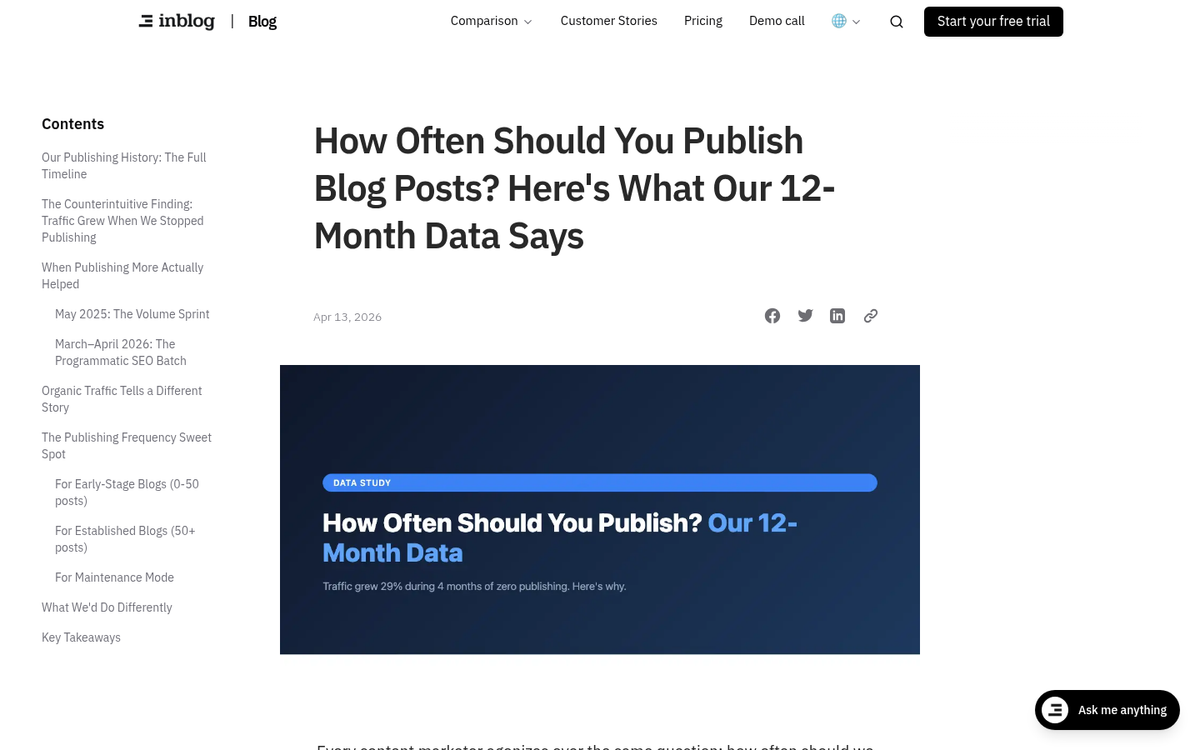
This connects directly to how editorial planning works in practice. Without that structure, publishing can become reactive and uneven.
Audience expectations tie into this too. Readers who find your site through a helpful post are more likely to return if they sense more is coming. A steady rhythm tells visitors that your site is active and worth bookmarking. An erratic one - even if the individual pieces are strong - makes it harder to build that habit. If you're struggling with visitor retention, it may also help to look at ways to reduce your blog's bounce rate.
The working definition here is simple: content velocity is your standard publishing rate, measured over an actual stretch of time. Not a sprint to a number and not a vanity metric about how prolific you seem - it's a reflection of how well your content operation actually runs.
The "more is always better" idea gets pushed around quite a bit in content marketing circles - it's an understandable instinct. But it's not accurate, and the reasoning behind that becomes much clearer when you look at what the data shows.
What the Numbers Say About Publishing Frequency and Traffic Growth
Research from VeloSEO tracked organic traffic growth across sites grouped by how frequently they published, and the difference between the tiers is hard to ignore.
| Publishing Tier | Organic Traffic Growth |
|---|---|
| Low velocity | 15% |
| Medium velocity | 67% |
| High velocity | 189% |
| Very high velocity | 340% |
That jump from low to very high isn't incremental - it's a different outcome. Sites that published at very high velocity saw more than twenty times the traffic growth of sites at the bottom tier.
Part of what makes this so striking is the math around keyword opportunity. Content strategist Nick Jordan has shown that if you have 1,000 keyword opportunities to go after and you publish 10 pages per month, it takes around 8 years to cover them; it's not a hypothetical - it's a planning problem site owners don't sit down to calculate.
At that pace, competitors who publish faster have already claimed the rankings you were planning to get to eventually.
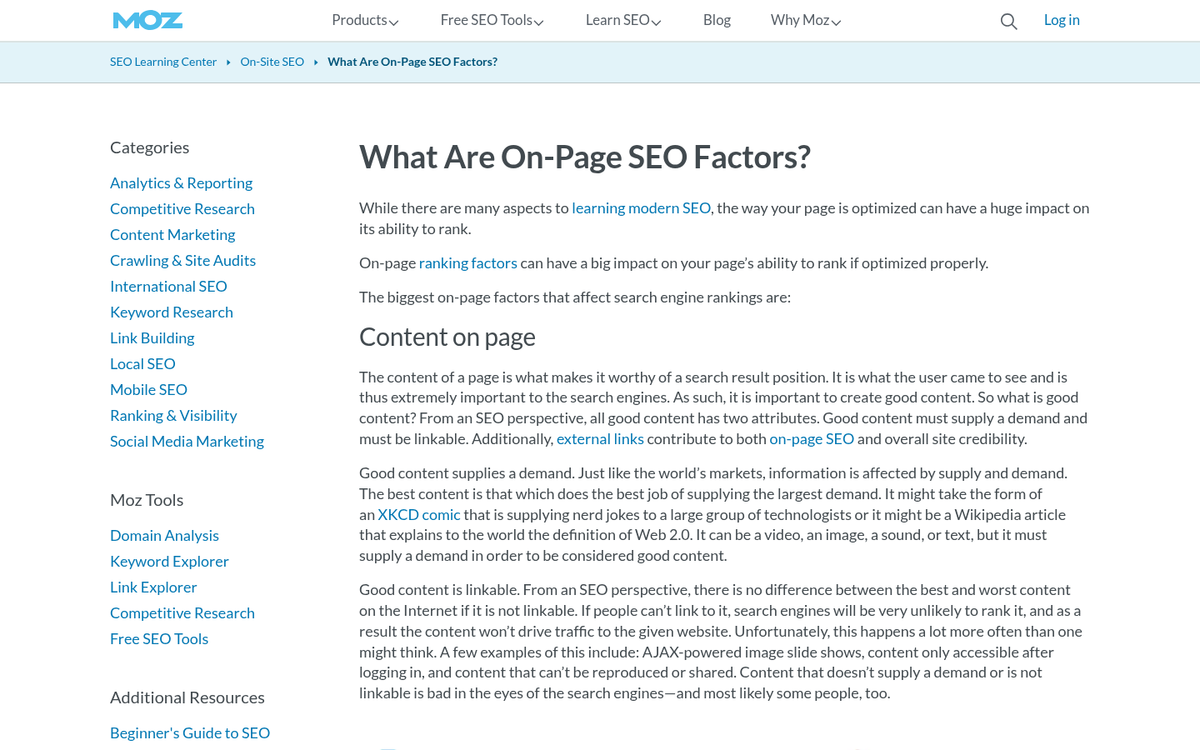
The VeloSEO data lines up with this. Low-velocity sites are leaving a large portion of their addressable traffic untouched while other sites move in. The 15% growth figure isn't a failure on its own. But in a competitive space, it can mean losing ground even while technically moving forward.
These numbers come with a correlation caveat - not a guarantee. Higher publishing frequency tends to go hand in hand with more indexing signals, more internal linking opportunities, and more opportunities to rank across a wider number of queries; it's where the compounding effect comes from.
The data doesn't make a case for publishing as much as possible at any cost. But it does show that frequency has a measurable relationship with growth, and the difference between tiers is far bigger than expected.
Why Publishing More Can Backfire Without the Right Foundation
Higher volume can drive growth. But only if the content behind it holds up. When teams push to publish more without the bandwidth to support it, quality drops fast and the damage is harder to undo than expected.
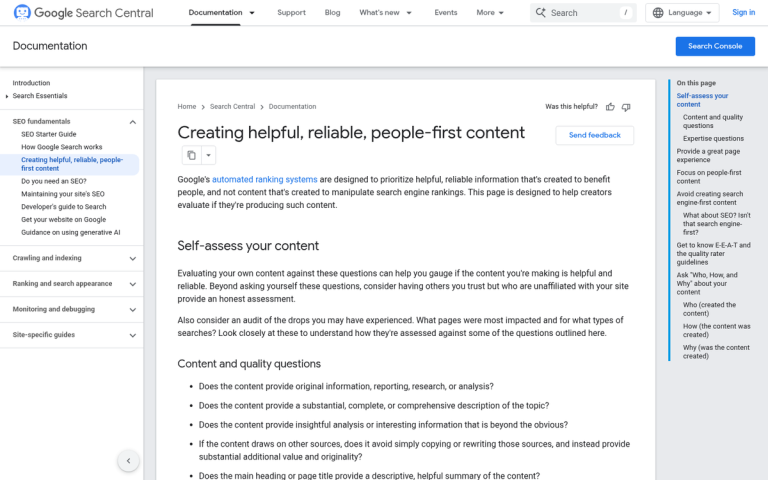
Thin content is the most visible symptom. Articles that cover a topic too briefly, skip depth, or just restate what every other page already says don't earn rankings or reader trust. Google has become much better at recognizing low-effort pages, and it does not reward them just because you published.
Brand voice drift is a quieter problem. But it matters just as much. When multiple writers produce content without shared editorial standards, your site starts to feel inconsistent. Readers see this even when they can't name it, and it erodes the sense that a knowledgeable team is behind the content.

A keyword strategy also gets stretched thin when volume increases too fast. Publishing more means you need more topics, and without a map of what you are trying to rank for, it's easy to create content that competes with your own pages or chases terms that have no business value. Tools like Alexa can help surface high traffic blog topics worth targeting before you scale.
Internal linking is another area that falls apart under pressure. New content needs to connect to existing pages to build authority and help readers move through your site. When teams are focused on hitting a publishing target, that step gets skipped. A solid set of WordPress plugins can help protect your rankings as output grows.
The real consideration is whether your team can sustain the pace you are thinking about. A slower, more deliberate output that lands well is far more helpful than a higher volume that dilutes what you have already built.
That is not a reason to hold back from scaling up - it's a reason to look at what you have in place.
How to Figure Out the Right Content Velocity for Your Situation
There is no single publishing frequency that works for every business. The right publishing frequency can depend on a few variables that are unique to you, and working through them is the best way to land on something realistic.
Start with your team and budget. A solo marketer with limited time can't sustain the same output as a team of three writers with editorial support. Be honest about what you can produce without cutting corners on quality.
Your content goal also shapes the answer. Brand awareness content does not need the same volume as an SEO-driven strategy. If you are trying to rank for hundreds of keywords, you need more content and time. If you are nurturing a small audience through email or social, frequency matters less than consistency and relevance.

Content maturity is another factor worth thinking about. A newer site with thin coverage benefits more from increased volume than an established site that already has large topic coverage. At that point, depth and updates move the needle more than new posts. If you're wondering whether WordPress pages rank better than posts, that distinction can also inform how you structure new content.
Finally, look at how competitive your niche is. A local service business is not competing with the same content volume as a SaaS company in a crowded category. The bar to get visibility is lower in less contested spaces. It also helps to make sure you're using the right WordPress SEO plugins to support whatever publishing pace you choose.
The table below gives a rough sense of how these scenarios can translate into different velocity ranges.
| Situation | Suggested Starting Range |
|---|---|
| Solo creator, brand awareness focus | 1-2 pieces per month |
| Small team, SEO-focused, low competition niche | 4-6 pieces per month |
| Small team, SEO-focused, high competition niche | 8-12 pieces per month |
| Established site with broad coverage | Focus on updates over new content |
| Larger team with lead gen goals | 10-20 pieces per month |
These ranges are starting points, not targets to hit at any cost. Use them to pressure-test what is realistic for your situation before committing to a schedule. If you're scaling up and need outside help, reviewing options like Textbroker for article quality can help you decide whether outsourcing fits your workflow.
The Real Cost of Producing Content at Scale
Once you know the velocity you're going for, the next question is whether you can afford it. That's where plans fall apart - not because the strategy is wrong, but because the production math doesn't add up.
A single post doesn't take an hour to write. When you factor in research, writing, editing and basic SEO work, a common piece takes between 4 and 7 hours to produce manually. So if you're targeting 10 articles a month, you're looking at between 40 and 70 hours of work before anything gets published.
It's worth breaking that down by stage so the numbers feel concrete.
| Production Stage | Estimated Time per Article |
|---|---|
| Research and topic validation | 1-2 hours |
| Writing the draft | 2-3 hours |
| Editing and revisions | 30-60 minutes |
| SEO formatting and optimisation | 30-60 minutes |
When you outsource this to an agency, the cost scales faster. According to VeloSEO production data, 30 articles per month through an agency can run between €3,000 and €5,000 - a real monthly commitment for most small businesses, and it doesn't include publishing, internal review, or any promotion. If you're considering using a content marketplace like Constant Content, it's worth reviewing their quality and pricing before committing.
In-house production has its own trade-offs. You save money but spend time - and time has a cost too, especially if the person writing is also responsible for other parts of the business. time has a cost too is a factor often underestimated by small business owners. Training an employee to write for your blog can help spread that workload more effectively.
None of that means a high velocity is out of reach. The cost and the capacity are out there somewhere - in your budget, your team, or your production process. A clear picture of what each part of content actually takes to produce makes it much easier to set a sustainable pace instead of an aspirational one.
Practical Ways to Increase Your Content Velocity Without Burning Out
Publishing more doesn't have to mean working more hours. The teams that sustain a high output rate tend to be more strategic with what they already have - not harder from scratch every time.
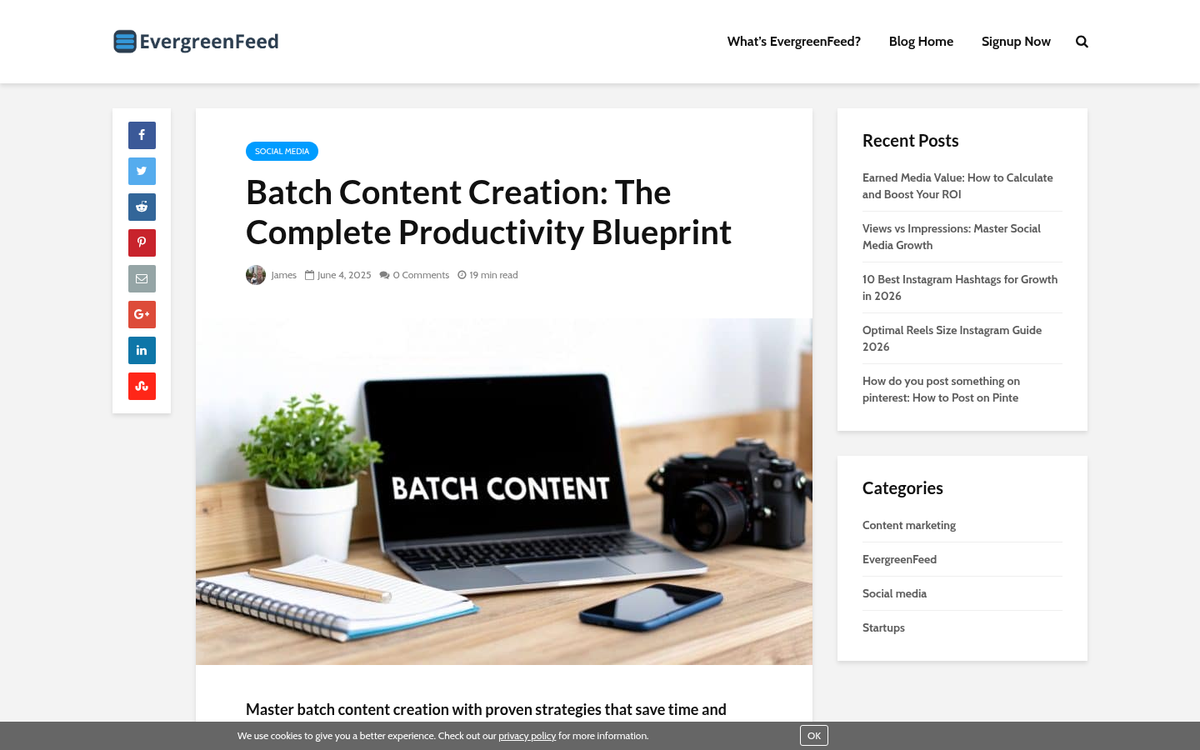
One of the most underrated strategies is content batching. Instead of writing one post at a time, you block out dedicated time to produce multiple pieces in a single session. A writer who spends three hours in "research mode" across five related articles will move faster than a person who switches context every day. The mental setup cost drops dramatically when you stay in the same topic space.
Repurposing is another way to stretch your output without starting from zero. A long-form guide can become a series of shorter posts, a FAQ page, or a refreshed version of an older piece that already ranks. It's not recycling content lazily - it's giving it a second life in a format that reaches a different reader.
Templates help too, and that's especially true for teams that publish recurring content types like product roundups, how-to guides, or news recaps. When the structure is already decided, writers spend their energy on the content instead of rebuilding the framework every time.
A few other strategies are worth building into your workflow:
- Editorial calendars - Plan topics in advance so writers aren't waiting on briefs and editors aren't chasing deadlines at the last minute.
- Subject matter experts - A 20-minute interview with an internal expert can replace hours of secondary research and make the content more credible.
- Modular content blocks - Create reusable sections like introductions, disclaimers, or CTAs that can slot into multiple pieces without rewriting.
None of these tactics are complicated on their own. The difference comes from making them a steady part of how your team operates, instead of something you return to when things get busy.
A small content team that uses batching and a shared editorial calendar can sometimes match the output of a bigger team that plans reactively.
Your Content Velocity Sweet Spot Is a Moving Target
As your business grows, your content velocity should grow with it - not in one ambitious leap, but in measured steps that your strategy, your team, and your quality standards can absorb. Start where you are. Build the systems. Then scale what's working.
If you're at a point where the bottleneck isn't strategy or ideas - it's bandwidth - it's where BlogPros was built to help. Our AI-hybrid process pairs machine efficiency with human editorial review, so you can increase output without sacrificing the depth and accuracy that earns trust with readers and search engines. Every post is optimized for AEO and schema markup, which means your content is built to surface across Google, ChatGPT, Perplexity, Gemini, and wherever else your audience is looking for answers. The first month is free - no contracts, no credit card, no danger - it's a better way to publish more of what works. See how BlogPros works and find out what sustainable, quality content velocity looks like for your business.