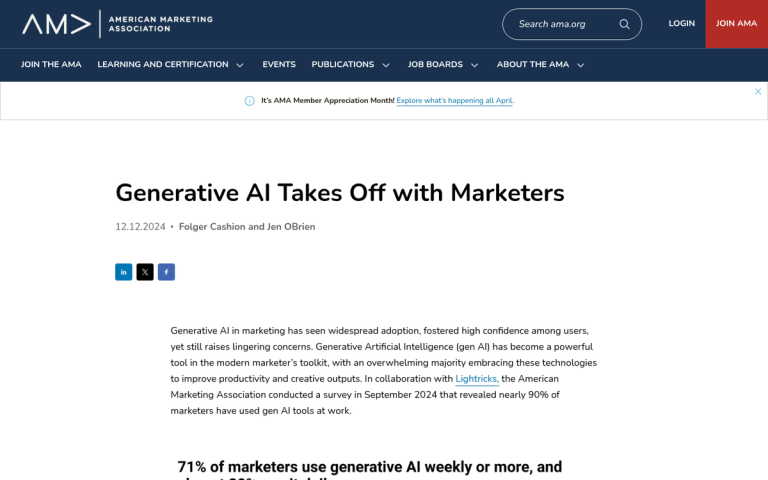
But there's a catch. Hand your content over to AI without the right guardrails and something quietly disappears. The dry wit your audience loves. The way you phrase a call to action. That particular warmth - or edge, or irreverence - that makes your brand feel like your brand. AI doesn't strip your voice out maliciously - it just defaults to the middle: grammatically clean, professionally bland and virtually identical to what every other brand in your space is making.
The stakes here are higher than a few forgettable blog posts. 68% of consumers say they'll unfollow a brand if its tone suddenly changes - and "suddenly robotic" counts as a change. Your brand voice is one of the few things in your marketing stack that's legitimately copy. Letting AI quietly erode it is a slow, expensive mistake.
The good news is that AI tools don't have to be a threat to your brand identity. Used correctly, they reinforce it - but that's going to need some deliberate setup on your end. This post walks through how to make that happen.
Key Takeaways
- AI defaults to generic, bland content, and 68% of consumers will unfollow a brand if its tone suddenly changes.
- A brand voice guide needs concrete, specific instructions - vague descriptors like "friendly" don't give AI enough direction.
- Strong prompts function like creative briefs, specifying tone, audience, vocabulary, and what language patterns to avoid.
- Pasting existing on-brand content directly into prompts helps AI mirror your actual voice better than descriptions alone.
- Human editing remains essential for catching tonal mismatches, weak transitions, and subtle disconnects AI cannot detect.
What Brand Voice Actually Means (and Why AI Struggles With It)
Brand voice is the personality your audience hears every time they read something you've published - it's your word choices, your tone, the way you explain things, the rhythm of your sentences, and the attitude that sits underneath every paragraph. Your audience picks up on it even when they can't name it.
The problem with AI writing tools is that they're trained on giant amounts of general text from across the internet. That means they write in a way that fits almost everyone - which is another way of saying they fit no one well. They don't have access to your brand history, your audience relationship, or the decisions your team has made over the years about how to sound.
AI can match a style guide to a point - it can write formally or casually, use short sentences or long ones, and follow a list of approved words. But style is only part of voice. The harder part - the instinct behind why you'd phrase something one way instead of another - is something AI hasn't learned from your brand, because it hasn't been trained on it.
This matters more than businesses know. One study found that 73% of consumers can already tell when content is AI-generated. That number is worth sitting with for a bit.
If your audience can find the difference, the next question is what that recognition costs you - it can affect how much they trust what you're saying and whether they feel the same connection to your brand that they did before. Content that reads like it came from a machine can quietly put distance between you and the people you're trying to reach. Why competitors show up in AI Overviews while others don't often comes down to exactly this kind of content distinction.
AI tools are helpful for writing tasks - but they need your direction to stay on brand. If you don't have it, you get content that sounds plausible but doesn't quite sound like you.
Building a Brand Voice Guide Your AI Can Actually Use
A brand voice guide written for human employees can afford to be a little loose. People pick up on context, read between the lines, and fill in the gaps from experience. AI tools don't do any of that. They need explicit instruction, and the more specific you are, the better the output.
The goal here is to build a working document, not a mood board. Think less "we sound approachable and fun" and more "we use short sentences, we don't use jargon, and we never open with a question."
Start with tone descriptors. But define them in concrete terms. "Friendly" means almost nothing to an AI model. "Friendly, like a knowledgeable colleague who gets to the point" gives it something to work with. Add two or three examples of what that tone looks like in a sentence and you've already got something helpful.
Next, build out your vocabulary list. Write down the words and phrases your brand actually uses, then write down the ones it doesn't. That's where an easy reference table pays off.
| Voice Element | On-Brand Example | Off-Brand Example |
|---|---|---|
| Tone | Warm, direct, a little witty | Formal, stiff, overly professional |
| Vocabulary | "Let's dig in" / "Here's the deal" | "It is imperative to note" |
| Sentence length | Short punchy lines. Mix it up. | Long, complex, clause-heavy sentences that lose the reader halfway through |
A table like this takes about twenty minutes to put together and makes a real difference - paste it into a prompt and it shows the AI what you want and what to stay away from, side by side.
Finally, add a short note about your audience. Who are you talking to, what do they already know, and what tone do they respond to? That context shapes everything from word choice to sentence length, and it's the thing AI won't guess correctly on its own. Getting this right also ties directly into how you optimize content for different search behaviors, where understanding your reader is just as critical.
How to Write Prompts That Actually Sound Like You
Your brand voice guide does the groundwork. But it can't help you if you leave it sitting in a document while you type vague instructions into an AI tool. The prompt is where your guide comes to life - and where a weak prompt will undersell it.
A lazy prompt looks like this: "Write a product description for our new running shoes." The AI will produce something. But it will sound like every other product description on the internet. A voice-driven prompt tells the AI who you are, who you're talking to, and how you want to come across.
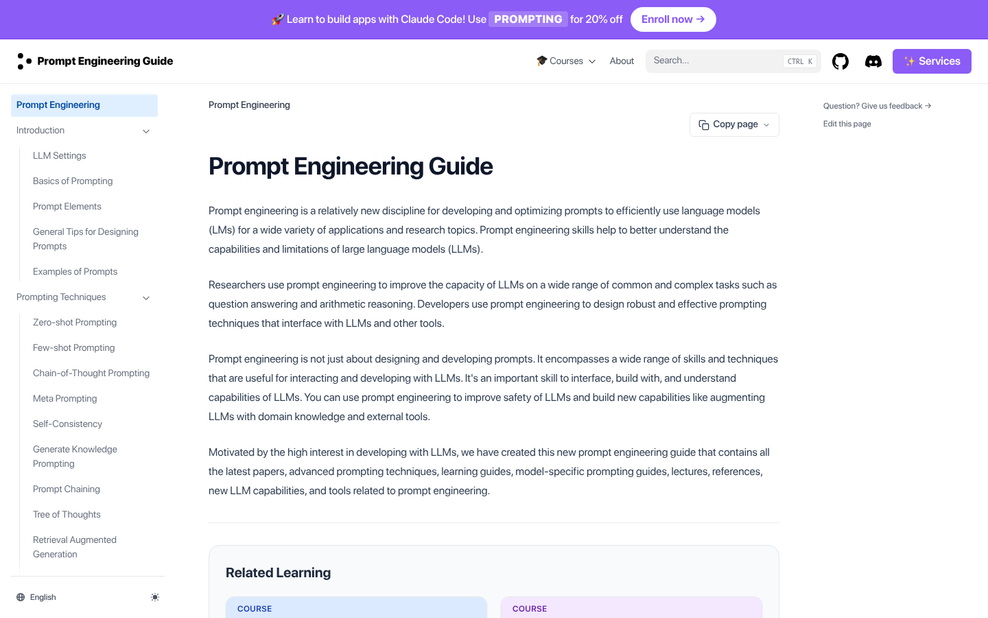
Think of a prompt like a creative brief. You wouldn't hand a copywriter a blank page and expect them to nail your tone on the first try, so don't expect AI to do that either. If you're curious what over-reliance on AI tools actually looks like in the output, check out the biggest tells that content was written with Claude.
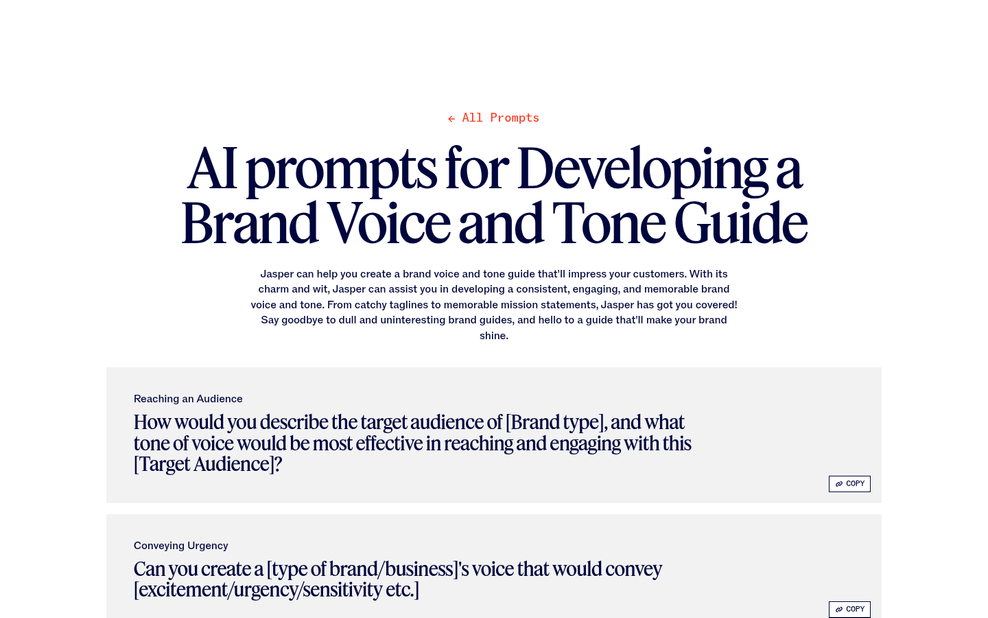
A strong, voice-driven prompt starts with your tone and explains it. "Write in a warm but straightforward tone" is more helpful than "be friendly." Then add a line about your audience so the AI knows who it's writing for. Something like "the reader is a first-time homeowner who doesn't have much experience with home repairs" gives the tool direction.
From there, include your content goal and any phrases or language patterns you want to see. Pull these straight from your voice guide. You can also tell the AI what to stay away from, whether that's overly technical language, a formal sign-off, or a sentence structure you dislike.
Prompting is a skill that builds over time. The first result is rarely the best one, and that's fine. Treat each output as a draft to respond to, then adjust your prompt and go again. Note what worked and carry that language into your next session. This iterative approach also matters when you're structuring blog content for AI citation algorithms.
The AI is not going to figure out your brand on its own. You have to show it the way.
Using Your Own Content to Train and Steer AI Output
Better prompts get you closer to your brand voice. But there's another layer worth adding. You can paste your own existing content directly into a prompt as a style reference, and this changes things considerably.
AI tools mirror patterns they're shown, not patterns they're told about. You can spend words describing your tone, or you can just show it. Paste in a past blog post, a strong email, or a few social captions that represent how your brand communicates, then ask the tool to match that style when it writes something new.
This works because the AI picks up on things that are hard to put into words. Sentence length, how you open a paragraph, if you use contractions, how direct you are with a call to action - it gets absorbed from the sample you give it.
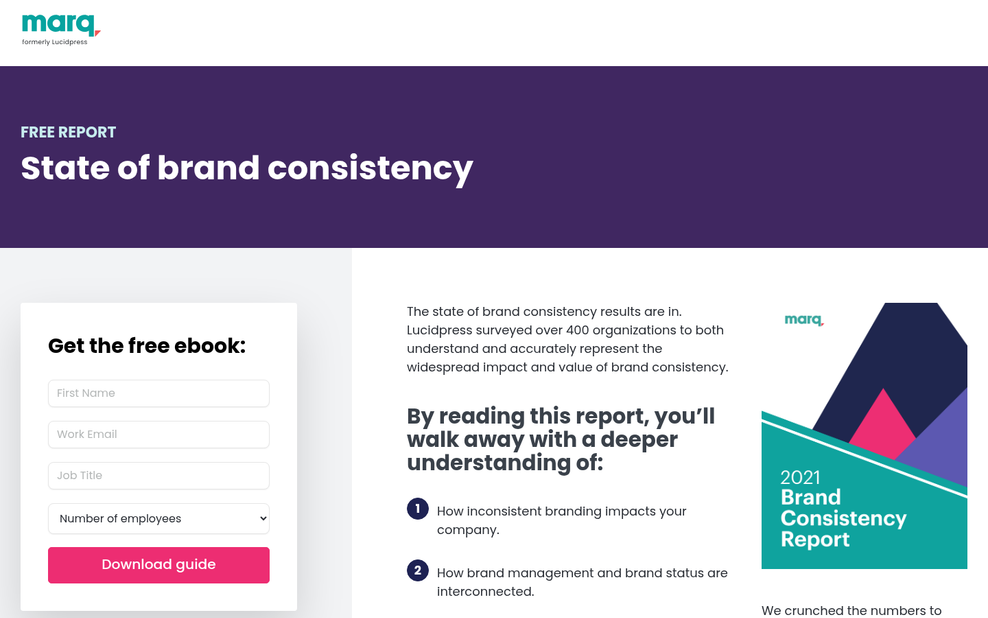
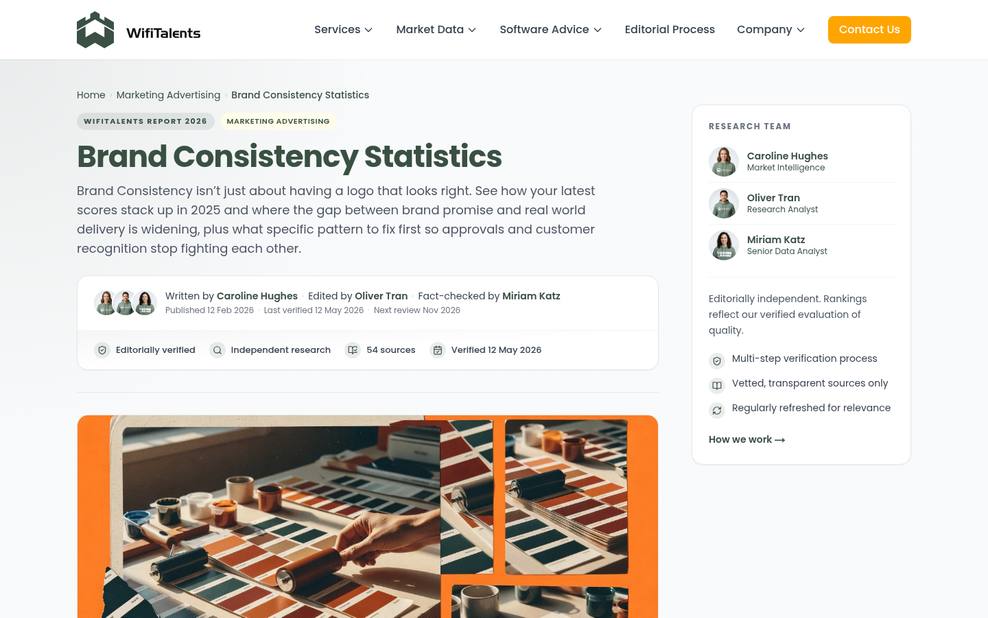
The payoff goes past writing. Consistent branding across all your content can lift revenue by as much as 33%, according to a research study from Marq; it's an actual reason to put in the extra effort to get the AI making content that actually sounds like you.
One thing to watch for: the content you use as a reference needs to align with your voice as it is. If your brand has evolved in the last year or two, older blog posts or emails might steer the AI in the wrong direction. Pull from your most recent content to keep things aligned.
It's also worth building a small library of your best examples so you're not hunting for them each time. A short document with two or three strong samples from different content types - one blog excerpt, one email, one social post - makes it easy to drop a relevant reference into any prompt.
Where Human Editing Still Has to Do the Heavy Lifting
Even a well-steered AI draft needs a person to go through it before it goes anywhere near your audience - this isn't just fixing typos - it's catching the things AI can't feel.
AI can write a sentence that's technically correct and still feel flat or slightly off. It might use a tone that's too formal for your brand, or too chipper for a topic. It won't always know when a joke lands wrong, or when a phrase carries a cultural weight that doesn't fit your audience. These are the moments that make readers feel a quiet disconnect - and over time, that disconnect erodes trust.
Brands with a steady voice see as high as a 23% improvement in customer retention. It's not a small number, and it's worth keeping in mind when you're tempted to hit publish without a read-through.
The most helpful thing you can do is treat your edit as a checklist instead of a general scan. Go through the draft and ask yourself questions. Does this sound like us? Does the emotional tone match what this piece is trying for? Are there any phrases that feel borrowed from somewhere else? Is the humor landing the way we'd actually say it?

Pay close attention to transitions between ideas. AI tends to move from point to point without the connective reasoning a human writer would include. Those gaps can make content feel assembled instead of written.
It also helps to read the draft out loud. Your ear will catch what your eye skips over. A sentence can look fine on screen and feel robotic when you say it.
Human editing is where your brand voice actually gets protected. AI can get you close. But the final layer of judgment - the part that knows your audience, your history, and your tone - still belongs to a person.
Your Brand Voice Is the One Thing AI Can't Generate for You
That's the competitive edge. The businesses winning with AI aren't necessarily the ones using it most - they're the ones who showed up with a voice, a defined audience, and the confidence to push back when the output doesn't feel right. AI furthers your message - it can't invent your identity. That part still belongs entirely to you.
If you're not sure where to start, you don't need a perfectly-formed brand voice guide to start. Pick one ingredient - your tone, a list of words you'd never use, or three adjectives that describe how you want to sound - and build from there. A small, honest foundation will do more for your AI output than a generic style guide ever could. Test one piece, smooth it out, and grow it over time. Your voice is already there. These tools just help you share it faster.