





Pay per click advertising can be a fountain you turn on to blast your company with money. It can also be a pit you throw cash into and burn. The difference between these two extremes is measurement, testing, and iteration. By measuring every aspect of your PPC funnel, you can make it rain - and with PPC delivering an average ROI of 200% (meaning $2 earned for every $1 spent), the upside is very real. The problem? Only 30% of CMOs are actually confident in their ability to measure marketing ROI. So how do you go about measuring your PPC returns?
Key Takeaways
- PPC delivers an average 200% ROI, but only 30% of CMOs feel confident measuring their marketing returns.
- Track clicks, impressions, cost per click, impression share, conversion rate, and overall ROAS for complete PPC visibility.
- Dedicated landing pages and UTM parameters allow precise tracking of which campaigns and channels drive conversions.
- Implementing conversion tracking pixels can increase measurable ROI by 67%; proper pixel setup is essential.
- Campaigns running 90+ days outperform newer ones by 27-60%, so allow sufficient time before drawing conclusions.
Methods of Measurement
Think about your PPC funnel. You start with advertisements, which lead to landing pages, which lead - hopefully - to conversions. How do you measure what users are doing?
Track your clicks. While you're at it, track your impressions. Clicks need context. If your ad is clicked by 100 people, you don't know what that means. If you know that the ad was only seen by 150 people, that's a really good click through rate. On the other hand, if 1,000 people saw the ad, 100 clicks isn't really all that much.
If your clicks decrease, it could mean your ad is stale or positioned poorly. It might also mean that something in your ad is broken or a competitor out-bid your positioning.
Track your cost per click. Determine how much you spend on a given ad in a given time, measure how many clicks you received in that time, and calculate how much each click cost on average. A lot about increasing your ROI is finding ways to lower your cost per click. One often-overlooked lever here is your Quality Score - improving it from a 5 to an 8 has been shown to reduce average CPC by as much as 43%. That's not a small number.
Track your impression share. This is a measurement of how many people saw your ad versus how many people could have. For example, if your keyword saw 10,000 searches in a given month, but your ad was only shown to 8,000 of those people, you're losing out on 20% of the possible impressions. This might mean you want to increase your bid. On the other hand, if your impression share is high but your other metrics are low, it might indicate a keyword that isn't working out.
Track your conversion rate. If 1,000 people clicked your ad, how many of them moved on to convert? This can be tricky to measure, especially across devices. Cross-device tracking has revealed that 34% of mobile clicks result in desktop conversions within 30 days - meaning if you're only measuring same-device conversions, you're likely undercounting your results significantly. If your landing page has a dedicated conversion funnel, you can track people who convert through it. You can also use URL parameters or tracking code to follow users who escape that funnel to your main site.
Track your cost per conversion. Like your cost per click, this is a comparison between the amount you spend on bringing people to your site versus the number of people who take action and convert. Simply divide the amount you spent in total by the number of conversions you received. A high click through rate means nothing if they don't convert. If you're using CPA bidding, keep in mind it works best when you have at least 30-50 conversions per month - below that threshold, the algorithm doesn't have enough data to optimize effectively.
Track your profits overall. Take the amount of profit you made from your ad campaign and divide it by the total costs of running that campaign. This will give you a figure known as the return on ad spend, or ROAS. You want a ratio better than 1:1, which means that you spend $1 to make $1 in profit, breaking even. It's also worth noting that PPC traffic converts 50% better than organic traffic on average, which means when your funnel is dialed in, you're working with high-quality traffic from the start.
Ways to Measure Metrics

Create dedicated landing pages. Each individual ad campaign should point to a unique landing page. This does a few things for you. First, it segments your ad campaigns in a way that allows you to track clicks and leads generated by that ad. Second, it gives you an additional place for optimization in your funnel; you can split test landing pages and optimize them independently from your ad copy.
Landing pages do tend to have a few issues with SEO, so you'll need to watch out. You should noindex the pages to avoid potential duplicate content issues, and you should make sure they have plenty of information to avoid thin content penalties, should the noindex fail. You don't want your whole website penalized because of an accidentally visible landing page.
You should avoid ever linking your ads directly to a product page or homepage. This is because you can't easily tell whether the traffic came from a landing page or if it came from somewhere else on your site. With a dedicated landing page for each ad, you're making sure you see just the traffic from that ad.
You can also create dedicated phone tracking numbers. Some users prefer to convert over the phone rather than the Internet. When you direct them to a normal phone number, you don't know whether the person found you through your normal contact page, a landing page, or a third party site. By using dedicated tracking phone numbers in each unique location, you guarantee the ability to identify between leads generated organically and leads from PPC.
Implement conversion tracking pixels. If you haven't already, this one is hard to ignore: implementing conversion tracking pixels has been shown to increase measurable ROI by 67%. Whether you're running Google Ads, Meta, or any other platform, make sure your pixels are properly installed and firing on all confirmation or thank-you pages. This is table stakes in 2026.
UTM parameters are also essential. These are parameters used to track various information for links. Including these parameters in your links gives you unique tracking information for each individual link and anyone who clicked it. For example, you could use one dedicated landing page with three unique UTM parameters specifying different campaigns.
What happens is that you post each unique link in a different location - say one on Facebook, one on LinkedIn, and one through Google Ads. You specify campaign parameters in the UTM code and create three individual links, one for each location. They all funnel to the same landing page.
Later, you can check your Google Analytics dashboard and identify any traffic coming from one of those three links. You can identify if, for example, your Facebook link had a high number of clicks but few conversions, while your Google Ads link had a lower number of clicks but a higher conversion rate.
Give campaigns time to mature. One underappreciated factor in PPC measurement is time. PPC campaigns that run 90 or more days consistently outperform newer campaigns by 27-60%, largely because the algorithm has had time to learn and optimize. Don't pull the plug on a campaign too early before you have meaningful data to act on.
Optimize All the Things!
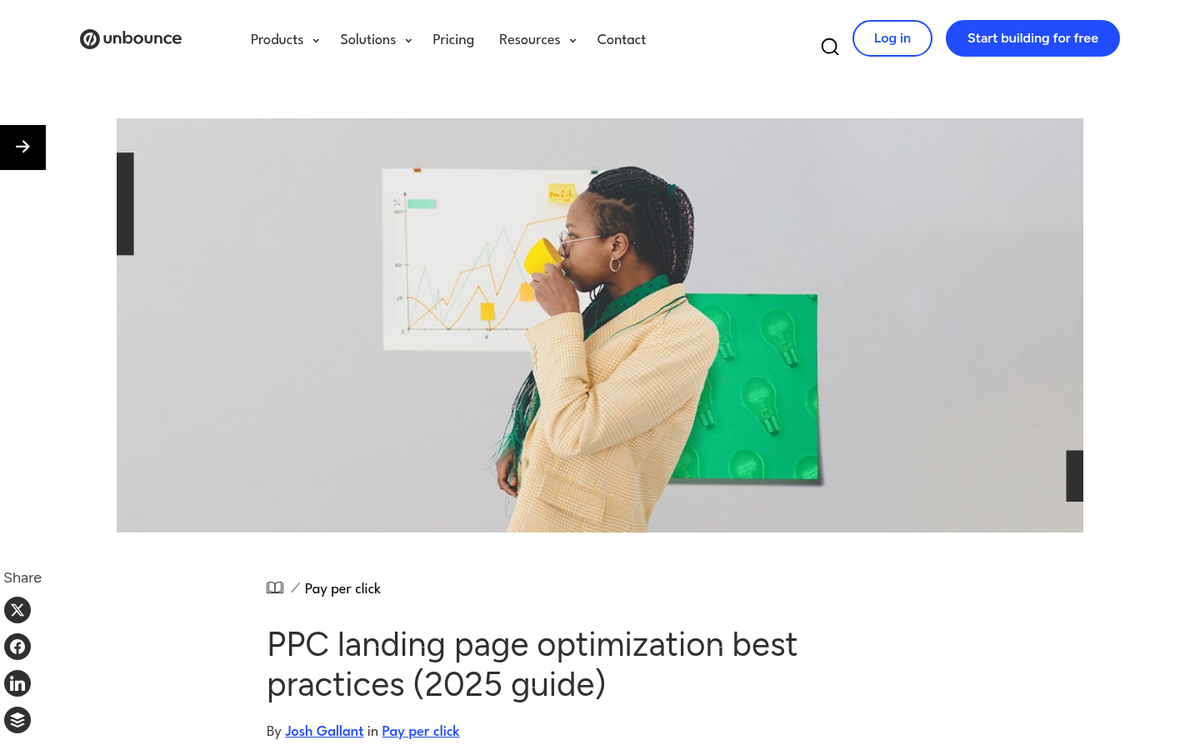
With tracking data, you know what to optimize, you just don't know how.
Your Ads: You can optimize your ads by tweaking the headline and copy. You can also tweak the display URL of the landing page, which sometimes has an effect. With PPC on platforms like Meta or LinkedIn, you can tweak the creative - image, video, or format - as well. Responsive search ads in Google now allow the platform to mix and match your headlines and descriptions automatically, so feed them plenty of strong variations to test. Learn more about how to properly optimize your Google ads for better results.
Your Landing Page: You can optimize your landing page by shuffling around copy, changing dominant colors, adjusting your hero section, or streamlining the overall layout. You might also consider tweaking your submission form to ask for less information upfront - shorter forms consistently outperform longer ones for initial lead capture. A tool like Landing Page Monkey can help you build and test high-converting pages quickly.
Your Conversion Process: How many barriers are there between an ad click and a finalized conversion? If someone needs to click more than a small handful of times to go from ad to conversion, you may be imposing unnecessary friction. In 2026, users have less patience than ever - every extra step is an opportunity to lose them. Map out your full conversion path and ruthlessly cut anything that doesn't need to be there. If you're processing payments, make sure you've also set up conversion tracking with Stripe Checkout so no completed transactions go unrecorded.


1 response
Thoughtful replies only - we moderate for spam, AI slop, and off-topic rants.
I Read your article,it's very effective for me. I will share this useful tips with our clients.Thanks for sharing this useful information.