





Twitter can be a great source of conversions, or it can be a public relations nightmare, or it can be a complete non-entity. Which it is for your business all depends on how you use it. When used properly, how well does Twitter traffic convert? What can you do to avoid using it improperly?
First of all, it can be daunting to measure or test any of this. Any numbers you find online are likely going to apply to a small subset of online businesses, and they may not match up to your experiences. You're going to want to perform some tests yourself to discover if Twitter is worth investing in.
Key Takeaways
- Twitter averages a 0.77% conversion rate, ranking third among social platforms behind Facebook (1.85%) and ahead of LinkedIn (0.47%).
- Sharing product reviews on Twitter can dramatically boost conversions to 6.46%, roughly 8.4 times higher than the baseline rate.
- An automated competitor-follower strategy can generate meaningful traffic with minimal effort, though conversion results remain modest overall.
- Image tweets, action words, and consistent link inclusion significantly improve click rates and engagement on the platform.
- Twitter works best as a supplemental channel; responding to users and engaging two-way communication is essential for sustained effectiveness.
A Look at Conversion Data

To start out, let's look at what the data actually says. According to a Shopify analysis of storefronts using their platform, Twitter ranks third among social referral sources. Facebook holds roughly two-thirds of all referrals, with Pinterest coming in at 13% and Twitter at 10.5%. In terms of raw conversion rates, Twitter averages around 0.77%, compared to Facebook at 1.85% and LinkedIn at 0.47%.
That said, Twitter's numbers can improve significantly under the right conditions. Yotpo data found that when product reviews are shared on Twitter, conversion rates jump to 6.46% - roughly 8.4 times higher than the baseline. And on the paid side, WebFX reports that Twitter's average ad conversion rate lands between 1% and 3%, which outperforms typical website conversion benchmarks of 0.5% to 2%. Organic Twitter traffic generally falls in the 0.5% to 1.5% range, and fewer than 10% of Twitter users actively shop for goods or services on the platform.
Don't let that data discourage you, however. These numbers reflect broad averages across many industries and business types. Your results will vary depending on your niche, your audience, and how well your Twitter presence is managed. The bigger takeaway is that while Twitter won't outperform a well-executed Facebook campaign, it doesn't need to. Twitter works best as a supplement - an additional channel that, when used correctly, contributes meaningfully to your overall social strategy.
A Look at a Semi-Successful Campaign
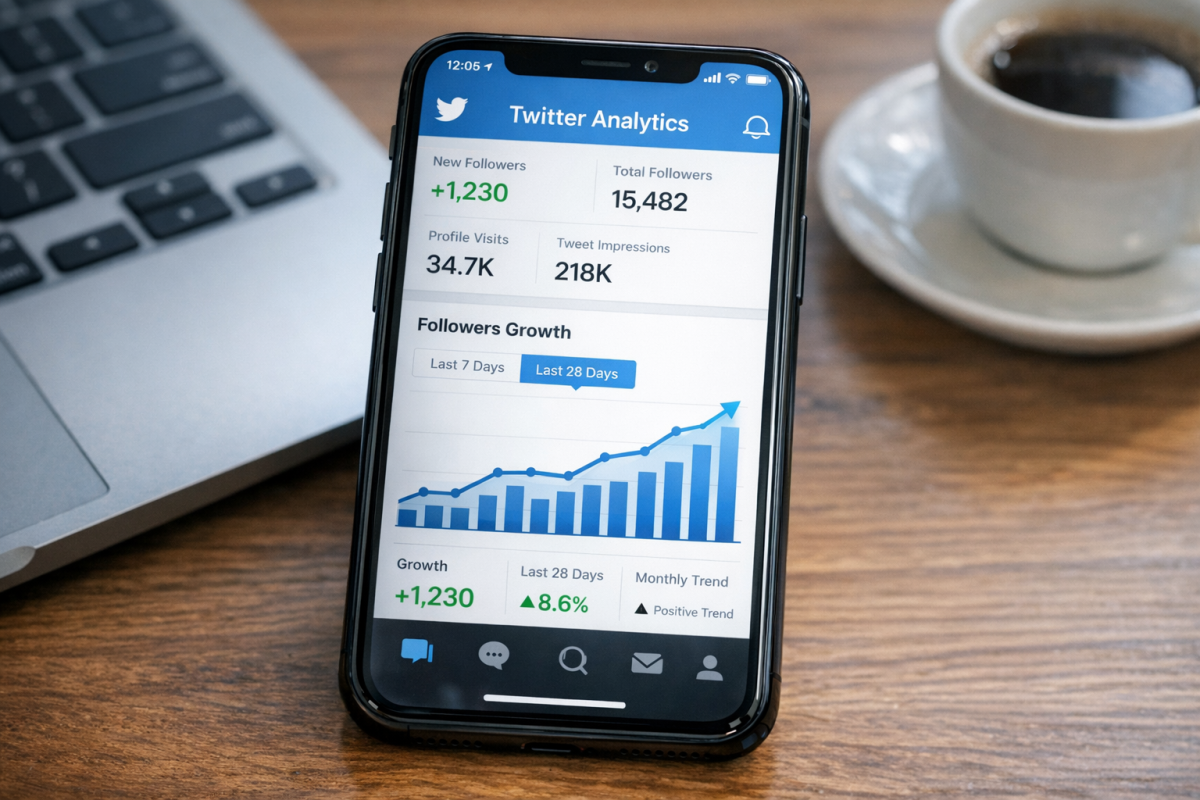
Fizzle.co presents a case study that involves a Twitter campaign that proved to be surprisingly effective. Here's how it worked:
- First, he already had an active Twitter account. You can probably set up this strategy on a new account, but it will be slower to get off the ground.
- Second, he used a third party program to automatically follow any user who followed one of his primary competitors. This configuration puts your business into the minds and attention of anyone interested enough in the industry on Twitter to follow a competitor; since your offerings are comparable, they should be interested in you as well.
- To avoid a situation where his account blindly follows people who aren't interested in his business, he set the program to remove anyone his account followed if they didn't follow him back within a week. Keeping such people on your followed list can be detrimental to usability, among other things.
- To connect with those who did follow him, he set the program to send a direct message to the user within a week as well. This ensures that users know they're noticed. It also works to present a bit of advertising the same way an email campaign might send a welcome letter after an opt-in.
There are two primary benefits to this strategy. First, it doesn't clog up the Twitter feed with valueless advertising tweets. All of the advertising is done in a subtle, invisible way. The follows aren't announced and the direct messages aren't broadcast. This leaves the feed open for scheduled tweets to build organic engagement.
Second, the program can be left operating around the clock, attracting and gaining new followers at any time. If you're setting up such a system yourself, you can even monitor the times of day that you end up getting most of your followers, and use those times to schedule your most potent tweets.
The strategy wasn't the most effective at conversions for Fizzle, but it resulted in a surprising number of clicks for an automated strategy. If you target multiple competitors with some system for filtering out duplicate follows, you can attract quite a bit of traffic. For a quick, automatic solution, it works very well.
Alternatives to Growing on Twitter

You can do more than just use a basic autofollow strategy and some scheduled tweets to make Twitter more effective. The direct message strategy works, but if it's not followed up, Twitter will drop off in effectiveness over time. Here are some other ways to make Twitter more effective, in addition to such an automated technique.
- Cater to mobile users. The vast majority of Twitter's userbase accesses the platform on mobile devices. If you're not optimized for mobile users, you're wasting your time on Twitter.
- Vary your "type" of tweet. That is, there are typically two types of tweet; tweets that copy the title of a blog post, and tweets that include some copy. They both have comparable numbers of clicks, so alternate between them.
- Always include links unless you're having a direct conversation that doesn't involve an outside source. When you do include links, consider using a URL shortener with a customization option to keep things clean and trackable.
- Use images. When people think Twitter, they often think just basic text tweets, but image tweets are far more valuable. They get more clicks, more likes, and far more retweets. On a platform with strict character limits, a picture's worth of words is incredibly valuable.
- Use action words like "download now" to boost click rates. Users have a subtle receptiveness to the sense of urgency and import that comes with an actionable directive.
- Repost your own tweets when the message is important. If enough time has passed between them - sometimes even just hours - you're reaching an entirely new audience with the new tweet and will receive comparable interactions.
- Leverage user-generated content and reviews. Given that Yotpo's data shows review-driven tweets can push conversion rates as high as 6.46%, sharing social proof through Twitter is one of the highest-leverage moves available to ecommerce brands.
- Focus on responses. If a user tweets you and never hears back, they're probably going to unfollow you. People expect two-way communication on Twitter, even with brands. If you can't live up to that, Twitter probably isn't the right platform for your business.


1 response
Thoughtful replies only - we moderate for spam, AI slop, and off-topic rants.
Very helpful stuff, Kenny, and good actionable advice. I understand growing a Twitter takes time, so this is something we'll have to do slowly.