





Key Takeaways
- Google+ removed share counts in mid-2017, citing faster load times, but it signaled the platform's broader decline toward shutdown in 2018.
- Google+ suffered from artificially inflated usage stats, with real engagement averaging just 3.3 minutes versus Facebook's 7.5 hours.
- Twitter, Facebook, and Google+ all removed or disrupted share counts, reflecting a broader industry trend away from public social metrics.
- Displaying zero or low share counts can hurt credibility and conversions, making count-free logo buttons a viable modern alternative.
- Unless content consistently earns high share numbers, removing share counts entirely is now considered the smarter approach.
A while back, Twitter pushed an update to the architecture that ran their servers.
However, as a side effect of this change, something awful happened. As marketers discovered, and much to our dismay, the ability to pull the share count for a URL disappeared.
The Twitter API in use for social sharing counts was, in fact, never an API at all - it was a relic of how Twitter processed and handled data at the time. When they changed architecture back in September 2015, they didn't think of data handling and instead changed to something else that was helpful for them. But it left bloggers and marketers in a lurch.
Without this fake API, there was no way to pull Twitter sharing data for sites and URLs. There was no way to display that number next to Twitter in the sharing button plugins we all use.
In the years that followed, some developers came up with ways to harvest Twitter share count data, though it's not as smooth as an API, or a pseudo-API like what Twitter had before. Some social sharing plugins updated to display counts through these services. Others removed the ability to display counts from Twitter, and some removed counts from every social network, choosing instead to just be uniform logo-based buttons.
There was a scare for a while about Facebook doing the same thing, because of the way their APIs update on a rolling basis. For a short few months, Facebook data was hard to come by, though it was largely restored through the plugins.
Which, of course, brings us to the point of this whole history lesson. Only this time, instead of Twitter or Facebook, it was Google+.
In a blog post published in mid-June 2017, John Nack announced that the Google+ button - the G+ button provided for blogs to share their +1 count - was changing.
"The G+1 button is shown billions of times per day on web pages around the world, so it's important that it load as quickly and efficiently as possible. To make it easier for people to load and share the pages they're interested in, we've created a simpler G+1 button sharing experience. Beginning in a few weeks, clicking the +1 button will open a streamlined new Google+ sharing dialog, and the G+1 button will no longer display a +1 count."
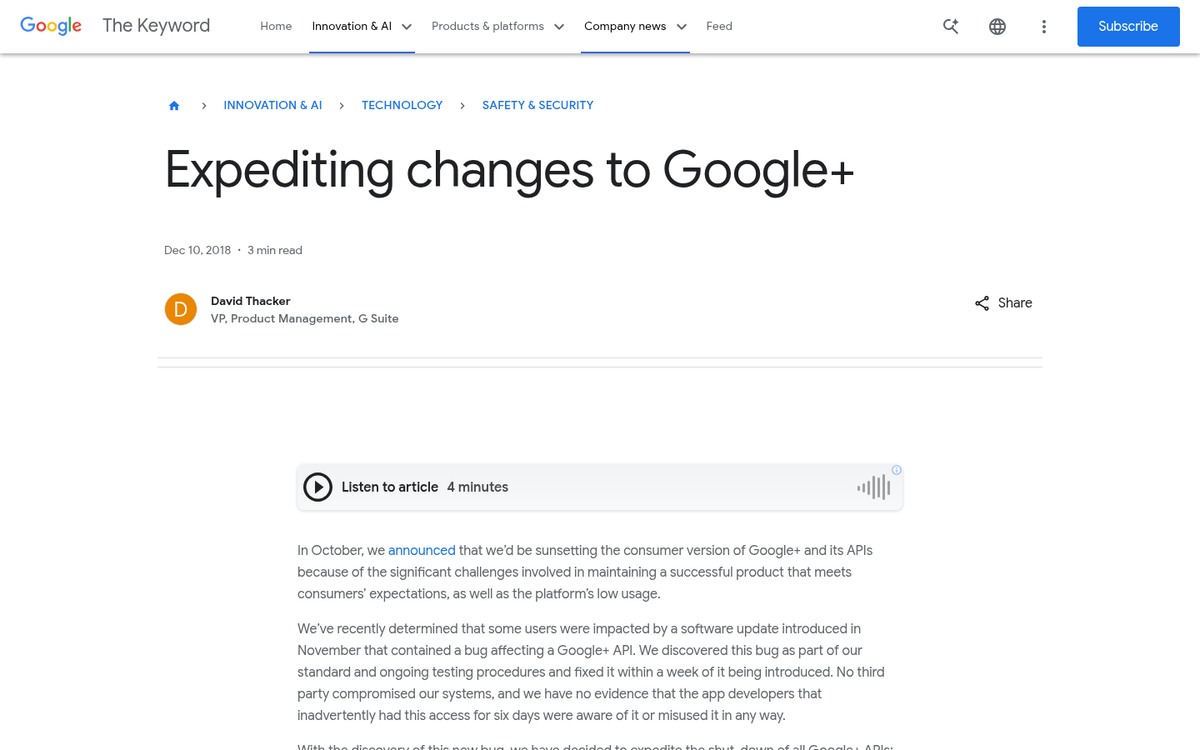
So, an easier share button meant the Google +1 button, without any count attached to it. As it turned out, this was just one step in a longer decline - Google+ shuttered its services in late 2018.
The Troubled Times of Google Plus
Google+ was launched in June of 2011, and it was immediately and heavily pushed as a Facebook Killer. Google wanted in on that delicious social space, and the popularity, data access, and monetization options it supplied. With their power and their money, it seemed like it could never fail.
Of course, that's ignoring that Google had tried other social networks prior to Google+. Remember Google Buzz, or Google Friend Connect? Orkut at least had some traction before it was retired. But largely in South America.
The issue with Google+ was how much it was, well, shoved in the faces of virtually everyone. There was a time you could barely use a Google service without being prompted to make a Google+ account, or claim your existing account as provided by having a Google account on its own.
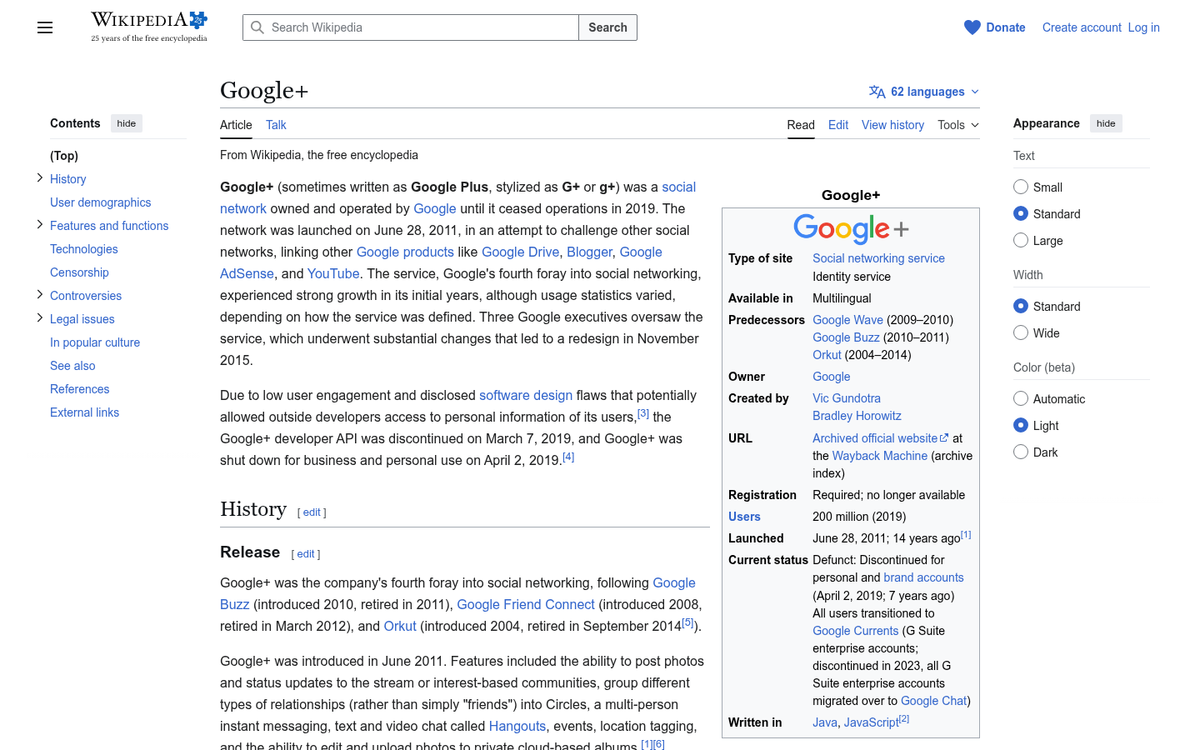
Thus it looked like Google+ had some astonishing growth. But looked a little deeper, you found the sinister hints. How many thousands signed up for Google+ because they couldn't watch YouTube without being hassled every time they logged in? And how many set up their Google+ accounts on the assumption that they would gain value from Authorship? And how many businesses signed up just to claim their names, ready to use if and only if the site took off?
Google+ may have had a high monthly active user count on paper. But that activity basically bled in from other Google services. User engagement, as measured by ComScore at the time, was somewhere around 3.3 minutes for Google+, as opposed to 7.5 hours for Facebook. The New York Times even called the site a ghost town, noting that even if they had hundreds of millions of monthly active users, most of the users never actually visited the site.
By the time Google+ began removing share counts in 2017, the platform had already been gutted. Hangouts had been moved to its own product, mixed in with Gmail, and removed from Google+ itself. The writing was on the wall, and Google officially pulled the plug on Google+ for consumers in late 2018, following a data breach disclosure that accelerated the timeline of its shutdown.
Removing Share Counts - And What Came After
Twitter removing share counts in 2015 was, well, basic in isolation. Even if bloggers felt they needed the share count, Twitter was well within their right to remove what was basically unauthorized access to data. They were also well within their right not to spend time and money building a replacement for a feature they never technically had.
Google+ doing the same thing in 2017 reeked of the slow decline of yet another Google service. The stated reason - that the button needed to load faster - was not a very convincing excuse for a change that was bound to frustrate a large portion of their userbase.
Later in the comment thread for that post, Nack came back to say that "The counts aren't valuable to most publishers (most of whom no longer display them), so we think it's smarter to direct our resources towards more beneficial work."
In hindsight, that statement aged as expected. Google+ was being wound down, and the removal of share counts was basically one of the earlier visible symptoms. The platform was officially retired in late 2018, confirming what many had suspected for years.
So what does the full arc of this story look like?
- Twitter kills share counts in September 2015: everyone panics and rushes to restore them.
- Facebook temporarily kills share counts: everyone panics and they are restored, but more voices begin rationalizing the removal of share counts entirely.
- Google+ removes share counts in mid-2017. Fewer people panic, because of all the share counts available, theirs was arguably one of the least influential.
- Google+ shuts down entirely in late 2018. The point becomes moot.
- The broader trend toward removing public share counts continues.
This served as an early signal of a wider industry change. The era of prominently displayed share counts as social proof has largely faded. Many modern sharing plugins now default to displaying clean, logo-based buttons with no counts at all - either because the data isn't available, or because displaying low counts hurt conversions instead of helping them.
What This Means Now
Google+ is gone. Any button or plugin still referencing it is dead weight and could even create a poor user experience or broken UI elements.
For Twitter (now rebranded as X), share count display has remained inconsistent for years. Some plugins still give you workarounds. But the reliability of that data has never recovered from the 2015 change, and the platform's turbulent ownership and API restructuring since 2022 have made third-party data access even less predictable.
Not having share counts platform-wide could give you less of the "me too" crowd sharing because a post looks popular. Alternatively, removing low or zero counts can improve click-through rates - a button showing zero shares can undermine credibility instead of build it.
Personally, unless you have a strong reason to display share counts - like content that earns large numbers across platforms - it's worth thinking about removing the counts entirely. You can display clean share buttons without numbers, or swap to an aggregated count tool if social proof matters to your conversion strategy. In either case, the days of treating Google+, Twitter, and Facebook share counts as reliable, permanent metrics are long over. Adapt accordingly.

1 response
Thoughtful replies only - we moderate for spam, AI slop, and off-topic rants.
what share buttons do you use?