





Traffic exchanges are an interesting concept, but they can lead you to disaster if you use them incorrectly. The focus of this article will be on helping you use an exchange appropriately, in a way that won't destroy your search ranking or hinder your normal traffic.
Key Takeaways
- Traffic exchanges work by having publishers earn credits through browsing other sites, then redeeming those credits for visitors.
- Manual exchanges deliver higher quality traffic than autosurfs, since real humans browse rather than bots.
- Exchange traffic can harm your site through AdSense termination, spam backlinks, and suppressed organic rankings from poor engagement signals.
- To minimize damage, keep ads off exchange landing pages, filter bots in analytics, and focus on email capture over direct sales.
- Traffic exchange audiences are typically marketers themselves, so marketing and SEO-related content converts best with this traffic.
How Traffic Exchanges Work

If you're already experienced with traffic exchanges and you're just looking for a list of programs that work, go ahead and skip down to the list. If you only kind of know what one is, or you're completely ignorant about the concept, read on.
A traffic exchange begins with a central hub site, running software of a specialized kind. Website owners sign up to be a part of this exchange, and their website is added to a list. Another publisher signs up and puts their site into the list as well. This repeats to grow a list of websites as long as the exchange wants it to be. Some of the biggest exchanges involve millions of sites; some of the smallest might only have a few thousand.
Where does traffic come from? If you want visitors to your site, you need to earn them. You earn them by browsing the list on the exchange. The list is made up of other publishers who want traffic, and who are doing the same browsing.
This way, your traffic is coming from other publishers, often the publishers of the sites you're viewing. Your views on the sites you find through the list are views those publishers are earning.
The central hub is what regulates all of this. It keeps track of how many views a publisher has earned, and puts their site into the rotation until it has received that much traffic. If the publisher stops earning views, they stop receiving traffic.
One problem that comes up is the balance between earned views and paid out views. At a 1:1 ratio, ideally, everything would work out perfectly. However, some publishers will earn credits for traffic they don't claim. Others will spend money for credits, rather than earning credits through viewing.
The usual way a traffic exchange regulates this is by "taxing" views. You'll see this as the listed "ratio" on a traffic exchange site. A ratio of .5, for example, means that you need to browse two websites in order to earn one view of your own.
Of course, traffic exchanges have evolved from this relatively simple concept. They add additional features, like buying large amounts of traffic directly, or entering contests with credits for jackpots of more credits or payouts. Many traffic exchanges also incentivize more incoming traffic than is earned or bought, by offering payouts to regular users who want to earn some money but who don't have sites or care about claiming traffic. They earn credits, and exchange those credits for cash rather than for traffic.
The Difference Between Autosurf and Manual Exchanges
If you're not new to the Internet, one good question is going to come to mind. What would happen if you created a bot, a piece of software, that browsed for you? You would earn credits while you did other things, in the background, and you could claim those credits for traffic. You are essentially getting something for nothing.
This is the concept of the autosurf, and some traffic exchanges have embraced it. Others prefer to restrict bot access, and there's a good reason for that. That reason is traffic quality.
If you use a bot to browse, you're putting nothing into the system. You're giving "views" but those views are not real. It's no different, and no more valuable to your site, than a search engine web crawler. You don't want or like bot traffic coming to your site, because it doesn't convert, it doesn't subscribe, and it doesn't click ads.
Now reverse the roles. If you're putting your own time and energy into browsing, you want the views you earn to be good. How do you feel if you put effort into earning credits, and the traffic you get is coming from bots someone else is using to earn their own credits?
A manual traffic exchange bans the use of bots for surfing. This is meant to ensure that the traffic you get from the network is as high quality as possible. Autosurf exchanges, however, not only sanction the use of bots; they often provide the bots themselves, in the form of specialized browsers or browser extensions.
You will find in general that a manual exchange is typically better for earning and redeeming legitimate traffic. Autosurf networks are more for people who want to make a few dollars a day by running a piece of software in the background of their computers. You're free to try both out and see which provides better traffic, however.
How Using a Traffic Exchange Can Hurt Your Site

One common complaint with traffic exchanges in general is that the traffic is never very targeted. Even if the exchange segments sites into categories and keeps users going to categories they're interested in, they're still publishers, not users. They're not looking for new resources or new products to buy. They're looking to earn traffic with as little effort as possible. Sure, you might occasionally attract someone, but chances are your conversion rate on exchange traffic is going to be very, very low.
Autosurfs, of course, are virtually worthless for generating meaningful traffic. In rare cases, you can set up ads that pay per view, and that have low enough filtering to accept the bot traffic as legitimate views and pay you for them. The money you'd earn would be less than the money you pay for credits in almost every case.
That's just about negative effects for the exchange itself. How, though, might using an exchange damage your site as a whole?
For one thing, invalid traffic from an exchange can lead to having your ad accounts terminated. This is especially true for Google's AdSense, which specifically calls out traffic exchanges as a risky technique. They don't explicitly ban their use outright, because a high quality traffic exchange can actually be a legitimate means of advertising. It's only when you enter a poor exchange - and run it on the same pages that have AdSense ads - that it hurts you. If you're considering sending paid traffic to an AdSense site, it's worth understanding where the line is.
It's also worth noting that in 2026, Google's algorithms are significantly more sophisticated than they were even a few years ago. Unusual traffic spikes, high bounce rates, and near-zero engagement signals from exchange traffic can negatively influence your Core Web Vitals and overall site quality assessments. This can quietly suppress your organic rankings even without a formal penalty.
If your traffic exchange is one that encourages publishers to add links to other sites in the network, it can result in a lot of spam backlinks. Google doesn't like seeing sites with a lot of backlinks from poor quality or irrelevant sites, and recovering from a link-based penalty is a slow and painful process.
If you go overboard with traffic, and your hosting is sufficiently minimal, you might accidentally overwhelm your own server. This is admittedly a rare event, and you'd have to have a combination of a lot of traffic and a pretty underpowered web host. Still, it's worth keeping in mind.
Steps to Take to Prevent Exchange Damage

There are a few things you can do to minimize any potential damage from traffic exchanges. You should always have the groundwork in place before you sign up for an exchange and spend credits to bring in traffic.
- Make sure you have quality hosting. A good web host is easy to come by these days, so you should never go without one regardless of what you're trying to do. Make sure your server can handle traffic spikes without going down or slowing to a crawl.
- Take steps to filter bots from your analytics. This will help you know how much of the traffic you're getting from a traffic exchange is legitimate, versus how much of it is automated. In Google Analytics 4, you can enable bot filtering and create custom segments to isolate exchange traffic. Monitoring this closely will tell you pretty quickly whether a given exchange is worth your time.
- Make sure your site is optimized to capture visitor attention as quickly as possible. Traffic exchanges often have a minimum length of time for a visit to count, so it's still measured in seconds. You only have a few seconds to catch user attention. Make sure that your single landing page, above the fold, is enough to hook them.
- Go for the soft sell. Most of the people surfing traffic exchanges aren't in it to shop, so you're not going to sell anything directly. What you're doing is gaining leads. Instead of trying and failing to sell a product, try to capture an email address and use a longer-term nurture campaign to convert those users over time.
- Don't run ads on pages you're sending traffic from an exchange to. This is just simple common sense. If you're going to send traffic exchange traffic to your site, keep ads off that landing page. Usually, traffic exchange users don't navigate away from their landing page anyway, so it's okay to advertise on other pages. Just avoid sending questionable traffic anywhere near your monetized pages.
- Make sure you sign up for a high quality exchange, not some bottom of the barrel network. That's probably why you've come to read this article in the first place. The higher quality and more established the traffic exchange, the better the traffic will be. Longevity matters here - exchanges that have been around for years have had time to clean up their networks.
- Take advantage of referral programs. Some traffic exchanges will allow you to earn credits by referring users, and will give you a cut of the credits those users earn. If you treat the traffic exchange as more of a referral-driven platform than a simple 1:1 credit grind, you'll find you can accumulate a ton of traffic without spending all your time surfing.
Finally, it's possible that your site and your niche just won't mesh well with the people who use traffic exchanges.
Think about it. If you're using a traffic exchange, it means you're educated enough about marketing and internet traffic generation to know what a traffic exchange even is. If you're concerned about traffic generation enough to use an exchange, you're only in it for one thing; getting as many hits as possible in the shortest possible time.
What sort of information is going to appeal most to these people? Traffic generation tools and software. Marketing guides. SEO resources. Anything that speaks to the hustle of building an online presence. Anything else is just stacking the deck against yourself.
There is one technique you might consider using, but I don't usually recommend it. I call it the all-in technique. Essentially, you don't limit yourself to one good exchange. You set up accounts on as many traffic exchanges as you can, and you set up landing pages for each of them. You cycle through them so the timers don't matter, they're always up on at least one tab. It's a ridiculous plan and it works for a few people, but it takes a lot of dedication to squeeze water from a stone. You'll get an absolute ton of traffic, but you won't get much useful traffic out of it. For the few of you who might be able to put the scheme to work, there you go.
Anyways. Now the moment you've all been waiting for - or just skipped down for, I suppose. Here's the list I promised. I've created two, one for autosurf traffic and one for manual exchanges.
Five Top Tier Manual Exchanges

- EasyHits4U - One of the oldest and most well-known manual traffic exchanges on the web, having been around since 2003. Free users get a 1:1 ratio with a 20-second timer, while Ultimate users enjoy a faster 10-second timer. Premium and Ultimate plans run $7.95 and $19.95 per month respectively. Its longevity and large user base make it a reliable starting point, though that popularity does mean less exclusivity.
- TezakTraffic - This exchange has an 8-second timer and a ratio of .4, but it specifically has tools for list building and offers cash commissions on referrals who upgrade to premium tier accounts. They also run their own custom script rather than a generic off-the-shelf platform, which tends to result in a cleaner, more stable experience.
- HitLink - This is one of the more contest-heavy exchanges out there, and a lot of people love it for the competitive element. A four-second timer and a ratio of 1 give it broad appeal, and the weekly jackpots, cash prizes, and referral contests are all strong draws.
- Lords of Lothar - A genuinely unique exchange that wraps an RPG game around the traffic surfing experience. Their ratio is .5 and their timer is 8 seconds, but the main draw is the surprisingly addictive game layered on top. If you're going to spend time surfing anyway, you might as well have fun doing it.
- Legacy Hits - A solid option with a relatively short timer at around five seconds. The credit earning ratio starts at .3 but improves the more you surf in a single session, rewarding dedicated users who put in longer surfing stretches.
Five Top Tier Autosurf Exchanges
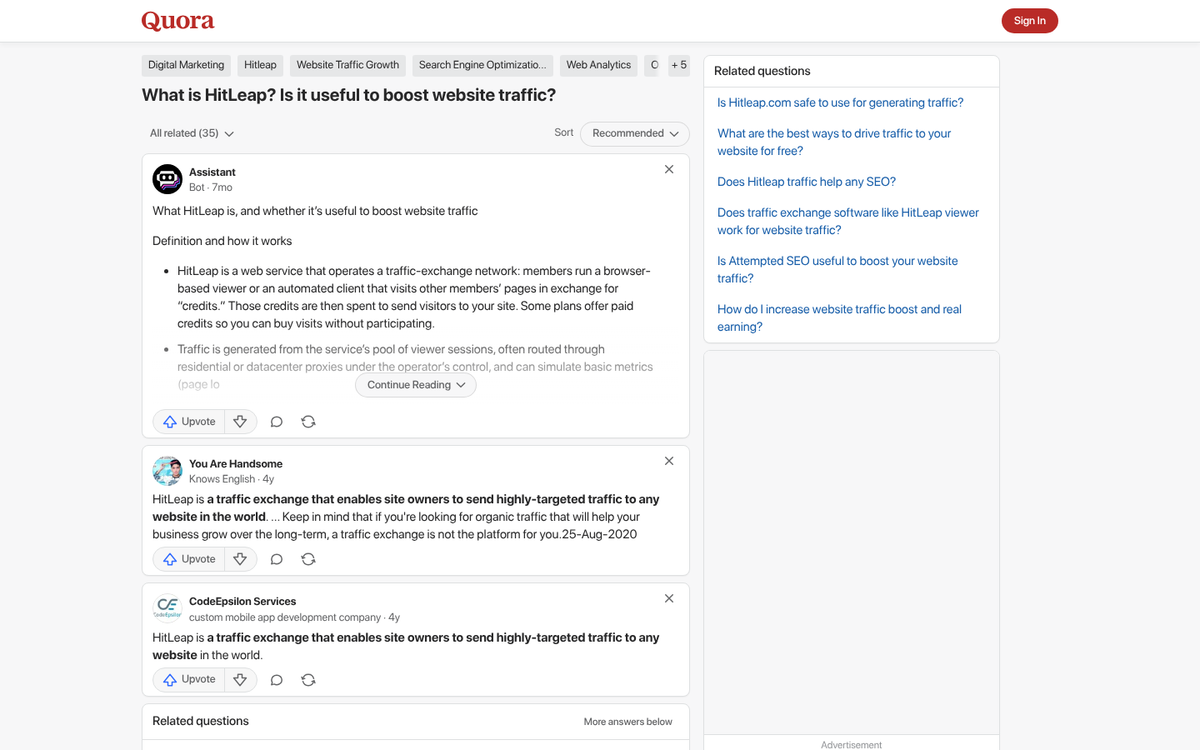
- Hitleap - Long considered one of the better autosurf options, this site features a dynamic timer and allows you to configure a range of options for your surfer, including referrer data and visit length. The credit rate sits at .7, and the level of customization makes it one of the more flexible autosurf tools available. Read our full Hitleap review to see how well it actually works.
- RankBoostUp - Around since 2007 and still going strong. Features a .7 ratio, configurable referrer data, Alexa toolbar integration, and geotargeting options. New sign-ups also receive 1,000 free hits to get started, which is a nice touch.
- Otohits - This one features a custom timer and a ratio of 1, making it one of the more generous autosurf options in terms of credit return. You can surf using either a browser-based web app or a standalone desktop program, giving you flexibility depending on your setup.
- Elite Autosurf - Fixed at a 10-second timer, giving you roughly six hits per minute. With a ratio of .5, that translates to three credits per minute of surfing. Weekly referral contests give you the opportunity to multiply your traffic well beyond what you'd earn through surfing alone.
- Twistrix - A ratio of .6, a custom timer, configurable or hidden referrers, and weekly cash prize contests. It's a well-rounded autosurf option for anyone looking to diversify across multiple platforms.
There you have it. These are some of the best exchanges around. I'm sure your favorite may have slipped off the list, and that's fine - tell me in the comments! I'm always happy to take a look at a new traffic exchange and tell you what I think.


8 responses
Thoughtful replies only - we moderate for spam, AI slop, and off-topic rants.
Hiya, Kenny - thanks for this info. I've just started using TE sites over last 2 months and this article has helped clarify a few points, so thanks again.
Do you know if TE sites like EasyHits4U can help improve SEO rankings or are they a problem to Google rankings because of where they come from? (E.G. does 1000 hits to a blog via a TE site help or hinder?)
Thanks again - have bookmarked your blog as I think you've got some very helpful info here.
All the best - Andre Kish
That's a huge service to new comers. Don't put anything close to a TE that has AdSense running. You'll have your account disabled the next day. I have tried my best to get that across being that I am a fan of EH4U. I use it only for promoting a squeeze page for list marketing reasons. Great tips and advice here for folks.
How about swaffic.com ? No surfing, just send hits to them and you get decent traffic back. I'm realy happy with their service.
A very nice post Kenny!
I make my money from everything but traffic exchanges. But, I wouldn't make the money without them.
It is great to see someone offer nicely presented clear information for those who love and have the time to surf for longer periods of time than I do right now. I lost my enthusiasm when TE owners just shut up shop never paying up and the explosion of new sites came along dragging surfers away to their 5 unique surfer a week sites.
It is sites like this that are needed so that surfers can find the performing traffic exchanges and avoid the non performing.
I was using the traffic delivery report so that I could plan my surfing week but many of these sites do not accept gambling sites and that has been a big pain. Sites that do accept gambling sites do not offer PayPal. I am from the UK and find that when I try to use Payza for buying traffic it rejects the payment saying I am not allowed to buy from that Country.
It would be awesome if you would publish a list of great traffic spots and list their payment methods.
I am now going to check out your add for cheap targeted traffic lol!
Keep up the awesome work!
Thanks a lot
this is too useful for me! thanks <3
Any updates on these traffic exchanges? Thank you!
Great question, Siamak! Traffic exchange programs do tend to change over time - some improve, others fade out. We'd recommend revisiting the ones mentioned in the article and checking their current user reviews and activity levels before diving in. It's also worth joining a few online marketing communities where members regularly share updated experiences with these platforms. We'll look into refreshing this article soon!