





Amazon's affiliate program is widely considered one of the best for novice affiliate marketers, and well-seasoned veterans often call it one of the best overall. Some very famous marketers use it and promote its use to all comers.
That said, it's not for everyone, for one easy reason. Due to tax legislation, Amazon is unable to run their affiliate program in certain states on a state by state basis.
To get the quick answer out of the way, every state in the United States is eligible for the Amazon affiliate program, with the exception of Arkansas, Colorado, Missouri, Maine, Rhode Island and Vermont. There may also be other geographic restrictions outside of the United States; Amazon supports as many as 21 locales globally, but doesn't always list restrictions on their FAQ. For the most accurate and up-to-date information, always check the Amazon Associates Program Operating Agreement.
The list has shifted over the years. Arkansas was added to the banned list in 2011 and California was removed from the list around the same time, because of the repealing of the laws that caused them to shut down before. Vermont was added in early 2015. If you're ever looking for up-to-date information, check the Operating Agreement linked above - not their FAQ - the FAQ tends to lag behind.
Key Takeaways
- Amazon's affiliate program is unavailable in Arkansas, Colorado, Missouri, Maine, Rhode Island, and Vermont due to tax legislation.
- State "nexus laws" allow states to require Amazon to collect sales tax once affiliate sales exceed $10,000, creating costly bookkeeping burdens.
- Amazon blocks these states to pressure them into repealing nexus laws, as California successfully demonstrated by being reinstated.
- Affiliates in banned states have options: close shop, use alternative affiliate programs, register an out-of-state LLC, or diversify monetization methods.
- The article recommends diversifying monetization through display advertising or own products as the best long-term solution.
Why Certain States are Banned
The question on everyone's mind is, why does Amazon disallow their program in certain states? It seems arbitrary. The answer is in state legal documents and taxes.
What happens is this. Some states are strapped for cash and are looking for ways they can tax residents in ways that don't affect the majority and so won't be voted down. Raising a gas tax or a sales tax is usually shot down, because everyone is affected by it, so those people vote against it.
When someone floats the idea of a tax on "online income" or "affiliate sales income," most residents aren't affected by it. Only a few tens of thousands of people in each state happen to be affiliate marketers, fewer in smaller states. If a tax on those few raises money and it's unlikely to be voted down, legislators pass it through.
These taxes don't inherently ban states from selling. What triggers the issue is what are known as nexus laws. Once a company exceeds $10,000 in affiliate sales generated from within one of these states, the state can require that company to collect and remit sales tax on those transactions. Essentially, the state is declaring that affiliate sellers constitute a "sales nexus" - a micro-storefront for Amazon operating within state lines - this allows the state to say "look, people are making the purchase in our state, so we get to tax it."
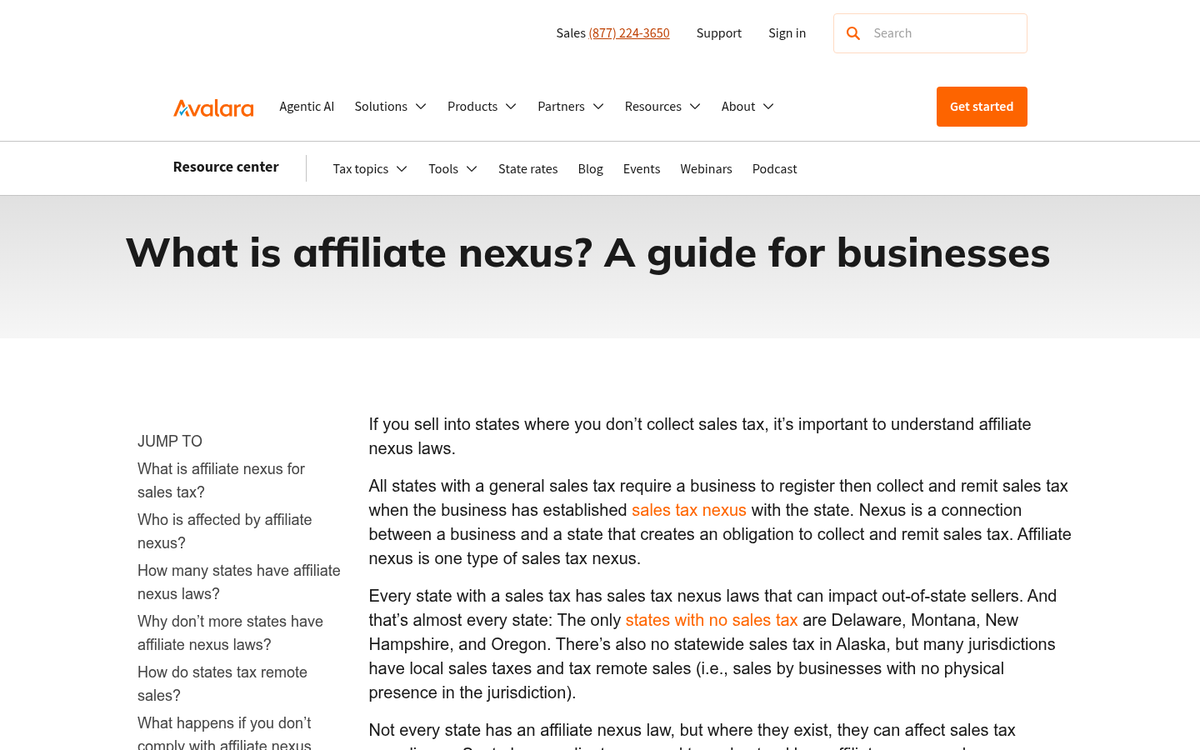
This can become very complicated when taxes overlap or when purchases are made with another entity or location involved. All together, it can become a significant bookkeeping burden, with no possible benefit to Amazon. They lose money because of the taxes and more money because of the record-keeping requirements - it ends up being more profitable and less work to effectively retaliate against the states in question and block them from the affiliate program altogether.
What this does, from Amazon's perspective, is put pressure on the states to repeal the law. With Amazon affiliates no longer in the state, the tax does very little. Other affiliate programs can still run, but the income from Amazon is greater than most other affiliate programs, so it hurts to be cut off. Residents of the state who are affected by the issue will campaign to have the tax repealed and are occasionally successful. California's reinstatement is a big example of that.
The problem, as many see it, is that the so-called nexus laws treat affiliate marketers as if they are contractors or employees of the businesses involved - factually incorrect for many reasons, and yet the tax loophole is used to exploit that idea.
One thing to note is that this is all a simplified version of the situation. I'm not a tax lawyer, nor am I fully up to date reading the tax code for every state involved. The landscape has also continued to evolve since the Supreme Court's 2018 South Dakota v. Wayfair ruling, which broadly expanded states' ability to collect sales tax from online retailers - adding yet another layer of difficulty to the affiliate nexus picture. When in doubt, talk to a tax professional familiar with your state's latest laws.
Fighting Tax Bans
There are a number of people affected by these taxes who have businesses that use affiliate sales to make ends meet. When a state passes one of these laws, it tends to shut down these businesses. Where the state thinks it's trying to make money with the tax, the reality is very different. They are putting people out of jobs, killing the income of citizens and occasionally even driving them to financial ruin. Yet some states persist in maintaining the tax, so marketers in these states need to figure out their options.

There are some options for making money in these states, but they aren't always viable options. I'll list them off and you can choose what works best for you.
Option 1: Close Up Shop
This is the option some affiliates take, and that's especially the case when they were relying too heavily on Amazon at the start and were barely making ends meet. Closing up shop prevents the state from gaining anything out of their tax law and helps put pressure on them to repeal it. But it doesn't do you any good in the meantime. Think about it - it's your business, and closing it up means you aren't making any money. You have to find something else to do, be it move to another state, find a workaround, or find another way to monetize.
I don't recommend closing up shop unless you're desperate and have no way to progress. If you go from a profit to $0 overnight, it's a desperate situation. But you might be able to salvage something. Remember, a functional site with search traffic is an asset - even if it's not currently generating Amazon revenue. You'll find other ways to monetize - which I'll talk about later - or you can do something more organic.

One option is to turn the site into a more personal portfolio or an example of your skills as a site designer. You don't need to be actively selling products on Amazon to make money from them, after all. Sell your skills at creating a functional Amazon affiliate site to clients out of state. You can transition from affiliate marketer to contractor.
Another idea is to build the site and then sell it. You won't have active profit records for the most recent month, largely because of the change that closed you down. But you'll still have traffic and past value to disclose. You can make a decent amount from a site that is updated and running - even if you're not making much money from recurring affiliate sales. Whoever buys it can work with swapping over the links to their affiliate code.
These options only help those who are in a state that passes this law and shuts them down. Most of the options on this list are for those who are scrambling to find an answer when Amazon shuts down in their area. But they can be valid paths for those who live in states like Colorado that have banned the program for much longer.
Option 2: Use Non-Closed Affiliates and Pay the Tax
There are hundreds of affiliate programs that did not shut down in response to one of these nexus tax laws. Amazon is basically the largest and most visible of those that did. Unfortunately, it can be hard to tell which affiliate programs are available and which are not. You will have to do some research to choose for yourself.
One resource you'll want to have on hand is an affiliate network aggregator that pulls together offers from a number of networks and individual affiliate programs. Options like Impact, ShareASale and CJ Affiliate are worth looking at, as they host a large number of merchants and tend to be more transparent about geographic restrictions.
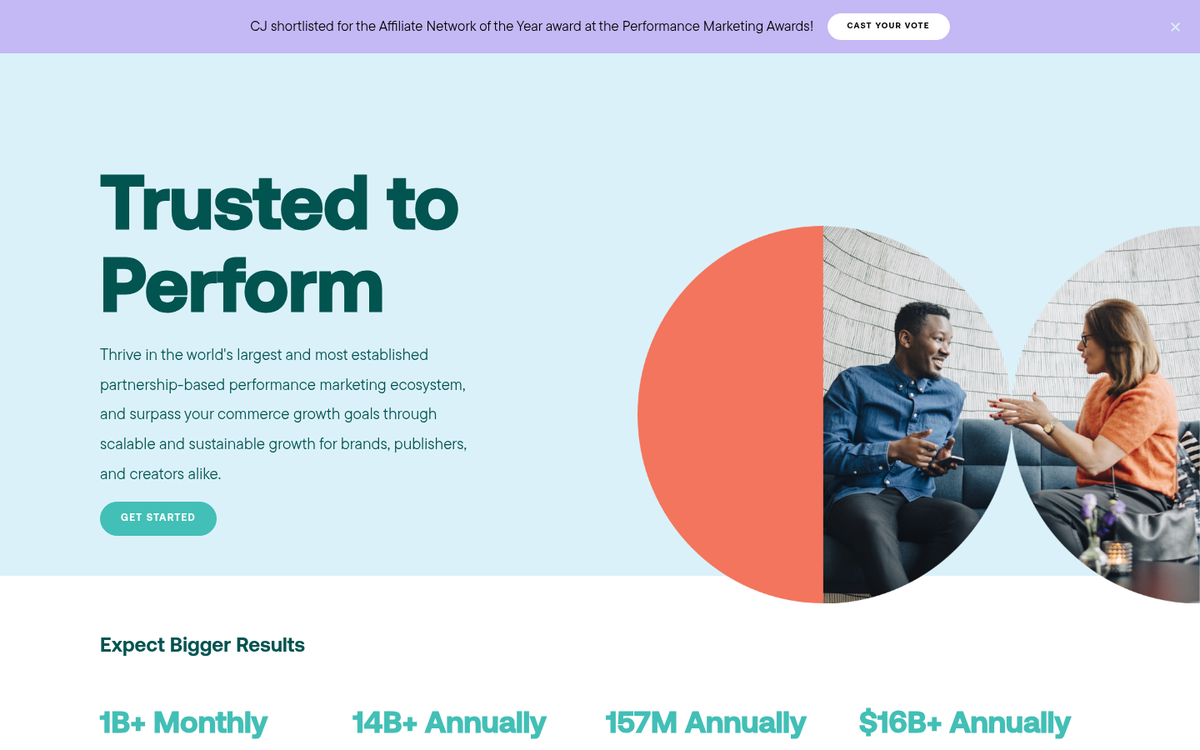
What you can do is work to replace the Amazon links on your site with links from these networks. Often you'll have to remove direct references in text to Amazon as well, so there's no disjointed difference from old to new link.
Unfortunately, replacing your links en masse like this isn't likely to have a great effect. For one thing, you might not be able to find offers for everything you were selling before. That halo effect doesn't exist with most other programs.
You also lose out on the selling power and name recognition Amazon carries. When you're an Amazon marketer, buyers know and trust Amazon, so they don't need to worry about that aspect of the transaction. For other affiliate programs the buyer might not know the seller by name or they might not trust the website - this hurts your click-through rate, your conversion rate and your profits.
Option 3: Register an Out of State LLC
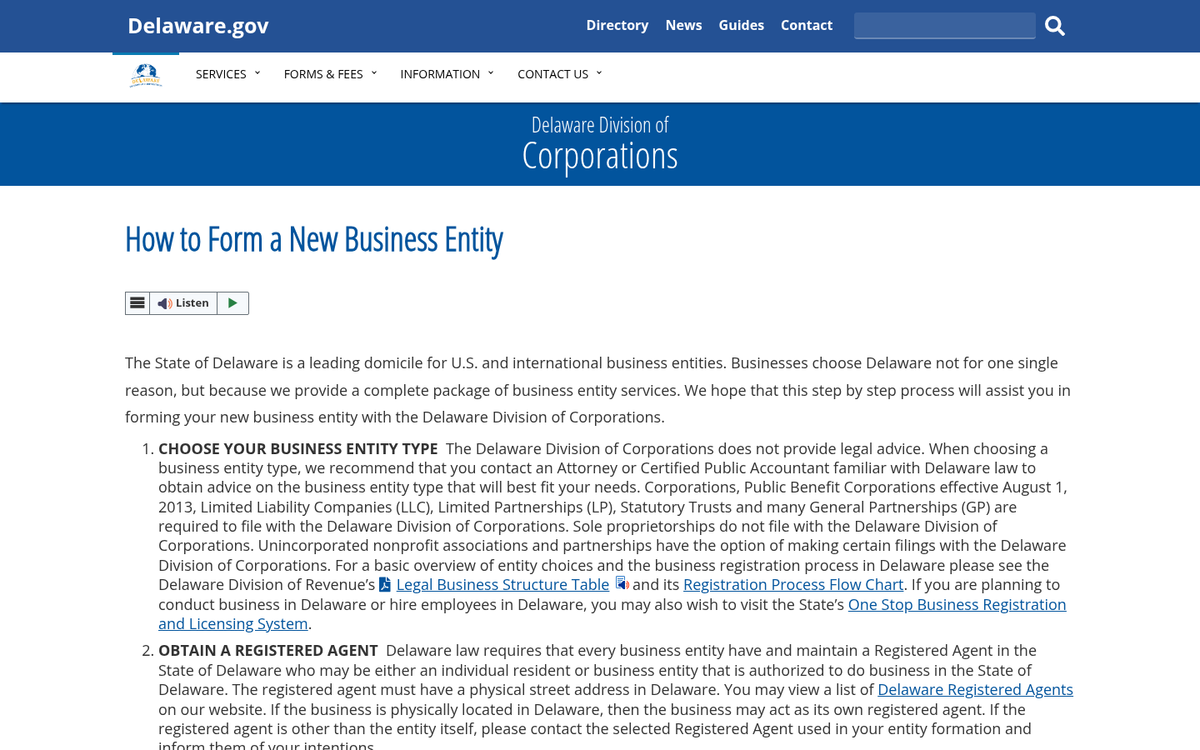
One workaround that some have implemented is registering themselves a business out of state. The most common states are Nevada and Delaware. Delaware has very flexible business laws and their legal process is very lenient toward businesses. There's no state corporate income tax for businesses formed there that don't do business there - which is specifically the answer to the nexus tax problem.
Nevada is much the same. They don't have a state corporate income tax or franchise tax, along with other benefits. The idea in these cases is straightforward. Your state is using a tax loophole to treat you as an extension of Amazon and tax you as a business representing Amazon in your state. By adding your business as an LLC out of state, you can point to that in return. You're not doing business in your state, you're doing it out of state, see? You just run your business from your state.
This is not a flawless plan. You need to work through some tough legal hurdles to get it to work. You don't make money directly from affiliate sales any more; your company does. Your company pays you as the sole shareholder. But you'll have to pay some costs towards your business in other ways - like fees and taxes.
Another flaw is that you have to pay to register an LLC and the fee is usually significant - especially compared to low-end affiliate marketing profits - it might not be worth it to manage.
If you do pull it off, you'll have to deal with added complexity come tax time. You have your own income and your business to worry about and it will very likely be past the ability of a layman to work out the complications. You will have to hire a professional tax preparer, which will cost even more money.
Not to mention, this puts you at a much higher risk of an IRS audit, so you'll have to be a stickler for keeping everything in order and maintaining records.
Overall, this is a way to keep working with Amazon, but it's a very expensive way to do it. I only recommend it if you have a long-established business with income and savings and you can afford these costs.
Option 4: Monetize Through Other Methods
This is by far the best option, though it is going to need some reorganization on your part. You can make a change in your business, away from affiliate links and into another form of monetization.
There are a number of ways you can monetize your site. Display advertising through networks like Mediavine or Raptive (formerly AdThrive) can generate actual passive income if you have traffic and tends to outperform basic PPC ads. You can also use them alongside other affiliate programs that aren't blocked in your state.

If that's too low-effort and low-reward for you, you can go with a product of your own. You can sell ebooks, online courses, consulting, design services and a whole host of other products. In 2026, there's also more opportunity than ever to build an audience through content platforms, newsletters and communities that aren't dependent on a single affiliate program.
How you adapt is up to you; just make sure that you do something with your business and stay away from letting it fall into disrepair, in case Amazon relents and lets your state back into the fold. The most well-built affiliate businesses are the ones that were never overly dependent on Amazon.

4 responses
Thoughtful replies only - we moderate for spam, AI slop, and off-topic rants.
The states really should get away from sales tax and go with the same type of thing Hawaii uses which is a General Excise Tax (GET). With GET a business is paying a tax on their business income regardless of where the customer was located.
The rate of tax varies depending on the businesses location in the state as there are state and local levels of the tax just like with sales tax. Merchants are allowed to recoup the tax by adding it to their sales which many do, but this is not required and there are no reporting requirements for what was collected (or not). There is only one GET return to be filed with the state and they handle the distributions of tax revenues to all local authorities.
This greatly simplifies book keeping for businesses. It avoids all the pitfalls that the sales tax schemes are running into due to online sales and purchases, and it allows affiliates to operate like every other business.
After having lived in Hawaii for 6 years and then having to deal with standard sales tax again on the mainland it became REALLY apparent the GET was a great thing for everyone.
You should add Louisiana to the list that cannot participate in the affiliate program.
Thanks for the good information. Please note that the Amazon Associates Program Operating Agreement link is a dead-end.
Thanks for the heads up, Lisa! We really appreciate you taking the time to let us know about the broken link. We'll get that fixed as soon as possible so other readers can easily access the Amazon Associates Program Operating Agreement. It's super helpful when our readers point out these issues!