




This matters deeply for Answer Engine Optimization because AI tools like ChatGPT, Gemini, and Perplexity aren't just retrieving information - they're reasoning through it across a thread. When a user asks a follow-up question, the AI draws on earlier parts of the conversation to shape its next response. That means the sources, structures, and content that get cited early in a thread can carry weight throughout the entire exchange.
As a website owner or manager, multi-turn conversations change how you think about content creation - it's no longer enough to answer one question well. Your content needs to anticipate where a conversation might go - the follow-ups, the clarifications, the deeper dives - and be structured in a way that makes it easy for AI to pull from across multiple turns.
Quick Answer
A multi-turn conversation is a dialogue that consists of multiple back-and-forth exchanges between a user and an AI (or another person), where each message builds on the context of previous ones. Unlike single-turn interactions, multi-turn conversations maintain context across multiple rounds, allowing for follow-up questions, clarifications, and more complex, coherent discussions. This capability is essential for tasks like customer support, tutoring, and general assistance, where understanding conversation history is critical to providing relevant and accurate responses.
How Multi-Turn Conversations Work Inside AI Systems
When you send a message, the AI looks at the full conversation history - every message from you and the AI - and uses that as context to change its reply. This history is fed into the model each time you send a new message, which is how the AI seems to "remember" what was said earlier.
The technical term for how much history a model can hold at once is the context window. Think of it as a scrolling view of the conversation. Once a conversation grows long enough to push earlier messages outside that window, the AI loses access to them and can no longer reference them.
To make this concrete: ask an AI "What's the best way to structure a landing page?" It gives you an answer. Then you follow up with "Can you make the third point shorter?" That second question only makes sense if the AI still has your first exchange in view. Without that history, it has no idea what "the third point" refers to.
This is where things get technically tough. A model needs to store previous messages and track what was asked, what was answered, and what commitments were made across multiple turns. The model also needs to manage things like topic changes, pronoun references, and partial clarifications without losing the thread.
The MultiChallenge benchmark, published at ACL 2025, tested how well leading AI models manage basic multi-turn conversations. Even Claude 3.5 Sonnet - one of the strongest models available - scored just 41.4% accuracy on those tasks. That number tells you quite a bit about the difference between what these systems appear capable of and what they can reliably pull off.
Part of the challenge is that each new turn can add more dependency. A mistake or missed detail can quietly distort everything that follows. The AI isn't re-reading the full conversation from scratch each time with fresh eyes - it's processing a text string, and soft context can get diluted or misread as that string grows longer.
Session state - meaning any persistent data about a user's preferences or prior interactions - can help some systems maintain continuity across separate conversations. But most standard deployments don't carry that memory between sessions at all. If you're building content workflows around AI tools, it's worth understanding how to grow a successful blog on Medium or other platforms where AI-assisted writing fits naturally into a broader publishing strategy.
Why Multi-Turn Context Matters for Answer Engine Optimization
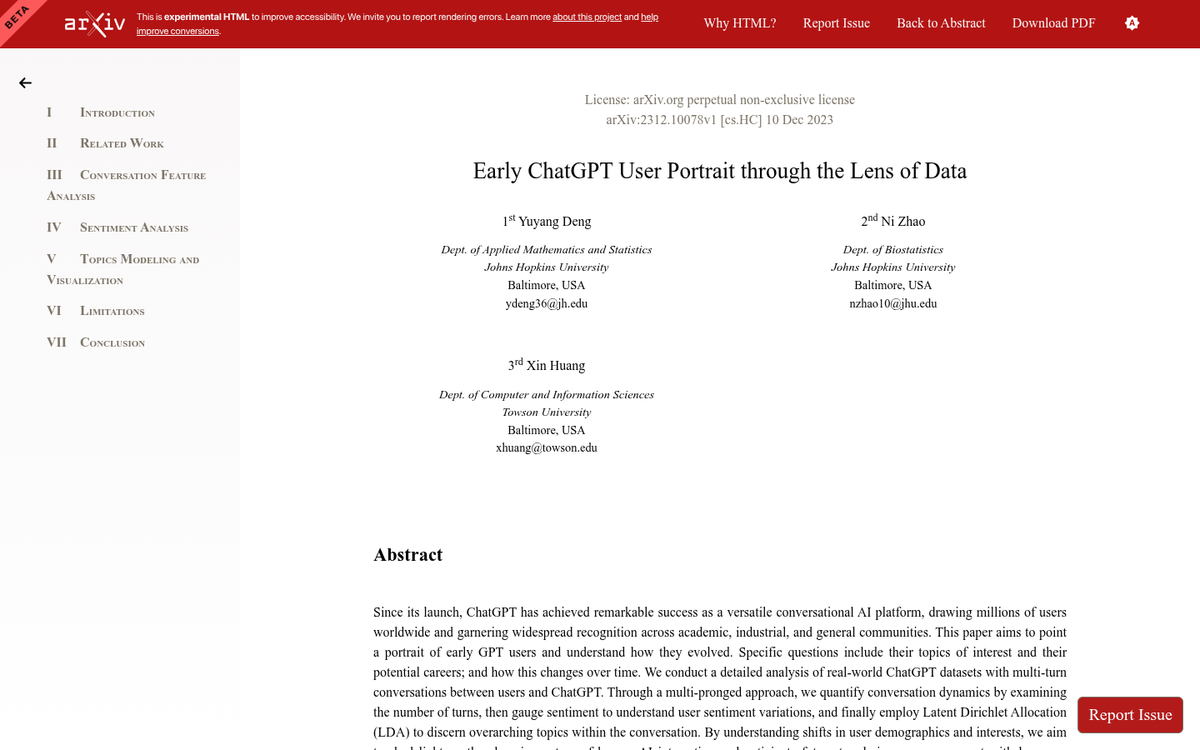
Around 73% of ChatGPT conversations involve more than one turn, according to ShareGPT data from 2023; it's not a niche behavior - it's the norm. Most don't ask one question and walk away satisfied.
This matters quite a bit for Answer Engine Optimization because the content that gets cited or surfaced isn't always what answered the first question best - it's what holds up when the conversation keeps going. A user may ask "what is content pruning" and follow up with "how do I know which pages to remove" and then "does this affect rankings right away." Each turn narrows the focus and the AI has to pull from sources that stay relevant across it.
Consider what that means for your content. If a page answers the surface-level question but stops there, it's less likely to stay useful as the conversation goes deeper. The AI is tracking coherence across turns, and content that only works at a single depth starts to fade out.
Answer engines like ChatGPT, Gemini, and Perplexity are built to refine their replies as users push further. They don't just retrieve - they adjust based on what's already been said in the thread. A follow-up question gets a tighter, more customized answer, and that answer draws on sources that can support that level of detail.
This is where content falls short without anyone realizing it. A page might rank well and even get cited early in a conversation. But if it doesn't have the depth to support follow-up questions, it gets left behind. The AI moves on to something more helpful.
That's the content that earns a lasting place in AI-generated answers - not because it's longer, but because it covers a topic in a way that holds together across multiple angles. If you're also thinking about whether to remove tags on your WordPress blog, that same principle of focused, well-structured content applies there too.
It's about depth and coherence. Content that anticipates where a question goes next is content that stays helpful across the full arc of a conversation. The same logic applies when you're trying to promote a new WordPress blog - reaching the right audience means going beyond surface-level tactics.
The Gap Between Single-Turn and Multi-Turn AI Performance
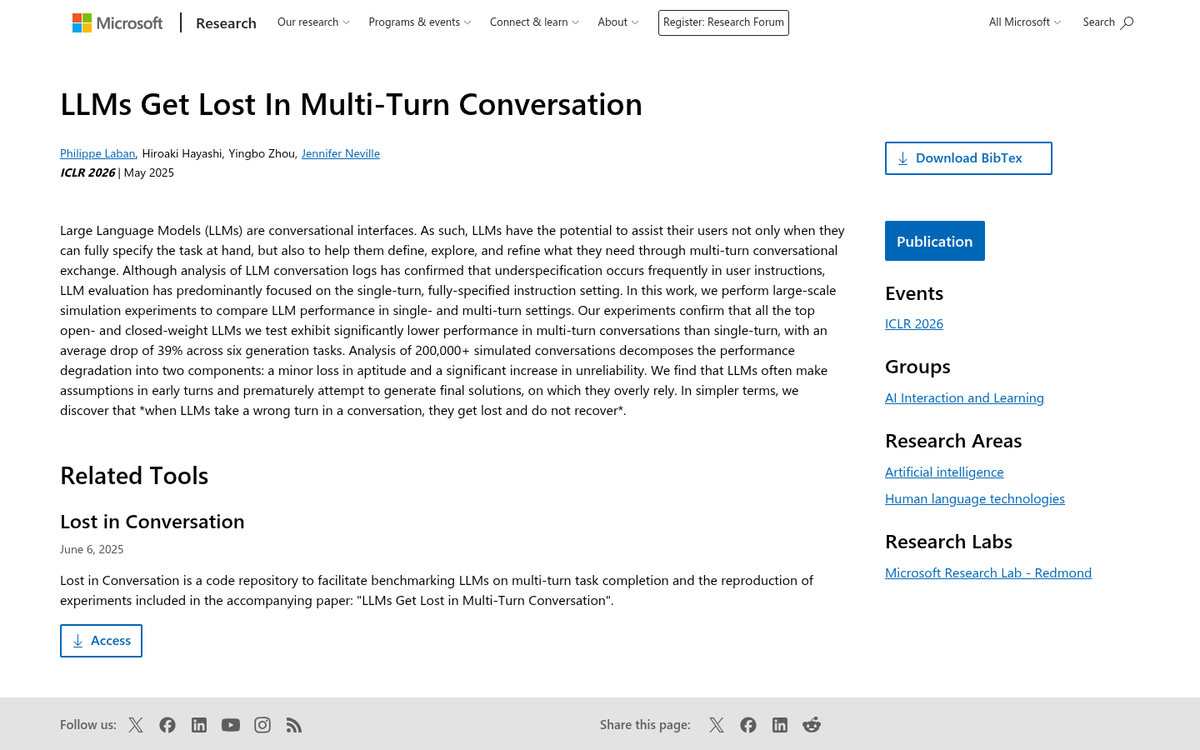
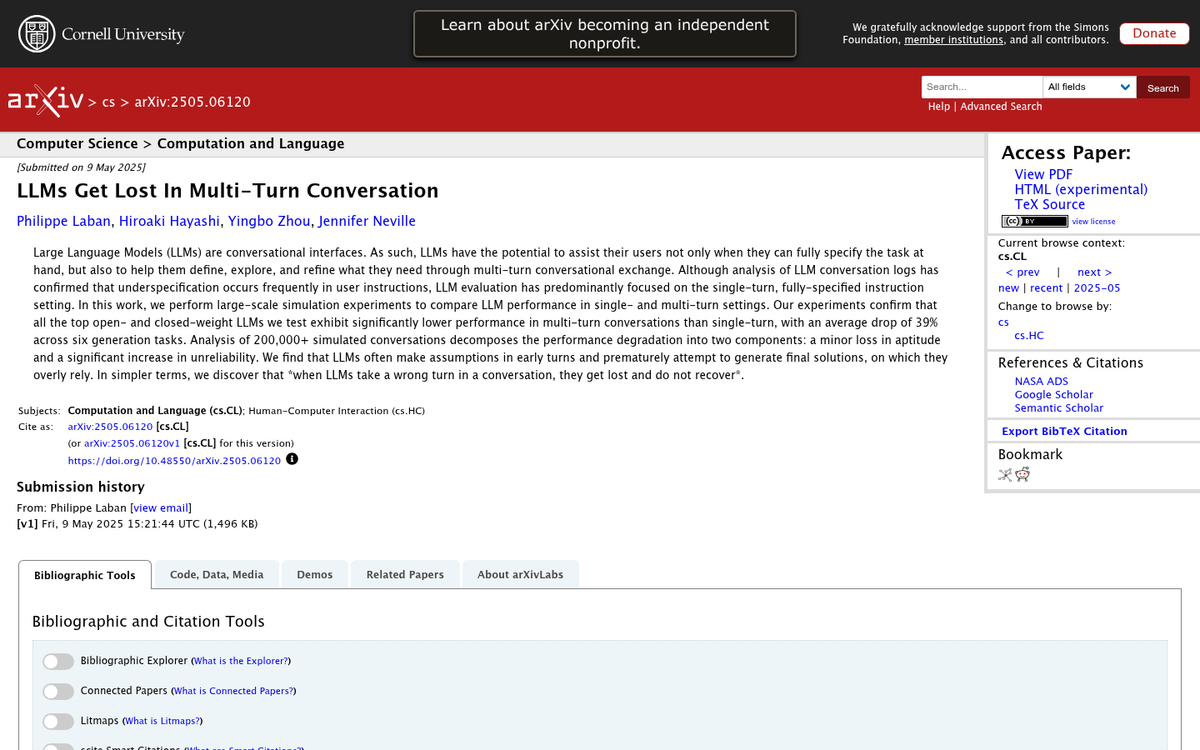
Microsoft Research ran a large-scale study across more than 200,000 simulated conversations and found that AI systems perform about 39% worse in multi-turn conversations than in single-turn ones; it's not a small difference - it seems like a structural weakness in how most AI systems manage extended dialogue.
A single-turn interaction is easy. A user asks a question, the AI answers it, and that's the end of the exchange. The model has one job with a clean, contained input. Multi-turn conversations are a different situation entirely because the model has to track what was said before, maintain consistency, and adjust its replies as the conversation develops.
The longer a conversation runs, the more the AI has to manage. Context windows fill up, earlier facts get deprioritized, and the model can start to drift from what was established at the start - where performance drops become noticeable to users, even if they can't identify why the replies started to feel less accurate or less helpful.
| Single-Turn Conversations | Multi-Turn Conversations |
|---|---|
| One isolated question and answer | A sequence of related exchanges |
| No prior context to manage | Context builds and must be tracked |
| Model has a defined, contained input | Model must infer intent across turns |
| Higher accuracy and consistency | Performance degrades over time |
| Easier to evaluate and benchmark | Harder to test and much harder to optimize |
Most AI benchmarks are built around single-turn tasks because they're easier to measure - it means the performance ratings you see for most AI tools don't reflect how those tools actually behave in conversations. Users don't ask one question and walk away.
This performance gap has a direct impact on content strategy. If an AI system struggles to maintain accuracy as a conversation extends, then the content it draws from needs to do more of the heavy lifting. Well-structured, self-contained content gives the AI less room to drift and reliable material to pull from across multiple turns. Using high-quality content sources becomes even more important when accuracy across extended exchanges is the goal.
What Multi-Turn Conversations Look Like Across Different Topics
Multi-turn conversations can vary significantly, and that matters more than most realize. A customer asking about a return policy might need two or three exchanges to get a full answer. A patient working through symptoms with an AI health tool might need twenty or more.
Research on the MedMT-Bench dataset puts the average medical conversation at 22 turns, with some running as high as 52; it's a very different challenge than a quick product inquiry or an easy how-to question. The depth of a conversation is shaped by the topic itself - how much context it needs, how many variables are involved, and how personal the stakes tend to be.
Consider the types of follow-up questions your audience usually asks. Someone researching a software tool may ask what it does, then how it compares to alternatives, then what the pricing looks like, and then whether it works with their existing setup.
Legal and financial topics tend to run deep too, because users need to apply general information to their personal situations. A single answer doesn't cover it. Compare that to recipe content or travel tips; conversations are usually shorter and contained.
Here's a rough look at how turn depth tends to vary by topic type.
| Topic Type | Typical Turn Depth | Key Driver |
|---|---|---|
| Medical and health | 10-52 turns | Symptom complexity and personal context |
| Legal and financial | 8-20 turns | Individual circumstances and nuance |
| Software and tech support | 5-15 turns | Troubleshooting steps and system variables |
| E-commerce and product | 2-6 turns | Feature comparisons and purchase decisions |
| Recipes and lifestyle | 1-4 turns | Simple preferences and substitutions |
Your niche sits somewhere on that spectrum, and your content strategy should align with where it falls. A site covering tax advice needs to expect longer, more layered conversations than a site covering weekend meal prep.
It's worth spending some time with your audience questions - look at search data, forums, or support tickets to see how those conversations unfold.
How to Structure Your Content for Multi-Turn AI Queries
The most helpful pages answer the first question directly, then keep going. Think of your content in layers: a short direct answer at the top, supporting detail in the middle, and natural follow-up answers mixed together into the rest of the page.
That layered structure matters because AI engines don't always pull from a single paragraph. They scan the whole page to build a response, so the more your content anticipates where a conversation might go, the more helpful it can become as a source.
Start with the direct answer
Put your clearest, most direct answer right at the top of each section. Don't bury the lead. A user asking an AI assistant a question wants an answer in the first sentence, not the fifth.
After that direct answer, you can use the rest of the section to add depth. Explain the why, the exceptions, and the context that makes the answer more helpful to a person who wants to go deeper.
Build in the follow-up questions
A useful exercise is to write down what turn two and turn three of a conversation might look like for your content. If your page explains what something is, the next question is probably how it works. The turn after that could be how to get started or what to watch for.
FAQ sections are great for this. They give AI engines a ready-made set of question-and-answer pairs to draw from across multiple turns. Nested headings work the same way - they signal to readers and AI that your page covers a topic from multiple angles.
Use topic clusters and internal links
When related pages on your site link to each other, AI engines can follow that context across a wider conversation. A user may ask a general question and then a more specific one, and your internal links help the AI trace a path through your content to find answers.
Semantic depth matters here as well. Pages that use natural variations of key terms and cover a topic thoroughly perform better across longer conversations than pages that repeat the same phrase over and over.
Think of your site as a connected set of answers instead of a collection of separate pages. The more your content flows from one idea into the next, the better it holds up when users are asking follow-up questions.
Common Mistakes That Break Multi-Turn Optimization
Even with a content structure in place, a few easy-to-miss habits can quietly undo that work. Most site owners don't realize these patterns are a problem until they check how AI tools actually represent their content.
One of the most common problems is fragmented content. A page answers one question well but leaves the obvious follow-up unaddressed. When an AI is working through a multi-turn conversation, it needs connected answers from the same source - and if your page only works with part of that chain, the AI moves on and finds the rest somewhere else.
Thin pages are a related problem. Short content might rank fine in traditional search. But it doesn't hold up when a user asks two or three connected questions in a row. Pages that don't have much depth get passed over after the first turn.
Inconsistent wording is harder to catch. If you call the same concept by different names across different pages, AI systems can have a hard time connecting the dots. A user might start a conversation with the term from your homepage and then reference something from your FAQ - and if those two pages use different language for the same thing, the AI may treat them as separate topics entirely.

It's worth keeping in mind that even the most advanced AI models don't manage multi-turn conversations well. The MultiChallenge 2025 benchmark found that accuracy across extended multi-turn queries sat below 50% for all tested models; it's an actual gap, and content that doesn't have enough internal consistency makes it even harder for AI to get things right.
Perfection isn't the goal. Content that reads as coherent and connected - where wording is steady, follow-up questions are addressed, and pages have depth - gives AI tools more to work with. Disjointed content gets dropped or misrepresented more than well-connected content does.
A quick self-check helps. Read your page and ask what the next logical question would be after reading it. If that question isn't answered somewhere nearby, that's a gap worth filling. Small fixes like that add up to a noticeably stronger presence across multi-turn AI replies.
Build Your Content for the Whole Conversation, Not Just the First Question
A helpful next step is to audit your existing content through the lens of multi-turn queries. Take your most important pages and ask what a user would ask after reading them. If the content doesn't answer that follow-up, it stops short.
This is not about chasing the latest AI trend or engineering content to satisfy an algorithm, but about serving users who arrive with layered, growing questions and deserve connected answers.
FAQs
What is a multi-turn conversation in AI?
A multi-turn conversation is a sequence of related exchanges where the AI tracks prior messages to inform each new response, rather than treating each question as isolated.
Why does multi-turn context matter for content creators?
Content that only answers one question gets left behind as conversations deepen. AI tools favor sources that remain relevant across follow-up questions, so depth and coherence matter significantly.
How much worse do AI models perform in multi-turn conversations?
Microsoft Research found AI systems perform about 39% worse in multi-turn conversations than single-turn ones, revealing a structural weakness in how most AI manages extended dialogue.
How should I structure content for multi-turn AI queries?
Lead with a direct answer, then add supporting detail and anticipated follow-up questions. FAQ sections and nested headings help AI engines pull relevant answers across multiple conversation turns.
What common mistakes hurt multi-turn content optimization?
Fragmented content, thin pages, and inconsistent terminology across pages are the biggest issues. These gaps cause AI tools to abandon your source mid-conversation and pull answers elsewhere.