Key Takeaways
- Medium offers a simple setup and clean editor, while Steemit requires complex blockchain account creation with potential minor costs.
- Steemit has critical risks: unrecoverable passwords, permanent blockchain records, and no post editing after seven days.
- Medium's 60 million monthly readers vastly outperform Steemit's engagement; one post got 2,100 Medium views versus 21 mostly bot upvotes on Steemit.
- Steemit pays volatile cryptocurrency requiring exchange conversions; Medium pays real currency through its straightforward Partner Program.
- Medium is recommended for most writers due to larger audience, enforced guidelines, and sustainable monetization over Steemit's niche crypto appeal.
The world of online blogging platforms is surprisingly cutthroat. I'm not even talking about the competition inherent in creating your own blog. I mean the competition between platforms. If you want to set up a new blog, where do you turn? Do you go to WordPress.com? Blogger? Medium? Substack? Choosing between them is the first question you'll have to answer before you can start writing.
They're known for different reasons, and picking between them matters. Think about it - it can be very difficult to migrate a following from one site to another without basically starting over.
What is Medium?
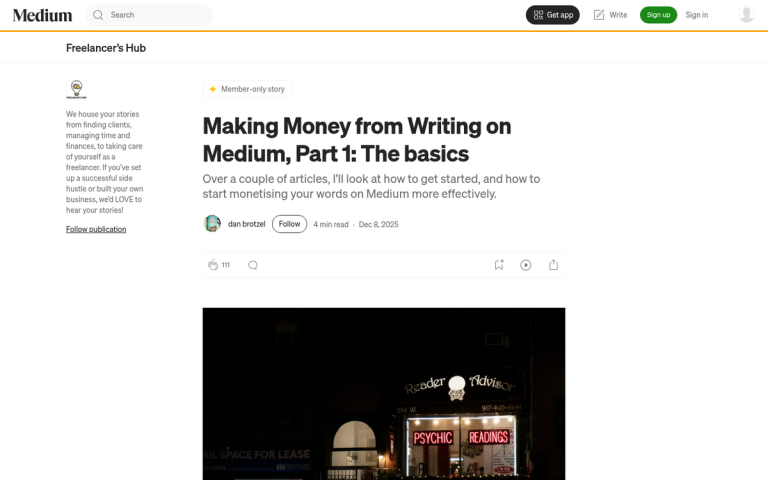
Medium is a free blogging platform founded by Evan Williams, one of the co-founders of Twitter and the founder of Blogger. It was created upfront as a companion to Twitter, giving users a different way to broadcast long thoughts to their audiences without cramming them into character-limited tweets.
In the years since its founding in 2012, Medium has grown into a massive shared blogging platform used by millions of writers and readers worldwide. The connection to Twitter has largely faded, though you can still use a social account to sign up. Medium has been valued at over $600 million, a figure that reflects just how seriously the industry takes it as a publishing destination.

While Medium remains free to read on a limited basis, the site locks a portion of its content behind a paywall. A membership costs $5 per month and gives readers unlimited access to everything on the platform. Medium also runs a Partner Program that lets writers earn money based on how paying members engage with their content.
We've written about Medium before - it's a platform for bloggers, and while it has some drawbacks, so does every platform.
What is Steemit?
Steemit is a blockchain-based blogging platform created in 2016. It emerged during the wave of cryptocurrency enthusiasm that followed Bitcoin's rise, positioning itself as a platform where writers could earn cryptocurrency directly from their content. Steemit is among the most well-known of the crypto-based blogging platforms, though it has struggled to maintain relevance over the years.
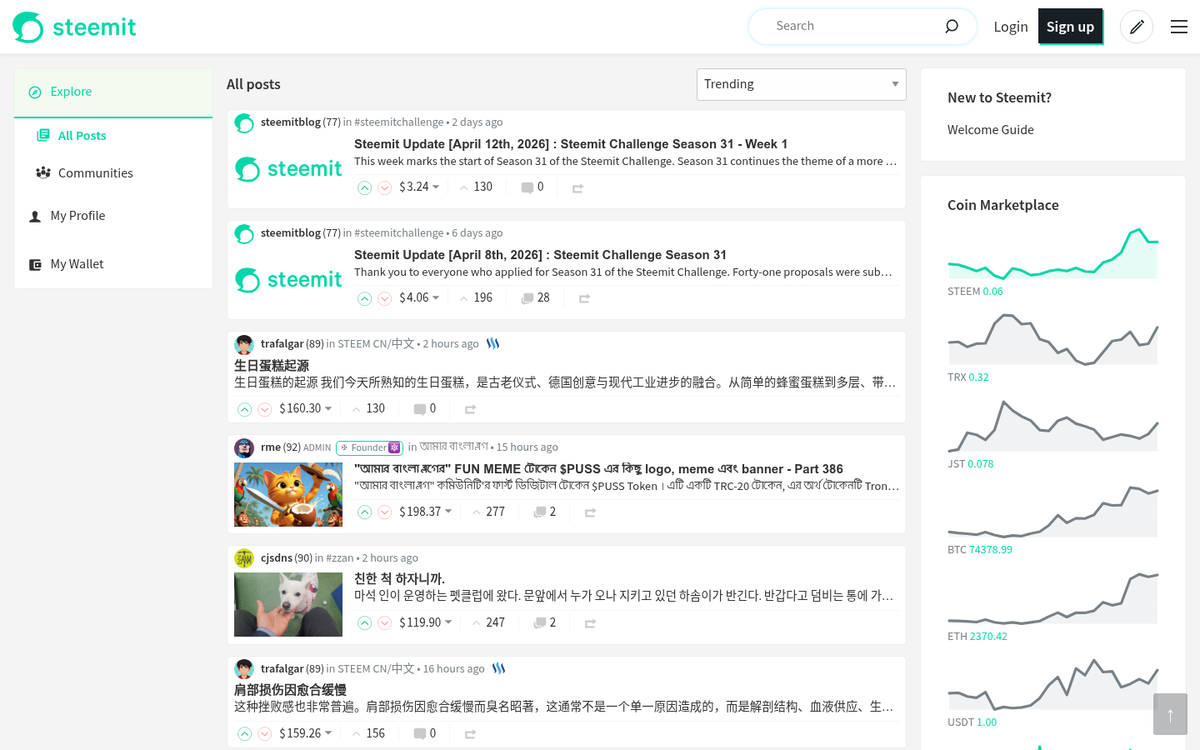
Steemit has its own cryptocurrency ecosystem built around the Steem token. Bloggers earn Steem for their posts, and commenters can earn some as well. The amount earned generally corresponds to the number of upvotes the content receives. However, the Steem token has experienced dramatic volatility over the years and has struggled to hold value, which has undermined one of the platform's core selling points. If you're exploring ways to make a living through blogging, it's worth understanding the risks that come with relying on crypto-based platforms.
Compare and Contrast
If you're looking for a new blogging platform, you want to compare the different options you find. I'll be comparing these two. But you can use these categories to compare them to other platforms you're thinking about, like WordPress or Substack.
First up, let's talk about how easy it is to use - an area where the two platforms can vary substantially. Medium is designed to be very easy to use. You can create an account in just a couple of clicks, authorizing a social media account or signing up with an email address. You're immediately given access to an author dashboard, and it's trivial to create a new post. Click "Write" and you're already in a clean, distraction-free editor with everything you'll need to get a blog post published in just a few minutes.
By contrast, it's a bit harder to get up and running on Steemit. Because accounts are tied to the blockchain, account creation is more involved than on a conventional platform. Free account approvals have historically taken time to process, and purchasing an account through third-party services can add friction and minor costs right from the start.
There are also restrictions on Steem accounts. Accounts can't be deactivated or deleted. You can't change your username. Your activity is permanently recorded on the Steem blockchain. You can't edit Steemit posts after seven days, which removes one of the most helpful benefits of maintaining evergreen content over time.
Perhaps most importantly, your Steem master password functions as a wallet key - it's a string that can't be recovered if lost. There is no password reset process. If you lose your master password, you lose your account permanently, with no recourse. This is a significant barrier for anyone not comfortable with how cryptocurrency wallets and keys work.
This remains a concern when recommending the platform to general audiences. If you are not prepared to store your Steem master password with extreme care, Steemit is essentially not a safe platform for your content investment.
Next, you have to consider community guidelines whenever you're talking about a community blogging platform. How do Medium and Steemit compare?
Medium has a clear and enforced set of guidelines. Their rules cover the expected ground - no hate speech, no harassment, no threats, no doxing, no spam, no copyright violations. Medium has also maintained explicit restrictions around cryptocurrency and speculative content, given the volume of scams and low-quality promotional posts that flooded the platform during the crypto boom years. Beyond the basic rules, Medium has editorial guidelines that govern what kinds of content qualify for monetization, giving writers a framework to work within.
By contrast, Steemit has very little in the way of enforced guidelines. The platform has historically relied on community members to police content through upvotes, downvotes, and flags instead of any formal moderation system. Plagiarism, spam, and low-quality content are technically discouraged, but Steemit itself has not maintained a strong track record of enforcement. Because accounts can't be deactivated, even confirmed spammer accounts can't be removed from the platform.
Monetization is also worth considering if you're looking to run a blog. On Medium, writers who enroll in the Partner Program can earn money based on how paying members engage with their content - specifically how long members spend reading and whether they interact with the post. With over 60 million monthly active readers, Medium has a legitimately large potential audience, and the monetization system is straightforward and paid out in real currency.
In one documented cross-platform comparison, a post published on Medium received 2,100 views, 1,200 full reads, 48 recommends, 7 comments, and was tweeted over 42 times. The same post published on Steemit received only 21 upvotes - mostly from bots - and a single comment. The engagement gap is significant.
Steemit's monetization, of course, is based entirely on earning cryptocurrency from your writing. Every post and comment shows a running tally of earnings in Steem. However, the system is complicated. You earn a combination of Steem Power and Steem Dollars, each serving different functions within the ecosystem. Converting any of this into spendable money requires dealing with cryptocurrency exchanges, and the value of what you earn can fluctuate substantially based on market conditions. In practice, most posts on Steemit earn very little after the first burst of activity, and many of the early upvotes come from automated bots instead of genuine readers.
One area where Steemit has shown an advantage is in follower growth speed. In one comparison, a user gained 30 followers on Steemit in a single week, versus only 6 followers on Medium after more than 40 days. This likely reflects the tight-knit and engagement-driven nature of Steemit's smaller community, where active participants are more likely to follow each other. However, a smaller, more niche community of crypto enthusiasts is a very different audience than Medium's 60 million monthly readers, and the practical value of that follower growth depends heavily on what you're trying to accomplish.
Which is Better?
To be honest, I'd say Medium is by far the better blogging platform for most writers - it has a massive readership, a clean and professional publishing experience, community guidelines, and a monetization path paid in real currency. Its $600 million valuation reflects the fact that it has established itself as a serious player in the publishing world.
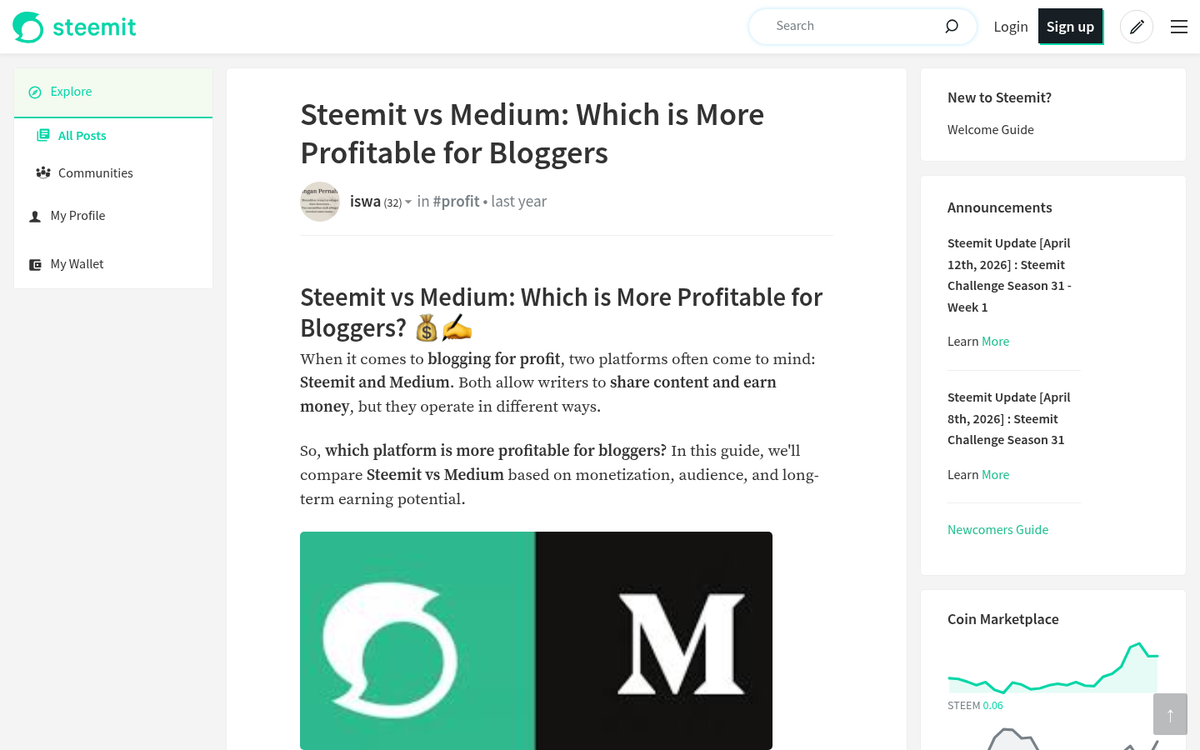
Steemit occupies a niche that may appeal to cryptocurrency enthusiasts or those interested in blockchain-based content platforms. But it comes with real drawbacks - limited engagement from readers, volatile and complicated earnings, no post editing after seven days, and an unrecoverable password system that creates genuine risk. Unless you have a specific reason to experiment with the crypto-blogging space, Medium is the more practical and sustainable choice for building an audience and a body of work.