





PopAds is one of a wide range of ad networks available for publishers looking to earn some extra cash. It operates using pop-under advertising, which may or may not be ideal for your situation. If you're interested in learning more, read on.
Key Takeaways
- PopAds is a pop-under ad network established in 2010, processing over 2 billion daily ad views across 50+ countries.
- Publishers can earn money, with US/UK CPM rates reaching $6 per 1,000 impressions, though real-world results often fall lower.
- Key benefits include low $5 payout threshold, flexible minimum bid settings, and acceptance of most website types including adult and gambling niches.
- Pop-unders trigger only after a user click, helping bypass many ad blockers and reducing immediate bounce rates.
- The author doesn't recommend PopAds for most publishers due to disruptive user experience and historical associations with malicious advertising.
What Is PopAds.net?
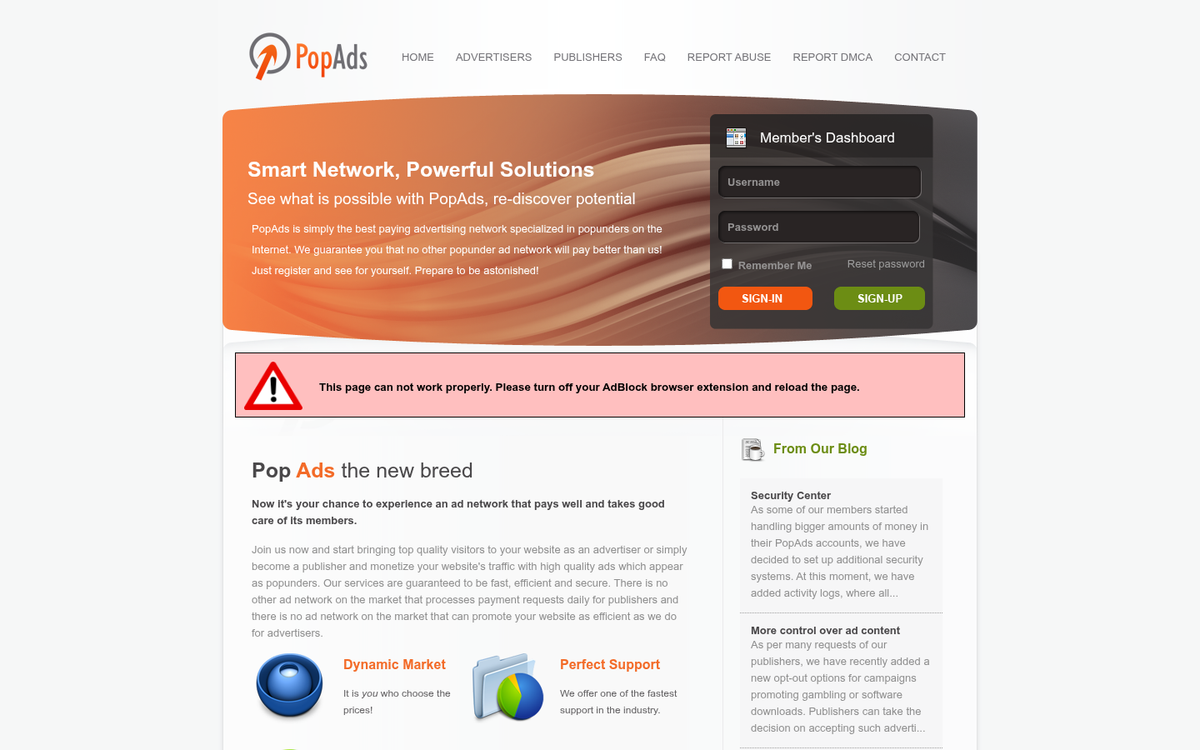
PopAds is an ad network. It's not an ad network that uses embedded ads on your site, overlays in front of videos, or other sorts of display ads, however. Rather, PopAds uses pop-unders, a kind of ad format that has been in and out of favor for years.
PopAds has a few benefits over old-school pop-under and pop-up advertising. It still opens a new window, but that window is layered below the current window, so the user doesn't have their browsing of your site disrupted. More importantly, it waits to trigger until the user clicks somewhere within your site. This minimizes the immediate bounces that occur when a pop-up or pop-under shows up, from those web users who are sensitive to that kind of thing.
The PopAds network has been around since 2010 and has adapted over the years, making it one of the larger and more established pop-under advertising networks still operating today. Pop-ups and pop-overs are generally frowned upon, while pop-unders tend to skirt by because it's more difficult with long browsing sessions to identify which site originated the ad. As of 2026, PopAds processes more than 2 billion ad views daily and runs at least 1,000 unique advertising campaigns every day, which speaks to its continued scale and activity.
The Benefits of PopAds
PopAds has a few benefits as an ad network. First of all, they have a fairly large range of advertisers, meaning you'll pretty much never be left with unfilled ad space. Since the ads require a click to appear, your bounce traffic and short-lived visits won't dilute your click rates. PopAds also reports conversion rates of 2-3% and CTR rates six times higher than regular banner ads, which is worth noting if you're comparing formats.
The ad network is also very liberal with their acceptance of websites. It's not like something such as Taboola or Outbrain, where you need hundreds of thousands of visitors to even get into the network. Essentially any website is allowed so long as it doesn't violate the laws of the United States or Costa Rica. Costa Rica is included because it's where PopAds is headquartered.
Basically, that means sites that advertise gambling or adult content are generally fine, but sites that sell weapons or illegal drugs are not.
One major benefit of PopAds is that publishers can set the minimum bid for their site. This requires that advertisers who want to advertise on your site meet a minimum bid threshold, so you're not spamming your audience with low-quality advertising and only earning a few cents per click.
PopAds also uses a system that, since it requires a user action to open the window, tends to bypass many pop-up blockers. It's not entirely reliable - some blockers still catch it, and disabling scripts site-wide will catch it - but it performs better than most pop-up based ad networks in this regard.
PopAds claims that their system is compatible with Google's rules, specifically for Google Ads, but they disavow any responsibility if it gets your Google Ads account sanctioned or restricted. If that happens, it will be up to you to decide which you would rather prioritize.
Because of the unique bidding system that PopAds uses, there's a certain level of diminishing returns for publishers. You can choose how many pop-unders a particular visitor will receive, but each additional pop-under is typically filled with a lower bidder than the initial ad. This means allowing 1 pop-under might be more valuable in the long run than allowing 2 or 3.
The PopAds network is global, with advertisers and publishers across more than 50 countries, though some markets are naturally more valuable than others.
Can You Earn Money With PopAds?
A short section here, but yes, you can earn money using the PopAds pop-under network. There are some caveats to it that I'll go into later, but it's not a scam and it does pay people. Payouts are available on a daily basis upon request, with a low minimum payout threshold of just $5 - which is genuinely one of the more publisher-friendly payout setups in the industry.
According to PopAds, their average revenue for US unique visitors has never dropped below $4 per 1,000 impressions. For US and UK traffic specifically, CPM rates can reach up to $6 per 1,000 impressions. Overall average CPM rates across all regions range from $0.10 to $4.00, depending on campaign type, audience geography, and niche. If you're curious which countries have the highest CPM payout rates, that's worth exploring separately. As always, your actual results will vary based on a wide range of factors.
PopAds also has an affiliate and referral program. When a user signs up as a publisher using your link, you get 10% of their earnings. When a user signs up as an advertiser using your link, you get 10% of their ad spend. All in all, it's not a bad deal, and frankly that's likely where many of the bigger success stories from affiliate marketers originate. None of the links in this post are affiliate links, by the way.
Real-world publisher results tend to land below the headline CPM figures, particularly for non-English-speaking or lower-income-country traffic, where rates can fall well under $1 per 1,000 views. That's consistent with nearly every ad network out there - the advertised rates represent a ceiling, not a floor.
Maximizing Earnings with PopAds
If you're interested in using PopAds to make money as a publisher, here are some tips for making the most of the network.
Target high value countries. The USA, Canada, the UK, Europe, and Australia tend to generate the highest CPMs, with US and UK traffic capable of hitting $6 per 1,000 impressions. Countries in Southeast Asia, South Asia, and parts of Latin America typically yield much lower rates. Unfortunately, a sizable proportion of PopAds traffic comes from Brazil, which falls into the lower-value tier.
Make sure to set your category and restrict advertiser categories. Your category helps ensure there is a match between your content and the content of the ad. It also helps to be in one of the niches most commonly represented within the PopAds network.
Which categories are those? Well, if you keep in mind that it's a pop-under network, you'll have a pretty good idea. The majority of advertisers and publishers in the network operate in the adult content niche, with others in file sharing, image hosting, web games, and gambling. There's also a notable presence in automotive niches, typically around used car sales and auto insurance.
File sharing in particular is not a great niche to allow. The audiences drawn to file sharing content tend not to convert well, resulting in low earnings. Adult and gambling niches generally perform better within this network.
Pick offers that you know you can fulfill as much as possible. You pick offers to participate in, but if your metrics are low enough - that is, low click and conversion rates - the people managing those offers can blacklist your site. Click-to-download offers and similar formats can be especially hard to convert with pop-unders. You can test them, but you risk removal if you consistently underperform.
Make sure to set a moderate minimum bid. Setting your minimum bid too low will flood your site with low-quality advertising and burn through your daily quota of pop-unders quickly. Your rates will be low, though if volume is your goal, that may be acceptable. Higher minimums generally result in fewer but better-quality and higher-value ads.
Conversely, don't set your minimum bid too high. If you set the level too high, you'll cut out too many advertisers, and remaining advertisers may simply skip your site. Unless your site has genuinely premium traffic, pricing yourself out of the market helps no one.
Do what you can to encourage clicks on your site. Since PopAds requires a user interaction to trigger the pop-under, you'll perform much better if your users have a reason to click. Engaging content, interactive elements, and well-placed calls to action all help here.
Monitor your metrics and maintain a level of agility. Ad pricing and bidding fluctuate throughout the week, with lower rates typically on weekends as many businesses pause campaigns. Keep an eye on your data and don't be afraid to adjust your minimum bids and targeting settings accordingly.
Why I Don't Recommend PopAds
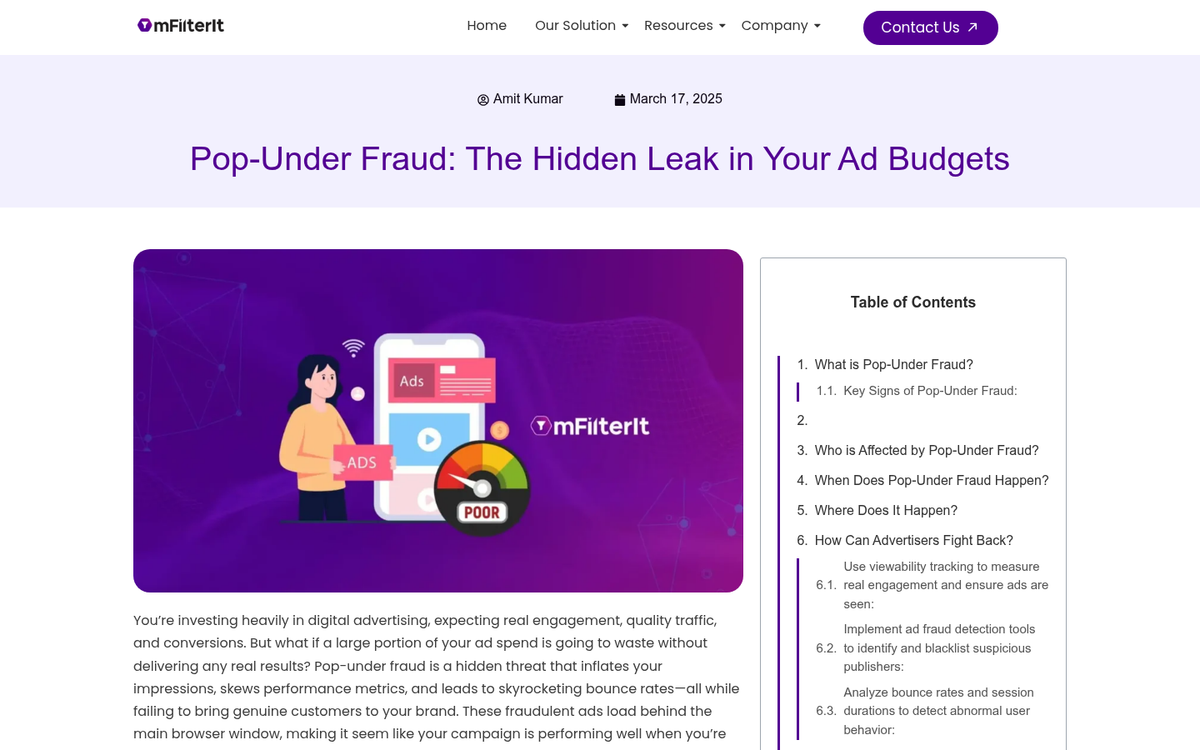
All of the above makes PopAds seem like a reasonable mid-tier ad network. However, I still have reservations about recommending it outright. Here's why.
First, pop-under advertising is, frankly, a disruptive experience for your website visitors. There's a reason most websites have transitioned to display advertising, affiliate marketing, or more native formats. Having unexpected tabs or windows appear - even underneath the current one - is a violation of the user experience that many visitors find frustrating. It's a format that has been in decline for good reason, and in 2026 users are less tolerant of it than ever. Unexpected interruptions like these are among the top reasons visitors bounce from a site.
Second, PopAds has been abused by malware. There are documented pieces of malware that run hidden browser windows and silently browse PopAds for the benefit of bad actors. PopAds is not responsible for this and does not sanction it, but the association exists. More practically, pop-under networks have historically been a vector for serving malicious ads, and while PopAds does have filtering in place, no network is perfect. The risk of accidentally exposing your audience to a malicious ad is real.
Personally, the risk isn't worth it for a site I care about. I wouldn't want to subject my audience to the potential downsides that come with a pop-under network like this. That said, you're an adult capable of making your own decisions.
To be honest, PopAds makes the most sense for sites operating in niches that aren't accepted by mainstream ad networks, or for experimental projects where user experience isn't your primary concern. Even in those cases, monitor your ad output regularly to make sure you aren't inadvertently serving something harmful to your visitors. Exercise caution and you can make some money, but there are better and less intrusive options available for most publishers in 2026.


6 responses
Thoughtful replies only - we moderate for spam, AI slop, and off-topic rants.
Thank you so much for this information. Can you suggest the best ads aside from AdSense?
Hi Rafi! We wrote an article on that here: https://growtraffic.com/blog/2016/08/alternatives-google-adsense
Which one other than popads will you recommend?
Hey Oghenetega! Great question! Besides PopAds, you might want to check out PropellerAds, which is really popular for pop traffic and has great monetization options. Adsterra is another solid choice with multiple ad formats and decent CPM rates. If you're looking for something more mainstream, Media.net and Ezoic work well depending on your traffic source. The best one really depends on your niche and traffic type, so it's worth testing a couple to see which performs best for you. Hope that helps! 😊
One good thing in your review is you are giving original review not fake and not using referral program of theirs...
All you said is true and not like other affiliate reviewers ...
Love I so much buddy
Thanks so much for the kind words, Shreyash! That genuinely means a lot to us. Our goal has always been to give readers honest, unbiased reviews so you can make informed decisions without being misled by hype. We believe you deserve the truth, not just a sales pitch. Glad you found it helpful, and stay tuned for more honest reviews coming your way!